
Table of Contents
- Planning Your Winter Escape: Tbilisi Christmas Market and New Year Essentials
- Exploring the Main Tbilisi Christmas Market Locations
- Driving in Tbilisi in December: Parking and Traffic Tips
- Celebrating New Year’s Eve in Tbilisi: Gala Dinners and Fireworks
- Surviving January 1st and 2nd: What Stays Open
- Winter Day Trips from Tbilisi for Independent Drivers
- Georgian Holiday Traditions: Supra, Chacha, and Bedoba
- Essential Logistics: Taxis and Public Transport on New Year’s Night
- Frequently Asked Questions About New Year in Tbilisi
Tbilisi during the holidays is a different city. The streets fill with lights, the smell of roasted chestnuts drifts through Old Town, and Georgians throw themselves into celebrations that stretch from mid-December well past Orthodox Christmas on January 7. If you’re planning to spend Christmas in Tbilisi or ring in the New Year here, the practical details matter more than the pretty photos suggest. Parking disappears in the center, taxis triple their prices on December 31, and half the city shuts down on January 1. One critical change for 2026: mandatory tourist insurance now applies to all foreign visitors, requiring a minimum coverage of 30,000 GEL (roughly $11,000 USD). Sort that before you fly.
This guide covers the specifics: where the markets are, how to survive New Year’s Eve logistics, what’s actually open on January 1, and how to plan winter day trips if you’ve got a rental car. I’ve spent multiple winters in Georgia, and the gap between expectation and reality can catch people off guard.
Planning Your Winter Escape: Tbilisi Christmas Market and New Year Essentials
Georgia celebrates New Year as its biggest holiday, not Christmas. Western Christmas on December 25 passes quietly here, while Orthodox Christmas falls on January 7. The real energy peaks between December 28 and January 2, with the national countdown happening on December 31. Plan around that window if you want the full experience.
December weather in Tbilisi sits between 0°C and 8°C most days, occasionally dipping below freezing at night. Snow is rare in the city center but common on surrounding hills. Pack layers and waterproof shoes: the streets get slippery.
Tip: The festive season typically runs from December 12 to January 14, so arriving in mid-December gives you the markets without the New Year’s Eve chaos. Late December gets expensive and crowded.
Here’s a quick planning table:
| Detail | What to Know (2026) |
|---|---|
| Peak dates | Dec 28 – Jan 2 |
| Tourist insurance | Mandatory, 30,000 GEL minimum |
| Average Dec temp | 0°C to 8°C |
| Currency | Georgian Lari (GEL) |
| Key holidays | Dec 31 (New Year), Jan 7 (Orthodox Christmas) |
| Market season | Mid-Dec to mid-Jan |
Book accommodation early for December 30 – January 2. Prices jump 40-60% during that window, and popular guesthouses fill weeks in advance.
Exploring the Main Tbilisi Christmas Market Locations
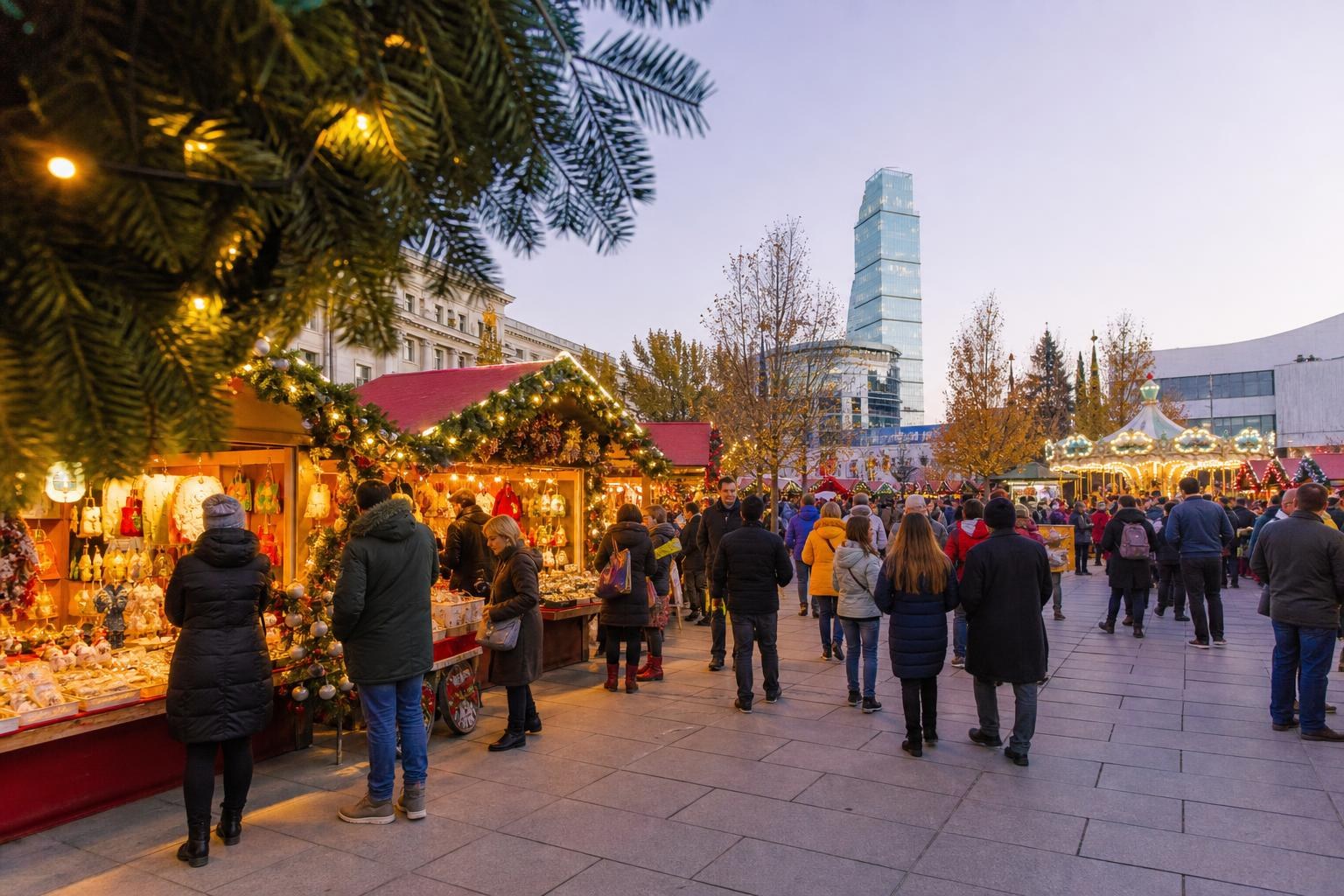
The Tbilisi Christmas market scene has grown considerably in recent years, spreading across multiple squares rather than concentrating in one location. Stalls sell churchkhela (the walnut-and-grape candy that looks like a candle), handmade ornaments, wool socks, enamelwork, and plenty of hot wine. Expect prices at market stalls to be slightly inflated compared to regular shops, but the atmosphere justifies a wander.
Most markets open around noon and stay active until 10 or 11 PM. Weekends draw bigger crowds, and the days between December 28 and January 1 are the busiest by far.
Orbeliani Square and 9 April Park Festivities
Orbeliani Square, right in front of the famous blue-tiled sulfur bathhouse, hosts a smaller but charming market. Stalls here tend toward handmade crafts and local food. The nearby 9 April Park (formerly Pushkin Park) gets its own set of lights and a small ice rink some years, though the rink’s presence varies. This area is walkable from most Old Town hotels.
Parking near Orbeliani Square is a headache in December. Your best bet is to park on a side street off Abastumani or walk from Abanotubani. Street parking costs 1-3 GEL per hour in the center.
First Republic Square: The Main Tree and Concerts
The national Christmas tree and the official “New Year City” setup have moved to First Republic Square, which serves as the main hub for concerts, light shows, and the December 31 countdown. This is where the biggest crowds gather. Free concerts run most evenings from late December, and the square stays decorated through mid-January.
Getting there by car is possible but not advisable on peak nights. The square sits near Rustaveli Avenue, and police close surrounding streets for events. If you’re driving, park at the Galleria Tbilisi underground lot (a 10-minute walk away) or use Bolt/Yandex Go.
Driving in Tbilisi in December: Parking and Traffic Tips
If you’ve rented a car to explore Georgia, keep it parked during the central Tbilisi festivities and walk or use ride-hailing apps. The city center becomes a pedestrian zone on December 31, and traffic on surrounding roads grinds to a halt from about 8 PM onward.
For the rest of December, driving in Tbilisi follows its usual chaotic rules. Lanes are suggestions, horns are conversation, and double-parking is a local art form. A few practical notes:
- Street parking in the center uses the Tbilisi Parking app. Download it before you need it: it works with international cards.
- Underground lots at Galleria Tbilisi and East Point cost 2-5 GEL per hour, depending on duration.
- Avoid Rustaveli Avenue and Melikishvili Avenue between 5 PM and 9 PM in late December. Traffic doubles during the market season.
- If you’re staying outside the center (Saburtalo, Vake, Dighomi), driving to a metro station and riding in is the smarter move.
Important: Georgian police have increased enforcement of drunk driving during the holiday season. The legal blood alcohol limit is 0.0% for drivers. Zero tolerance, zero exceptions. Fines start at 500 GEL.
Winter tires aren’t mandatory in Tbilisi itself, but if you’re planning day trips to the mountains, you’ll want them. Most rental agencies offer winter-equipped vehicles if you ask specifically.
Celebrating New Year’s Eve in Tbilisi: Gala Dinners and Fireworks
New Year’s Eve is the event in Georgia. Families gather for a supra (feast) that can run six hours, and the entire city pours into the streets around midnight. The official fireworks launch from several points around the city, with the best views from Mtatsminda Park, the Narikala Fortress area, or any rooftop bar along the Kura River.
Restaurants offer special New Year’s Eve dinners, typically priced between 150-400 GEL per person for a multi-course Georgian menu with wine. Book by mid-December or you won’t find a table. Hotels like Rooms Hotel, Stamba, and the Biltmore run gala events that sell out early.
For a more local experience, some guesthouses invite guests to join the family supra. This is genuinely one of the best ways to ring in the year: a long table, endless toasts led by a tamada (toastmaster), and food that keeps coming until you beg it to stop.
Note: Strict firework regulations now carry a 2,000 GEL fine for unauthorized sales and 1,000 GEL for unauthorized buyers. Bringing your own fireworks is not worth the risk. Stick to watching the official displays.
The street celebrations are loud, joyful, and run until 3 or 4 AM. Dress warmly: you’ll be standing outside longer than you expect.
Surviving January 1st and 2nd: What Stays Open
January 1 in Tbilisi is a ghost town. Almost everything closes. Shops, restaurants, museums, banks: assume they’re shut unless you’ve confirmed otherwise. Most Georgians are recovering from a supra that ended at dawn.
Here’s what generally stays open:
- Convenience stores and some Nikora/Spar branches (reduced hours, usually noon onward)
- A handful of restaurants in the tourist zone along Shardeni and Erekle II streets
- Hotel restaurants and lobbies
- Pharmacies on a rotating duty schedule (ask your hotel which one is open)
- The Tbilisi funicular and Mtatsminda Park sometimes operate, but check the day before
January 2 is slightly better. More restaurants reopen by the afternoon, and some shops resume business. Museums typically stay closed until January 3 or 4. If you need cash, ATMs work, but bank branches won’t be staffed.
Stock up on snacks, water, and essentials on December 30 or 31 morning. The city genuinely shuts down, and if you’re self-catering, an empty fridge on January 1 is a real problem.
Winter Day Trips from Tbilisi for Independent Drivers
Having your own car during the Tbilisi holiday season opens up the surrounding countryside, which is quiet, beautiful, and far less crowded than the capital. Roads out of the city are generally clear in winter, though mountain passes require caution.
Mtskheta and Jvari Monastery
Mtskheta sits just 25 km northwest of Tbilisi, a 30-minute drive on the well-maintained E60 highway. This ancient capital holds two UNESCO World Heritage sites: Svetitskhoveli Cathedral and Jvari Monastery. Both are open year-round and free to enter.
The road to Jvari Monastery climbs a steep hill with hairpin turns. In winter, ice can form on the upper section. A standard car handles it on dry days, but after snow or freezing rain, 4×4 or chains are advisable. Parking at both sites is free and usually has space in winter.
Stop in Mtskheta town for lunch: several family restaurants serve khinkali and mtsvadi (grilled meat) at prices well below Tbilisi center.
Sighnaghi: The City of Love in Winter
Sighnaghi is 110 km east of Tbilisi, roughly a 1.5-hour drive through the Kakheti wine region. The road is paved and in decent condition, though the final stretch into Sighnaghi winds through hills. No 4×4 needed unless there’s heavy snow.
Winter transforms this small hilltop town into something genuinely peaceful. The Alazani Valley views stretch to the Caucasus peaks, and the Pheasant’s Tears and other natural wine bars stay open. The Sighnaghi Museum (with Niko Pirosmani paintings) keeps regular winter hours.
Tip: Combine Sighnaghi with a stop at Bodbe Monastery, just 2 km outside town. The grounds are beautiful in winter mist, and visitor numbers drop to almost zero.
Do not drink and drive. If you’re visiting Kakheti’s wine cellars, designate a sober driver, hire a local guide, or plan to stay overnight. Guesthouses in Sighnaghi run 80-150 GEL per night in winter.
Georgian Holiday Traditions: Supra, Chacha, and Bedoba
Georgian New Year traditions run deeper than fireworks and champagne. The supra is central: a formal feast with a tamada who leads structured toasts to God, family, the deceased, love, and the future. Each toast requires a full glass of wine (or chacha, the local grape brandy). Refusing a toast is considered rude, though sipping rather than draining your glass is increasingly accepted, especially for guests.
January 2 is called Bedoba, the Day of Fate, when Georgians believe the day’s events predict the year ahead. People try to keep the mood positive: no arguments, no breaking dishes, no bad news. The Mekvle, the first person to cross your threshold in the New Year, is believed to bring the household’s luck for the coming twelve months. Families often arrange for a specific person they consider fortunate to visit first.
If you’re invited to a Georgian home for New Year, bring a gift: wine, sweets, or fruit. Arrive hungry. You will eat more than you thought possible.
Essential Logistics: Taxis and Public Transport on New Year’s Night
Public transport shuts down early on December 31. The Tbilisi Metro stops running around 1 AM (check the official schedule closer to the date, as it sometimes extends by an hour). Buses follow a similar pattern.
Your real options for getting around on New Year’s Eve:
- Walk. If you’re staying within 2 km of the center, this is the most reliable option.
- Bolt or Yandex Go. Both apps work, but surge pricing kicks in hard from about 11 PM. A ride that normally costs 4-7 GEL [https://thegeorgianguide.com/practical-info/bolt-georgia-guide/] can hit 25-40 GEL. Pre-booking isn’t available for these apps.
- Pre-arranged taxi. Some drivers will agree to a fixed price if you book a day or two ahead. Ask your hotel to arrange this: expect 50-80 GEL for a cross-city ride.
- Hotel shuttle. Larger hotels sometimes run shuttles to First Republic Square and back. Ask at reception.
Do not count on finding a taxi on the street after midnight. Everyone is trying to get somewhere at the same time, and the combination of road closures and celebrations makes street hails nearly impossible.
If you’re driving yourself to a restaurant dinner, park the car and take a taxi home. The roads are full of pedestrians, many of whom have been celebrating for hours. It’s not safe to drive through the center between 11 PM and 3 AM even if you’re sober.
Frequently Asked Questions About New Year in Tbilisi
Is December 25 celebrated in Tbilisi?
Not really. Georgia follows the Orthodox calendar, so Christmas falls on January 7. December 25 is a regular working day. A few international hotels and expat-oriented restaurants offer Christmas dinners, but the city itself doesn’t mark the date.
When is the Alilo procession?
The traditional Alilo, an Orthodox Christmas procession, takes place on January 7. The route starts at First Republic Square at 2:00 PM and ends at Sameba (Holy Trinity) Cathedral, lasting about two hours. It’s a colorful, musical event worth seeing.
Do I need winter tires to drive around Tbilisi in December?
Within the city, regular tires are usually fine. Roads are treated and rarely icy. For mountain day trips (Gudauri, Kazbegi, Bakuriani), winter tires or chains are essential. Check with your rental company about tire options before signing the contract.
How much cash should I carry for New Year’s Eve?
Card payments work at most restaurants and shops, but market stalls and street vendors are cash-only. Carry at least 100-150 GEL in small bills for the markets, snacks, and emergency taxi fares. ATMs are widely available but can run out of cash on January 1.
Is Tbilisi safe during New Year celebrations?
Generally yes. The crowds are festive and family-oriented, with plenty of police presence in the center. Pickpocketing can happen in dense crowds around First Republic Square, so keep valuables close. The bigger risk is honestly the cold: people underestimate how long they’ll stand outside and dress too lightly.
The Tbilisi holiday season rewards travelers who plan the logistics but stay open to spontaneity. Book your New Year’s Eve dinner, sort your parking situation, download Bolt, and stock the fridge before January 1. Then let the city surprise you. A stranger will invite you to a toast, a grandmother will hand you churchkhela at the market, and you’ll understand why Georgians say “stumari ghvtisaa” – the guest is from God. If you’re mapping out a wider winter road trip through Georgia, resources like Triproadwayplanner can help you sort routes and road conditions before you set off. Whatever you do, don’t skip January 7: the Alilo procession alone is worth extending your trip.