
Table of Contents
- Embracing Winter Magic: Why Visit Georgia in December
- Hitting the Slopes: Georgia’s Premier Ski Resorts
- Festive Atmosphere: Christmas Markets and Holiday Traditions
- Beyond the Snow: Cultural Experiences in December
- Planning Your Winter Itinerary
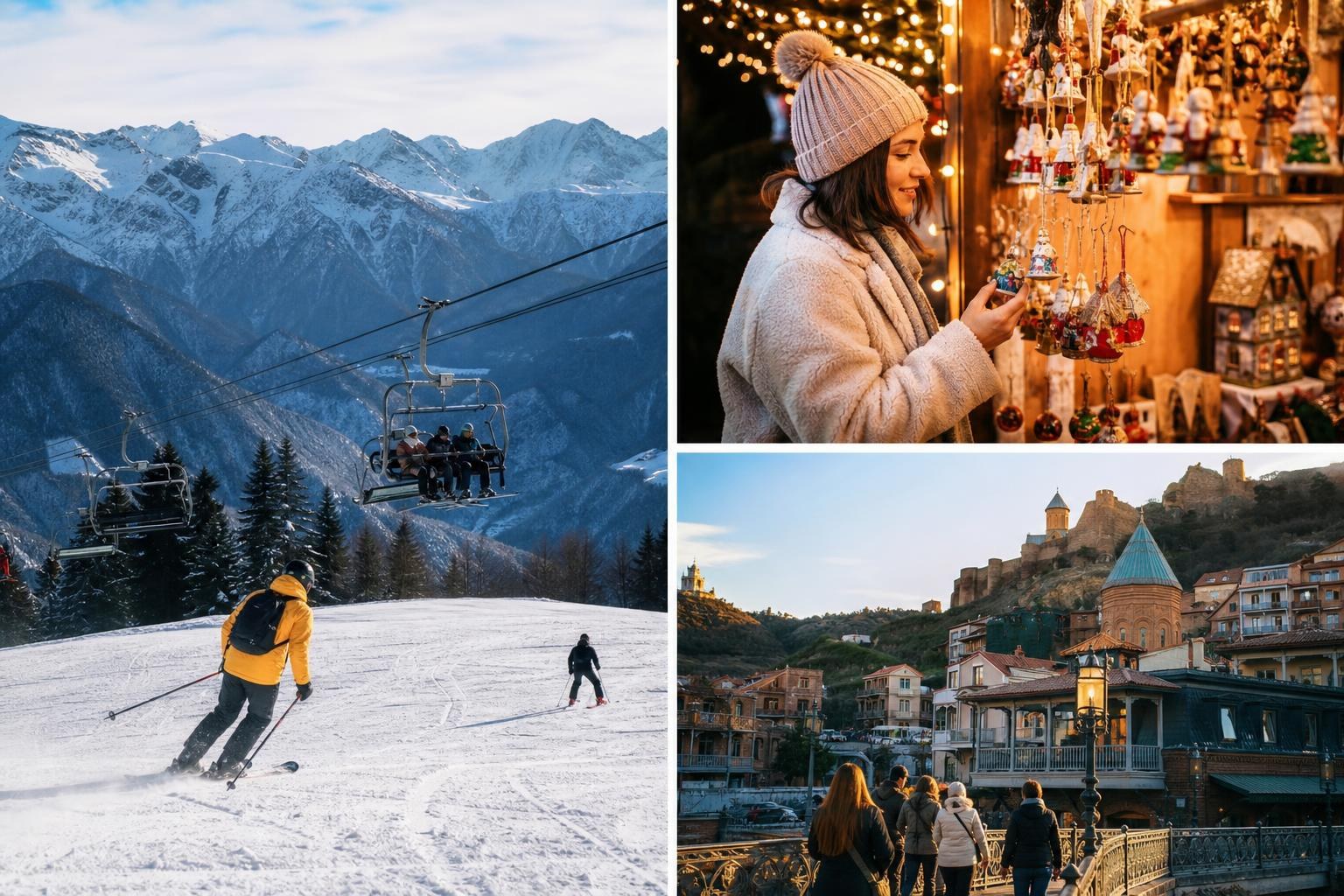
Georgia in December is a different kind of winter trip. Forget the overcrowded Alpine resorts and the predictable European Christmas markets you’ve seen a hundred times on Instagram. This small Caucasus country offers genuine powder, authentic holiday traditions rooted in centuries of Orthodox Christian culture, and prices that make your wallet breathe a sigh of relief. Whether you’re carving turns at 3,300 meters above sea level or sipping mulled wine in a Tbilisi courtyard strung with fairy lights, December here feels like a secret that most Western travelers haven’t caught onto yet. I’ve spent multiple winters in Georgia, and the combination of skiing and festive markets keeps pulling me back. Here’s everything you need to know to plan the trip right.
Embracing Winter Magic: Why Visit Georgia in December
December marks the true start of winter across Georgia, and the country transforms dramatically. The capital, Tbilisi, dresses itself in lights and decorations, while the mountain towns receive their first serious snowfall. What makes this month special is the overlap: ski season opens in the second half of December, and holiday festivities are already in full swing. You get both experiences in a single trip without needing to choose.
The tourism infrastructure has grown significantly in recent years. Georgia welcomed over 7 million international visitors in 2023, and winter tourism numbers continue to climb. December sits in a sweet spot: it’s busy enough that everything is open and running, but not so packed that you’ll fight for lift tickets or restaurant tables the way you might in January or February. Prices for accommodation tend to be 15-25% lower than peak ski season rates in late January.
There’s also a cultural dimension that sets December apart. Georgians celebrate New Year’s Eve with enormous enthusiasm, essentially treating it as the biggest holiday of the year. Orthodox Christmas falls on January 7, so December is all about the buildup: markets, concerts, family gatherings, and an almost electric sense of anticipation.
Weather Conditions and What to Pack
Tbilisi in December is cold but manageable, with daytime temperatures hovering around 3-7°C and nights dipping to -1°C or colder. Rain is possible, so a waterproof jacket matters. The mountains are a completely different story: Gudauri and other high-altitude resorts see temperatures well below -10°C, with wind chill making it feel even harsher.
Pack in layers. A good base layer, fleece mid-layer, and waterproof shell will cover most situations. For skiing, bring your own goggles and gloves if you’re particular about fit: rental gear in Georgia has improved but still isn’t on par with Western European standards. Thermal socks are non-negotiable. For city days, waterproof boots with decent grip handle Tbilisi’s occasionally icy sidewalks.
One thing people forget: sunscreen and sunglasses. At Gudauri’s elevation (2,196 meters at the base), UV exposure is intense even on cloudy days. I learned this the hard way my first December there, ending up with a ridiculous goggle tan by day three.
December Travel Data: Temperatures and Snowfall
Here’s a quick snapshot of what to expect across Georgia’s key winter destinations:
| Location | Avg. High (°C) | Avg. Low (°C) | Avg. Snowfall (cm) | Snow Days |
|---|---|---|---|---|
| Tbilisi | 5 | -1 | 2-5 | 3-5 |
| Gudauri | -4 | -12 | 40-60 | 15-20 |
| Bakuriani | -1 | -8 | 25-40 | 12-16 |
| Mestia | -3 | -10 | 35-55 | 14-18 |
The mountains typically receive reliable snowfall from mid-December onward, though early December can be hit-or-miss depending on the year. If skiing is your priority, aim for the second half of the month. The 2025-2026 season has followed this pattern closely, with most resorts opening between December 20 and 27.
Hitting the Slopes: Georgia’s Premier Ski Resorts
Georgia’s ski scene punches well above its weight. Four main resorts serve different types of skiers, from beginners to backcountry enthusiasts, and all of them cost a fraction of what you’d pay in the Alps or the Rockies. Lift ticket prices typically range from 30 to 55 GEL per day (roughly $11-$20 USD), which is almost absurdly cheap by international standards.
The infrastructure has seen major investment over the past decade. New lifts, improved grooming equipment, and better on-mountain facilities mean you’re not roughing it the way early adopters did ten years ago. That said, don’t expect the polish of Zermatt or Whistler. Part of Georgia’s charm is its rawness: fewer crowds, less commercialization, and a sense of adventure that’s hard to find at mainstream resorts.
Gudauri: The Hub for High-Altitude Skiing
Gudauri is Georgia’s flagship resort, sitting on the south-facing slopes of the Greater Caucasus about two hours north of Tbilisi. The ski area spans from 2,196 to 3,307 meters, giving it some of the most reliable snow conditions in the region. There are 22 runs totaling around 57 kilometers, served by modern gondolas and chairlifts.
What makes Gudauri special is the off-piste terrain. Freeride opportunities are exceptional, with wide-open bowls and relatively few avalanche-control restrictions compared to European resorts. Heli-skiing is available too, typically costing around $250-$400 per run depending on the operator. Daily ski passes run about 50-55 GEL for adults, making it one of Europe’s best value propositions for serious skiers.
The resort village itself is small but functional. You’ll find hotels ranging from budget guesthouses (60-80 GEL per night) to mid-range options (150-250 GEL), plus a handful of restaurants and bars. Don’t expect nightlife on par with Chamonix, but the après-ski scene has its own laid-back appeal: think local wine, khinkali dumplings, and conversations with a genuinely international crowd.
Bakuriani: Family-Friendly Runs and Winter Parks
Bakuriani sits at a lower elevation (1,700 meters) in the Lesser Caucasus, about three hours west of Tbilisi. It’s the country’s oldest ski destination, originally developed as a training base for Soviet Olympic athletes. Today it’s the go-to choice for families and intermediate skiers.
The Kokhta ski area anchors the resort, and the 2025-2026 season kicked off with Kokhta’s slopes opening on December 20, followed by other areas in the days after. Runs here are gentler and shorter than Gudauri’s, making them ideal for beginners and kids. A ski school operates throughout the season with English-speaking instructors available, though booking in advance is smart during holiday weeks.
Beyond skiing, Bakuriani offers cross-country trails, a small ice rink, and sledding areas that keep non-skiers entertained. The town has a more traditional Georgian feel than Gudauri, with local restaurants serving hearty mountain food: lobiani (bean-stuffed bread), ostri (spicy beef stew), and endless pots of tea. Accommodation is generally cheaper than Gudauri, with guesthouses starting around 40-50 GEL per night.
Mestia and Goderdzi: Off-the-Beaten-Path Powder
If you want to escape the crowds entirely, Mestia and Goderdzi are your best bets. Mestia, the capital of Svaneti in northwestern Georgia, offers a small but growing ski area called Hatsvali, with runs between 1,865 and 2,348 meters. The real draw here is the setting: medieval stone towers, dramatic mountain scenery, and a culture that feels distinctly different from the rest of Georgia. Svan traditions, language, and cuisine all have their own character.
Goderdzi, in the Adjara region near the Turkish border, is Georgia’s newest resort and receives the heaviest snowfall in the country, sometimes exceeding 3 meters by late December. The resort is still developing, with limited infrastructure, but for powder hunters willing to trade comfort for untouched snow, it’s a revelation. Getting there requires a winding mountain road from Akhaltsikhe, so a 4×4 vehicle or the local marshrutka (minibus) is essential.
Both destinations reward the extra effort with experiences you simply can’t replicate at more established resorts. Expect basic but warm hospitality, home-cooked meals, and the kind of quiet that city dwellers crave.
Festive Atmosphere: Christmas Markets and Holiday Traditions
Georgia’s December festivities blend European-style Christmas markets with deeply local traditions. The country’s Orthodox calendar means that Christmas itself falls on January 7, but the weeks leading up to New Year’s Eve (December 31) are when the real celebrations happen. Streets fill with vendors, concerts pop up in public squares, and the smell of roasting chestnuts and spiced wine drifts through every neighborhood.
What surprised me most was how organic it all feels. These aren’t corporate-sponsored events designed for tourists. Families shop for gifts, friends gather at outdoor stalls, and children crowd around puppet shows. The commercial element exists, but it hasn’t overwhelmed the genuine warmth of the season.
Tbilisi’s Christmas Village and Artisan Stalls
The main hub for December festivities is Tbilisi’s Christmas Village, typically set up on and around Rustaveli Avenue and First Republic Square. A large Christmas tree anchors the space, surrounded by wooden stalls selling handmade ornaments, enamel jewelry, felt toys, and Georgian ceramics. Local designers and artisans dominate: you’ll find pieces from makers like Tamuna Ingorokva’s accessories line and hand-painted cloisonné from Tbilisi workshops.
I always recommend spending at least one evening wandering the stalls. Prices are reasonable: handmade ornaments run 10-25 GEL, and small ceramic pieces start around 15 GEL. The atmosphere peaks after dark, when the lights come on and street musicians set up near the Opera House. Hot chocolate from a market vendor costs about 5-7 GEL, and it’s worth every tetri.
Beyond the main Christmas Village, smaller markets pop up in neighborhoods like Vera and Vake. The Dry Bridge flea market, which operates year-round, takes on a festive character in December with vintage Soviet-era decorations and antique finds mixed in among the usual paintings and silverware.
Traditional Winter Treats: Churchkhela and Mulled Wine
Georgian winter food deserves its own article, but a few items define the December market experience. Churchkhela, the candle-shaped walnut-and-grape-juice candy, hangs from every stall and makes a perfect edible souvenir. Each piece costs 2-4 GEL, and the quality varies: look for ones with a slightly soft exterior and a visible string of whole walnuts inside.
Mulled wine, or glintveini as Georgians call it (borrowed from German), appears at every market stall and café from early December. Georgian versions often use local Saperavi wine as a base, giving it a deeper, more tannic flavor than the sweeter European versions. A cup runs about 5-8 GEL. Pair it with gozinaki, a traditional New Year’s treat made from honey and toasted walnuts, and you’ve got the perfect December snack.
Street food options expand during the holidays too. Look for freshly baked shotis puri (traditional bread from a tone oven), lobiani, and kubdari, the Svan meat pie that’s practically a meal in itself. December is also prime season for tangerines from western Georgia, and you’ll see them piled high at every corner: sweet, fragrant, and practically free at 1-2 GEL per kilogram.
Beyond the Snow: Cultural Experiences in December
Skiing and markets are the headline acts, but Georgia in December offers plenty for travelers who want to dig deeper. The shorter days and cooler temperatures actually make it an ideal time for indoor cultural experiences that you might skip during summer’s long, hot days.
Museums are quieter in winter, and Tbilisi’s best ones deserve unhurried visits. The Georgian National Museum on Rustaveli Avenue houses gold artifacts from the Colchis civilization dating back 3,000 years. The Museum of Soviet Occupation, located in the same building, is small but powerful. Entry to both costs about 15 GEL.
Warming Up in the Sulfur Baths of Abanotubani
After a day on the slopes or walking through cold market stalls, the sulfur baths of Abanotubani feel like a reward you’ve earned. These natural hot springs have been central to Tbilisi’s identity for centuries, and the brick-domed bathhouses in the Old Town are both historic landmarks and fully functional spas.
A private room at Chreli Abano, one of the most popular bathhouses, costs 80-120 GEL per hour depending on room size. The experience includes a hot sulfur pool, cold plunge, and optional kisi scrub (a vigorous exfoliation with a rough wool mitt that leaves your skin feeling brand new). Budget bathhouses like the No. 5 public bath charge as little as 5 GEL for a communal session.
The water smells strongly of sulfur, which takes some getting used to, but the mineral content is genuinely therapeutic. After skiing Gudauri’s steep runs, an evening soak in these baths is the best recovery method I’ve found anywhere.
Celebrating the Orthodox Spirit and New Year’s Eve
New Year’s Eve is the biggest celebration of the Georgian calendar. Families gather for a supra, the traditional Georgian feast presided over by a tamada (toastmaster), and the table groans under dozens of dishes: satsivi (walnut-sauce chicken), badrijani (eggplant rolls), pkhali (vegetable pâtés), and of course, rivers of wine.
If you’re in Tbilisi on December 31, head to Rustaveli Avenue or Freedom Square for the public countdown. Fireworks light up the sky over the Mtkvari River, and the streets stay packed until the early morning hours. Restaurants and hotels host special New Year’s dinners, typically priced between 100-250 GEL per person including food and drinks.
The Orthodox dimension adds a layer that most Western travelers find fascinating. Churches hold special services throughout December, and the period leading up to January 7 is a time of fasting for observant Georgians. Visiting a church like Sameba (Holy Trinity Cathedral) during an evening service offers a glimpse into a living spiritual tradition, with chanting, incense, and candlelight creating an atmosphere that feels genuinely timeless.
Planning Your Winter Itinerary
A well-planned December trip to Georgia needs about 7-10 days to cover both skiing and city experiences without feeling rushed. Fly into Tbilisi’s Shota Rustaveli International Airport, where budget carriers like Wizz Air and direct flights from most major European cities keep airfare reasonable: round trips from London or Berlin often run €80-€150 if booked early.
Spend your first two days in Tbilisi exploring the markets, visiting Abanotubani, and adjusting to the time zone. Then head to Gudauri or Bakuriani for three to four days of skiing. The drive to Gudauri takes about two hours via the Georgian Military Highway, one of the most scenic mountain roads you’ll ever travel. Marshrutkas run daily from Tbilisi’s Didube station for about 15-20 GEL, or you can book a private transfer for 80-120 GEL. Download Bolt or Yandex Go for city taxis: rides within Tbilisi rarely exceed 10-15 GEL.
If time allows, tack on two days in Mestia for a completely different mountain experience. Vanilla Sky operates daily flights from Tbilisi to Mestia’s Queen Tamar Airport for about 65 GEL each way, saving you the long drive. Return to Tbilisi for New Year’s Eve celebrations, and you’ll leave Georgia with the kind of winter memories that ski-and-market trips to Austria or Germany simply can’t match: more authentic, more affordable, and far more surprising.