
Table of Contents
- Why February is the Perfect Month for Georgia
- Top Ski Resorts for Winter Sports Enthusiasts
- Thermal Baths and Wellness Retreats
- Comparing Top Winter Destinations in Georgia
- Cultural Experiences to Complement Your Trip
- Essential Travel Tips for a February Visit
February in Georgia feels like the country’s best-kept secret. While summer tourists crowd the cobblestone streets of Tbilisi and autumn visitors flock to Kakheti’s vineyards, the winter months offer something entirely different: snow-dusted peaks with surprisingly affordable skiing, centuries-old sulfur baths steaming against cold air, and mountain towns where you might be the only foreigner for miles. If you’re wondering where to go in Georgia in February for spas and ski adventures, the answer is practically everywhere. The country packs an absurd amount of geographic diversity into a territory smaller than South Carolina, meaning you can carve powder in the morning and soak in mineral-rich thermal waters by evening. The Georgian concept of “stumari ghvtisaa” – the guest is a gift from God – takes on a special warmth during winter, when guesthouse owners pile your table with khinkali and homemade chacha without being asked. This isn’t resort-style hospitality with a price tag attached; it’s genuine, sometimes overwhelming generosity that defines the culture. I’ve spent multiple Februaries exploring Sakartvelo’s winter offerings, and the combination of empty slopes, steaming baths, and ridiculously low prices makes it one of Europe’s most underrated cold-weather destinations.
Why February is the Perfect Month for Georgia
February hits a sweet spot that January and March can’t quite match. Snow coverage across the Greater and Lesser Caucasus ranges is at its peak, with most ski resorts reporting their deepest base layers of the season. Gudauri typically sees 2 to 3 meters of accumulated snow by mid-February, and Bakuriani’s trails stay consistently groomed through the month.
Prices tell the real story. Georgia’s tourism infrastructure has grown rapidly, with significant updates to accommodations and transport links across the country heading into 2026. Yet February remains shoulder season for most visitors, which means hotel rates in Tbilisi drop 20 to 30 percent compared to summer, and ski resort lodging costs a fraction of what you’d pay in the Alps. A decent guesthouse near Gudauri runs about 80 to 120 GEL per night (roughly $30 to $45), breakfast included.
The cultural calendar fills up during February too. Events and festivals run across the country throughout the month, from wine celebrations in the east to traditional supra feasts in mountain villages. The short days mean long evenings spent around tables, where a tamada (toastmaster) leads rounds of wine-fueled toasts that can stretch past midnight. These aren’t tourist performances – they’re how Georgians actually socialize during winter.
Weather-wise, expect daytime temperatures around 3 to 7°C in Tbilisi and well below freezing in the mountains. Rain is possible in the lowlands, but the ski regions stay reliably snowy. Pack layers and waterproof boots, and you’ll be comfortable everywhere.
Top Ski Resorts for Winter Sports Enthusiasts
Georgia’s ski scene has evolved dramatically over the past decade, but it still carries that raw, unpolished energy that European mega-resorts lost years ago. Lift lines rarely exceed ten minutes, the terrain is varied enough for beginners and experts alike, and a full day of skiing with equipment rental costs less than a single lift ticket at many Western European resorts.
Gudauri: High Altitudes and Vibrant Après-Ski
Gudauri sits at 2,196 meters on the south-facing slopes of the Greater Caucasus, about two hours north of Tbilisi along the Georgian Military Highway. The resort spans elevations from 1,990 to 3,279 meters, with 57 kilometers of marked runs served by modern gondolas and chairlifts. Lift ticket prices remain competitive compared to European alternatives, with a full day pass costing around 70 to 90 GEL ($26 to $34).
What makes Gudauri special is the freeride terrain. The backcountry above the resort is vast, relatively safe from avalanche risk when conditions are right, and almost entirely untracked. Heli-skiing operations run throughout February, offering drops onto virgin powder for around $150 to $200 per run – a price that would be laughable in Canada or Alaska.
The après-ski scene has matured considerably. A cluster of bars and restaurants along the main road serves craft beer, Georgian wine, and hearty mountain food. Try the lobiani (bean-stuffed bread) at any local spot – it’s the unofficial fuel of Georgian skiing. Accommodation ranges from budget hostels at 40 GEL per night to boutique hotels charging 300 GEL or more.
Bakuriani: Family-Friendly Slopes and Pine Forests
Bakuriani operates at a gentler pace. Located in the Borjomi-Kharagauli region at about 1,700 meters, this resort was originally developed as a Soviet-era training ground for Olympic athletes. Today it caters primarily to families and intermediate skiers, with wide, forgiving runs winding through dense pine forests.
The resort has three main ski areas: Kokhta, Didveli, and the newer Mitarbi zone. Didveli offers the most challenging terrain, with a gondola reaching 2,700 meters and some genuinely steep black runs. Kokhta is ideal for beginners, with gentle slopes and a ski school that charges about 60 GEL per hour for private lessons.
What I appreciate about Bakuriani is the town itself. Unlike Gudauri, which is essentially a purpose-built ski village, Bakuriani is a real Georgian town with a central market, local restaurants serving khachapuri for 5 GEL, and a narrow-gauge railway connecting it to Borjomi. That train ride through snow-covered gorges is worth the trip alone.
Mestia and Goderdzi: Off-the-Beaten-Path Powder
For skiers who want something wilder, Mestia and Goderdzi deliver. Mestia, the capital of Svaneti in northwestern Georgia, sits beneath the jagged peaks of Mount Ushba and Tetnuldi. The Tetnuldi ski resort opened its upper lifts in recent years, reaching 3,165 meters with long, sweeping runs and virtually no crowds. A day pass costs around 40 to 50 GEL.
Hatsvali, the smaller resort just above Mestia town, is perfect for a half-day session followed by an afternoon exploring Svaneti’s famous medieval defense towers. The region’s isolation means fewer tourists, but it also means the road from Zugdidi can be challenging in heavy snow. Flights from Tbilisi to Mestia’s Queen Tamar Airport operate several times weekly and cost about 65 GEL each way.
Goderdzi, in the Adjara highlands near Khulo, is Georgia’s newest ski resort and arguably its most atmospheric. Dense fog rolls through old-growth forest, the snowfall is among the heaviest in the country, and the treeline skiing feels almost Japanese in character. Infrastructure is still developing – expect basic guesthouses rather than hotels – but that’s part of the appeal.
Thermal Baths and Wellness Retreats
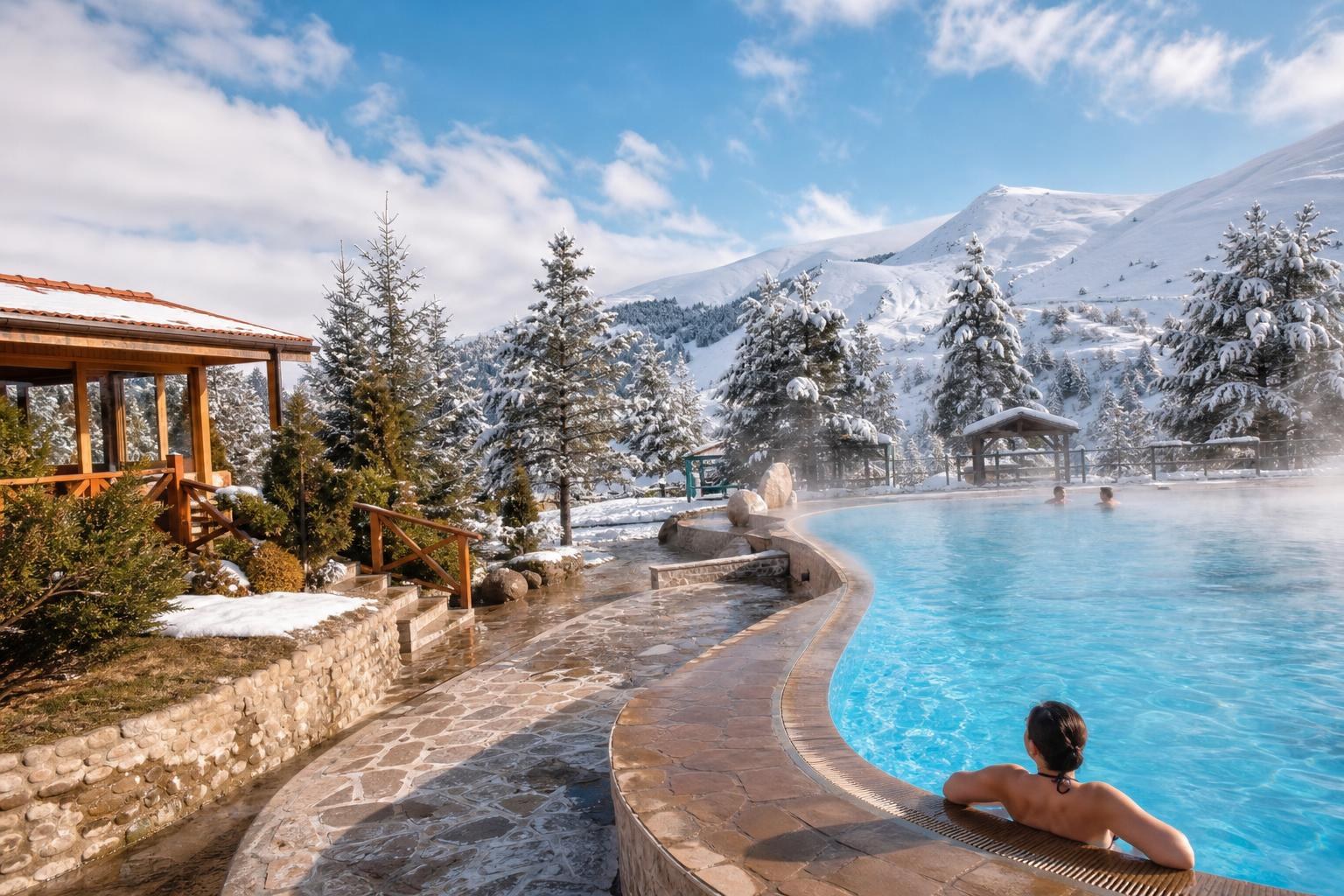
Georgia sits on one of the most geothermally active zones in the Caucasus, and its thermal bathing traditions stretch back centuries. February’s cold makes these hot springs feel particularly restorative, and the contrast between freezing mountain air and 40°C mineral water is genuinely addictive.
The Historic Sulfur Baths of Tbilisi
The Abanotubani district in old Tbilisi is where most visitors get their first taste of Georgian bathing culture. The brick-domed bathhouses cluster along the Tsavkisis-Tskali River, their sulfurous steam visible from blocks away. The water emerges naturally at around 37 to 46°C, rich in hydrogen sulfide and minerals that locals swear by for joint pain and skin conditions.
You have two options: public halls or private rooms. Public baths at Bathhouse No. 5 cost about 5 GEL ($1.90) and offer a communal experience that hasn’t changed much since the 19th century. Private rooms at places like the Royal Bath House or Chreli Abano range from 50 to 150 GEL per hour, depending on the room size and whether you add a kisi scrub (a vigorous exfoliation with a rough wool mitt that costs an extra 20 to 30 GEL). The kisi treatment is intense but leaves your skin feeling brand new.
Pushkin, Dumas, and countless other literary figures wrote about these baths. The experience is less about luxury and more about ritual: scrub, soak, repeat, then stumble out into the cold air feeling like a different person.
Borjomi: Healing Mineral Waters and Luxury Spas
Borjomi’s mineral water is famous across the former Soviet Union – you’ll find the distinctive green bottles in shops from Moscow to Almaty. The town itself, nestled in a forested gorge about four hours west of Tbilisi, has been a wellness destination since the 1800s when Russian imperial officers discovered its healing springs.
The Borjomi Central Park contains a free public spring where you can fill bottles with warm, naturally carbonated mineral water straight from the source. The taste is intensely mineral and slightly salty – an acquired preference, but one that grows on you. Several spa hotels in town offer full hydrotherapy programs using the local water, with week-long treatment packages starting around 1,500 GEL ($560) including accommodation and meals.
February is ideal for Borjomi because the summer crowds disappear entirely. The park’s trails, lined with snow-covered pines, make for beautiful winter walks, and the proximity to Bakuriani (just 25 minutes by car or that charming narrow-gauge train) means you can easily combine skiing and spa time.
Sairme: Mountain Wellness and Balneotherapy
Sairme is the destination most international visitors haven’t heard of, and that’s precisely why it’s worth mentioning. Located in the Imereti region at about 950 meters elevation, this small resort town specializes in balneotherapy: medical treatments using mineral water, mud, and thermal baths.
The Sairme resort complex offers four distinct types of mineral water, each emerging at different temperatures and mineral compositions. Doctors on staff create personalized treatment plans for digestive issues, respiratory conditions, and musculoskeletal problems. A consultation costs about 30 GEL, and individual treatments range from 15 to 50 GEL per session.
The setting is quietly stunning: dense forest, clean mountain air, and an almost complete absence of tourist infrastructure beyond the resort itself. It’s the kind of place where you check in for three days and emerge feeling genuinely rested rather than just entertained.
Comparing Top Winter Destinations in Georgia
Choosing between these destinations depends on what you prioritize. Here’s a practical comparison:
| Destination | Best For | Avg. Daily Budget (USD) | Travel Time from Tbilisi | Crowd Level |
|---|---|---|---|---|
| Gudauri | Serious skiing, freeride | $60-100 | 2 hours | Moderate |
| Bakuriani | Families, beginners | $40-70 | 3.5 hours | Moderate |
| Mestia/Tetnuldi | Adventure, off-piste | $50-80 | 8 hours (or 1-hour flight) | Low |
| Goderdzi | Tree skiing, solitude | $30-50 | 6 hours | Very low |
| Tbilisi Baths | Culture, quick soak | $20-40 | N/A | Moderate |
| Borjomi | Spa treatments, relaxation | $40-70 | 4 hours | Low |
| Sairme | Medical wellness | $35-60 | 4.5 hours | Very low |
The most popular combination among visitors is Gudauri for skiing plus Tbilisi’s sulfur baths, since the two are only two hours apart. But the more rewarding itinerary, if you have 10 days, runs from Tbilisi to Bakuriani, then Borjomi, and finally up to Mestia for a completely different mountain experience.
Budget-conscious travelers should note that Georgian domestic flights are remarkably cheap. Vanilla Sky and other carriers connect Tbilisi to Mestia and Batumi for under $25 each way, saving hours of mountain driving.
Cultural Experiences to Complement Your Trip
A February trip to Georgia shouldn’t be all slopes and soaking. The country’s cultural depth is staggering for its size, and winter strips away the tourist veneer to reveal something more authentic.
Tbilisi’s gallery scene is thriving, with spaces like the Museum of Modern Art and smaller galleries in the Vera district hosting rotating exhibitions throughout winter. The State Opera House runs a full season in February, with tickets starting at just 10 GEL for balcony seats. Wine bars in the old town pour natural qvevri wines by the glass for 8 to 15 GEL, and the conversations that unfold in these places – often with strangers who insist on buying your next round – are some of the best memories you’ll carry home.
In the mountains, February is a time for traditional celebrations. Svaneti’s communities maintain customs that predate Christianity, and winter festivals involve ancient songs, ritual foods, and gatherings that feel genuinely timeless. If you’re staying in a family guesthouse, ask about local events – your hosts will almost certainly invite you along.
Georgian cuisine deserves its own trip, honestly. Winter dishes lean heavy and warming: thick bean stews called lobio, cheese-filled breads, slow-cooked meat in walnut sauces. A full meal at a local restaurant rarely exceeds 25 GEL ($9), and the portions are enormous.
Essential Travel Tips for a February Visit
Getting around Georgia in February requires some planning. Roads to ski resorts are generally well-maintained, but carry snow chains if you’re driving. The Tbilisi-Gudauri highway is reliably plowed, but the cross pass near Jvari can close temporarily during heavy storms. Bolt and Yandex Go work well in Tbilisi and major towns for ride-hailing; download Google Translate’s offline Georgian language pack before you arrive, since English proficiency outside the capital remains limited.
Currency exchange is straightforward. ATMs are everywhere in cities, and most restaurants accept card payments. In smaller mountain towns, carry cash in Georgian Lari. The exchange rate in early 2026 hovers around 2.65 GEL to $1 USD.
Travel insurance with winter sports coverage is non-negotiable if you’re skiing, especially for off-piste activities. Georgian medical facilities in Tbilisi are decent, but mountain rescue and evacuation can be complicated. Several international policies cover heli-skiing and backcountry skiing for a modest premium.
For solo female travelers, Georgia is remarkably safe. Police are reliable and responsive, and violent crime against tourists is extremely rare. The main annoyance is occasional persistent attention from local men, which is generally harmless but can be tiresome. A firm “ara, madloba” (no, thank you) usually does the trick.
One last thing: don’t skip the marshrutka experience entirely. These minibuses connect every town in the country for almost nothing (Tbilisi to Borjomi costs about 15 GEL), and while they’re cramped and the drivers are terrifyingly fast, they’re also where you’ll meet the most interesting people. Someone will offer you tangerines. Accept them. That’s Georgia in February at its most genuine: cold outside, warm everywhere else.