
Table of Contents
- Overview of the Unified Payment System
- Using the Metromoney Card for Tourists
- Paying with Contactless Bank Cards
- Subscription Plans and Long-Term Passes
- How to Use Payment Methods Across Different Modes
- Essential Tips for Seamless Travel
Getting around Tbilisi is one of those things that sounds complicated until you actually do it. The city runs a surprisingly efficient network of metro trains, buses, cable cars, and minibuses, and the whole system hinges on a few simple payment methods that most visitors figure out within their first hour. But here’s the thing: there are enough quirks and recent changes that it’s worth understanding your options before you land. I’ve watched plenty of travelers fumble at metro turnstiles or argue with marshrutka drivers over exact change, and almost all of it could have been avoided with ten minutes of reading. So if you’re wondering how to pay for public transport in Tbilisi, this is the practical breakdown you need, covering cards, contactless payments, subscriptions, and the small details that actually matter when you’re standing at a bus stop in Didube at rush hour.
Overview of the Unified Payment System
Tbilisi’s public transport payment system has gone through several iterations over the past decade, but by 2026, the city has settled into a fairly streamlined setup. The core idea is simple: one card or one contactless payment method works across nearly all modes of transport, from the metro to the blue city buses to the aerial tramway. The system is managed by the Tbilisi Transport Company (TTC), which has been steadily modernizing infrastructure and pushing toward cashless operations.
The metro itself is undergoing a major overhaul. The Tbilisi Metro Modernization Project involves a commitment of between $200 million and $300 million to extend lines and ease overcrowding at major terminals. Part of that investment includes upgraded fare collection systems, which means the payment experience is getting smoother year over year.
A single ride on the metro or a city bus costs 1 GEL (roughly $0.37 USD at current exchange rates), and transfers within 90 minutes are free. That’s not a typo. You can hop from the metro to a bus to a cable car within an hour and a half and pay just once. It’s one of the cheapest urban transit systems in Europe.
The Metromoney Card vs. Tbilisi Transport Card
Two card names float around in guides and forums, and they cause real confusion. The Metromoney card is the older, widely recognized reloadable card that’s been in circulation for years. It’s a simple plastic card you load with credit and tap at validators. The Tbilisi Transport Card is a newer iteration tied to the same system but sometimes referenced separately in official communications.
In practice, they function identically for most riders. Both are contactless smart cards that work on metro turnstiles, bus validators, and cable car terminals. The Metromoney card has become the generic term that locals and expats use interchangeably, much like how people say “Kleenex” instead of “tissue.” If someone tells you to get a Metromoney card, they’re pointing you to the right thing.
One difference worth noting: some newer Tbilisi Transport Cards can be linked to the official TTC mobile app, allowing you to check your balance, view trip history, and top up remotely. The older Metromoney cards may not support all app features, though they still work perfectly fine at validators.
Comparison of Payment Methods and Pricing
Here’s a quick reference for the main ways to pay and what each costs:
| Payment Method | Cost per Ride | Transfer Window | Where It Works | Best For |
|---|---|---|---|---|
| Metromoney / Transport Card | 1 GEL | 90 min free transfers | Metro, buses, cable cars | Everyone (cheapest option) |
| Contactless Bank Card | 1 GEL | 90 min free transfers | Metro, most buses | Short-term visitors |
| Mobile Wallet (Apple/Google Pay) | 1 GEL | 90 min free transfers | Metro, most buses | Tech-savvy travelers |
| Cash | 1 GEL (exact change) | No free transfers | Marshrutkas only | Minibus riders |
| Monthly Subscription | 40 GEL | Unlimited rides | Metro, buses, cable cars | Residents and long stays |
The key takeaway from this table: if you’re staying more than a few days, get a card. If you’re passing through for a weekend, your contactless bank card or phone will work fine on most routes.
Using the Metromoney Card for Tourists
For anyone staying in Tbilisi longer than a day or two, the Metromoney card is the simplest and cheapest way to move around the city. It eliminates the need to carry small bills, removes the language barrier at marshrutka stops, and gives you access to free transfers that you won’t get with cash.
The card itself costs 2 GEL (non-refundable), plus whatever balance you load onto it. Most tourists load 5 to 10 GEL to start, which covers a solid number of rides. I’ve found that even during a full week of heavy sightseeing, including trips out to Mtskheta via bus, 15 GEL of loaded credit is more than enough if you’re also walking a lot, which you should be, because Tbilisi rewards walkers.
You can share a single card between two people if you’re traveling as a couple, though you’ll lose the free transfer benefit on the second tap (it registers as a new trip). For families, getting individual cards makes more financial sense.
Where to Buy and Top Up Your Card
Metromoney cards are available at every metro station in Tbilisi. Look for the ticket windows near the entrance, usually staffed by an attendant behind glass. You can also find them at some convenience stores and kiosks around the city, though availability outside metro stations can be hit or miss.
Topping up is straightforward. Inside metro stations, you’ll find yellow self-service machines that accept cash (Georgian Lari only, no coins smaller than 10 tetri). The interface has an English language option, and the process takes about 30 seconds: insert card, select amount, feed in bills, confirm. You can also top up at the staffed windows if the machines feel intimidating.
The TTC mobile app, available on both Google Play and Apple’s App Store, allows remote top-ups using a linked bank card. This is genuinely useful if you’re out in Vake or Saburtalo and realize your balance is low. The app also shows real-time bus locations and estimated arrival times, which makes it one of the most practical tools you can have on your phone in Tbilisi.
Refund Policy and Card Validity
Here’s where expectations need adjusting. The 2 GEL card fee is non-refundable. Period. You can get remaining balance refunded at metro station ticket offices, but only if you have more than 1 GEL on the card. In practice, most tourists just use up their balance and toss the card or pass it to another traveler.
Cards remain valid for a long time, typically several years, as long as they haven’t been physically damaged. If you visit Tbilisi regularly, keep your card. I’ve used the same one across multiple trips spanning two years with no issues. The magnetic strip and chip are surprisingly durable, even after being forgotten in jeans pockets and run through a washing machine (don’t recommend it, but it survived).
If your card stops working, metro staff can usually diagnose the problem and transfer your balance to a new card, though this process requires patience and possibly some hand-gesture communication if the attendant doesn’t speak English.
Paying with Contactless Bank Cards
Starting in 2023 and expanding through 2024 and 2025, Tbilisi rolled out contactless bank card readers across the metro and most city bus routes. By 2026, this is a fully viable way to pay for transit if you don’t want to bother with a dedicated transport card.
The fare is the same: 1 GEL per ride with 90-minute free transfers. You tap your bank card on the same validator where you’d tap a Metromoney card. The system recognizes it, deducts the fare, and you’re through. It works on Visa and Mastercard, and I’ve seen travelers use cards from banks in the US, UK, EU, and Turkey without issues.
One catch: your bank may charge a foreign transaction fee on each tap. These are typically 1-3% of the transaction amount, which on a 1 GEL fare is negligible, but it adds up if you’re making 6-8 trips a day. Check with your bank before relying on this method exclusively.
Visa, Mastercard, and Mobile Wallets
Both Visa and Mastercard contactless cards work at validators. American Express is not supported, so leave that one in your hotel. The validators accept standard NFC contactless signals, which means Apple Pay, Google Pay, and Samsung Pay all work as well.
I’ve personally tested Apple Pay on the metro and blue buses without a single failure, though I’ll add one caveat: make sure your phone’s NFC is active and your default payment card is set before you approach the turnstile. Fumbling with Face ID while a line of commuters builds behind you is not a great way to make friends.
Mobile wallets have one advantage over physical bank cards: they don’t trigger foreign transaction fees from most digital banks and fintech cards (Revolut, Wise, etc.). If you’re carrying a Wise card or similar, linking it to your phone’s wallet is the most cost-effective contactless option.
One limitation to keep in mind: contactless bank cards and mobile wallets do not work on marshrutkas. These minibuses remain cash-only in 2026, and that’s unlikely to change soon given that most are privately operated.
Subscription Plans and Long-Term Passes
If you’re living in Tbilisi, working remotely, or staying for a month or more, the subscription plans offered by TTC are genuinely worth considering. The monthly unlimited pass costs 40 GEL (about $15 USD) and covers the metro, city buses, and cable cars with no per-ride charges and no transfer limits.
To activate a subscription, you need a registered Metromoney or Tbilisi Transport Card. You can purchase the subscription through the TTC app or at metro station ticket offices. The pass activates on the date of purchase and runs for 30 calendar days.
There are also shorter-duration passes that pop up periodically, though availability varies. A 7-day pass has been offered at around 15 GEL during certain promotional periods, but it’s not always listed as a standard option. Check the app or ask at the ticket window for current offerings.
For context on how affordable this is: a monthly transit pass in Tbilisi costs roughly what you’d pay for two single rides on the London Underground. The city’s public transport network is one of the strongest arguments for Tbilisi as a base for digital nomads and long-term travelers. Pair the 40 GEL monthly pass with Bolt for occasional taxi rides (base fare around 3-5 GEL for short trips), and your total transportation budget for a month can stay under $30.
Students and pensioners in Georgia receive discounted or free passes, but these require Georgian ID documents, so they’re not applicable to most foreign visitors.
How to Use Payment Methods Across Different Modes
Tbilisi’s transport network includes the metro (two lines), city buses (blue buses operated by TTC), marshrutkas (yellow or white privately operated minibuses), cable cars, and even a funicular. Each mode has slightly different payment quirks, and knowing them in advance saves real headaches.
The general rule: your Metromoney card or contactless bank card works on anything operated by TTC. Marshrutkas are the exception, and they’re a significant one because they cover routes that buses don’t.
Metro and Blue Buses
The metro is the easiest system to use. You tap your card at the turnstile, the barrier opens, and you walk through. Both metro lines (Akhmeteli-Varketili and Saburtalo) use the same fare system. Inside the metro, transfers between lines at Station Square (Sadguris Moedani) are free and don’t require another tap.
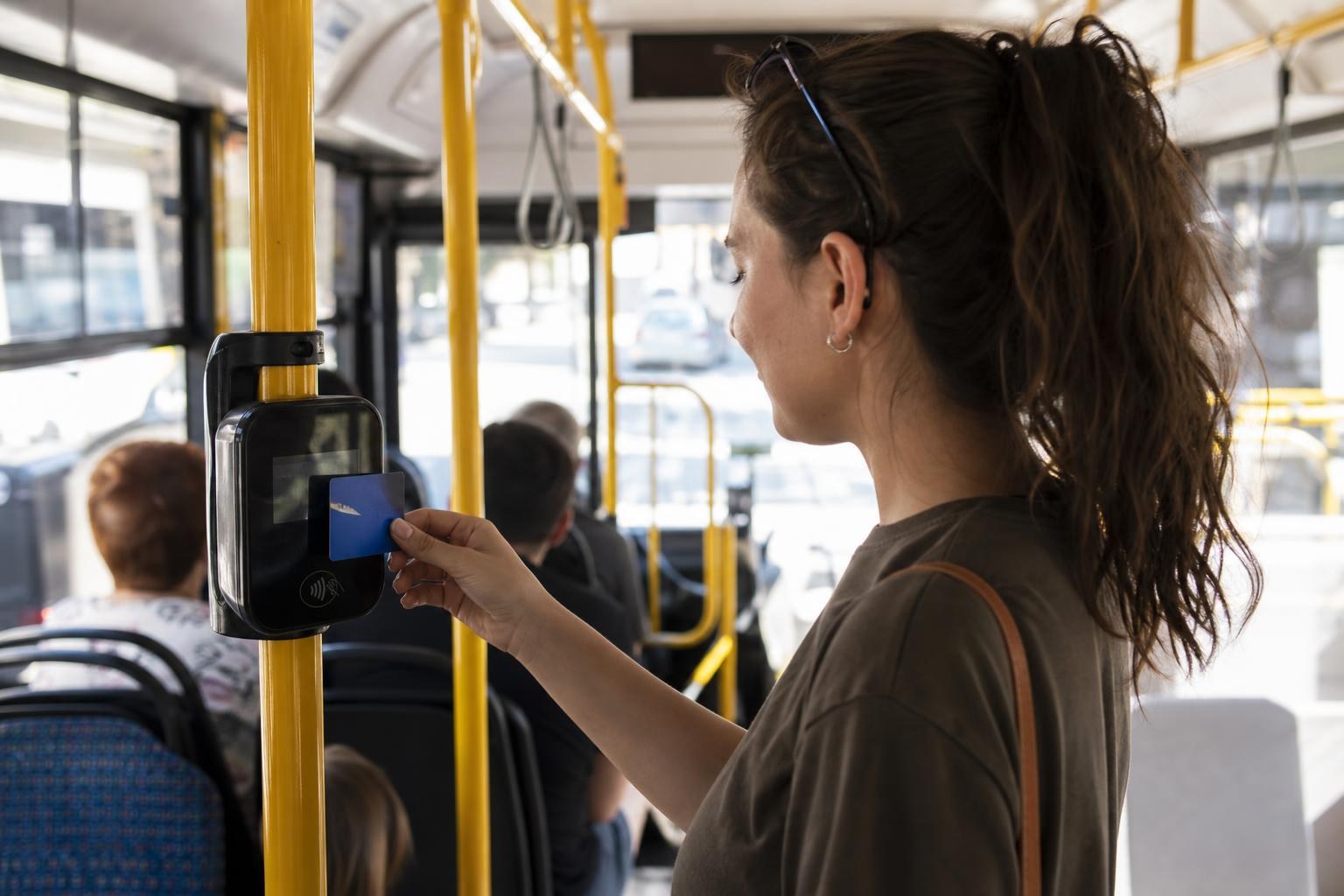
Blue city buses have validators installed near the front door. You board through the front, tap your card on the reader, and take a seat. If you’ve already tapped into the metro within the past 90 minutes, the validator will register your ride but charge 0 GEL for the transfer. A small screen on the validator shows your remaining balance after each tap, which is helpful for tracking spending.
Bus routes cover most of the city and extend to some suburban areas. The TTC app provides real-time tracking and route maps, which is essential because bus stop signage in English is inconsistent. Google Maps also shows Tbilisi bus routes and live arrival times with reasonable accuracy in 2026.
One practical tip: during rush hour (roughly 8-9:30 AM and 5-7 PM), both the metro and buses get packed. The Akhmeteli-Varketili line between Didube and Station Square is particularly crowded. If you’re carrying luggage or have mobility concerns, avoid these windows.
Marshrutkas
Marshrutkas are the wild card in Tbilisi’s transport system. These privately operated minibuses run fixed routes but don’t always follow strict schedules. They’re faster than city buses on some routes and cover areas where bus service is thin or nonexistent.
Payment on marshrutkas is cash only. The fare is typically 0.80 to 1 GEL depending on the route, and you pay the driver directly when you board or sometimes when you exit. Exact change is strongly preferred. Drivers rarely have change for a 20 GEL note, and asking them to break one while they’re merging into Tbilisi traffic is an experience you only need once.
Marshrutka stops are sometimes marked with small signs, but locals often flag them down anywhere along the route. To signal your stop, call out “gaacheret!” (stop, please) or just knock on the window or ceiling. There’s no validator, no card reader, no app integration. It’s analog transit, and it works.
Cable cars and the funicular accept Metromoney cards and contactless bank cards. The Rike-Narikala cable car, which takes you from Rike Park up to the Narikala Fortress area, costs 1 GEL and is included in the 90-minute transfer window. It’s both a transit option and a sightseeing experience, offering views over the Old Town that are hard to beat.
Essential Tips for Seamless Travel
A few things I wish someone had told me before my first trip through Tbilisi’s transit system:
- Always carry a few 1 GEL coins and small bills for marshrutkas. ATMs dispense 20 and 50 GEL notes, so break them at a grocery store or cafe before you need bus fare.
- Download the TTC app before you arrive. Set it up over hotel Wi-Fi so you can check bus arrivals and top up your card without hunting for a metro station.
- The 90-minute transfer window starts from your first tap, not from when you exit. If you tap into the metro at 10:00 AM, your free transfer window closes at 11:30 AM regardless of how long your metro ride took.
- Metro stations close at midnight and open at 6:00 AM. After midnight, your options are taxis (Bolt and Yandex Go are both widely used) or walking.
- Tbilisi is also planning a modern tram network, which could add another transit layer in the coming years. Keep an eye on announcements if you’re planning a longer stay.
- If your contactless card gets declined at a validator, don’t panic. Try again slowly, holding the card flat against the reader for a full second. Rapid taps sometimes fail.
- For trips outside Tbilisi (Mtskheta, Kazbegi, Kutaisi), intercity buses and marshrutkas at Didube and Ortachala stations use cash payment. The Metromoney system only covers Tbilisi city transport.
The single best piece of advice: get a Metromoney card on day one, load 10 GEL, and stop thinking about transit payments for the rest of your trip. It takes the friction out of every journey and lets you focus on what actually matters, which is exploring one of the most underrated cities in the region.
Paying for public transport in Tbilisi is genuinely one of the simplest parts of visiting Georgia. The system is cheap, increasingly modern, and designed to work even if you don’t speak a word of Georgian. Whether you tap a Metromoney card, wave your phone at a reader, or hand a crumpled lari note to a marshrutka driver, you’ll get where you need to go. Load up a card, download the app, and go get lost in the streets of Sololaki. That’s where the real Tbilisi starts.