
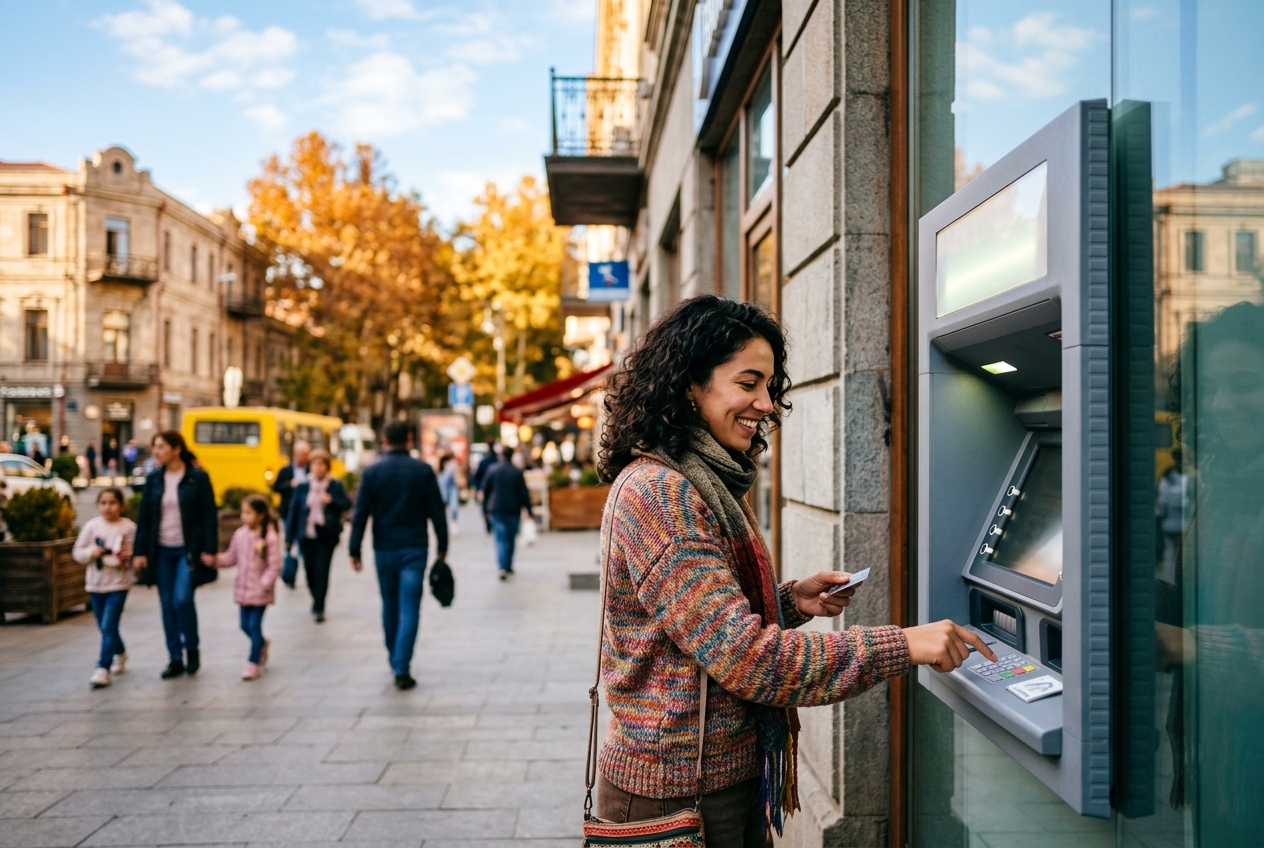
Georgia is one of those countries where your money stretches remarkably far, but only if you’re smart about how you access it. A plate of khinkali might cost 1.50 GEL, a bottle of excellent wine 15 GEL, and a night in a family-run guesthouse in Svaneti maybe 60 GEL. But if you’re carelessly pulling cash from the wrong ATMs, you could easily hemorrhage 5-10 USD per withdrawal in fees you never needed to pay. The question of which ATMs in Georgia charge the lowest withdrawal fees is one I hear from nearly every traveler planning their first trip to the Caucasus. The answer isn’t as simple as picking one bank, because the real cost depends on a chain of decisions: which ATM network you use, which currency you select on screen, what card you’re withdrawing with, and how much you take out at once. I’ve spent enough time in Tbilisi, Batumi, and the smaller towns between them to have strong opinions on this. Here’s what actually works.

Understanding the Georgian Banking Landscape for Tourists
Georgia’s banking sector is surprisingly modern for a country of roughly 3.7 million people. The post-Rose Revolution economic reforms that began after 2003 transformed the financial system, and today you’ll find ATMs even in small towns like Mestia, Sighnaghi, and Stepantsminda. But not all ATMs are created equal, and the distinction between bank-operated and independent machines matters enormously for your wallet.
Major Commercial Banks vs. Independent ATM Operators
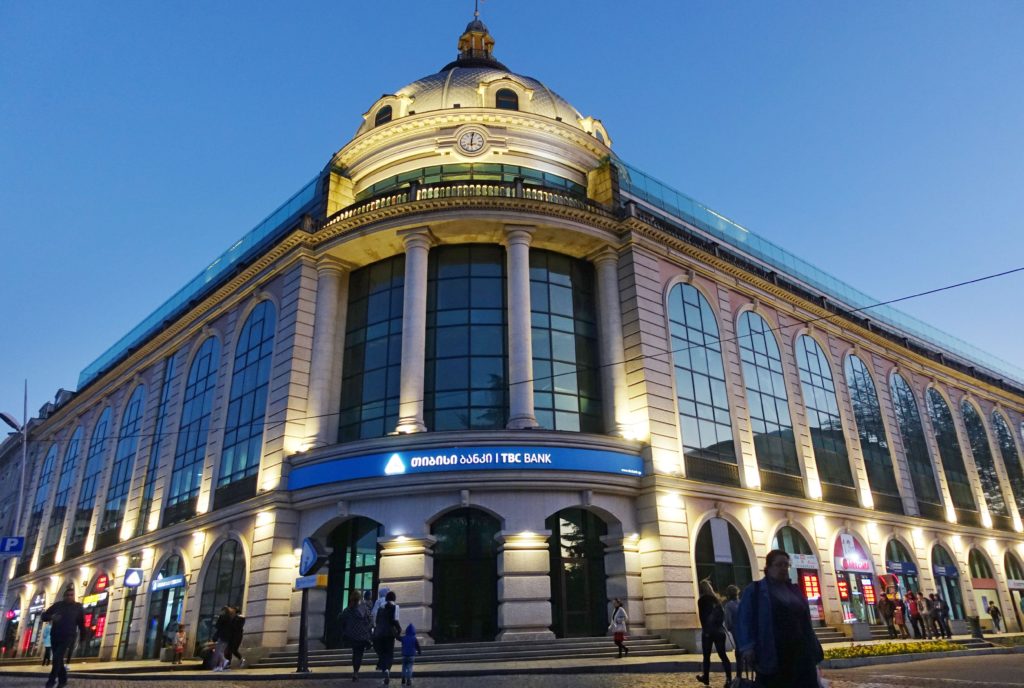
The Georgian ATM market is dominated by three major commercial banks: TBC Bank, Bank of Georgia (commonly called BOG), and Liberty Bank. Together, these three operate the vast majority of ATMs you’ll encounter across the country. Their machines are generally well-maintained, stocked with cash, and located in convenient spots: metro stations, shopping malls, airport terminals, and busy intersections.
Then there are independent ATM operators, which are far less common in Georgia than in, say, Thailand or Mexico. You might occasionally stumble upon a white-label machine in a hotel lobby or tourist-heavy area, and these tend to charge higher surcharges. The good news is that Georgia hasn’t been overrun by the predatory independent ATM companies that plague some tourist destinations. Stick to bank-branded machines and you’re already ahead.
One thing to understand: the fee you pay at a Georgian ATM is typically just one piece of the puzzle. Georgian banks themselves often charge foreign cardholders a flat fee per withdrawal (usually 1-3 GEL, which is under 1 USD). The bigger hit usually comes from your own bank back home, in the form of foreign transaction fees and unfavorable exchange rates. This is why your choice of travel card matters just as much as your choice of ATM.
Currency Options: GEL vs. USD and EUR Withdrawals
Most Georgian ATMs, particularly those from TBC and BOG, give you the option to withdraw in Georgian Lari (GEL), US Dollars, or Euros. This is where many travelers make their first expensive mistake.
Always withdraw in GEL. If you select USD or EUR, you’re almost certainly triggering Dynamic Currency Conversion (more on that below), which means the ATM operator sets the exchange rate rather than your bank. That rate is consistently worse, sometimes by 3-5%. The only scenario where withdrawing foreign currency might make sense is if you’re heading to a neighboring country like Armenia or Turkey the next day and need dollars for the border crossing. Otherwise, GEL is the only sensible choice.
The current exchange rate hovers around 2.7 GEL to 1 USD, though this fluctuates. Georgian Lari is the only currency you need for daily expenses. Street vendors, marshrutka drivers, and rural guesthouses all deal in Lari. Even in Tbilisi’s tourist corridor along Rustaveli Avenue, GEL is king.
Top Banks in Georgia with Zero or Low Withdrawal Fees
Not all Georgian bank ATMs charge the same fees to foreign cardholders. The differences are small in absolute terms but add up over a multi-week trip. Here’s what I’ve found through personal experience and corroborated by other long-term travelers.
TBC Bank: Coverage and Fee Structures
TBC Bank is Georgia’s largest bank by market share and has the most extensive ATM network in the country. You’ll recognize their machines by the bright blue branding. In Tbilisi alone, there are hundreds of TBC ATMs, and even in smaller cities like Kutaisi, Zugdidi, and Telavi, you’ll rarely walk more than a few minutes without spotting one.
For foreign Visa and Mastercard holders, TBC ATMs typically charge a withdrawal fee of around 1-2 GEL (roughly 0.40-0.75 USD). This is among the lowest ATM-side fees you’ll find in the country. TBC machines also have a relatively high single-withdrawal limit, often allowing up to 1,000-2,000 GEL per transaction depending on the machine and your card’s daily limit.
| Bank | Typical ATM Fee (Foreign Cards) | Max Single Withdrawal | Network Size | DCC Prompt |
|---|---|---|---|---|
| TBC Bank | 1-2 GEL | 1,000-2,000 GEL | Largest | Yes (decline it) |
| Bank of Georgia | 1-3 GEL | 1,000-1,500 GEL | Second largest | Yes (decline it) |
| Liberty Bank | 0-2 GEL | 800-1,500 GEL | Medium | Sometimes |
| BasisBank | 0-1 GEL | 800-1,000 GEL | Small | Rarely |
TBC machines are reliable and rarely out of service. In my experience, the only time I’ve found empty TBC ATMs was during the January holiday period when half of Tbilisi seems to be withdrawing cash simultaneously. Their interface is available in Georgian, English, and Russian.
Bank of Georgia (BOG): Accessibility and Costs
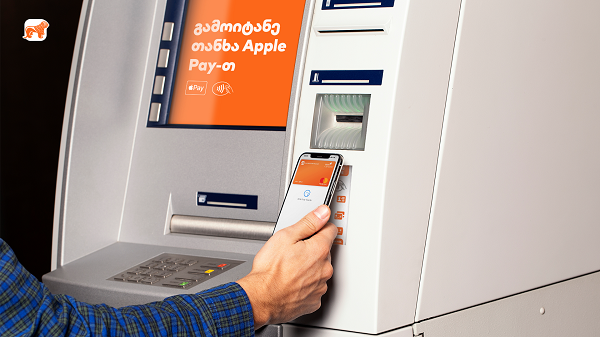
Bank of Georgia is the second-largest player and is practically interchangeable with TBC in terms of coverage. Their ATMs are marked with distinctive orange branding. BOG ATMs charge foreign cardholders a slightly variable fee, typically 1-3 GEL per withdrawal. The exact amount can depend on the specific ATM location and the card network you’re using.
BOG has a particularly strong presence in airports and transit hubs. You’ll find their machines at Tbilisi International Airport, Kutaisi Airport, and major bus stations. One advantage of BOG is their “smart ATMs” in larger branches, which accept both chip and contactless transactions, making them compatible with a wider range of international cards.
Where BOG edges ahead of TBC for some travelers is in their partnership with certain international bank networks. If your home bank is part of the Global ATM Alliance or a similar reciprocal network, you might find reduced or waived fees at BOG machines. Check with your bank before traveling.
Liberty Bank and BasisBank: Hidden Gems for Travelers
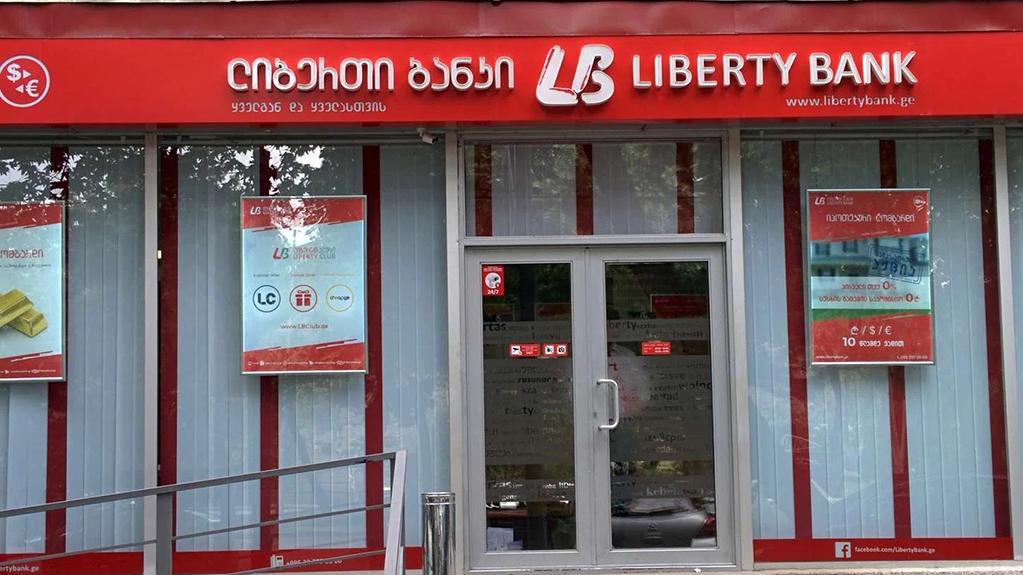
Liberty Bank is state-owned and has a strong presence in rural areas and smaller towns where TBC and BOG might have fewer machines. If you’re trekking in Tusheti, visiting the cave monasteries of David Gareja, or exploring the less-touristed Racha region, Liberty Bank ATMs are sometimes your only option.
The pleasant surprise is that Liberty Bank often charges lower fees to foreign cardholders than its bigger competitors, sometimes nothing at all. I’ve made withdrawals at Liberty Bank machines in Batumi and Akhaltsikhe with zero ATM-side fee showing up on my statement. Your mileage may vary depending on your card issuer, but it’s worth trying their machines first.
BasisBank is the smallest of the four but deserves mention. Their ATMs are concentrated in Tbilisi and a few other cities, and they consistently charge the lowest fees I’ve encountered: often 0-1 GEL. The trade-off is limited availability. You won’t find BasisBank ATMs in remote areas, and even in Tbilisi, they’re far less common than TBC or BOG. Think of BasisBank as a bonus option when you happen to walk past one, not something to plan your cash strategy around.
How to Avoid Dynamic Currency Conversion (DCC) Traps
This is the single most important section of this article. Dynamic Currency Conversion is the mechanism by which ATMs offer to convert your withdrawal into your home currency “for your convenience.” It is never convenient. It is always expensive.
Here’s how it works: you insert your card, select 500 GEL, and the screen shows you a message like “We can convert this to 185 USD for you. Accept this rate?” The exchange rate shown will be 3-5% worse than the interbank rate. If you press “accept” or “yes,” the ATM operator pockets that margin. Over a three-week trip with five or six withdrawals, DCC can cost you 30-50 USD in hidden conversion fees.
Both TBC and BOG ATMs present DCC prompts to foreign cardholders. The screen language varies, but the correct action is always the same: decline the conversion and choose to be charged in the local currency (GEL). The exact button might say “Continue without conversion,” “Decline conversion,” or simply present the GEL amount as one option and your home currency as another. Always pick GEL.
Metro Atlanta has consistently held the top spot for the highest average ATM fees in the U.S. for five consecutive years, which gives you some perspective on how fees can vary wildly by location. Georgia the country, thankfully, is far cheaper than Georgia the U.S. state when it comes to ATM costs. But DCC is the great equalizer: it can make a cheap Georgian ATM just as expensive as a predatory machine in an American airport.
Some travelers have reported that certain ATM screens in Tbilisi are designed to be deliberately confusing, with the DCC option pre-selected or the “decline” button made smaller. Take your time. Read the screen carefully. If you accidentally accept DCC, you can sometimes cancel the transaction and start over, though this doesn’t always work.
Strategic Tips for Minimizing Foreign Transaction Costs
Finding a low-fee ATM is only half the battle. The other half is what’s happening on your bank’s end. Your home bank’s foreign transaction fee and exchange rate markup often dwarf whatever the Georgian ATM charges.
Using Neobanks Like Revolut or Wise in Georgia
If you’re still traveling with a traditional bank debit card that charges 1-3% foreign transaction fees plus a flat ATM surcharge, you’re leaving money on the table. Neobanks have fundamentally changed the math for international travelers.
Revolut is extremely popular among travelers in Georgia, and for good reason. The free plan allows up to 200 GBP (or equivalent) in fee-free ATM withdrawals per month, with no foreign transaction markup on card payments during weekday business hours. The paid plans increase the ATM limit. I’ve used Revolut at TBC and BOG ATMs across Georgia and the only fee I’ve paid was the 1-2 GEL ATM-side charge.
Wise (formerly TransferWise) offers a similar proposition with its multi-currency debit card. Wise charges a small conversion fee (typically 0.35-0.6% for GEL) but gives you the real mid-market exchange rate, which usually works out cheaper than a traditional bank. Wise also lets you hold GEL in your account if you convert before withdrawing, potentially saving even more.
A few practical notes for using these cards in Georgia:
- Both Revolut and Wise cards work at all major Georgian bank ATMs
- Contactless payments are widely accepted in Tbilisi, Batumi, and Kutaisi, less so in rural areas
- Always carry some cash as a backup, especially outside major cities
- Notify your neobank of travel plans if required, though most don’t need this anymore
Optimal Withdrawal Amounts to Balance Fees
Here’s a principle that sounds obvious but many travelers ignore: if you’re paying a flat fee per withdrawal (whether from the Georgian ATM or your home bank), fewer, larger withdrawals are always cheaper than frequent small ones.
If TBC charges 2 GEL per withdrawal and your bank charges 3 USD per international ATM transaction, each withdrawal costs you roughly 4 USD total. Withdrawing 100 GEL five times costs you 20 USD in fees. Withdrawing 500 GEL once costs you 4 USD. Same amount of cash, wildly different fee totals.
The sweet spot for most travelers is withdrawing 500-1,000 GEL at a time, depending on your daily spending and how comfortable you are carrying cash. Georgia is generally very safe, even by European standards, so carrying a few hundred Lari isn’t the risk it might be elsewhere. A 500 GEL withdrawal covers roughly 4-5 days of moderate spending for a solo traveler: accommodation, food, transport, and some activities.
One exception: if you’re using a neobank with fee-free withdrawals up to a monthly cap, you might actually want to make smaller, more frequent withdrawals to avoid exceeding the free limit in a single transaction. With Revolut’s free plan, for instance, spreading your withdrawals across the month keeps you under the 200 GBP equivalent ceiling.
ATM Safety and Location Reliability Across Georgia
Georgia is one of the safest countries I’ve traveled in, and ATM-related crime is extremely rare. Tbilisi regularly ranks among the safest capital cities in Europe for tourists, and the police (while sometimes overzealous about traffic enforcement) are generally reliable and helpful. Solo female travelers consistently report feeling safe using ATMs at all hours in the major cities.
That said, common sense applies. Use ATMs in well-lit, populated areas. Bank branch ATMs during business hours are the safest option. Avoid the rare standalone machine in an empty alley, though honestly, I’ve never encountered one in Georgia. The machines inside shopping centers like Tbilisi Mall, East Point, and Galleria are convenient and secure.
In terms of reliability, ATM availability drops significantly once you leave the main tourist trail. In Tbilisi, Batumi, and Kutaisi, you’ll never struggle to find a working machine. In Mestia, Ushguli, Kazbegi (Stepantsminda), and Tusheti, options thin out considerably. Mestia has a few ATMs from TBC and Liberty Bank, but they sometimes run out of cash on busy summer weekends when the town fills with hikers. Stepantsminda has a couple of machines near the main square, but don’t count on them after a holiday weekend.
My rule of thumb: withdraw enough cash in the last major city before heading into remote areas. If you’re driving the Georgian Military Highway from Tbilisi to Kazbegi, pull cash in Tbilisi. If you’re heading to Svaneti from Kutaisi, stock up in Kutaisi. If you’re doing the Tusheti road from Alvani, there’s a Liberty Bank ATM in Alvani, but I wouldn’t bet my trip on it being stocked.
For card payments, Tbilisi is increasingly cashless. Most restaurants, cafes, and shops accept Visa and Mastercard. Batumi is similar. But the moment you step into a village, a marshrutka, or a roadside churchkhela stand, cash is the only option. The generational divide matters here too: younger Georgians in urban areas are comfortable with digital payments and even use local apps like TBC’s own mobile platform, while the older generation, especially in rural areas, deals exclusively in cash.
Getting the Most from Every Lari
The bottom line for ATM fees in Georgia is refreshingly simple. Stick to bank-branded machines from TBC, BOG, Liberty, or BasisBank. Always decline Dynamic Currency Conversion and withdraw in GEL. Pair a neobank card from Revolut or Wise with larger, less frequent withdrawals to minimize per-transaction costs. And stock up on cash before heading into the mountains.
Georgia rewards travelers who plan just a little bit ahead. The fees you save by making smart ATM choices won’t change your life, but they’ll buy you an extra bottle of Saperavi, another plate of khachapuri, or a taxi ride to that monastery you almost skipped. In a country where hospitality is practically a religion, where the word for guest, stumari, shares its root with “gift from God,” it feels right to spend your money on experiences rather than bank fees.