
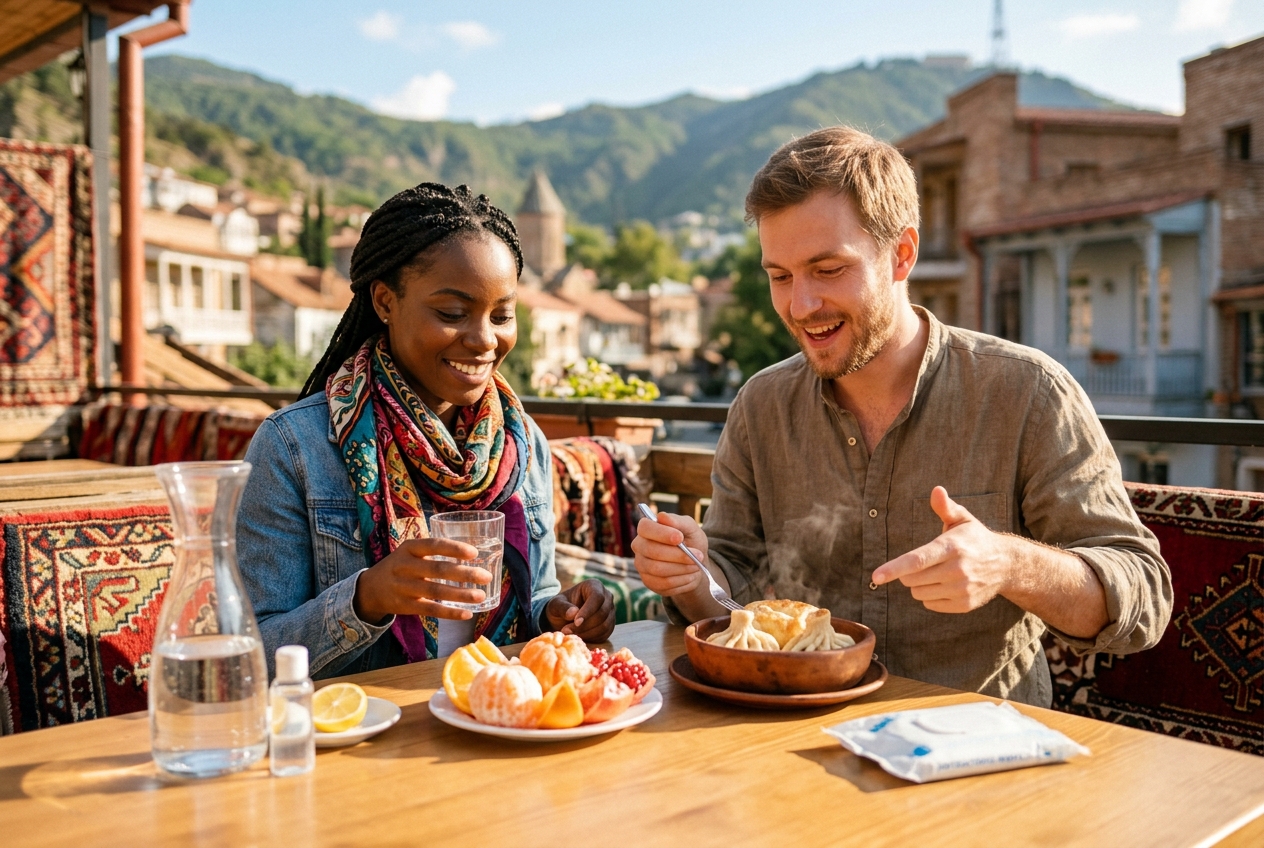
Georgia is one of those countries that wins you over through your stomach. The food is extraordinary: khinkali dumplings bursting with broth, cheese-filled khachapuri in every regional variation, walnut-laced salads, and wine poured from clay qvevri vessels that have been underground for months. But that same culinary richness can catch travelers off guard. Stomach bugs and traveler’s diarrhea are a real concern in Georgia, not because the country is unsanitary, but because your body simply isn’t adapted to the local water, the generous use of oil and spice, or the sheer volume of food that Georgian hospitality demands you consume. Traveler’s diarrhea affects 30% to 70% of travelers within a two-week period, depending on the destination and season, and Georgia’s combination of rich cuisine, variable water infrastructure, and a culture that practically insists you eat until you can’t move places it squarely in the zone where preparation matters. I’ve spent considerable time traveling through Georgia, from Tbilisi’s buzzing restaurant scene to remote Tusheti villages accessible only by dirt roads, and I’ve learned a few things the hard way. Here’s what actually works to keep your gut healthy while you enjoy everything this country has to offer.

Understanding Common Causes of Gastric Distress in Georgia
Before you can prevent stomach trouble, it helps to know what causes it. Georgia presents a specific combination of risk factors that differs from, say, Southeast Asia or sub-Saharan Africa. The threats here are less about dangerous pathogens and more about your digestive system encountering unfamiliar bacteria, heavy food, and inconsistent water treatment, all at once.
The Role of Local Tap Water and Infrastructure
Tbilisi’s tap water is generally considered safe to drink, and many locals drink it daily without issue. The city sources its water from reservoirs and treats it to modern standards. But “safe for locals” and “safe for travelers” aren’t the same thing. Your gut flora is calibrated to your home water supply, and even mildly different mineral content or bacterial profiles can trigger loose stools or cramping during your first few days.
Outside the capital, the picture changes significantly. In Kutaisi, Batumi, and smaller cities, water infrastructure varies by neighborhood. Some areas have aging Soviet-era pipes that can introduce contaminants between the treatment plant and your faucet. Rural areas, particularly in Svaneti, Tusheti, and parts of Kakheti, often rely on local springs or well water with no formal treatment. I’ve stayed in guesthouses in Upper Svaneti where the water came directly from a mountain stream, and while the host family had been drinking it for decades, my system was not prepared for whatever microorganisms came along for the ride.
The general rule: if you’re outside Tbilisi and unsure of the source, treat all tap water as suspect.
Rich Georgian Cuisine: Oil, Walnuts, and Spices
Not every stomach issue in Georgia comes from bacteria. A huge portion of traveler gastric distress is simply dietary shock. Georgian cooking relies heavily on sunflower oil, butter, and rendered fat. A single supra (traditional feast) can involve five to ten courses, each more oil-rich than the last. Lobio (bean stew), badrijani (fried eggplant rolls with walnut paste), and fried potatoes are staples, and they hit hard if your usual diet is lighter.
Walnuts are everywhere: ground into sauces, stuffed into vegetables, folded into desserts. They’re high in fat and fiber, and in large quantities, they can cause bloating and diarrhea even in people with iron stomachs. Combine that with generous portions of fresh herbs like cilantro, tarragon, and fenugreek (locally called utskho suneli), and you have a recipe for digestive overload. The food isn’t the enemy here, but pacing yourself is essential, especially during your first few days.
Safe Hydration Strategies for Travelers
Staying hydrated is critical, particularly if you’re hiking in the Caucasus mountains or visiting Georgia during the hot summer months. But how you hydrate matters just as much as how much you drink.
Bottled Water vs. Natural Springs
Bottled water is cheap and widely available throughout Georgia. Borjomi, the famous mineral water, is a national treasure and costs about 1-2 GEL (roughly $0.40-$0.75) for a half-liter bottle in shops. Nabeghlavi is another popular brand with a lighter mineral profile. Both are perfectly safe.
| Water Option | Safety Level | Cost | Notes |
|---|---|---|---|
| Tbilisi tap water | Generally safe | Free | May cause mild adjustment issues |
| Bottled water (Borjomi, Nabeghlavi) | Safe | 1-2 GEL | Widely available everywhere |
| Mountain springs (marked) | Usually safe | Free | Locals drink from these regularly |
| Unmarked rural water sources | Variable | Free | Avoid unless confirmed safe |
| Restaurant tap water | Variable | Free | Ask if it’s filtered |
Natural springs are part of Georgian culture. You’ll see locals filling jugs from roadside springs, especially along mountain highways. Many of these springs are well-known and tested, and some have been used for centuries. The sulfur springs in Borjomi-Kharagauli National Park, for instance, are famous. That said, I’d recommend sticking to springs that locals actively use and that show signs of regular maintenance. A random trickle of water from a pipe on a mountain road is a different story.
Navigating Ice and Unwashed Raw Produce
Ice in Tbilisi restaurants is almost always made from filtered or bottled water, so you don’t need to refuse every cold drink. In smaller towns and rural guesthouses, it’s worth asking. The phrase “gapiltrul ts’qals ikenebt?” (do you use filtered water?) will get you a straight answer, though in most rural settings, Google Translate’s offline Georgian pack is your best friend for communication.
Raw produce is a bigger concern. Georgian salads are wonderful: sliced tomatoes and cucumbers with fresh herbs are served at nearly every meal. In restaurants, these are typically washed with clean water. At roadside stalls and markets, especially in places like the Deserter’s Bazaar in Tbilisi or rural village markets, produce may have been rinsed with tap water or not washed at all. Peel what you can, and carry a small bottle of vegetable wash or diluted vinegar for situations where you’re preparing your own food.
Dining Out Safely: From Khinkali to Street Food
Georgian food culture revolves around eating out, sharing meals, and trusting the cook. That trust is usually well-placed, but a few smart choices can keep your trip on track.
Selecting Reputable Restaurants and Cafes
Tbilisi’s restaurant scene has exploded in the past decade, and food safety standards in popular establishments are generally good. Look for places with high turnover: a busy khinkali house where dumplings are made to order is far safer than a quiet restaurant where food might sit. Machakhela, Pasanauri, and Shemoikhede Genatsvale are chain-style restaurants that maintain consistent quality, and they’re a reliable baseline when you’re unsure.
In smaller cities and towns, guesthouses often serve the best (and safest) food because it’s cooked fresh for a small number of guests. I’ve had some of my best meals in Georgia at family-run guesthouses in Sighnaghi and Mestia, where the host prepared everything that morning from their own garden. The personal pride in the cooking translates directly to food safety.
Street food requires more caution. Tbilisi’s street food is generally fine: churchkhela (walnut candy), fresh bread from tone ovens, and roasted chestnuts are all low-risk. But meat-based street food, particularly in hot weather, deserves scrutiny. If the vendor doesn’t have refrigeration and the meat has been sitting out, skip it.
Handling High-Risk Foods: Unpasteurized Dairy and Meat
Georgia has a thriving artisanal dairy culture, and unpasteurized cheese is everywhere. Sulguni, imeruli, and fresh goat cheese sold at markets are typically made from raw milk. For most healthy adults, this is fine, and the cheese is incredible. But if you have a sensitive stomach or compromised immune system, stick to cheese from established brands sold in supermarkets like Goodwill, Carrefour, or Nikora, where pasteurization standards are more consistent.
Meat preparation varies widely. In cities, restaurants generally handle meat safely. In rural areas, particularly during festivals or family gatherings, meat might be prepared outdoors with less attention to temperature control. Mtsvadi (Georgian barbecue) cooked over grapevine embers is usually safe because the high heat kills bacteria, but pre-marinated meats that have been sitting at ambient temperature are riskier. When in doubt, eat meat that’s been cooked thoroughly and served hot.
Essential Hygiene Practices for the Georgian Road
Half the battle against stomach bugs is what happens before food enters your mouth. This is especially true in Georgia, where long travel days, limited facilities, and adventurous itineraries can make basic hygiene challenging.
Handwashing and Sanitization in Remote Areas
Georgian cities have public restrooms with soap and running water, though quality varies. Tbilisi’s metro stations and major attractions usually have functional facilities. Rural Georgia is a different matter. On the road between Tbilisi and Tusheti, for example, you might drive four to six hours without encountering a proper restroom. Roadside stops often consist of a basic outhouse with no running water.
Carry alcohol-based hand sanitizer (at least 60% alcohol) and use it before every meal and snack. Wet wipes are equally important for situations where your hands have been touching shared surfaces: marshrutka (minibus) handles, shared taxi door handles, or hiking trail ropes. I keep a small kit in my daypack at all times: sanitizer, wet wipes, and a few ziplock bags for waste.
If you’re trekking in areas like Tusheti or the Truso Valley, consider packing a portable water filter like a Sawyer Squeeze or LifeStraw. These weigh almost nothing and let you safely drink from streams, which is a significant advantage on multi-day hikes where carrying enough bottled water isn’t practical.
Prevention and First Aid Kit Essentials
The best approach to avoiding traveler’s diarrhea in Georgia combines pre-trip preparation with a well-stocked travel pharmacy. Don’t rely on finding specific medications in-country: while Georgian pharmacies are surprisingly well-stocked, the brands and formulations may be unfamiliar.
Probiotics and Pre-Travel Preparation
Starting a probiotic supplement two to three weeks before your trip can help prepare your gut for new bacterial environments. Look for a multi-strain probiotic with at least 10 billion CFUs, including Lactobacillus and Saccharomyces boulardii strains. The latter has specific evidence supporting its use in preventing traveler’s diarrhea and is worth seeking out.
During your trip, continue taking probiotics daily. Some travelers also benefit from digestive enzymes, particularly lipase, which helps break down the heavy fats in Georgian cooking. If you know that rich, oily food tends to upset your stomach at home, enzymes are a smart addition to your kit.
Gradual dietary introduction matters too. Don’t arrive in Tbilisi and immediately attend a six-hour supra with unlimited wine. Spend your first two days eating moderately: simple grilled meats, rice, bread, and lighter salads. Let your system adjust before diving into the full Georgian culinary experience.
Recommended Over-the-Counter Medications
Pack these before you leave home:
- Loperamide (Imodium): stops diarrhea symptoms quickly, essential for long bus rides or flights
- Bismuth subsalicylate (Pepto-Bismol): helps with nausea, indigestion, and mild diarrhea
- Oral rehydration salts (ORS): critical for replacing electrolytes lost during diarrhea episodes
- Activated charcoal tablets: popular in the post-Soviet world and available everywhere in Georgia, useful for mild food poisoning
- Ciprofloxacin or azithromycin: prescription antibiotics for severe bacterial diarrhea (consult your doctor before travel)
Bring enough for your entire trip plus a few extra days. Georgian pharmacies carry local equivalents of most of these, but having your own supply means you’re never caught scrambling while feeling terrible.
What to Do if You Get Sick in Georgia
Despite your best efforts, stomach illness can still happen. The good news is that Georgia has accessible healthcare and pharmacies, even in smaller cities. Knowing where to go and what to ask for can turn a miserable experience into a manageable one.
Locating Pharmacies (Apteki) and Medical Care
Georgian pharmacies, called “aptiaki” (აფთიაქი), are everywhere. In Tbilisi, you’ll find them on nearly every block, and many are open 24 hours. PSP and GPC are the two largest pharmacy chains, and their staff often speak some English, especially in Tbilisi and Batumi. In smaller towns, pharmacies are less frequent but still present: look for the green cross sign.
You don’t need a prescription for most medications in Georgia, including some antibiotics. A pharmacist can often recommend treatment based on your symptoms. Simply describing “diarrhea” and “stomach pain” will usually get you pointed toward the right products. The Bolt app, which works throughout Georgia, can get you to a pharmacy quickly if you’re not near one.
For more serious illness, such as bloody diarrhea, high fever, or symptoms lasting more than 48 hours, seek medical attention. Tbilisi has several private clinics with English-speaking staff, including MediClub Georgia and the Aversi Clinic. Outside the capital, regional hospitals exist but quality varies. Travel insurance that covers medical evacuation is worth every penny for trips to remote areas.
Local Remedies and Hydration Salts
Georgians have their own approaches to stomach trouble, and some of them actually work. Matsoni, a local fermented yogurt similar to kefir, is rich in probiotics and is a traditional remedy for digestive issues. Once your stomach can handle food again, matsoni is an excellent recovery food.
Herbal teas are another local staple. Mint tea (pitnisa chai) and chamomile are widely available and genuinely soothing for an upset stomach. Many guesthouses will prepare these for sick guests without being asked: Georgian hospitality, rooted in the belief that “stumari ghvtisaa” (a guest is a gift from God), extends naturally to caring for unwell visitors.
Oral rehydration is the single most important thing you can do when experiencing diarrhea. Georgian pharmacies stock ORS packets (look for “Rehydron”), and you can also make your own: one liter of clean water, six teaspoons of sugar, and half a teaspoon of salt. Drink this steadily throughout the day, even if you don’t feel thirsty. Dehydration is what turns a minor stomach bug into a medical emergency.
Staying Healthy and Enjoying Every Bite
Georgia rewards the adventurous eater, and avoiding stomach problems doesn’t mean avoiding the food. It means being strategic: hydrate smartly, ease into the cuisine, wash your hands obsessively, and carry the right medications. Most travelers who get sick in Georgia recover within 24 to 48 hours with basic self-care. The ones who have the worst experiences are those who ignored early symptoms, skipped hydration, or tried to push through a supra while already feeling off. Listen to your body, respect the richness of the food, and give yourself permission to say “no” to the eleventh toast. Your stomach will thank you, and you’ll have the energy to actually enjoy one of the most generous, beautiful, and gastronomically rewarding countries on earth.