
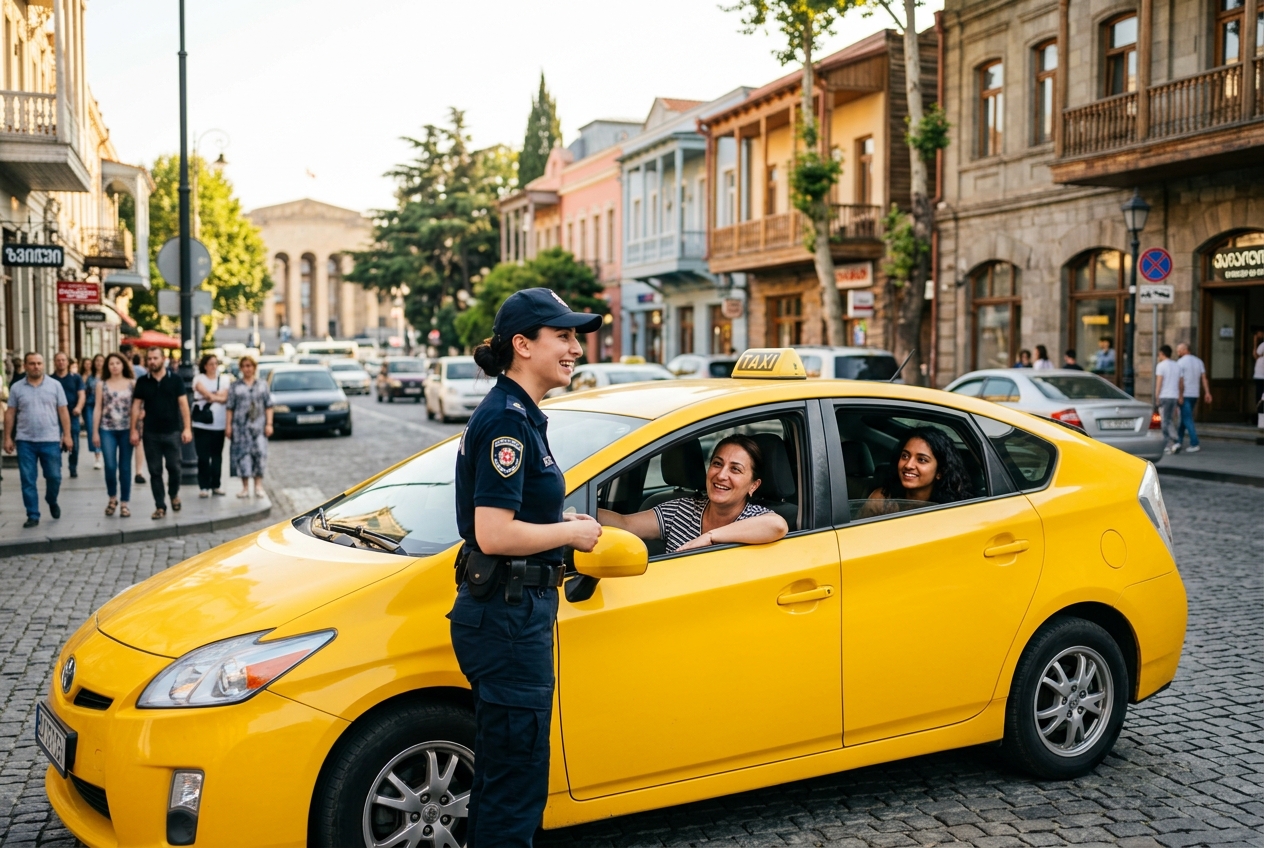
One of the most common concerns travelers have before visiting the Republic of Georgia is whether they’ll be able to communicate with the people they’ll interact with most: taxi drivers and police officers. I’ve spent considerable time in Georgia, from the winding streets of Tbilisi’s Old Town to the remote mountain villages of Svaneti, and the honest answer is complicated. English proficiency is growing rapidly, especially among younger Georgians, but you’ll still encounter plenty of situations where hand gestures and a translation app become your best friends. The country sits at a fascinating linguistic crossroads, shaped by its Soviet past, its European aspirations, and a fiercely independent national identity. Understanding who speaks what, and why, will save you real headaches on the ground.
Current English Proficiency Landscape in Georgia
Georgia ranks in the “low proficiency” band on the EF English Proficiency Index, sitting below most European nations but showing consistent improvement year over year. This number, though, hides a dramatic split within the population. Walk into a trendy café in Tbilisi’s Vera district and the barista will chat with you fluently in English. Ask for directions from an older gentleman at a bus stop in Kutaisi and you’ll likely get a warm smile, a flood of Georgian or Russian, and a helpful but confusing series of hand signals.
The country’s English proficiency has been steadily climbing since the Rose Revolution of 2003, when the government began aggressively pivoting toward Western institutions. English replaced Russian as the mandatory first foreign language in schools, and thousands of native English-speaking teachers were brought in through the Teach and Learn with Georgia (TLG) program. The results are visible, but unevenly distributed.
Generational Divide: English vs. Russian
The clearest predictor of whether a Georgian speaks English is their age. Anyone born after roughly 1990, and especially after 2003, likely studied English throughout school. Many younger Georgians in their twenties and early thirties speak it comfortably, some impressively well. They grew up with English-language internet, Hollywood films, and a national narrative that positioned Georgia as part of Europe rather than a post-Soviet state.
The generation educated during the Soviet era, roughly anyone over 50, almost universally speaks Russian as their second language. Georgian, or “Kartuli,” remains the mother tongue across all generations, but Russian was the lingua franca of the USSR, and many older Georgians are fluent. This creates an interesting dynamic: if you speak Russian, you’ll actually have an easier time communicating with older taxi drivers and police officers than if you speak English. For those who speak neither Georgian nor Russian, the language gap with the older generation can be significant.
There’s also a middle generation, people in their late thirties and forties, who often fall into a linguistic gray zone. They may have studied some Russian and some English but aren’t fully comfortable in either. I’ve met plenty of Georgians in this age bracket who understand basic English but struggle to form complex sentences.
Urban vs. Rural Communication Barriers
Tbilisi is a different world from rural Georgia when it comes to English. In the capital, you’ll find English menus, English-speaking hotel staff, and a growing number of young professionals who use English daily. Batumi, the Black Sea resort city, has also seen a surge in English proficiency driven by tourism.
Step outside these urban centers, though, and English becomes rare. In towns like Mestia, Zugdidi, or Telavi, you might find one or two English speakers at a guesthouse, but market vendors, local drivers, and municipal officials will almost certainly communicate only in Georgian or Russian. The further you go from Tbilisi, the more essential preparation becomes. This isn’t a complaint: it’s part of what makes rural Georgia so authentically rewarding. But it does require planning.
| Location | English Proficiency | Russian Proficiency | Best Communication Strategy |
|---|---|---|---|
| Tbilisi | Moderate to good (younger population) | Widespread among older residents | English often works; apps as backup |
| Batumi | Moderate (tourism-driven) | Common | English for tourist services; apps elsewhere |
| Kutaisi | Low to moderate | Common | Translation apps recommended |
| Mestia/Svaneti | Very low | Some older residents | Offline translation essential |
| Rural villages | Minimal | Variable | Written addresses, gestures, patience |
Communicating with Georgian Taxi Drivers
This is where most travelers first encounter the language barrier, and it can be jarring. You land at Tbilisi International Airport, hop in a cab, and realize the driver doesn’t understand your hotel’s name when you pronounce it in English. Don’t panic. This is normal, and there are straightforward ways to handle it.
Traditional Street Hailing vs. Ride-Sharing Apps
If you hail a traditional taxi on the street in Tbilisi, the driver will almost certainly be an older Georgian man who speaks Georgian and Russian but little to no English. These drivers know their city intimately, but negotiating a fare and communicating your destination can be frustrating without a shared language. Fares aren’t metered in most traditional cabs, which adds another layer of potential miscommunication.
The single best piece of advice I can give: use Bolt. This ride-hailing app has essentially taken over Tbilisi and operates in Batumi and Kutaisi as well. You enter your destination in the app, the driver sees it on their screen in Georgian, and the fare is calculated automatically. No negotiation, no language barrier for the destination, and you can track your route on your phone. Yandex Go is another option, though it’s less popular since the company is Russian-owned.
A critical update for 2026: Georgia has banned foreign citizens without permanent residency from working as taxi drivers, couriers, and tour guides as of March 1, 2026. This means your driver will be Georgian, and while this regulation was designed to protect local employment, it also means fewer drivers who might speak English as a native language. The practical impact for tourists is minimal if you’re using apps, but it’s worth knowing.
Essential Phrases for Navigating Destinations
Even with ride-hailing apps, there are moments when you’ll need to communicate directly with a driver. Maybe you need to give specific instructions about a pickup point, or you’re in a smaller city where apps don’t work reliably.
A few Georgian phrases go a surprisingly long way:
- “Gamarjoba” (hello) opens every interaction warmly
- “Madloba” (thank you) is essential and always appreciated
- “Ak sheacheret” (stop here) is probably the single most useful phrase in a taxi
- “Marjvniv” (right) and “Marcxniv” (left) help with basic navigation
- “Ra ghirs?” (how much does it cost?) is useful for traditional cabs
Georgian drivers, like Georgians generally, are remarkably patient with tourists trying to communicate. I’ve had drivers pull over, take my phone, type their question into Google Translate, and hand it back. The cultural concept of “stumari ghvtisaa,” meaning “a guest is a gift from God,” runs deep. You’re unlikely to encounter rudeness even when communication completely breaks down.
Interacting with the Georgian Patrol Police
Georgia’s police force underwent one of the most dramatic reforms in post-Soviet history. After the Rose Revolution, the entire traffic police force was fired and rebuilt from scratch to eliminate endemic corruption. The result is a police force that is, by regional standards, remarkably professional, honest, and tourist-friendly. But do they speak English?
Language Training Standards for Officers
The short answer: some do, many don’t. Georgia’s Ministry of Internal Affairs has incorporated English-language training into police academy curricula, and officers in Tbilisi’s tourist-heavy areas are more likely to have basic English skills. The Tourist Police unit, specifically created to assist visitors, employs officers who speak English and sometimes other languages.
However, the average patrol officer outside Tbilisi may speak very limited English. Younger officers who went through the post-2003 education system tend to have better English skills than their senior colleagues. If you’re stopped at a checkpoint in Kakheti or pulled over on a mountain road in Adjara, expect to communicate primarily through gestures, your phone’s translation app, or basic Russian if you know it.
The good news is that interactions with Georgian police are generally positive for tourists. Officers tend to be helpful rather than adversarial, and many will call a colleague who speaks English if the situation requires it. Solo female travelers frequently report feeling safe and well-treated by Georgian police, which aligns with the country’s broader reputation for hospitality and low crime rates.
Accessing English-Speaking Emergency Services
If you need emergency help, dial 112. Georgia’s emergency services number connects you to a dispatch center where English-speaking operators are available. This is a genuine lifeline and one of the better-functioning emergency systems in the Caucasus region. The operators can coordinate police, ambulance, and fire services, and they’re accustomed to handling calls from tourists who don’t speak Georgian.
For non-emergency police assistance, the Tourist Police can be reached in Tbilisi and Batumi. They maintain a visible presence in popular tourist areas and can help with everything from lost documents to reporting theft. Their English proficiency is significantly higher than that of regular patrol officers, which is precisely why the unit exists.
I’d also recommend saving the number for your country’s embassy or consular section in Tbilisi. In a serious situation where language barriers compound a legal or medical issue, consular staff can provide interpretation assistance or connect you with English-speaking local contacts.
Practical Solutions for Overcoming Language Gaps
The reality is that whether taxi drivers and police in Georgia speak English depends heavily on context: age, location, and the specific individual. Rather than hoping for the best, prepare for the gap. The tools available today make it far easier than even five years ago.
Recommended Translation Apps and Tools
Google Translate is your primary weapon. Download the Georgian language pack for offline use before you arrive: this is non-negotiable. The app’s camera feature can translate Georgian script (Mkhedruli) in real time, which is invaluable for reading menus, signs, and addresses. The conversation mode, where two people speak into the phone in different languages, works surprisingly well for basic exchanges with taxi drivers or police officers.
Bolt and Yandex Go, as mentioned, eliminate most taxi communication issues. For restaurants, Google Maps listings often include English transliterations of Georgian names, which helps when telling a driver where you want to go.
A less obvious tip: screenshot your hotel’s address in Georgian script from Google Maps before you leave your accommodation each day. If your phone dies or you lose signal, you can show this to any driver. I’ve done this dozens of times and it works perfectly every time.
Using Offline Maps and Written Addresses
Maps.me and Google Maps both offer offline map downloads for Georgia. Download the entire country: the file isn’t large, and you’ll be grateful in areas with spotty cell coverage, which includes most mountain regions and many rural areas.
Write down your key destinations in Georgian script before heading out. Your hotel receptionist will happily do this for you. Having a card with your hotel’s name and address in Georgian is especially useful late at night when you’re trying to get home and your phone is at 3%.
For longer trips outside Tbilisi, consider pre-booking a driver through your hotel or a local tour company. These drivers are accustomed to working with English-speaking tourists and often speak enough English for basic conversation. They’re also invaluable for navigating Georgia’s mountain roads, where GPS can be unreliable and road signs are sparse.
Cultural Etiquette and Non-Verbal Communication
Here’s something most travel guides understate: Georgians are among the most naturally hospitable people you’ll encounter anywhere. The language barrier matters less than you’d think because Georgians compensate for it with extraordinary warmth and effort. I’ve been invited into homes where nobody spoke a word of English, and we communicated through smiles, toasts with homemade chacha, and the universal language of food.
Non-verbal communication is powerful in Georgia. A hand on the heart means sincerity or gratitude. Pointing with your whole hand rather than a finger is considered more polite. When a Georgian driver waves you into his car or a police officer gestures for you to proceed, the meaning is usually clear regardless of language.
Be sensitive to a few cultural and political topics. Avoid casual references to Georgia as part of Russia: this is deeply offensive. The occupied territories of Abkhazia and South Ossetia are painful subjects, and while Georgians will discuss them openly, approach with respect rather than casual curiosity. In a taxi, stick to safe conversation starters like food, wine, and football. Every Georgian driver has strong opinions about all three.
The tradition of the “tamada,” or toastmaster, might come up if a driver or officer invites you to join a meal or a supra (feast). This isn’t just social drinking: it’s a structured ritual with deep cultural roots. Accepting an invitation, even briefly, builds goodwill that transcends any language barrier.
One final thought: the question of whether taxi drivers and police speak English in Georgia will likely become less relevant with each passing year. The younger generation is increasingly bilingual, tourism infrastructure is improving rapidly, and translation technology keeps getting better. But right now, in 2025, the honest answer is “sometimes.” Prepare for the times they don’t, appreciate the moments they do, and trust that Georgian hospitality will fill in every gap that language cannot.