
Table of Contents
- Exploring Old Tbilisi and Iconic Landmarks
- Cultural Immersion through Gastronomy and Wine
- Modern Vibe: Art Galleries, Flea Markets, and Nightlife
- Nature and Panoramic Views Above the City
- Practical Travel Data for Tbilisi Visitors
- Essential Tips for Navigating the Georgian Capital
Tbilisi is one of those cities that refuses to be pinned down by a single identity. It’s simultaneously ancient and anarchic, spiritual and hedonistic, crumbling and regenerating. I’ve spent months wandering its cobblestone alleys, eating too much khachapuri, and getting lost in conversations with strangers who insist you sit down for wine before giving directions. If you’re trying to figure out what to do in Tbilisi, this guide covers the activities that actually matter: the ones locals care about, not just the spots that photograph well for Instagram. Georgia welcomed over 5.5 million international tourists in 2025, and Tbilisi absorbed the lion’s share. The city has changed fast, but its soul hasn’t budged. The sulfur baths still smell the same. The grandmothers on balconies still watch everything. The wine still flows from clay vessels buried underground. What has changed is the infrastructure, the cafe scene, and the sheer volume of creative energy pouring out of converted Soviet factories. Whether you have two days or two weeks, the activities below will connect you to the real city, not just the tourist version of it.
Exploring Old Tbilisi and Iconic Landmarks
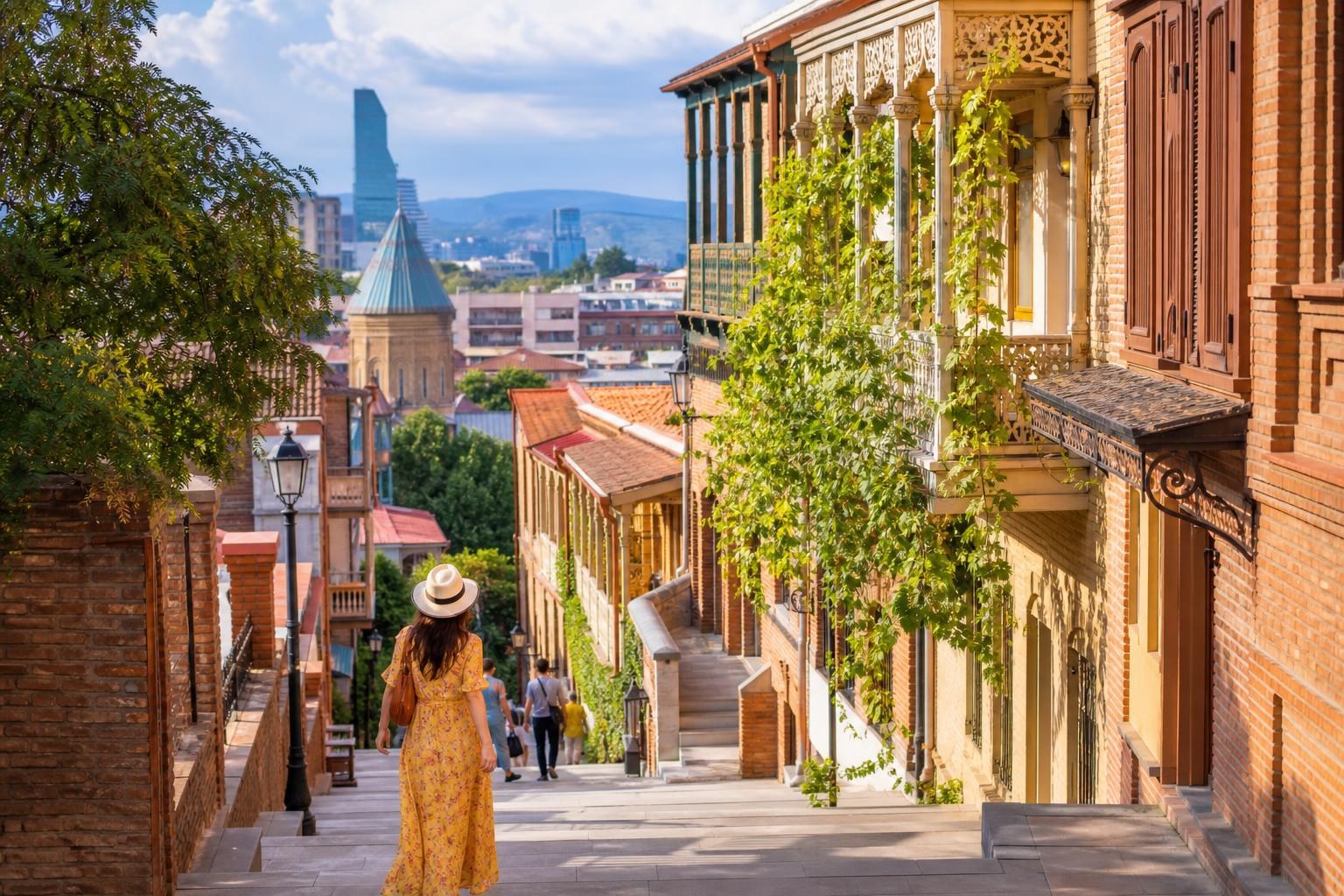
Old Tbilisi, or Dzveli Tbilisi, is where the city’s 1,500-year history lives and breathes. The narrow streets twist through a patchwork of Persian, Ottoman, Russian, and Soviet architectural layers. Walking here feels less like sightseeing and more like time travel with a slight risk of tripping on uneven cobblestones.
Start in the Kala district, where carved wooden balconies hang over your head and stray cats sleep in doorways. The churches here: Sioni Cathedral, Anchiskhati Basilica (the oldest surviving church in Tbilisi, dating to the 6th century): aren’t roped-off museums. People light candles in them daily. The phrase “stumari ghvtisaa,” meaning “a guest is a gift from God,” isn’t just a saying here. It’s something you’ll feel when a shopkeeper pulls you inside to try churchkhela he made that morning.
The Sulfur Baths of Abanotubani
Abanotubani sits in a low valley at the base of the old town, and the sulfur smell hits you before the brick domes come into view. These baths have operated since at least the 13th century, and the ritual hasn’t changed much: you soak in naturally heated sulfur water, get scrubbed raw by a kisi (a rough washcloth wielded by someone who clearly enjoys their job), and emerge feeling like a new person.
The Royal Bath and Chreli Abano are the most popular options. A private room at Chreli Abano runs about 80-120 GEL (roughly $28-42 USD) for an hour, which includes the room and hot water. The scrub and massage cost extra, around 30-50 GEL. Public baths are cheaper at about 5-10 GEL, but the private rooms are worth it for first-timers. Go in the evening when the crowds thin out and the domed ceilings glow under dim light.
Narikala Fortress and the Mother of Georgia
Narikala Fortress sits on a ridge above the old town, and you can reach it by cable car from Rike Park for 2.50 GEL each way. The fortress dates to the 4th century, though most of what you see now is from later medieval periods. The walls are partially ruined, which honestly makes them more interesting than a fully restored version would be.
From the fortress walls, you get a 360-degree view of Tbilisi: the Mtkvari River cutting through the center, the patchwork rooftops of the old town, and the Soviet-era apartment blocks climbing the hills beyond. The 20-meter aluminum statue of Kartlis Deda (Mother of Georgia) stands nearby, holding a sword in one hand and a wine bowl in the other. It’s the most Georgian symbol imaginable: hospitality and fierceness in equal measure.
The Leaning Clock Tower and Rezo Gabriadze Theater
Tucked into a small square near Shavteli Street, the Rezo Gabriadze Marionette Theater is one of Tbilisi’s most beloved oddities. The building itself is a whimsical tower that leans deliberately, covered in ceramic tiles and topped with a small angel that emerges every hour. Rezo Gabriadze, the legendary Georgian filmmaker and puppeteer, built this theater as a love letter to storytelling.
Performances run regularly and cost around 30 GEL. Even if you don’t catch a show, the tower and the adjacent cafe (which Gabriadze also designed) are worth the visit. The cafe serves excellent coffee and has walls covered in his drawings. It’s one of those places where you sit for twenty minutes and leave two hours later.
Cultural Immersion through Gastronomy and Wine
Georgian food isn’t a cuisine you sample politely. It’s one that grabs you by the collar and sits you down. The country’s culinary traditions are deeply tied to ritual, religion, and an almost aggressive generosity that makes Western dining feel transactional by comparison.
Traditional Georgian Supra and Local Delicacies
The supra is the traditional Georgian feast, and it’s less a meal than a social institution. A tamada (toastmaster) leads the table through a series of elaborate toasts: to God, to Georgia, to the deceased, to love, to friendship. Each toast requires a full glass of wine, and refusing is considered poor form. If someone invites you to a supra, clear your schedule. You won’t be leaving soon.
The food itself is extraordinary. Khinkali (soup dumplings filled with spiced meat or mushrooms) are eaten by hand: you grip the top knob, bite a small hole, slurp the broth, then eat the dumpling. The knob gets left on the plate, and at the end, everyone counts to see who ate the most. Khachapuri comes in regional varieties, but the Adjarian version (a bread boat filled with cheese, butter, and a raw egg) is the showstopper. A plate of khinkali at a local spot like Zakhar Zakharich costs about 1.50-2 GEL per dumpling, and most people order at least five.
Urban Wine Tasting and Natural Qvevri Varieties
Georgia has been making wine for over 8,000 years, and the traditional method involves fermenting grapes in qvevri: large clay vessels buried underground. This isn’t a marketing gimmick. It’s a UNESCO-recognized practice that produces wines unlike anything you’ve tasted in France or California. The amber wines, made from white grapes fermented with their skins, have a tannic, almost tea-like quality that surprises most first-time drinkers.
In Tbilisi, wine bars have multiplied rapidly. Vino Underground on Gorgasali Street was one of the first natural wine bars and remains a favorite. Ghvinis Ubani near Dry Bridge is another excellent option. A glass of natural wine typically costs 8-15 GEL. Georgia’s tourism revenue is projected to reach $4.6 billion, with the wine industry driving significant growth, which tells you how central wine is to the country’s identity and economy.
Modern Vibe: Art Galleries, Flea Markets, and Nightlife
Tbilisi’s creative scene has exploded over the past decade. The city attracts artists, musicians, and digital nomads from across Europe and the Middle East, drawn by low costs, high energy, and a government that mostly leaves the creative community alone.
Dry Bridge Market Treasure Hunting
The Dry Bridge Market is an open-air flea market that stretches along a dusty strip near the river. Vendors spread their goods on blankets and folding tables: Soviet-era cameras, old oil paintings, military medals, vinyl records, handmade jewelry, antique daggers, and random oddities that defy categorization. I once found a 1970s Georgian film poster for the equivalent of $3.
Prices are negotiable, and most vendors expect some haggling. A good Soviet-era watch might go for 30-80 GEL depending on condition and your bargaining skills. The market runs daily but is best on weekends when more sellers show up. Get there by 10 AM before the afternoon heat and the tour groups arrive.
Fabrika and the Creative Hub of Marjanishvili
Fabrika is a former Soviet sewing factory in the Marjanishvili district, now converted into a hostel, coworking space, and cultural center. The courtyard fills up every evening with locals and travelers drinking craft beer, eating from food stalls, and listening to whatever DJ or live act has set up that night. It’s free to enter and wander.
The Marjanishvili neighborhood around Fabrika has become Tbilisi’s creative heartbeat. Small galleries, tattoo studios, vintage shops, and specialty coffee roasters line the streets. Check out Rooms Hotel’s bar for cocktails, or walk to the nearby Tbilisi Photography and Multimedia Museum. Georgia’s tourism sector has seen sustained growth alongside shifting traveler demographics, and Marjanishvili reflects this: you’ll hear as much Arabic, Hebrew, and German as Georgian on a Friday night.
Nature and Panoramic Views Above the City
Tbilisi sits in a valley surrounded by hills, and the city’s relationship with nature isn’t something you have to drive hours to experience. Green spaces and viewpoints are woven into the urban fabric.
Mtatsminda Park and the Funicular Ride
Mtatsminda is the mountain that looms over central Tbilisi, and the funicular railway that climbs it has been running since 1905 (with interruptions for wars and renovations). The ride costs 15 GEL round trip and takes about five minutes, passing through a tunnel carved into the rock. At the top, Mtatsminda Park offers amusement rides, restaurants, and the best panoramic view of the city.
The park itself is a mix of Soviet nostalgia and modern updates. The Ferris wheel gives you views stretching to the Caucasus foothills on clear days. Come at sunset when the city below turns golden, then stay for dinner at Funicular Restaurant, where a full meal runs about 40-70 GEL per person. The funicular’s last descent is usually around 11 PM, so there’s no rush.
Hiking to Turtle Lake and the Ethnographic Museum
Turtle Lake (Kus Tba) sits in the hills above Vake district, about a 30-minute walk uphill from Vake Park or a short minibus ride. The lake is small and unspectacular on its own, but the surrounding forest and the walk itself are the real draw. Locals come here to swim in summer, jog the loop trail, and eat at the lakeside restaurants where a plate of grilled trout costs around 20-25 GEL.
Adjacent to the lake, the Open Air Ethnographic Museum displays traditional houses from every region of Georgia, reconstructed on a hillside. Entry is 7 GEL, and you can spend a solid two hours wandering through Svan towers, Kakhetian farmhouses, and Adjarian wooden homes. It’s one of the best ways to understand Georgia’s regional diversity without leaving Tbilisi.
Practical Travel Data for Tbilisi Visitors
Tbilisi is remarkably affordable compared to most European capitals. A metro ride costs 1 GEL (about $0.35 USD). A filling lunch at a local restaurant rarely exceeds 25 GEL. Bolt and Yandex Go handle ride-hailing, and a cross-city trip typically runs 5-10 GEL. Download Google Translate’s offline Georgian pack before you arrive: English proficiency is growing but still limited outside tourist zones and younger demographics.
Comparison Table: Best Neighborhoods to Stay and Visit
| Neighborhood | Vibe | Best For | Average Nightly Stay (USD) | Walking Distance to Old Town |
|---|---|---|---|---|
| Old Tbilisi (Kala) | Historic, touristy | First-time visitors, sightseeing | $40-80 | You’re already there |
| Vera | Quiet, residential, leafy | Couples, longer stays | $35-60 | 15-20 min |
| Marjanishvili/Fabrika | Creative, lively nightlife | Young travelers, solo visitors | $20-50 | 10-15 min |
| Vake | Upscale, modern cafes | Families, remote workers | $50-100 | 25-30 min |
| Saburtalo | Local, budget-friendly | Long-term stays, students | $15-35 | 30-40 min |
| Sololaki | Bohemian, artsy | Photographers, culture seekers | $30-70 | 5-10 min |
New developments are reshaping several of Tbilisi’s outer districts, but for visitors, the neighborhoods above cover the best options. Sololaki and Old Tbilisi put you closest to the action. Marjanishvili offers the best balance of price, nightlife, and character.
Essential Tips for Navigating the Georgian Capital
Tbilisi rewards the curious and punishes the rigid. A few things I wish someone had told me before my first trip:
- Carry cash in small denominations. Many smaller restaurants and marshrutka (minibus) drivers don’t take cards, and ATMs dispense 100 GEL notes that street vendors can’t break.
- Tap water is safe to drink throughout the city. Save your money.
- The metro runs until midnight and covers most major areas. Buy a Metromoney card at any station for 2 GEL and load it with credit.
- Solo female travelers generally report feeling safe in Tbilisi. Police are visible and responsive, and street harassment is uncommon compared to many other capitals in the region.
- Avoid discussing the Russia-Georgia conflict or the status of Abkhazia and South Ossetia unless someone else brings it up. Feelings run deep, and the topic is more personal than political for most Georgians.
- Sunday mornings are the quietest time to visit popular spots like the sulfur baths and Narikala. Most locals are sleeping off Saturday night.
Tbilisi isn’t a city you “do” in a checklist sense. It’s a place that pulls you into its rhythm if you let it. The best moments happen unplanned: a winemaker pouring you something from an unlabeled bottle, a stranger teaching you a Georgian toast, a sunset from a rooftop you weren’t supposed to be on. Use this local activity guide as a starting framework, then throw it away once the city starts talking to you. It will.