
Table of Contents
- Embracing the Rain in Tbilisi: An Overview of Indoor Charm
- Cultural Shelters: Museums and Galleries Worth the Visit
- Traditional Warmth: Sulfur Baths and Wine Cellars
- Cozy Culinary Routes: Cafes and Indoor Markets
- Rainy Day Logistics and Local Tips
- Evening Entertainment: Theaters and Live Music
Tbilisi has a way of surprising you. You plan your trip around golden autumn light or the long, warm days of summer, and then the sky opens up. Rain sweeps through the Mtkvari River valley, turning cobblestone streets slick and sending tourists scrambling under balconies. But here’s the thing: some of my favorite days in this city have been wet ones. The rain strips away the crowds, sharpens the smell of churchkhela drying in shop doorways, and pushes you toward experiences you’d otherwise walk right past. If you’re wondering what to do in Tbilisi on a rainy day, you’re actually asking the right question, because the city’s indoor life is arguably richer than what happens outside. From sulfur baths that feel like they were designed for grey skies to wine cellars older than most European nations, a wet day here is far from wasted. This is the guide I wish I’d had the first time clouds rolled in over Narikala Fortress.
Embracing the Rain in Tbilisi: An Overview of Indoor Charm
Tbilisi wasn’t built for sunshine alone. The city’s architecture tells you that immediately: deep wooden balconies overhang narrow streets in the Old Town, creating natural covered walkways. Traditional homes were designed around interior courtyards, and the social culture has always revolved around long meals, wine, and conversation indoors. Rain doesn’t disrupt life here; it redirects it.
The Georgian concept of hospitality, or stumari ghvtisaa (“a guest is a gift from God”), extends to how the city itself receives you. Cafes don’t rush you out. Museum staff will chat with you about exhibits for twenty minutes if you let them. Wine bars expect you to linger for hours. This isn’t a city where indoor activities feel like consolation prizes.
Practically speaking, Tbilisi’s compact Old Town means you can walk between most major attractions in ten to fifteen minutes, even in the rain. The metro system, built during the Soviet era and still running efficiently, connects key neighborhoods for just 1 GEL (about $0.37 in 2026). Bolt and Yandex Go make ride-hailing cheap, with most trips within the center costing 3-7 GEL.
What makes rainy days genuinely special here is the texture they add. Sulfur bath steam mixes with mist. Candlelit wine cellars feel more atmospheric. The sound of rain on tin roofs in Sololaki creates a soundtrack you won’t forget. I’ve talked to travelers who planned entire return trips around the hope of catching a storm.
One practical note: Tbilisi’s rain tends to come in bursts rather than all-day drizzle, especially in spring and autumn. You might get a heavy downpour for an hour, then clear skies. This means you can often mix indoor and outdoor activities on the same day. Pack a compact umbrella and waterproof shoes, and you’ll be fine.
The city’s indoor offerings cluster naturally by neighborhood. Abanotubani holds the bathhouses. Sololaki is packed with cafes and small galleries. Rustaveli Avenue houses the major museums and theaters. Fabrika sits in Marjanishvili. Understanding this geography helps you plan a rainy day without zigzagging across town. Each section of this guide is organized with that in mind, so you can pick a neighborhood and settle in.
Cultural Shelters: Museums and Galleries Worth the Visit
Tbilisi’s museum scene has grown significantly over the past decade. What was once a handful of Soviet-era institutions has expanded into a network of galleries, private collections, and renovated heritage spaces that rival cities twice its size. A rainy day gives you permission to spend real time in these places rather than rushing through on your way to the next outdoor viewpoint.
The city’s museums tend to be affordable. Most charge between 5 and 15 GEL for entry, and several offer free admission on certain days. Student discounts are common, and children under six usually enter free. The Georgian National Museum system alone encompasses multiple branches across the city, each with a distinct focus.
What sets Tbilisi’s cultural institutions apart from those in Western European capitals is intimacy. You won’t be fighting crowds or following a rigid path through galleries. Many spaces are small enough that curators or attendants will walk you through exhibits personally. I once spent an hour in a ceramics gallery where the owner brewed me tea and explained the symbolism behind each piece. That kind of experience doesn’t happen at the Louvre.
The National Museum and the Museum of Fine Arts
The Georgian National Museum’s main branch on Rustaveli Avenue is the obvious starting point, and for good reason. The archaeology collection alone spans millennia, from Dmanisi hominid fossils (the oldest human remains found outside Africa) to medieval goldwork that would make a Florentine jeweler envious. The museum’s collection of archaeological and ethnographic artifacts covers Georgia’s position at the crossroads of empires: Persian, Ottoman, Russian, and everything in between.
Plan for at least two hours here. The Soviet Occupation exhibit on the upper floor is one of the most powerful museum experiences I’ve encountered anywhere. It documents Georgia’s 70-year occupation through personal artifacts, letters, and deportation records. The emotional weight of this exhibit is significant, and it provides essential context for understanding modern Georgian identity and the fierce pride locals take in their independence.
The Shalva Amiranashvili Museum of Fine Arts, a separate branch, focuses on Georgian religious art, medieval manuscripts, and enamelwork. The cloisonné enamel icons here date to the 8th century and are stunningly preserved. Entry is around 7 GEL, and the building itself, a renovated 19th-century structure, is worth seeing.
For something unexpected, the State Silk Museum reopened in late 2024 after extensive renovation, celebrating 135 years of Georgian sericulture heritage. Georgia’s silk industry dates back centuries, and this small museum tells the story through original looms, cocoon samples, and textile displays. It’s tucked away in a quiet neighborhood, which means you’ll likely have it to yourself. The museum’s collection includes over 5,000 specimens and artifacts related to silkworm cultivation, making it one of the most specialized collections of its kind globally.
Contemporary Art Spaces: Fabrika and MOMA Tbilisi
If traditional museums aren’t your speed, Tbilisi’s contemporary art scene has exploded. Fabrika, a former Soviet sewing factory in the Marjanishvili district, is the anchor. It’s been converted into a multifunctional creative hub housing artist studios, co-working spaces, a hostel, and rotating gallery exhibitions. The courtyard murals change regularly, and even on a rainy day, the covered interior spaces host pop-up shows, film screenings, and workshops.
Fabrika works as a rainy-day destination because it’s more than a gallery. You can spend a morning browsing art, grab lunch at one of the on-site cafes, and settle into the co-working space with a coffee. It attracts a mix of local creatives, digital nomads, and travelers, so the atmosphere is energetic without being touristy.
MOMA Tbilisi (the Museum of Modern Art) is smaller and more focused. Located near the Dry Bridge flea market, it houses a permanent collection of Georgian modernist and avant-garde works from the 20th century, plus temporary exhibitions that feature emerging local artists. The building itself is a converted residential house, giving it an intimate, almost domestic feel. Entry is 10 GEL.
Tbilisi also has a growing number of independent galleries and exhibition spaces scattered through Vera and Sololaki. Gallery 27, Artarea, and the Window Project are all walkable from each other and free to enter. On a rainy afternoon, you can gallery-hop through these neighborhoods, ducking into doorways between stops.
Traditional Warmth: Sulfur Baths and Wine Cellars
If there’s one activity that feels tailor-made for grey, wet weather in Tbilisi, it’s the sulfur baths. The city was literally named after its hot springs: “tbili” means “warm” in Georgian. And while tourists flock to the bathhouses on sunny days too, there’s something about rain drumming on the domed rooftops of Abanotubani while you soak in mineral-rich water that feels exactly right.
Wine is the other pillar. Georgia claims to be the birthplace of wine, with archaeological evidence of winemaking stretching back 8,000 years. The qvevri method, fermenting wine in large clay vessels buried underground, is a UNESCO Intangible Cultural Heritage practice. On a rainy day, descending into an underground marani (wine cellar) feels like stepping into that history.
These two experiences complement each other perfectly. Start with a long bath in the morning, then move to wine tasting in the afternoon. Your muscles will be loose, your mind will be quiet, and you’ll be in exactly the right mood to appreciate a slow pour of amber-colored Rkatsiteli.
The Abanotubani Experience: Choosing the Right Bathhouse
Abanotubani, the bath district, sits at the eastern end of the Old Town, nestled into the hillside below Narikala Fortress. The sulfur springs here have been in use since at least the 13th century, and the current brick-domed bathhouses date primarily to the 17th and 18th centuries. The district has about a half-dozen operating bathhouses, and choosing between them matters.
The two most popular options are Chreli Abano (the mosaic-covered one you’ve seen in every Instagram photo) and Royal Bath. Both are well-maintained and tourist-friendly, but they’re also the most expensive, with private rooms running 80-150 GEL per hour depending on size and amenities. Orbeliani Baths, behind the famous blue-tiled facade, is another premium option.
For a more local experience at a lower price, try Bath No. 5 or Gulo’s Thermal Spa. These charge 30-60 GEL for a private room and attract a more Georgian clientele. The facilities are simpler, but the water is the same sulfur-rich mineral spring feeding every bathhouse in the district. The common halls at Bath No. 5 cost as little as 5 GEL, though they’re gender-segregated and basic.
Here’s my honest advice: book a private room. The common halls are fine if you’re comfortable with the public bath culture, but a private room gives you your own pool, a massage table, and quiet. Most rooms fit two to four people comfortably. Add a kisi scrub (a vigorous exfoliation with a rough wool mitt) for 20-30 GEL extra. It’s worth every tetri.
Reservations are smart, especially on weekends and rainy days when demand spikes. Most bathhouses accept walk-ins, but you might wait 30-60 minutes during peak times. Call ahead or book through the bathhouse’s website if available.
Wine Tasting in Underground Maranis
Georgian wine deserves more than a quick glass at dinner. A proper tasting session on a rainy afternoon is one of the best ways to understand why this country’s wine tradition is so distinct from anything you’ve tried in France or Italy.
The key difference is qvevri. These egg-shaped clay vessels, buried in the ground, allow wine to ferment with grape skins, seeds, and sometimes stems for months. The result, especially with white grapes like Rkatsiteli and Mtsvane, is what’s called amber or orange wine: deeply colored, tannic, and complex in a way that surprises most first-time tasters.
Several spots in central Tbilisi offer structured tastings. The 8000 Vintages wine bar on Chardin Street is one of the best. Their menu features wines from small producers across Georgia’s wine regions, with tasting flights starting around 25-35 GEL for four to five pours. The staff speaks English well and takes time to explain each wine’s region, grape variety, and production method.
Vino Underground, near the Clock Tower in the Old Town, focuses exclusively on natural and qvevri wines. It’s a tiny space, maybe fifteen seats, with a rotating selection that changes weekly. Glasses start at 8-12 GEL. The atmosphere is unpretentious: think wine-stained wooden tables and handwritten menus.
For a deeper experience, Wine Gallery on Bambis Rigi offers tastings paired with Georgian cheese and bread in a cellar setting. The pairings matter because Georgian cheese, particularly suluguni and aged Tushetian varieties, interacts with amber wine differently than Western cheeses do. The salt and texture of suluguni cuts through the tannins beautifully.
If you want to visit an actual working marani within the city, a few family-run operations in the outskirts offer tours. These typically require advance booking and a short taxi ride, but they’re worth the effort for anyone serious about wine.
Cozy Culinary Routes: Cafes and Indoor Markets
Tbilisi’s cafe culture has matured rapidly. Five years ago, you had a handful of decent coffee shops and a lot of Soviet-era canteens. Today, the city has specialty roasters, third-wave coffee bars, and a food hall scene that reflects both Georgian tradition and global influence. A rainy day is the perfect excuse to eat and drink your way through the city’s indoor culinary offerings.
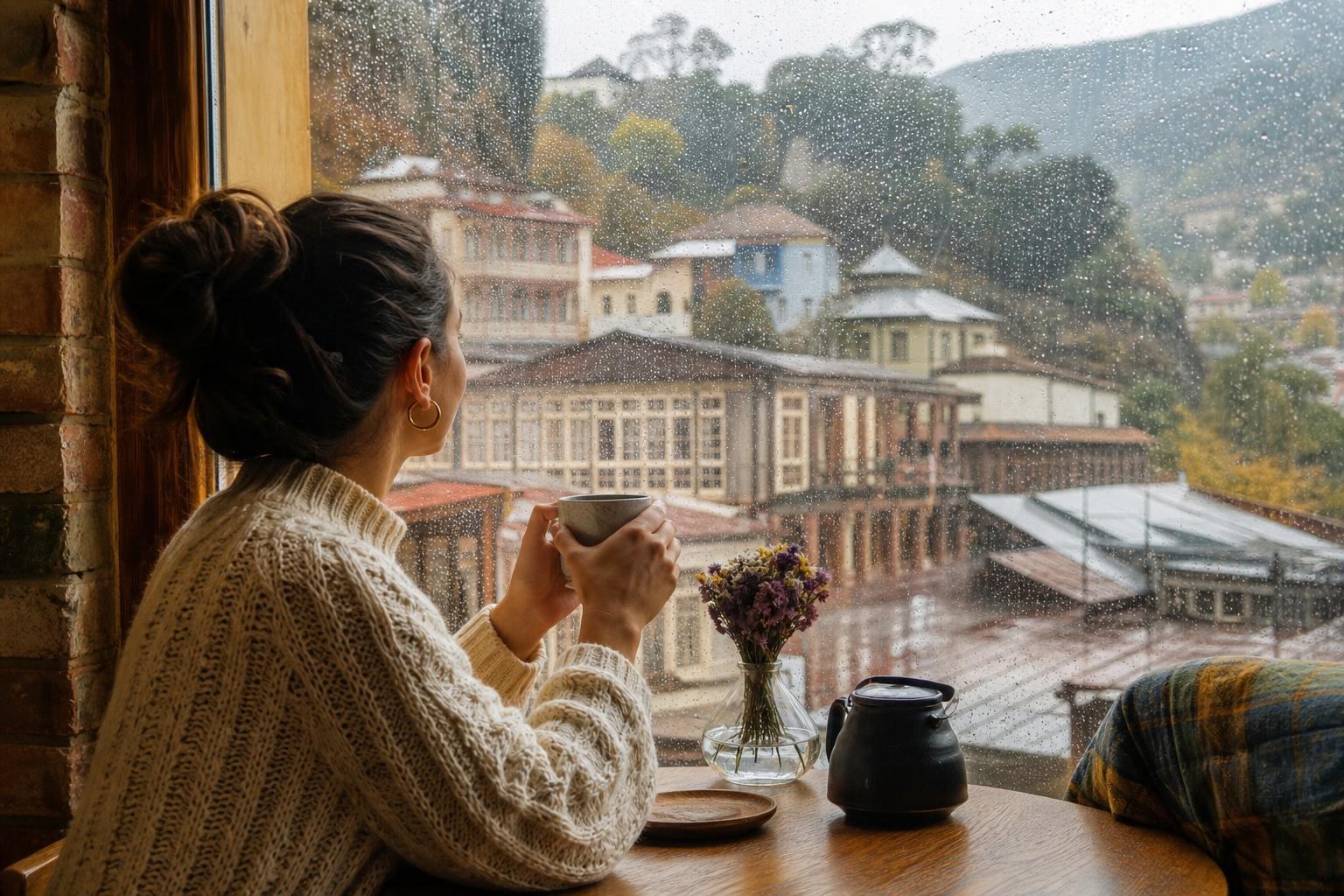
Georgian food itself is built for comfort. Khinkali (soup dumplings), khachapuri (cheese bread), lobio (spiced bean stew): these are dishes designed for cold, wet days. Eating them in a warm, crowded cafe while rain streaks down the windows is one of those travel moments that stays with you.
The cafe and food scene clusters in a few key areas. Sololaki, the hilly residential neighborhood above Rustaveli Avenue, has the highest concentration of interesting small cafes. The area around Orbeliani Square has the food hall. And Vera, just north of Sololaki, has a growing number of brunch spots and bakeries.
Literary Cafes and Hidden Sololaki Gems
Sololaki’s charm is in its imperfection. The neighborhood is a grid of crumbling Art Nouveau buildings, overgrown courtyards, and narrow streets that feel like they haven’t changed much since the 1920s. The cafes here tend to be small, independently owned, and full of character.
Leila is one of the best known: a tiny cafe on Lermontov Street with mismatched furniture, shelves of books, and a menu of Georgian-European fusion dishes. It seats maybe twenty people, so arriving early is wise. A full meal with wine runs about 25-40 GEL per person. The khachapuri here is legitimately excellent.
Linville, a few blocks away, is a specialty coffee shop that takes its beans seriously. Espresso-based drinks run 6-10 GEL, and they offer pour-over options that you won’t find in most Georgian cafes. The space is modern and minimal, a contrast to Sololaki’s weathered exteriors.
For a literary atmosphere, Prospero’s Books and Caliban’s Coffeehouse near the Gabriadze Theater combines an English-language bookshop with a cafe. You can browse used novels, settle into a corner with a cappuccino, and watch the rain through tall windows. It’s a reliable rainy-day anchor, especially for solo travelers who want a quiet place to read.
A few other Sololaki spots worth knowing: Entrée serves excellent pastries and brunch. Café Stamba, inside the Stamba Hotel, offers a grander setting with high ceilings and an industrial-chic design. Shavi Lomi, though technically in Vera, is a short walk and serves some of the most creative Georgian food in the city, rethinking traditional dishes with modern technique.
The beauty of cafe-hopping in this neighborhood is the walking itself. Even in the rain, Sololaki’s covered balconies and overhanging buildings provide enough shelter to move between spots without getting soaked. Bring an umbrella for the open stretches, but don’t let drizzle stop you from exploring.
Exploring the Bazari Orbeliani Food Hall
Dezerter Bazaar has long been Tbilisi’s main market, but it’s an outdoor affair that loses some appeal in heavy rain. Bazari Orbeliani, the renovated food hall on Orbeliani Square, is the indoor alternative, and it’s become one of the city’s best culinary destinations regardless of weather.
The hall opened in its current form after a major renovation and houses dozens of vendors selling everything from Georgian street food to specialty products. You can get fresh churchkhela (walnut-stuffed grape candy), sample different varieties of tkemali (sour plum sauce), buy spices from the Kakheti region, and eat a full meal from one of the prepared food stalls.
The layout encourages grazing. Walk the perimeter first, scope out what looks good, then commit. I’d recommend trying adjarian khachapuri from one stall, a plate of pkhali (walnut-herb paste on vegetables) from another, and finishing with gozinaki (honey-nut candy) from the sweets section. A full circuit of eating and shopping rarely costs more than 20-30 GEL.
The hall also has a small wine section where you can taste and buy bottles from Georgian producers. Prices are fair, often cheaper than what you’d pay at a dedicated wine bar for the same labels. If you’re looking to bring Georgian wine home, this is a good place to shop.
One thing I appreciate about Bazari Orbeliani is its mix of tourists and locals. It hasn’t tipped fully into tourist-market territory the way some renovated food halls do. You’ll see grandmothers buying cheese alongside backpackers photographing everything. That balance keeps the quality honest.
Rainy Day Logistics and Local Tips
Planning around rain in Tbilisi requires a bit of practical knowledge that most travel guides skip. The city’s infrastructure handles rain reasonably well, but there are quirks: certain streets flood briefly during heavy downpours, some neighborhoods have better drainage than others, and the way locals move through the city shifts noticeably when the weather turns.
Spring (April-May) and autumn (October-November) bring the most rain, though summer thunderstorms can be sudden and intense. Winter rain is less common but can mix with cold temperatures to make sidewalks slippery. Regardless of season, the rain tends to be intermittent rather than constant, so flexibility is your best tool.
Download offline maps before you go. Google Maps works well in Tbilisi, and having the metro map saved on your phone saves time. Download a Georgian language pack for Google Translate too: while English is increasingly common in tourist areas, you’ll encounter plenty of situations where a quick translation helps, especially in markets and local restaurants.
Table: Best Indoor Activities by Neighborhood and Cost
| Neighborhood | Activity | Approximate Cost (GEL) | Time Needed |
|---|---|---|---|
| Abanotubani | Sulfur bath (private room) | 50-150 | 1-2 hours |
| Old Town | Wine tasting at 8000 Vintages | 25-45 | 1-1.5 hours |
| Old Town | Vino Underground natural wine bar | 15-30 | 1 hour |
| Rustaveli Ave | Georgian National Museum | 7-15 | 2-3 hours |
| Rustaveli Ave | Theater performance | 10-50 | 2-3 hours |
| Marjanishvili | Fabrika galleries and cafes | Free-15 | 1-3 hours |
| Sololaki | Cafe hopping (Leila, Linville, etc.) | 15-40 | 2-3 hours |
| Orbeliani Square | Bazari Orbeliani food hall | 15-30 | 1-2 hours |
| Near Dry Bridge | MOMA Tbilisi | 10 | 1-1.5 hours |
| Avlabari | State Silk Museum | 5-7 | 1 hour |
This table covers most of a full rainy day. Mix and match based on your neighborhood and interests. A realistic budget for a full day of indoor activities, including food and transport, runs about 80-150 GEL ($30-55), which is remarkably affordable by European standards. Georgia’s overall travel costs remain low compared to most of Europe, and rainy-day activities are no exception.
Navigating the City: Taxi Apps vs. The Metro
The metro is your best friend in the rain. Tbilisi’s two-line system covers the main corridor from the train station through Rustaveli and up to Saburtalo. Trains run every 3-5 minutes during peak hours, and a single ride costs 1 GEL using a reloadable Metromoney card (the card itself costs 2 GEL and works on buses too). The stations are deep underground, Soviet-built, and architecturally interesting in their own right.
The metro’s limitation is coverage. It doesn’t reach Abanotubani, the Old Town, or Sololaki directly. For those areas, you’ll need to walk or take a taxi. Bolt is the dominant ride-hailing app and works reliably. Yandex Go is the other option. Both are significantly cheaper than hailing a cab off the street, where drivers may try to negotiate inflated prices, especially with tourists.
A typical Bolt ride from Rustaveli to Abanotubani costs 4-6 GEL. From Marjanishvili to the Old Town, expect 3-5 GEL. Surge pricing during heavy rain can push these up by 50-100%, so if you see high prices, wait ten minutes and check again. The surge usually drops quickly.
One tip that saves hassle: set your destination in the app before getting in. This eliminates any confusion about where you’re going and prevents the occasional driver who wants to take “a better route.” Georgian taxi drivers are generally honest, but the app keeps everyone on the same page.
Buses are cheap (1 GEL) but harder to figure out without Georgian language skills. The routes aren’t always intuitive, and signage is primarily in Georgian script. Unless you’ve spent time learning the system, stick to the metro and ride-hailing for rainy-day transport.
Evening Entertainment: Theaters and Live Music
Tbilisi after dark, especially on a rainy evening, has a particular energy. The wet streets reflect neon signs and streetlights, the Old Town takes on a moody, cinematic quality, and the city’s nightlife shifts indoors in the best possible way.
The Rustaveli National Theatre is the crown jewel of Tbilisi’s performing arts scene. Built in 1887 and renovated multiple times since, it hosts drama, ballet, and opera in a grand European-style auditorium. Performances are primarily in Georgian, but the physical productions are so well-staged that language is rarely a barrier for drama, and obviously irrelevant for ballet and opera. Tickets range from 10-50 GEL, which is absurdly cheap by Western standards. Check the schedule online and book a day or two ahead for popular shows.
The Gabriadze Theater, near the Clock Tower in the Old Town, is something entirely different. Founded by the legendary Georgian puppeteer Rezo Gabriadze, it stages intimate puppet performances that blend humor, poetry, and visual artistry. Shows are performed in Georgian with a quality that transcends language. The theater seats fewer than 80 people, so booking in advance is essential. Tickets cost around 30-40 GEL.
For live music, Tbilisi offers everything from traditional polyphonic singing to underground electronic sets. Georgian polyphonic singing, a UNESCO-recognized tradition, can be heard at several restaurants and dedicated venues. The harmonies are haunting and unlike anything in Western musical tradition: three-part vocal arrangements that create overtones you can feel physically.
Jazz has a surprisingly strong foothold in Tbilisi. The Tbilisi Jazz Festival has been running for years, and several bars host live jazz throughout the week. Café Linville occasionally hosts acoustic sets, and the area around Chardin Street has a few bars with regular live music lineups.
If your rainy evening extends late, Tbilisi’s club scene is worth knowing about. The city gained international attention for its electronic music culture, with Bassiani (located in a former Soviet swimming pool beneath a football stadium) becoming one of Europe’s most talked-about techno clubs. Entry is selective and the vibe is intense, but if electronic music is your thing, it’s a genuinely world-class experience. Cover charges are typically 20-30 GEL.
For a quieter evening, several wine bars stay open late and offer the kind of atmosphere that pairs perfectly with rain. Wine Underground, Ghvinis Moedani, and the bar at Rooms Hotel all provide comfortable settings where you can settle in with a bottle and conversation. Georgian hospitality means you’ll never feel rushed, even if you’re the last person there.
One final evening option that often gets overlooked: cinema. Tbilisi has several modern multiplexes showing international films, often in English with Georgian subtitles. Amirani Cinema on Kostava Street is a renovated Soviet-era theater with character, and tickets cost 12-18 GEL. It’s a perfectly valid rainy evening plan, especially if you’ve been on your feet all day.
The rain in Tbilisi isn’t something to endure. It’s an invitation. An invitation to slow down, to sit longer over wine, to pay attention to the details you’d rush past on a sunny day: the patterns in a bathhouse dome, the brush strokes on a medieval icon, the way a grandmother at the food hall wraps churchkhela in wax paper with practiced precision. The best rainy days here aren’t the ones where you check the most boxes. They’re the ones where you pick two or three things, give them real time, and let the city’s warmth do the rest. Tbilisi rewards patience, and nothing teaches patience quite like a good, long rain.