
Table of Contents
- Overview of Tbilisi Neighborhoods for First-Timers
- Old Tbilisi: The Heart of the City’s Charm
- Rustaveli Avenue and Mtatsminda: Culture and Convenience
- Vera: The Bohemian and Leafy Alternative
- Marjanishvili and Chugureti: Trendy Vibes on the Left Bank
- Essential Travel Tips for Your Tbilisi Stay
- Your First Time in Tbilisi: Making the Choice
Tbilisi has a way of catching first-time visitors off guard. You arrive expecting a post-Soviet capital and instead find yourself wandering cobblestone alleys lined with crumbling Art Nouveau balconies, stumbling into natural wine bars carved into old cellars, and eating khinkali at 2 a.m. because the city simply doesn’t sleep early. The question isn’t whether you’ll love it – it’s where to set up your base so you can experience the best of it without wasting time in taxis. Georgia’s capital saw over 1.2 million international visitors in Q1 2025 alone, and that tourism growth has continued into 2026 with new hotels, hostels, and guesthouses opening across the city. Choosing the right neighborhood shapes your entire trip: some areas put you steps from medieval churches and sulfur baths, others drop you into a thriving creative scene with street art and third-wave coffee. I’ve spent enough time in Tbilisi to know that each district has a distinct personality, and picking the wrong one for your travel style can mean the difference between a trip you talk about for years and one that felt slightly off. Here’s the honest breakdown of where to stay in Tbilisi as a first-time visitor, organized by the areas that actually matter.
Overview of Tbilisi Neighborhoods for First-Timers
Tbilisi sits along the Mtkvari River, with most tourist-friendly neighborhoods clustered on the right bank (east side) and a growing scene on the left bank (west side). The city is compact enough that you can walk between most central areas in 20-30 minutes, and the metro connects key districts for just 1 GEL (about $0.37 USD in 2026). That said, your neighborhood choice still matters because Tbilisi’s hilly terrain and narrow streets mean that “close on a map” doesn’t always mean “easy to reach on foot.”
For first-timers, the sweet spot is usually Old Tbilisi or the Rustaveli corridor. These areas concentrate the city’s major sights, restaurants, and transport links in a walkable radius. But if you prefer a quieter, more local feel, Vera and Marjanishvili offer excellent alternatives at lower prices. Georgia’s hospitality sector has expanded significantly, with hotel capacity growing across all these neighborhoods, so you’ll find options at every budget level.
One thing worth knowing: Tbilisi isn’t a city where you need to stay in a big-name hotel chain to have a good experience. Family-run guesthouses and boutique hotels often provide a richer stay, with hosts who’ll pour you homemade chacha (grape brandy) and insist you try their grandmother’s tkemali sauce. The Georgian concept of “stumari ghvtisaa” – the guest is a gift from God – runs deep here, and it shows in the hospitality you’ll encounter regardless of price point.
Quick Comparison Table: Best Areas by Travel Style
| Area | Best For | Vibe | Budget (per night) | Walk to Old Town |
|---|---|---|---|---|
| Old Tbilisi | Sightseers, history lovers | Historic, touristy, lively | $40-$120 | You’re already there |
| Rustaveli/Mtatsminda | Culture seekers, couples | Elegant, central, urban | $50-$150 | 10-15 min |
| Vera | Creatives, long-stay visitors | Bohemian, quiet, leafy | $30-$80 | 15-20 min |
| Marjanishvili/Chugureti | Young travelers, foodies | Trendy, artsy, emerging | $25-$70 | 15-20 min |
Old Tbilisi: The Heart of the City’s Charm
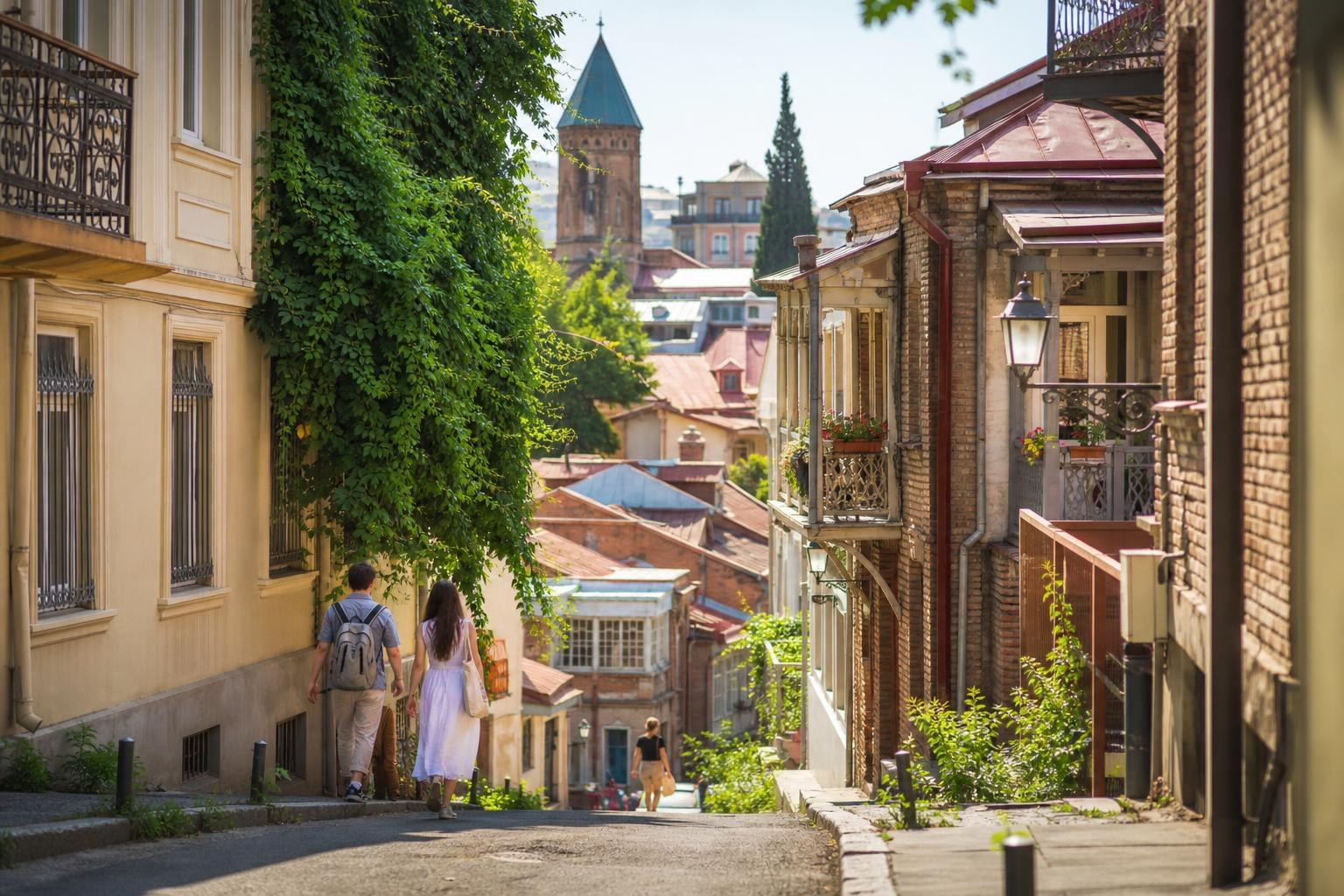
If this is your first trip to Georgia’s capital, Old Tbilisi is the default recommendation for good reason. This is where the city’s identity lives: winding lanes stacked with wooden balconied houses, centuries-old churches, and the Narikala Fortress watching over everything from its ridge. You can spend two full days here without running out of things to see, and most of Tbilisi’s bucket-list experiences are within a 10-minute walk.
The trade-off is that Old Tbilisi is the most touristic part of the city. Prices at restaurants along Shardeni Street run 30-50% higher than equivalent spots in Vera or Marjanishvili, and some of the “traditional” shops are aimed squarely at visitors. But step one block off the main drag, and you’ll find family-owned dukani (small eateries) serving lobiani for 3-4 GEL and wine cellars where a bottle of excellent Saperavi costs 15 GEL. The trick is knowing when to wander away from the polished streets.
Accommodation ranges from renovated heritage guesthouses to modern boutique hotels. A solid mid-range room typically runs $50-$80 per night, while budget travelers can find clean hostels for $10-$15. The area fills up during peak season (June through September), so booking two to three weeks ahead is smart.
Abanotubani and the Sulphur Baths
Abanotubani, the bath district, sits at the eastern edge of Old Tbilisi in a small valley where natural hot springs have been used for centuries. The domed brick bathhouses are both a functioning tradition and a tourist attraction. A private room at the popular Orbeliani Baths costs around 80-120 GEL for an hour, and the experience – soaking in naturally heated, mineral-rich water while someone scrubs you with a kisi mitt – is one of those things you just have to do once.
Staying near Abanotubani puts you close to the botanical garden entrance, the Leghvtakhevi waterfall (yes, there’s a waterfall in the middle of the city), and some of the best views of the old town’s layered architecture. The area is popular with solo travelers and couples who want to be at the center of the action. Mornings here are particularly magical: the tourist crowds don’t arrive until around 11 a.m., so early risers get the cobblestone streets almost to themselves.
Sololaki’s Historic Architecture and Cafes
Sololaki is technically part of Old Tbilisi, but it has a slightly different character: more residential, less commercial, and packed with some of the city’s finest 19th-century architecture. Walking through Sololaki feels like exploring an open-air museum of Art Nouveau, neoclassical, and Persian-influenced buildings, many of them undergoing careful restoration.
The cafe scene here has exploded in recent years. Spots like Leila, Linville, and Stamba Cafe (the Sololaki outpost) draw a mix of locals and visitors. Sololaki also connects directly to the Mtatsminda ridge via steep staircases and paths, so if you’re the type who likes earning your panoramic views on foot, this is your neighborhood. Expect to pay slightly less for accommodation than in the Shardeni Street area, with charming guesthouses in converted apartments starting around $35-$45 per night.
Rustaveli Avenue and Mtatsminda: Culture and Convenience
Rustaveli Avenue is Tbilisi’s grand central boulevard, a tree-lined stretch running from Freedom Square to the Rustaveli metro station. Think of it as the city’s cultural spine: this is where you’ll find the national museum, the opera house, Parliament, and most of the city’s upscale hotels. The atmosphere here is more cosmopolitan and polished than Old Tbilisi, with wider sidewalks, international restaurants, and a pace that feels distinctly urban.
Mtatsminda, the hillside district rising above Rustaveli, adds a residential calm to the mix. Streets get quieter and steeper as you climb, and the reward is consistently stunning views over the city. Together, these two areas offer the best balance of access and atmosphere for visitors who want culture, dining, and nightlife without the museum-town feel of the old quarter.
Proximity to Museums and the Opera House
The Georgian National Museum on Rustaveli Avenue is a must-visit, with its archaeological gold collection from Colchis alone worth the 15 GEL entry fee. The Tbilisi Opera and Ballet Theatre, a Moorish Revival building from 1851, hosts performances most evenings with tickets starting as low as 10-20 GEL – a fraction of what you’d pay for equivalent shows in Western Europe.
Staying along or near Rustaveli means you can walk to these venues in minutes, then grab dinner at one of the avenue’s restaurants without needing transport. The Rustaveli metro station also connects you to the rest of the city in under 10 minutes. Hotels in this corridor tend to be larger and more professionally managed than the guesthouses in Old Tbilisi, with international brands like Radisson and Marriott represented alongside local boutique options.
Funicular Access and Panoramic Views
The Mtatsminda funicular, recently modernized, climbs from the base station near Rustaveli to the top of Mtatsminda Park in about four minutes. The ride costs 2 GEL each way and delivers you to one of the best viewpoints in the city, where the entire Tbilisi basin spreads out below with the Caucasus foothills in the distance.
Living near the funicular base means you can ride up for sunset without planning a big excursion. Mtatsminda Park itself has a mix of amusement rides, restaurants, and walking paths – it’s where Tbilisi families go on weekends. The residential streets around the funicular station are quiet, safe, and full of small bakeries and wine shops. Accommodation here skews toward apartments and mid-range hotels, with nightly rates between $40 and $90.
Vera: The Bohemian and Leafy Alternative
Vera is the neighborhood I’d recommend to anyone who’s visited a few cities and knows they don’t want to stay in the tourist center. Located just north of Rustaveli, Vera is a residential district defined by tree-lined streets, crumbling pastel facades, and a creative energy that feels organic rather than manufactured. It’s where many of Tbilisi’s artists, musicians, and young professionals actually live.
The pace here is slower. You’ll find fewer souvenir shops and more neighborhood bakeries, fewer tour groups and more locals walking their dogs past overgrown courtyards. Vera is also one of the best neighborhoods for longer stays: apartment rentals are significantly cheaper than in the Old Town, with monthly rates for a furnished one-bedroom running $400-$600 USD. Even for a short trip, Vera gives you a taste of daily Tbilisi life that the tourist districts can’t match.
Boutique Hotels and Concept Stores
Vera has become a magnet for small, design-forward hotels and concept shops. Properties like Rooms Hotel Tbilisi set the template years ago, and the neighborhood now has a growing collection of boutique stays that blend Georgian architectural details with contemporary design. Expect exposed brick, local art on the walls, and staff who can recommend their favorite natural wine bar.
The shopping scene is equally distinctive. Independent concept stores sell Georgian-designed clothing, ceramics, and leather goods at prices that feel reasonable compared to similar items in Western European capitals. Vera’s Abashidze Street is the main commercial artery, lined with specialty coffee shops (Prospero’s Books & Caliban’s Coffee is a local institution), brunch spots, and small galleries. It’s the kind of street where you pop out for a coffee and end up spending three hours.
Marjanishvili and Chugureti: Trendy Vibes on the Left Bank
Cross the Mtkvari River to the left bank and you’ll find Tbilisi’s most rapidly evolving neighborhoods. Marjanishvili and Chugureti have transformed over the past few years from overlooked residential areas into the city’s creative and culinary epicenter. The energy here is younger, edgier, and more international than anywhere else in the city.
Prices remain lower than on the right bank, which is part of the draw. A quality hostel bed runs $8-$12, and private rooms in guesthouses start around $25. Restaurants serve excellent Georgian food at local prices: a full meal with wine rarely exceeds 30-40 GEL per person. The Marjanishvili metro station provides quick access to both Rustaveli and the train station, making this a practical base despite feeling slightly off the main tourist track.
Fabrika and the Creative Hub Scene
Fabrika is a converted Soviet sewing factory that now houses a hostel, co-working spaces, shops, bars, and a courtyard that functions as Tbilisi’s unofficial social hub. On any given evening, the courtyard fills with a mix of digital nomads, local students, and travelers sharing tables and cheap beer. It’s the single best place in the city to meet people if you’re traveling solo.
Beyond Fabrika, the surrounding blocks have developed their own ecosystem of creative businesses. Tattoo studios, vinyl record shops, independent bookstores, and experimental restaurants have clustered in the area, creating a neighborhood that appeals to younger and creative travelers. The vibe is comparable to Berlin’s Kreuzberg or Lisbon’s LX Factory district, but with Georgian hospitality and significantly lower prices.
Agmashenebeli Avenue Pedestrian Zone
Agmashenebeli Avenue is Chugureti’s main street, and its recently pedestrianized section is one of the most pleasant walks in the city. Lined with restored 19th-century buildings in shades of cream, mint, and terracotta, the avenue is home to bakeries, traditional restaurants, and shops selling churchkhela (the grape-and-walnut candy strings you’ll see everywhere in Georgia).
The Dry Bridge Market, located at the avenue’s northern end near the river, is a sprawling flea market where vendors sell Soviet-era memorabilia, antique jewelry, oil paintings, and all manner of curiosities. It operates daily but is best on weekends. Staying near Agmashenebeli puts you within walking distance of both this market and the Marjanishvili metro, making it a strong base for first-timers who want authenticity without isolation.
Essential Travel Tips for Your Tbilisi Stay
Tbilisi is one of the easiest cities in the Caucasus region to visit as a first-timer, but a few practical details will smooth out your experience. The Georgian Lari (GEL) is the local currency, and ATMs are everywhere – just avoid exchanging money at the airport, where rates are consistently worse. Most restaurants and shops accept card payments, though smaller bakeries and marshrutka (minibus) drivers still prefer cash.
The city is generally very safe, including at night. Violent crime against tourists is rare, and police in Tbilisi are considered reliable and approachable. That said, standard urban awareness applies: keep an eye on your belongings in crowded markets and be cautious with unlicensed taxi drivers. Use Bolt or Maxim apps for rides instead of hailing cars on the street – a ride across the city center rarely exceeds 5-8 GEL.
Navigating Public Transport and Metro Links
Tbilisi’s metro system has two lines and covers the main corridor from the train station through Marjanishvili, across the river to Rustaveli, and onward to Didube and beyond. A single ride costs 1 GEL using a rechargeable metro card, which you can buy at any station for 2 GEL. Buses use the same card system and cover routes the metro doesn’t reach.
For getting to and from Tbilisi International Airport, the #37 bus runs every 15-20 minutes and costs 1 GEL, dropping you at the central train station. A Bolt ride from the airport to Old Tbilisi costs around 15-20 GEL. Google Maps works well for transit routing in the city, and downloading an offline Georgian language pack for Google Translate before arrival is genuinely useful.
Safety and Language Basics for New Visitors
Georgian (Kartuli) uses its own unique alphabet, and very few words resemble anything in European languages. English proficiency among younger Tbilisi residents has improved substantially – Georgia ranks in the moderate band on the EF English Proficiency Index – but older residents and those outside the tourism sector may speak limited English. Russian is widely understood by the older generation, though using it can be a sensitive topic given Georgia’s political history with Russia.
A few Georgian phrases go a long way: “gamarjoba” (hello), “madloba” (thank you), and “gamardjos” (cheers, used constantly at meals). Georgians genuinely appreciate the effort, and even a clumsy attempt at pronunciation tends to earn a warm smile and possibly an extra glass of wine. Solo female travelers consistently report feeling safe in Tbilisi, with the main annoyance being occasional persistent attention rather than any genuine threat.
Your First Time in Tbilisi: Making the Choice
The best area for your first visit comes down to a simple question: what kind of traveler are you? History lovers and first-time visitors who want maximum sightseeing efficiency should stay in Old Tbilisi. Culture seekers and couples will appreciate the polish of the Rustaveli corridor. Creatives and longer-stay travelers will feel at home in Vera. And budget-conscious or socially motivated travelers should head straight to Marjanishvili.
Whichever neighborhood you choose, you’ll be in a city that’s small enough to explore on foot but rich enough to keep you busy for a week. Tbilisi rewards curiosity: take the wrong turn, follow the sound of music coming from a basement, say yes when someone invites you to a supra (feast). The neighborhoods are just your starting point. The real experience happens when you stop navigating and start wandering.