
Table of Contents
- Top Family-Friendly Sightseeing and Attractions
- Educational and Interactive Experiences
- Recommended Routes for Families with Strollers
- At a Glance: Best Activities by Age Group
- Dining with Kids: Georgian Food for Picky Eaters
- Practical Tips for Navigating Tbilisi with Children
- Your Family Trip Starts with Knowing What to Expect
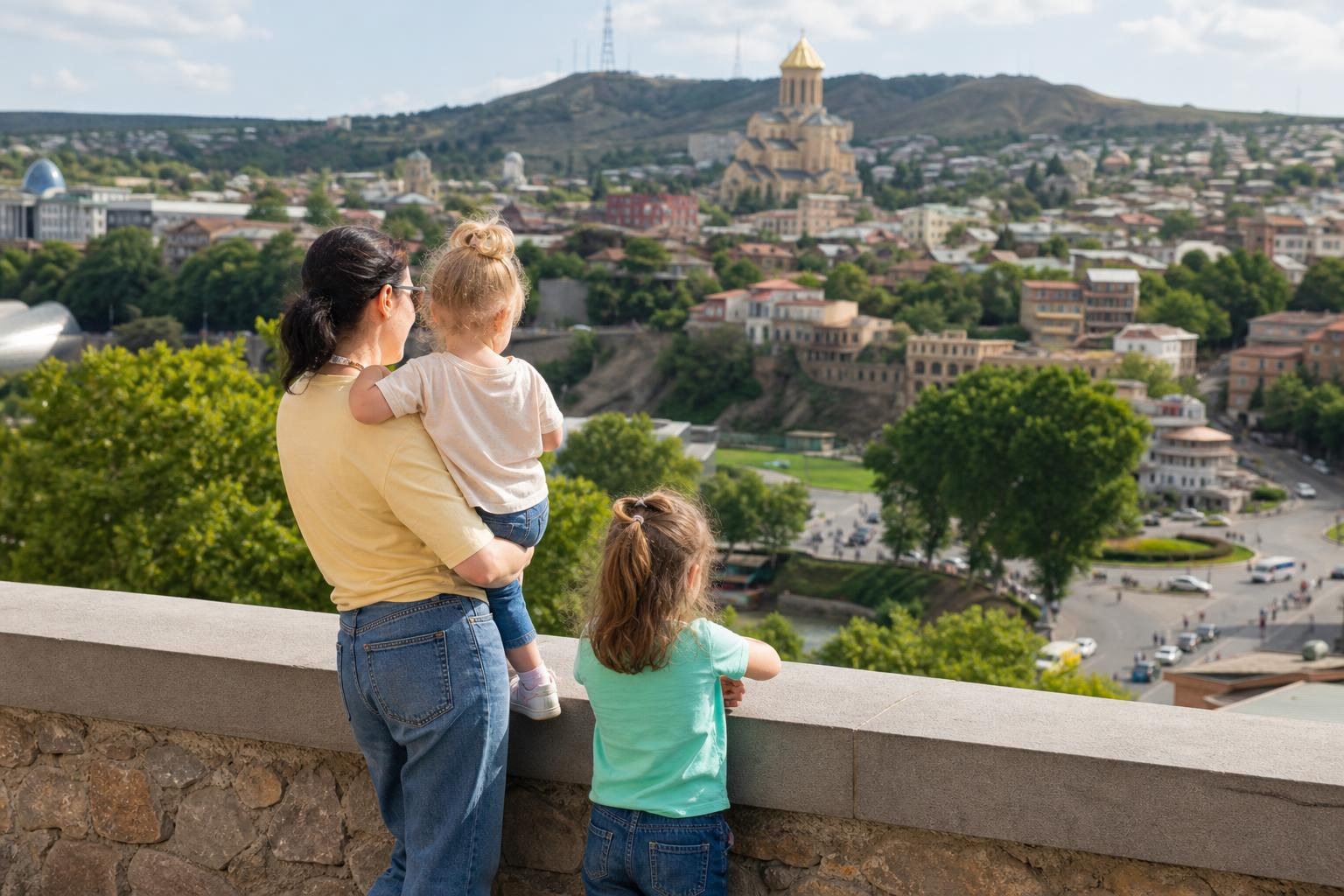
Tbilisi is one of those cities that surprises parents. You expect cobblestones and chaos, and you get both, but you also find a capital that genuinely accommodates families in ways many European cities don’t bother with. The food is kid-friendly by default (cheese bread is basically a national institution), the public parks are generous, and locals will carry your stroller up stairs without being asked. I’ve walked these streets with a toddler on my hip and a five-year-old running ahead, and the city held up beautifully. If you’re planning a trip to Tbilisi with kids, wondering what to see, which routes work with a stroller, and where to find diapers at 10 p.m., this is the guide I wish I’d had. Georgia’s capital has a rhythm that works for families: mornings at parks and museums, long lunches where nobody rushes you, and evenings along the river when the heat breaks. The trick is knowing which attractions are genuinely worth your time with children in tow, and which ones are better saved for a solo trip. The altitude, the heat (summers hit 38°C regularly), and the hilly terrain all matter when you’re traveling with little ones. So does knowing that a metro ride costs just 1 GEL (about $0.37 in 2026) and that most taxi apps let you request a car seat. These details make or break a family trip.
Top Family-Friendly Sightseeing and Attractions
Tbilisi’s best family attractions share a common thread: they’re outdoors, they’re affordable, and they don’t require kids to be quiet for two hours. The city sits in a valley along the Mtkvari River, with neighborhoods climbing steep hills on both sides. That geography means views are everywhere, and so are parks. Most of the places families gravitate toward are concentrated in three zones: the hilltop Mtatsminda area, the riverfront near Rike Park, and the sprawling green spaces of Vake and Turtle Lake to the west.
Entry fees across Tbilisi’s family attractions are remarkably low by European standards. Mtatsminda Park charges between 2-8 GEL per ride (roughly $0.75-$3), and most museums run 5-15 GEL for adults with free entry for children under six. That pricing means you can fill an entire day without spending more than $20-25 for a family of four, excluding food.
Mtatsminda Park: Rides and Panoramic Views
Perched on the mountain that gives it its name, Mtatsminda Park is Tbilisi’s most popular family destination, and it earns that status. The amusement park sits at around 770 meters above sea level, offering views that stretch across the entire city and beyond to the Caucasus foothills. You can reach it via the funicular railway from Chonkadze Street, which is itself half the fun for kids: the steep, rattling ascent takes about five minutes and costs 15 GEL round trip for adults.
The park has a solid mix of rides for different ages. Younger children (ages 3-7) will find bumper cars, a small Ferris wheel, a carousel, and a miniature train. Older kids can try the roller coaster, drop tower, and the park’s signature attraction: a giant observation wheel that lifts you above the treeline. Rides operate on a pay-per-ride basis using rechargeable cards, so you’re not locked into an expensive all-day pass.
Pack snacks. The food options inside are limited to standard amusement park fare: hot dogs, popcorn, and ice cream. The real draw is the panoramic terrace near the TV tower, where you can see Narikala Fortress, Holy Trinity Cathedral, and the winding river below. Sunset visits are magical but get crowded on weekends.
The Chronicles of Georgia: A Giant’s Playground
This one catches families off guard. The Chronicles of Georgia (also called the Stonehenge of Tbilisi by some travelers) is a massive monument on a hill overlooking the Tbilisi Sea reservoir. Sixteen stone pillars, each standing 35 meters tall, are carved with scenes from Georgian history, biblical stories, and royal figures. For adults, it’s a striking piece of monumental art. For kids, it’s a giant’s playground.
The base of the monument is wide open, with no fences or barriers. Children run between the pillars, touch the carvings, and climb the broad steps. The surrounding area is undeveloped and quiet, which means no crowds and no entrance fee. It’s a popular stop for families exploring Tbilisi’s outskirts, and the open space makes it ideal for kids who need to burn energy.
Getting there requires a taxi (about 15-20 GEL from central Tbilisi) since public transport connections are thin. Bring water and sun protection: there’s zero shade at the monument itself. The reservoir below has a small beach area, but water quality varies, so check locally before swimming.
Rike Park and the Aerial Tramway
Rike Park sits on the left bank of the Mtkvari River, directly across from the Old Town. It’s a modern, well-maintained green space with a playground, musical fountains, and a giant piano-shaped structure that kids love climbing on. The park is flat and stroller-friendly, which already puts it ahead of most Tbilisi attractions.
The main draw for families is the aerial tramway that connects Rike Park to Narikala Fortress. The glass-walled cable car glides over the river and Old Town rooftops, and the ride takes just two and a half minutes. It costs 2.50 GEL per trip using a metro card, making it one of the cheapest aerial tramways anywhere in Europe. Kids under six ride free.
At the top, Narikala Fortress offers incredible views but requires careful supervision. The walls are ancient and uneven, with steep drops and no guardrails in places. With children older than five or six, it’s manageable. With toddlers, I’d ride the tramway up, enjoy the view from the platform area, and ride back down without attempting the fortress walls.
Educational and Interactive Experiences
Tbilisi has invested in family-oriented indoor attractions over the past several years, and the results are genuinely good. These spots work best on hot afternoons or the occasional rainy day, giving you a break from outdoor sightseeing without resorting to screen time at the hotel.
The Museum of Illusions and Experimentorium
Two separate venues, often confused, and both worth visiting. The Museum of Illusions on Betlemi Street in the Old Town is the smaller of the two, focused on optical illusions, trick rooms, and interactive photo opportunities. Kids love the upside-down room and the infinity mirror tunnel. It takes about 45 minutes to get through, and tickets run around 20 GEL for adults, 15 GEL for children.
The Experimentorium, located in Vake, is a proper science museum aimed at children ages 5-14. Exhibits cover physics, biology, and engineering through hands-on experiments. Kids can build circuits, create tornadoes in bottles, and explore a darkened room with UV-reactive paint. It’s modeled on European science centers and holds up well against them. Plan for 90 minutes to two hours.
Both venues are air-conditioned, which matters enormously between June and September when Tbilisi’s heat becomes genuinely oppressive. The Experimentorium also has a small café, making it a comfortable half-day option.
Puppet Shows at Gabriadze Theater
The Rezo Gabriadze Marionette Theater is a Tbilisi institution, and catching a show here is one of those experiences that works for every age. The theater is tiny, seating around 80 people, and performances use elaborate handmade puppets with stories drawn from Georgian folklore and Gabriadze’s own imagination. Shows run in Georgian, but the visual storytelling is so strong that language barely matters.
Performances typically happen on weekends, with occasional weekday shows during tourist season. Tickets sell out fast: book at least a week in advance during summer. Prices hover around 30 GEL per seat. The building itself is worth seeing even without a show. The tower clock outside performs a brief mechanical puppet show every hour, and kids will stand mesmerized watching the angel emerge.
The theater sits on Shavteli Street in the Old Town, surrounded by cafés with outdoor seating. Combine a show with lunch at one of the nearby restaurants, and you’ve got a perfect morning.
Recommended Routes for Families with Strollers
Tbilisi’s terrain is the biggest challenge for families with young children. The Old Town is hilly, with uneven cobblestones and narrow sidewalks. Newer neighborhoods like Vake and Saburtalo are flatter and more stroller-friendly. Planning your route matters here more than in most cities.
The Vake Park to Turtle Lake Trail
This is my favorite family walk in Tbilisi. Vake Park is a large, shaded green space in the Vake district, about 15 minutes by taxi from the center. The park has wide paved paths, benches everywhere, and a playground near the main entrance. From the back of the park, a cable car (3 GEL per person) takes you up to Turtle Lake, a small natural lake surrounded by forest at about 680 meters elevation.
The lake has a walking path around its perimeter (roughly 1.5 km, flat and paved), a few casual restaurants, and a small swimming area. The water is clean enough for wading, though most families stick to the shore. The temperature up here runs 3-5 degrees cooler than central Tbilisi, which is a genuine relief in summer. Families with strollers can handle the entire loop comfortably. The cable car accommodates strollers, though you may need to fold them during busy periods.
Alternatively, there’s a paved road from Vake Park to Turtle Lake that some families walk (about 2.5 km uphill). It’s doable with a sturdy stroller but tiring in the heat. The cable car is the better choice for most.
Old Town Discovery: Shardeni and Sulfur Baths
Walking the Old Town with kids requires some strategic thinking. Shardeni Street is the pedestrianized heart of the tourist district: flat, car-free, and lined with restaurants that put tables outside. It’s the easiest part of the Old Town to manage with a stroller. From Shardeni, you can walk to the sulfur baths district (Abanotubani) along Kote Abkhazi Street, which is mostly downhill and manageable.
The sulfur baths themselves are a mixed experience with kids. The public baths are inexpensive (3-5 GEL entry) but crowded and not designed for young children. Private rooms at bathhouses like Chreli Abano or Royal Bath cost 60-120 GEL per hour and can accommodate families, but the hot sulfur water (around 40-45°C) is too warm for babies and toddlers. For kids over five, a private room can be a fun novelty: just limit time in the water to 15-20 minutes.
The waterfall at the end of the baths district is a better bet for young kids. A short trail from the baths leads to a small but scenic waterfall in a narrow canyon. The path is rocky and not stroller-friendly, so you’ll need a carrier for little ones. It’s a quick adventure that families consistently enjoy, and the whole detour takes about 30 minutes.
At a Glance: Best Activities by Age Group
Not every attraction works for every age. Here’s a breakdown based on what I’ve seen families actually enjoy, not just what’s marketed to them.
| Age Group | Best Activities | Skip or Save for Later |
|---|---|---|
| 0-2 years | Rike Park, Vake Park, Turtle Lake, aerial tramway, café culture | Mtatsminda rides, Narikala Fortress walls, sulfur baths |
| 3-5 years | Mtatsminda Park (small rides), Museum of Illusions, Gabriadze clock tower, playgrounds | Experimentorium (too advanced), long Old Town walks |
| 6-9 years | Experimentorium, Chronicles of Georgia, cable cars, Narikala Fortress, private sulfur bath | Extended museum visits, wine tastings |
| 10-14 years | Mtatsminda thrill rides, Old Town exploration, cooking classes, Experimentorium, escape rooms | Basic playgrounds, very touristy restaurants |
The sweet spot for Tbilisi as a family destination is kids aged 4-10. The city has enough variety to keep them engaged without the intensity of a place like Istanbul or the walking distances of Rome. Teenagers might find it slower-paced than they’d like, though the food and cable cars tend to win them over.
Dining with Kids: Georgian Food for Picky Eaters
Georgian cuisine is one of the most naturally kid-friendly in the world, and I don’t say that lightly. The staples are bread, cheese, butter, and meat: exactly what most children will eat without complaint. Khachapuri, the cheese-filled bread that comes in regional varieties, is available at every restaurant and costs 8-15 GEL depending on size and type. The Adjarian version, shaped like a boat with an egg and butter in the center, is theatrical enough to keep kids interested.
Khinkali, the oversized soup dumplings, are another reliable hit. They come stuffed with meat, cheese, potato, or mushroom, and eating them is a skill that kids enjoy learning (you hold the top knob, bite a small hole, slurp the broth, then eat the dumpling). Most restaurants serve them for 1-1.50 GEL per dumpling, and five or six make a full meal for an adult.
For genuinely picky eaters, Georgian restaurants almost always have lobiani (bean-filled bread), french fries, and grilled chicken. Fresh fruit is abundant and cheap from June through October: a kilo of peaches costs about 3-4 GEL at street markets, and watermelons go for 1-2 GEL per kilo.
One thing to know: Georgian portions are enormous. Order one khachapuri and one plate of khinkali for the table, add a salad, and see where you are before ordering more. Restaurants expect sharing, and servers won’t rush you. Lunch can easily stretch to 90 minutes, which is either wonderful or challenging depending on your children’s patience levels.
Practical Tips for Navigating Tbilisi with Children
The practical side of traveling with kids in Tbilisi is where good planning makes the biggest difference. The city is safe, affordable, and welcoming, but it has quirks that can trip up unprepared families.
Water is the first priority. Tbilisi tap water is safe to drink, which saves you from buying bottles constantly. Carry refillable water bottles and fill them at your hotel each morning. Dehydration sneaks up fast in summer, especially on kids who are too busy playing to ask for water.
Timing your days matters. The heat between 1 p.m. and 5 p.m. from June through August is brutal. Plan outdoor activities for mornings and evenings, and use the hot afternoon hours for museums, naps, or indoor play spaces. Most Georgian families follow this rhythm naturally, which is why restaurants are packed at 9 p.m. and parks are empty at 2 p.m.
Pharmacies (called “aptiaki” in Georgian) are everywhere and well-stocked. Most pharmacists speak some English and can recommend children’s medications. Common brands like Nurofen and Panadol are available without prescription.
Public Transport vs. Taxis with Car Seats
Tbilisi’s metro system is clean, efficient, and covers the main corridors of the city on two lines. A single ride costs 1 GEL using a rechargeable metro card (the card itself costs 2 GEL). The metro works well for getting between major areas: Rustaveli Avenue to Station Square, or Vake to the center. Stations have escalators but not all have elevators, which makes strollers tricky at some stops.
Buses are less practical with kids. Routes are confusing, vehicles are often crowded, and stops aren’t always clearly marked. I’d skip them entirely unless you’re comfortable with unpredictability.
Taxis are where Tbilisi shines for families. Bolt and Yandex Go both operate here, and rides across the city rarely exceed 10-15 GEL ($3.70-$5.50). Both apps allow you to request a car seat, though availability varies. If you’re traveling with a child under three, bring your own lightweight car seat or travel harness. Georgian traffic is aggressive by European standards: seatbelts and car seats aren’t optional from a safety perspective, even if local practice is more relaxed.
A taxi from Tbilisi International Airport to the city center costs 35-50 GEL and takes 20-30 minutes depending on traffic. Pre-booking through your hotel or using an app avoids the inflated prices from airport taxi drivers.
Where to Find Baby Supplies and Supermarkets
The two major supermarket chains are Carrefour and Goodwill, both of which stock diapers, formula, baby food, and wipes. Carrefour locations in the Tbilisi Mall and East Point Mall have the widest selection, including international brands like Pampers and Huggies. Prices are comparable to Western Europe: a pack of 50 diapers runs about 25-30 GEL.
For formula, Georgian pharmacies often have a better selection than supermarkets. Brands like NAN, Similac, and Hipp are widely available. If your child uses a specific formula, bring enough for the first few days and then locate it locally rather than packing your entire supply.
Baby food jars from brands like HiPP and Gerber are stocked at most Goodwill and Carrefour locations. Local Georgian baby food brands also exist and are perfectly fine: just check labels for allergens if that’s a concern. Fresh fruit purees are easy to make at your accommodation if you have a kitchen, given how cheap and abundant fresh produce is at markets like the Dezerter Bazaar.
Late-night needs are covered by 24-hour pharmacies scattered throughout the city. Google Maps reliably shows which ones are open, and most carry basic baby supplies alongside medications.
Your Family Trip Starts with Knowing What to Expect
Tbilisi rewards families who come prepared but stay flexible. The city isn’t polished in the way that Barcelona or Vienna might be: sidewalks crack, streets climb at absurd angles, and the summer heat can flatten you. But the warmth of the people, the absurdly good food, and the genuine affordability make it one of the best family destinations in the region that most Western travelers haven’t discovered yet.
Start with Rike Park and the aerial tramway on your first morning to get your bearings. Save Mtatsminda for a cooler day or an evening visit. Let your kids eat khachapuri for breakfast, lunch, and dinner if they want to: you’re on vacation. And remember that the best moments in Tbilisi with kids often aren’t planned. They’re the street musician who makes your daughter dance, the bakery where the owner hands your son a free puri straight from the oven, or the cable car ride where the whole family goes quiet, watching the city unfold below. Those are the things you’ll actually remember.