
Table of Contents
- Weather Overview: Georgia in May
- City Style: Packing for Tbilisi and Kutaisi
- Mountain Essentials: Kazbegi, Mestia, and Beyond
- Cultural Considerations and Dress Codes
- Practical Accessories for a May Trip
- Final Packing Checklist for Georgia
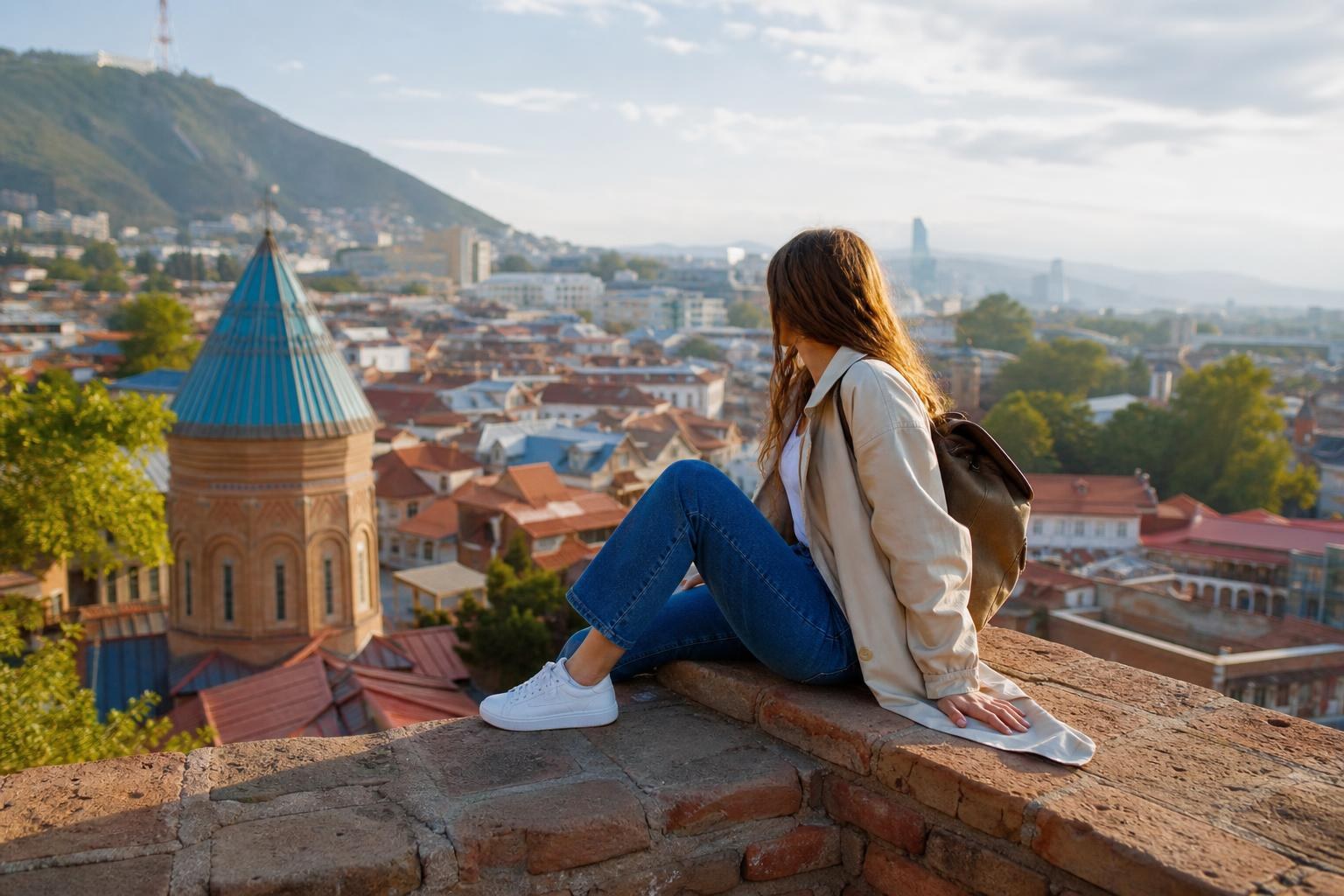
Georgia in May is one of those rare travel windows where everything aligns: the valleys are green, Tbilisi buzzes with outdoor café culture, and the high Caucasus passes start opening for the season. But that range of experiences – sipping natural wine on Rustaveli Avenue one day and trekking toward Gergeti Trinity Church the next – creates a real packing challenge. The temperature difference between downtown Tbilisi and the mountains near Kazbegi can be 20°C or more on the same day. I’ve made the mistake of packing for only one version of Georgia and regretted it within hours of arriving. If you’re figuring out what to wear in Georgia in May across both city streets and mountain trails, the key is strategic layering and knowing exactly where you’ll be spending your time. This guide breaks down the weather patterns, cultural expectations, and gear choices that will keep you comfortable whether you’re wandering through Kutaisi’s old town or scrambling up a trail in Svaneti. No generic advice here: just practical recommendations from someone who has packed badly for this trip and learned from it.
Weather Overview: Georgia in May
May in Georgia is a month of contrasts. The country sits at a crossroads between Europe and Asia, and its geography creates microclimates that can catch travelers off guard. Coastal Batumi might be humid and warm while Mestia, just a few hundred kilometers away, still has snow on the ground. Understanding these differences before you pack is the single most important thing you can do.
The general trend is warmth in the lowlands and cool, unpredictable conditions at altitude. Rain is a real factor across the country, particularly in the first half of May. By late May, things dry out somewhat, but afternoon thunderstorms in the mountains remain common through the end of the month.
Climate Variations Between Tbilisi and the Caucasus
Tbilisi in May feels like early summer. Daytime temperatures regularly hit 25-28°C, and the Old Town radiates heat off its stone walls and narrow streets. Evenings cool to a pleasant 14-16°C, which means you’ll want a light jacket for after-dinner walks along the Mtkvari River but won’t need anything heavy.
The Caucasus mountains are a different story entirely. Kazbegi (Stepantsminda) sits at around 1,750 meters, and temperatures there hover between 5°C and 15°C in May. Go higher on a hike and you can encounter near-freezing conditions, especially in the morning. Mestia, the gateway to Upper Svaneti, is similar: May days can be crisp and sunny or cold and rainy within the same afternoon.
I’ve seen travelers arrive in Kazbegi wearing the same linen shirt they wore in Tbilisi, and they were miserable by noon when clouds rolled in. The altitude difference is roughly equivalent to going from Rome to the Swiss Alps, and you need to pack accordingly.
Average Temperatures and Rainfall Data Table
| Location | Avg. High (°C) | Avg. Low (°C) | Rainfall (mm) | Rainy Days |
|---|---|---|---|---|
| Tbilisi | 25 | 14 | 77 | 10-12 |
| Kutaisi | 23 | 12 | 95 | 12-14 |
| Kazbegi | 13 | 4 | 85 | 13-15 |
| Mestia | 14 | 5 | 90 | 14-16 |
| Batumi | 21 | 14 | 115 | 12-14 |
These numbers tell a clear story. Tbilisi and Kutaisi are warm enough for summer clothing during the day, while the mountain towns require genuine cold-weather layers. Rainfall is consistent across the country, so waterproof gear isn’t optional anywhere.
City Style: Packing for Tbilisi and Kutaisi
Georgian cities have a surprisingly stylish culture. Tbilisi in particular has a strong fashion scene, and locals tend to dress well for everyday activities. You won’t feel out of place in casual travel clothes, but you’ll blend in better with a slightly polished look. Kutaisi is more relaxed, but the same general principles apply.
The goal for city packing is versatility. You want pieces that work for a morning at the Dry Bridge Market, an afternoon at the Narikala Fortress, and dinner at a wine bar, all without going back to your hotel to change.
Smart Casual Layers for Urban Exploring
A well-planned packing list for Georgia starts with breathable, versatile basics. For Tbilisi in May, think light cotton or merino wool t-shirts, a pair of chinos or dark jeans, and a lightweight button-down shirt for evenings. Women can pack a midi skirt or dress that works for both sightseeing and church visits (more on that later).
The essential city layer is a light jacket or cardigan. Evenings in Tbilisi drop enough that you’ll want something with sleeves, and air-conditioned restaurants can feel chilly after a warm day outside. A linen blazer or a thin cotton jacket strikes the right balance between warmth and style.
One thing I always recommend: pack at least one outfit that feels “nice” by your own standards. Georgian hospitality culture, rooted in the concept of stumari ghvtisaa (“the guest is from God”), means you may get invited to a supra (traditional feast) with little notice. Having something presentable in your bag means you can say yes without hesitation.
Footwear for Cobblestone Streets
This is where a lot of travelers go wrong. Tbilisi’s Old Town is beautiful, but it’s built on steep hills covered in uneven cobblestones, cracked sidewalks, and occasional patches of gravel. Flip-flops are a recipe for a twisted ankle. Sleek leather shoes with no grip will have you sliding on polished stone.
The best city footwear is a comfortable walking shoe with a decent sole. Think leather sneakers, low-profile hiking shoes, or sturdy sandals with ankle straps. If you’re planning to visit the sulfur baths in Abanotubani, pack a pair of slip-on sandals for that specific purpose.
For women, a pair of comfortable ankle boots works well across multiple settings: they handle cobblestones, look appropriate for restaurants, and pair well with skirts for church visits. Avoid brand-new shoes of any kind. Break them in before your trip or you’ll be buying bandages at a Tbilisi pharmacy within two days.
Mountain Essentials: Kazbegi, Mestia, and Beyond
The mountains are why many people come to Georgia, and May is an exciting but demanding time to visit them. Snow is melting, waterfalls are at peak flow, and wildflowers carpet the alpine meadows. But conditions can change fast, and being unprepared at 3,000 meters is genuinely dangerous, not just uncomfortable.
If your itinerary includes any time above 2,000 meters, you need to pack as if you’re going on a proper mountain trip, because you are.
The Three-Layer System for Variable Altitudes
The classic three-layer approach works perfectly for Georgia’s mountains in May. Here’s how I break it down for this specific context:
- Base layer: A moisture-wicking synthetic or merino wool top. Cotton is a poor choice because it holds sweat and chills you quickly when the wind picks up. A long-sleeve merino base layer weighs almost nothing and can double as a sleep shirt.
- Mid layer: A fleece jacket or lightweight insulated vest. Temperatures at Kazbegi can feel warm in direct sun but drop sharply in shade or wind. A 200-weight fleece is ideal: warm enough for cold mornings, easy to stuff in a daypack when the sun comes out.
- Outer layer: A waterproof, windproof shell jacket. This is non-negotiable. May thunderstorms in the Caucasus arrive with little warning, and being caught in rain at altitude without a shell can lead to hypothermia even in “spring” conditions. Look for something with sealed seams and a hood that cinches around your face.
This system lets you add or remove layers throughout the day as conditions change. On a typical May hike to Gergeti Trinity Church, you might start in all three layers at 8 AM, strip down to just the base layer by noon, and add the shell back on when afternoon clouds roll in.
Technical Gear for Late Spring Hiking
Beyond the three-layer system, Georgia’s mountains in May require a few specific items. Waterproof hiking boots with ankle support are essential: trails can be muddy, snowy, and rocky, sometimes all within the same kilometer. May is too early for trail runners on most high-altitude routes.
Trekking poles are worth their weight if you’re doing multi-day hikes in Svaneti. The trails between Mestia and Ushguli involve river crossings and steep descents on loose scree, and poles save your knees and improve stability. Georgia’s trails vary significantly in difficulty depending on the season, and May sits right at the edge of when some high passes become accessible.
Gaiters are useful but not strictly necessary unless you’re going above the snowline. A sun hat and UV-rated sunglasses are critical at altitude: the UV index at 3,000 meters is significantly higher than in Tbilisi, and sunburn happens fast on clear days. Pack sunscreen rated SPF 50 or higher.
Cultural Considerations and Dress Codes
Georgia is a deeply traditional country in many ways, and clothing choices carry cultural weight in certain settings. This isn’t about rigid rules: Georgians are incredibly welcoming and won’t turn you away for wearing shorts. But showing respect through your clothing choices will deepen your experience and open doors that might otherwise stay closed.
What to Wear for Orthodox Church Visits
Georgia’s Orthodox churches are among the country’s most stunning attractions, from the ancient Jvari Monastery to the painted interiors of Gelati near Kutaisi. Every single one has a dress code, and it’s enforced more consistently than you might expect.
For women, shoulders and knees must be covered, and head coverings are required in most churches. Many churches keep a basket of scarves and wrap skirts near the entrance for unprepared visitors, but relying on these feels a bit like borrowing someone’s umbrella: it works, but having your own is better. Pack a lightweight scarf that can serve as both a head covering and a fashion accessory elsewhere.
For men, long pants are expected. Shorts are generally not acceptable inside churches, and some stricter monasteries will ask you to cover your arms as well. A pair of lightweight travel pants and a t-shirt with sleeves will get you through any church visit without issue.
I keep a small “church kit” in my daypack when traveling in Georgia: a scarf for women or a light long-sleeve shirt for men, folded flat at the bottom of the bag. It takes up almost no space and saves the awkwardness of being turned away at the door of a 6th-century monastery.
Evening Attire for Wine Bars and Restaurants
Tbilisi’s dining scene has grown significantly in recent years, and the city now has everything from casual khinkali (dumpling) joints to upscale wine bars serving rare qvevri wines. The dress code varies accordingly.
For casual restaurants and traditional Georgian eateries, clean casual clothing is perfectly fine. Jeans, a nice top, and comfortable shoes will fit right in. Nobody expects formal attire at a neighborhood restaurant where the khinkali costs 0.80 GEL each (about $0.30 USD).
For upscale spots on Erekle II Street or in the Vera neighborhood, step it up slightly. Dark jeans or chinos, a collared shirt or blouse, and closed-toe shoes will put you at the right level. Georgian men tend to dress sharply for evening outings, and while nobody will judge a tourist in hiking pants, you’ll enjoy the experience more if you feel like you belong. A good packing strategy includes one “evening outfit” that packs flat and doesn’t wrinkle easily.
Practical Accessories for a May Trip
The right accessories can make or break a trip to Georgia in May. Beyond the obvious (passport, phone, charger), a few specific items deserve space in your bag.
A compact umbrella is more useful in the cities than a rain jacket. Tbilisi rain showers tend to be brief but intense, and ducking under an umbrella while continuing your walk beats overheating in a waterproof shell at 26°C. Save the shell for the mountains.
A daypack in the 20-25 liter range serves double duty: it carries your layers and water bottle on mountain hikes and holds your camera, umbrella, and snacks for city days. Look for one with a water bottle pocket on the side and a hip belt for hiking comfort.
Other items worth packing include a quick-dry travel towel and a reusable water bottle, both of which prove useful daily. A portable power bank is essential since long days of navigation and photography drain phone batteries fast. Download the Bolt app for affordable taxis in Tbilisi and Kutaisi, and grab the Google Translate offline pack for Georgian before you leave home: English proficiency outside Tbilisi is limited, and having offline translation available is genuinely helpful.
One accessory I never travel to Georgia without: a small dry bag or waterproof phone pouch. Whether you’re caught in a mountain downpour or visiting the sulfur baths, keeping your electronics dry is worth the minimal weight.
Final Packing Checklist for Georgia
Here’s a practical checklist organized by category. Adjust quantities based on your trip length, but these core items cover a typical 10-14 day trip spanning both cities and mountains.
- 3-4 moisture-wicking t-shirts or tops
- 1 long-sleeve merino base layer
- 1 fleece or insulated mid layer
- 1 waterproof shell jacket
- 1 pair of hiking pants (convertible zip-offs work well)
- 1 pair of dark jeans or chinos for cities
- 1 lightweight dress or collared shirt for evenings
- 1 scarf or head covering for church visits
- Waterproof hiking boots (broken in)
- Comfortable walking shoes for cities
- Sandals or flip-flops for hostels and baths
- Compact umbrella
- Sunglasses (UV-rated)
- Sun hat or cap
- Sunscreen SPF 50+
- 20-25 liter daypack
- Reusable water bottle
- Quick-dry towel
- Portable power bank
- Dry bag or waterproof phone pouch
The trick with packing for Georgia in May is resisting the urge to pack for only one version of the trip. The country asks you to be ready for warm city afternoons and cold mountain mornings, for casual street food lunches and candlelit wine bar dinners, for ancient church visits and rugged alpine trails. Pack layers, pack versatile pieces, and leave room in your bag for the churchkhela, spices, and wine you’ll inevitably bring home. Georgia has a way of filling your suitcase with things you didn’t plan on carrying, and that’s part of what makes it such a remarkable place to visit in spring.