
Table of Contents
- Weather Overview: December Temperatures and Conditions
- Essential Layering Strategy for Georgian Winters
- City Style: What to Wear in Tbilisi and Kutaisi
- Ski Slope Essentials for Gudauri and Bakuriani
- Must-Have Winter Accessories and Gear
- Final Packing Checklist for a Dual City-Ski Trip
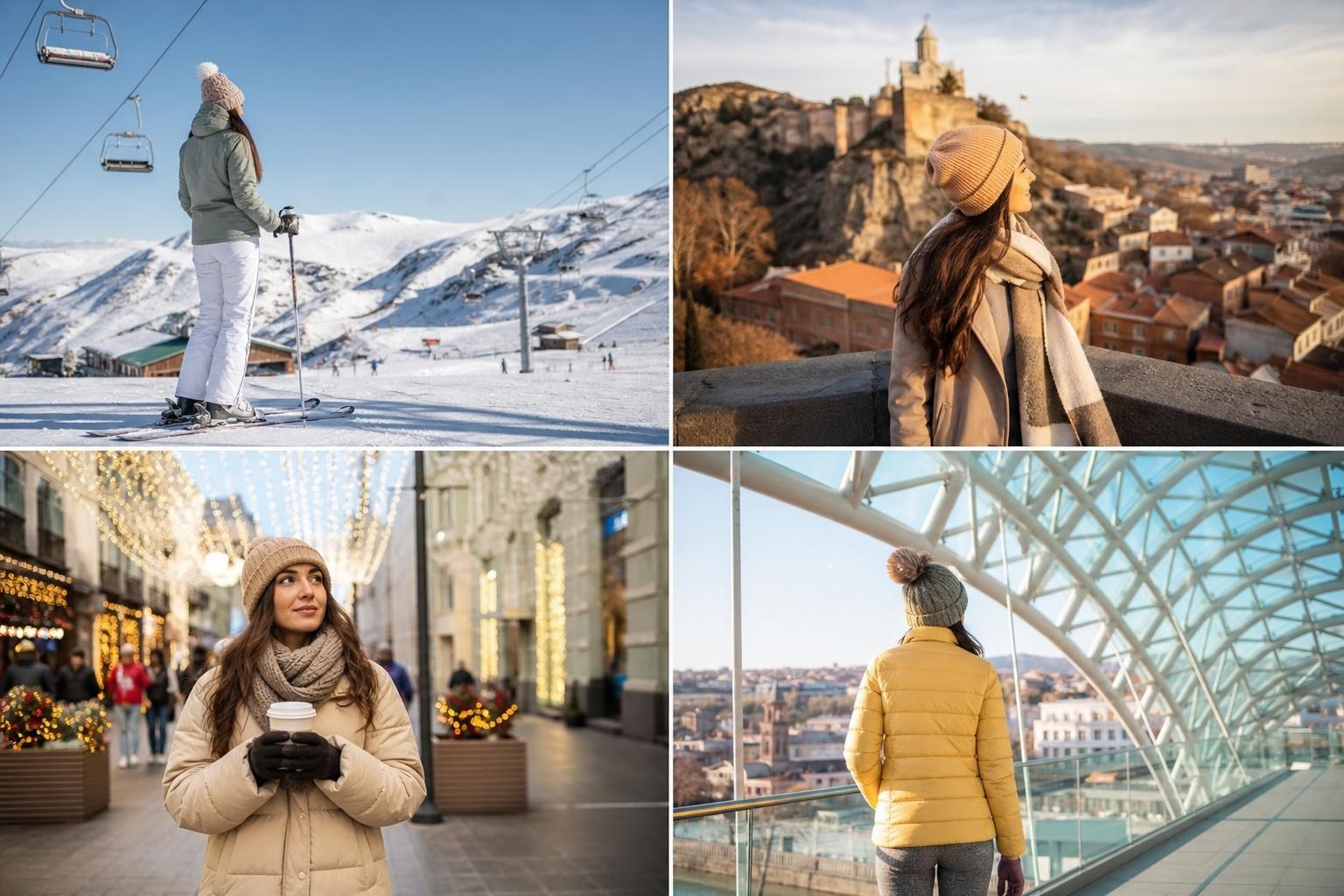
Georgia in December is a study in contrasts. One morning you’re sipping a flat white in a Tbilisi café, admiring street art in the old town while wearing a tailored wool coat. Two days later, you’re carving through fresh powder at 3,300 meters in Gudauri, bundled in technical ski gear from head to toe. The country packs an absurd amount of variety into a small geographic footprint, and your suitcase needs to reflect that. Packing for a December trip that spans both city streets and ski slopes requires some thought, but it’s far from impossible if you understand the climate and plan your layers wisely.
I’ve spent multiple winters bouncing between Tbilisi’s wine bars and Gudauri’s chairlifts, and the biggest mistake I see travelers make is packing for one or the other, not both. You don’t need two entirely separate wardrobes. You need a smart layering system, a few versatile pieces, and the right accessories. This guide breaks down exactly what to wear in Georgia in December for both ski resorts and city exploration, with specific gear recommendations, fabric advice, and a packing checklist you can screenshot before your trip. Whether you’re here for the khinkali, the skiing, or the increasingly vibrant fashion scene, you’ll leave prepared for whatever December throws at you.
Weather Overview: December Temperatures and Conditions
Georgia’s December weather varies dramatically depending on altitude and region. Tbilisi, sitting in a valley at roughly 400 meters above sea level, typically sees daytime temperatures between 2°C and 8°C (36-46°F), with nights dipping to -2°C or lower. Rain is common, and a damp chill settles over the city that can feel colder than the thermometer suggests. Kutaisi, Georgia’s second city in the western Imereti region, runs a few degrees warmer and slightly wetter due to its proximity to the Black Sea.
The ski resorts tell a completely different story. Gudauri, perched at 2,196 meters, sees average December temperatures between -5°C and -10°C (23 to 14°F), with wind chill making exposed skin feel significantly colder. Snowfall usually begins in earnest by mid-December, and the resort typically opens its slopes in late December, with Bakuriani’s Kokhta slopes often launching around December 20. Blizzard conditions aren’t unusual at altitude, and UV radiation intensifies with the snow’s reflective surface.
Average Climate Data by Region Table
| Location | Avg. High (°C) | Avg. Low (°C) | Precipitation | Snow Likelihood |
|---|---|---|---|---|
| Tbilisi | 6-8 | -2 to 1 | Moderate rain | Rare, occasional |
| Kutaisi | 8-10 | 0 to 3 | Frequent rain | Very rare |
| Gudauri | -3 to -5 | -10 to -15 | Heavy snowfall | Near certain |
| Bakuriani | -1 to -3 | -8 to -12 | Moderate snow | Very likely |
| Mestia (Svaneti) | -2 to 0 | -10 to -14 | Heavy snowfall | Near certain |
This table should make one thing clear: you’re packing for two different climates. City clothing needs to handle cold rain and moderate chill. Mountain gear needs to handle subzero temperatures, wind, and snow.
Essential Layering Strategy for Georgian Winters
The single most important concept for a dual city-and-ski trip to Georgia is layering. A well-constructed layering system lets you use many of the same pieces in both environments, reducing luggage weight while keeping you comfortable whether you’re strolling Rustaveli Avenue or riding a chairlift in a snowstorm.
The Three-Layer Rule: Base, Mid, and Outer
The classic three-layer system works perfectly here. Your base layer sits against your skin and manages moisture. Your mid layer provides insulation. Your outer layer blocks wind, rain, or snow.
For city days, this might look like a merino wool long-sleeve tee, a cashmere or fleece sweater, and a stylish wool overcoat. For ski days, the base layer stays the same, the mid layer becomes a down or synthetic puffy jacket, and the outer layer switches to a waterproof ski shell. The beauty of this system is that your base and mid layers do double duty.
I’d recommend packing two base layer tops (one for skiing, one drying), two mid layers (one technical, one more polished for the city), and two outer layers (a city coat and a ski jacket). That covers every scenario without overpacking.
Fabric Choices: Why Merino Wool and Synthetic Blends Win
Cotton is the enemy in Georgian winters. It absorbs moisture, dries slowly, and leaves you cold and clammy whether you’re sweating on a ski run or caught in Tbilisi rain. Merino wool is the gold standard for base layers because it regulates temperature, wicks moisture, resists odor, and feels soft against skin. A 200-weight merino top handles both city walks and moderate ski days.
Synthetic blends, particularly polyester-elastane mixes, work well for mid layers and active ski wear. They dry faster than wool and offer good stretch for movement. For insulation, look for jackets with 700+ fill-power down for maximum warmth-to-weight ratio, or synthetic insulation like PrimaLoft if you expect wet conditions. Down loses its insulating properties when wet, so synthetic fills make more sense for skiers who push hard and sweat.
Avoid pure polyester base layers if you can. They trap odor after one wear, which matters when you’re repacking the same pieces across a multi-day trip.
City Style: What to Wear in Tbilisi and Kutaisi
Tbilisi has quietly become one of the more fashion-forward cities in the post-Soviet world. Georgian designers like Demna Gvasalia (of Balenciaga fame) and brands like Situationist and George Keburia have put the country on the global fashion map. The city’s street style blends emerging local designers with a distinctly Caucasian edge, mixing bold silhouettes with practical winter dressing. You won’t feel out of place in a well-cut coat and good boots, but you will feel out of place in full ski gear walking down Aghmashenebeli Avenue.
Kutaisi is more relaxed and less fashion-conscious, but the same practical rules apply. You’ll be walking a lot, often on uneven surfaces, and you need to stay warm without overheating in heated restaurants and cafés.
Chic Outerwear for Urban Exploration
A mid-length wool or wool-blend coat is the single best investment for city days. It looks sharp, handles Tbilisi’s damp cold effectively, and works over everything from a sweater to a blazer. Dark colors (black, charcoal, navy) are practical and match the local aesthetic.
If wool coats feel too heavy for your luggage, a packable down puffer in a sleek silhouette works as a backup. Several brands now make slim-profile down jackets that look polished enough for a restaurant but compress into a small stuff sack. Pair either option with a chunky knit scarf and you’ll blend right in with the Tbilisi crowd.
Footwear for Cobblestone Streets and Wine Bars
This is where many travelers get it wrong. Tbilisi’s old town is full of cobblestone, uneven pavement, and occasional puddles. Sneakers get soaked. Dress shoes slip. The ideal city shoe is a leather or suede ankle boot with a rubber sole and some water resistance. Think Chelsea boots or lace-up leather boots with a Vibram-style outsole.
I’d also recommend treating any suede or nubuck boots with a waterproofing spray before your trip. Tbilisi’s December drizzle is persistent, and wet suede is miserable. For evenings out at wine bars or restaurants, the same boots work fine; Tbilisi’s dress code is smart-casual at most venues.
Ski Slope Essentials for Gudauri and Bakuriani
Georgia’s ski resorts have grown significantly in recent years. Gudauri is the larger and more developed resort, with modern lifts, extensive off-piste terrain, and a growing reputation among European skiers looking for affordable alternatives to the Alps. Bakuriani is smaller, more family-friendly, and slightly lower in altitude. Both offer excellent December skiing once the snow arrives, and winter tourism revenues continue to climb as more international visitors discover these resorts.
Technical Ski Gear and Waterproofing
Your ski outer layer needs a waterproof rating of at least 10,000mm, though 15,000mm or higher is better for Gudauri’s heavier snowfall days. A ski jacket with sealed seams, a powder skirt, and pit zips for ventilation covers all conditions you’ll encounter. Ski pants should match the waterproof rating and include reinforced cuffs and inner gaiters.
Key technical details to prioritize:
- Waterproof-breathable membrane (Gore-Tex, eVent, or proprietary equivalents)
- Helmet-compatible hood on your jacket
- Multiple pockets, including a goggle pocket with soft lining
- Articulated knees in ski pants for mobility
Gudauri is known for its exceptional off-piste and freeride terrain, so if you plan to venture beyond groomed runs, consider a shell with a higher waterproof rating and pair it with an avalanche beacon, probe, and shovel. Backcountry safety is no joke at altitude in the Caucasus.
If you’re renting skis or boards locally, the rental shops at both Gudauri and Bakuriani are well-stocked with current-season gear. No need to haul your own equipment unless you’re particular about your setup.
Après-Ski Fashion and Comfort
After a day on the slopes, you’ll want to change out of sweaty ski gear and into something comfortable. This is where your city mid layers earn their keep. A clean merino base layer, a fleece or down vest, and comfortable pants work perfectly for Gudauri’s growing après-ski scene, which includes several bars and restaurants near the resort base.
Pack a pair of insulated slip-on boots or warm sneakers for walking between your hotel and restaurants in the evening. The paths around Gudauri can be icy, so something with decent grip matters. Wool socks are non-negotiable here: your feet will thank you after a full day in ski boots.
Must-Have Winter Accessories and Gear
Accessories make or break a December trip to Georgia. The difference between a comfortable day and a miserable one often comes down to whether you packed the right hat or forgot gloves.
Protecting Your Extremities: Hats, Gloves, and Scarves
For city days, a wool or cashmere beanie and leather gloves with a fleece lining are sufficient. They look good, keep you warm, and pack flat. A large wool scarf doubles as a neck warmer, a blanket on long marshrutka rides, and a fashion statement in Tbilisi.
For ski days, you need more serious protection:
- A fleece-lined balaclava or neck gaiter for chairlift wind exposure
- Insulated ski gloves with waterproof shells (not leather city gloves)
- A thin merino liner glove to wear under ski gloves for extra warmth
- A helmet liner or thin beanie that fits under your ski helmet
The temperature difference between Tbilisi at 5°C and Gudauri at -12°C with wind chill is enormous. Don’t assume your city accessories will work on the mountain. They won’t.
General mountain safety advice for the Caucasus emphasizes protecting exposed skin from both cold and wind, particularly above 2,500 meters where conditions change rapidly.
Sun Protection for High-Altitude Snow
This catches people off guard every winter. At Gudauri’s altitude, UV radiation is roughly 50% stronger than at sea level, and snow reflects up to 80% of UV rays back at your face. Sunburn in December sounds absurd until you’ve seen a skier come down with a lobster-red face and raccoon-eye goggle tan.
Pack SPF 50+ sunscreen and apply it before every ski session, including under your chin and on your ears. Lip balm with SPF is essential: cracked, sunburned lips are painful and take days to heal. High-quality ski goggles with UV400 protection and an anti-fog coating are worth every lari. If you wear prescription glasses, look for over-the-glasses (OTG) goggle models.
Polarized sunglasses are also useful for city days when the sun breaks through Tbilisi’s winter clouds and reflects off wet pavement.
Final Packing Checklist for a Dual City-Ski Trip
Here’s the practical list, organized by category. I’ve kept it tight because most travelers to Georgia aren’t checking oversized luggage: you want everything in one medium suitcase and a carry-on.
Base layers:
- 2 merino wool long-sleeve tops (one for city, one for ski rotation)
- 2 pairs merino wool leggings or thermal bottoms
- 3-4 pairs wool blend socks (thin for city boots, thick for ski boots)
Mid layers:
- 1 fleece or lightweight down jacket (ski/mountain use)
- 1 cashmere or wool sweater (city use)
- 1 down vest (versatile for both)
Outer layers:
- 1 wool or wool-blend city coat (mid-length)
- 1 waterproof ski jacket (10,000mm+ rating)
- 1 pair waterproof ski pants
Footwear:
- 1 pair leather or suede ankle boots (waterproofed, rubber sole)
- 1 pair warm après-ski boots or insulated sneakers
Accessories:
- Wool beanie and leather gloves (city)
- Ski gloves, balaclava/neck gaiter, helmet liner (mountain)
- Large wool scarf
- Ski goggles with UV400 protection
- Sunglasses (polarized)
- SPF 50+ sunscreen and SPF lip balm
Extras:
- Waterproofing spray for boots
- Packable tote bag for Tbilisi market shopping
- Portable phone charger (cold drains batteries fast)
This entire list fits in a 65-liter suitcase with room to spare for souvenirs: churchkhela, spices from the Dezerter Bazaar, or a bottle of amber-colored qvevri wine.
The key to dressing well in Georgia during December is accepting that you’re visiting two different worlds in one small country. Your city wardrobe should feel polished and practical. Your ski gear should be technical and protective. And your layering system should bridge the gap between both. Pack smart, bring merino, waterproof everything, and you’ll be comfortable whether you’re toasting with chacha in a Tbilisi cellar bar or dropping into fresh powder above the clouds in Gudauri.