
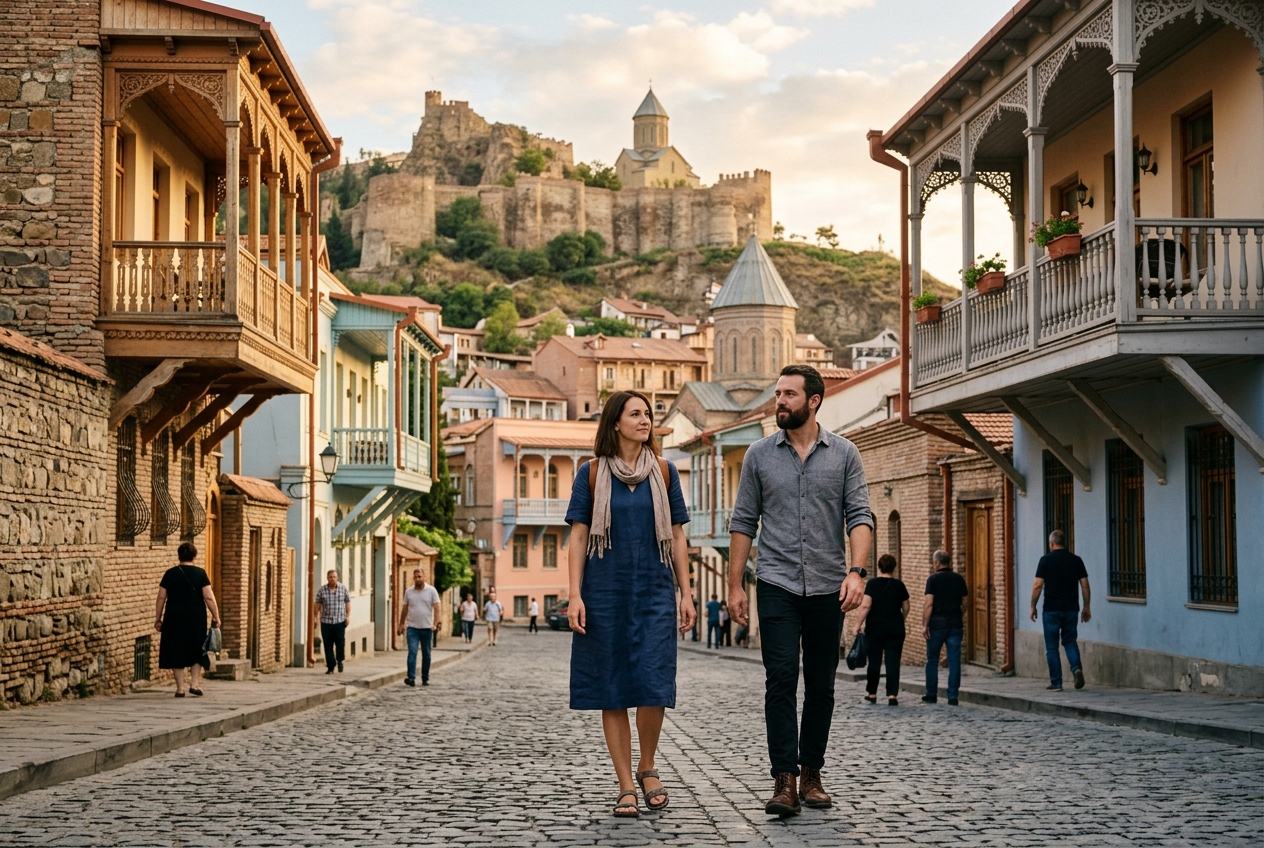
Georgia is one of those countries that catches you off guard. You arrive expecting a post-Soviet aesthetic and instead find yourself surrounded by people who look like they walked out of a European fashion editorial, sipping natural wine at a sidewalk café. But step into a 6th-century monastery in the mountains, and the rules shift completely. Understanding clothing etiquette as a tourist in Georgia means reading the room, sometimes literally, because the room might be a cathedral carved into a cliff face. The country sits at a crossroads of empires, cultures, and climates, and that intersection shapes everything from what locals wear on Rustaveli Avenue to what they expect visitors to wear in a village church. I’ve seen travelers show up in Tbilisi dressed for a beach holiday, only to be turned away from Svetitskhoveli Cathedral an hour later. This guide is the one I wish I’d had before my first trip: practical, specific, and honest about where Georgia is relaxed and where it absolutely isn’t.
Understanding Georgian Style and Cultural Norms
Georgians take personal presentation seriously. This is a culture where the phrase “stumari ghvtisaa” (the guest is a gift from God) shapes hospitality, and where looking put-together signals respect for the people around you. That doesn’t mean you need designer clothes, but it does mean that rolling up to a dinner invitation in gym shorts and flip-flops will raise eyebrows, particularly among the older generation.
The country’s fashion sense reflects its identity: fiercely independent, historically layered, and increasingly European. Georgia (or Sakartvelo, as Georgians call their own country) has absorbed influences from Persia, the Ottoman Empire, Russia, and now Western Europe, and you can see all of it in how people dress.
The Balance Between Modern Trends and Tradition
Walk through Tbilisi’s Fabrika district on a Friday night and you’ll see outfits that could hold their own in Berlin or Copenhagen: oversized blazers, vintage denim, chunky boots, statement jewelry. Georgia’s younger generation, especially those born after the 2003 Rose Revolution, tends to dress with a distinctly European flair. Designers like Demna Gvasalia (yes, the Balenciaga creative director is Georgian) have put the country on the global fashion map.
But step outside the capital, and the aesthetic shifts. In smaller cities like Telavi or Zugdidi, clothing tends toward the conservative. Older men wear dark trousers and button-down shirts even in summer. Women in rural areas often prefer longer skirts and muted tones. Georgians are careful to dress appropriately, and a moderate, well-groomed appearance can earn you respect, especially with the older population. Avoid a baggy, overly casual look out of respect for local sensibilities.
Color Palettes and Common Fashion Aesthetics
Georgian fashion leans toward earth tones, blacks, and deep jewel colors. You’ll notice that Tbilisi residents gravitate toward black year-round, not unlike Parisians. This isn’t accidental: black reads as sophisticated and versatile, and it pairs well with the bold gold and silver jewelry that Georgian women favor.
Traditional Georgian clothing, which you’ll see at festivals and folk performances, features rich reds, deep blues, and elaborate embroidery. The chokha, a long wool coat worn by men, is still brought out for weddings and national celebrations. You don’t need to mimic any of this, but packing a wardrobe heavy on neutrals and darker colors will help you blend in rather than stand out as an obvious tourist.
Strict Dress Codes for Orthodox Churches and Monasteries
Here’s where Georgia gets serious. The Georgian Orthodox Church is one of the oldest Christian institutions in the world, and its influence on daily life remains profound. Around 83% of the population identifies as Orthodox Christian, and religious sites aren’t tourist attractions first: they’re active places of worship. Dress codes at churches, monasteries, and convents are strictly enforced, especially in small towns and rural areas, and locals will not hesitate to tell you if your outfit doesn’t meet the standard.
Requirements for Women: Headscarves and Skirts
Women visiting Georgian religious sites need to cover their shoulders, knees, and hair. This is non-negotiable at most churches, though enforcement varies. At major tourist sites like Jvari Monastery or the Bodbe Convent, you’ll often find loaner scarves and wrap skirts near the entrance. Don’t count on this at smaller, rural churches.
My practical advice: carry a lightweight scarf in your daypack at all times. A large cotton or linen scarf works triple duty as a head covering, a shoulder wrap, and a makeshift skirt over shorts. Maxi skirts or loose linen trousers that fall below the knee are the easiest solution if you’re planning a day of church visits. Tank tops, shorts, and anything above the knee will get you turned away.
Requirements for Men: Long Trousers and Covered Shoulders
Men have it slightly easier but still face rules. Long trousers are required: no shorts, no matter how hot it is. Shoulders must be covered, which means no sleeveless shirts or tank tops. A basic t-shirt and lightweight chinos will get you into any church in the country.
Hats should be removed before entering. This is the opposite of the women’s requirement, which sometimes confuses couples traveling together. One puts a scarf on, the other takes a hat off. It becomes routine after the first few visits.
| Dress Code Item | Women | Men |
|---|---|---|
| Head covering | Required (scarf/headwrap) | Hats must be removed |
| Shoulders | Must be covered | Must be covered |
| Legs | Skirt or trousers below knee | Long trousers required |
| Footwear | Closed or modest sandals | Any closed shoes |
| Enforcement level | Strict, especially rural | Moderate to strict |
Dressing for the Diverse Georgian Landscape
Georgia packs an absurd amount of geographic variety into a country roughly the size of Ireland. You can go from subtropical Black Sea beaches to 5,000-meter Caucasus peaks in a single day’s drive. Your wardrobe needs to account for this.
Urban Exploration in Tbilisi and Batumi
Tbilisi has a liberal fashion sense that gives you plenty of freedom. Jeans, casual dresses, sneakers, and smart-casual outfits all work perfectly for daytime exploring. The Old Town’s sulfur bath district and the winding streets of Sololaki call for comfort above all else, but you won’t look out of place in a nice pair of trousers and a linen shirt either.
Batumi, Georgia’s Black Sea resort city, is even more relaxed. Beachwear is fine on the promenade and at coastal cafés, though you should cover up when heading into the city center or restaurants. Think of it like any Mediterranean resort town: bikinis at the beach, not at the bank.
One thing to note about both cities: the nightlife scene, especially in Tbilisi, skews toward dark, fashion-forward outfits. If you’re planning to visit clubs or upscale bars, pack at least one outfit that’s a step above casual.
Essential Gear for the Caucasus Mountains
If you’re trekking in Svaneti, Tusheti, or Kazbegi, fashion takes a back seat to function. Proper hiking boots with ankle support are essential: the trails are rocky, uneven, and often muddy. Layering is critical because temperatures can swing 15 to 20 degrees Celsius between a sunny valley floor and a windy mountain pass.
A solid mountain packing list includes moisture-wicking base layers, a fleece or down mid-layer, a waterproof shell jacket, and quick-dry hiking pants. Don’t forget sun protection: UV exposure increases significantly at altitude, and Georgian mountain trails above 2,500 meters offer little shade. A wide-brimmed hat and quality sunglasses are as important as your boots.
Seasonal Packing Essentials
Georgia’s climate doesn’t fit neatly into a single category. The eastern plains around Kakheti are semi-arid, the western lowlands near Kutaisi are humid and subtropical, and the mountains have their own alpine system entirely. Packing smart means packing for layers.
Dealing with High Humidity and Summer Heat
Summer in Georgia, particularly July and August, brings temperatures above 35°C in Tbilisi and oppressive humidity along the Black Sea coast. Lightweight, breathable fabrics are your best friend. Cotton and linen work well, though moisture-wicking synthetics dry faster if you’re sweating through multiple outfits a day.
Loose-fitting clothes in lighter colors help reflect heat. Women can get away with sundresses and light skirts in cities, and men will be comfortable in linen shirts and cotton shorts. Just remember to keep that church-appropriate layer accessible in your bag: a long skirt that rolls up small, a scarf, or a pair of lightweight trousers you can pull on over shorts.
Hydration matters more than clothing in Georgian summers, but the right fabrics make a real difference in comfort. I’ve walked through Tbilisi in August in dark jeans and regretted every step.
Layering for Unpredictable Alpine Winters
Georgian winters are wildly variable. Tbilisi sees mild winters with occasional snow, while ski resorts like Gudauri and Bakuriani get buried. The mountains can receive heavy snowfall from November through April, and layering clothing is essential due to unpredictable weather and temperature swings, particularly in spring and autumn when a sunny morning can turn into a freezing afternoon.
A practical layering system for winter travel in Georgia looks like this:
- Base layer: thermal underwear or merino wool tops
- Mid-layer: fleece jacket or lightweight down vest
- Outer layer: waterproof and windproof jacket
- Accessories: warm hat, gloves, and a wool scarf
- Footwear: waterproof boots with good traction for icy sidewalks
Tbilisi’s hilly Old Town becomes genuinely treacherous when icy, so traction on your footwear matters even in the city.
Etiquette for Social Occasions and Dining Out
Georgian social life revolves around food, wine, and hospitality. If you’re lucky enough to be invited to a supra (a traditional Georgian feast), you’re in for an unforgettable experience, and you’ll want to dress the part.
Smart Casual Norms for a Traditional Supra
A supra is not a casual dinner. It’s a structured event with a tamada (toastmaster), multiple courses, and an almost ceremonial rhythm of toasts and songs. Showing up in hiking gear or beach clothes would be a social misstep. Smart casual is the baseline: think clean trousers or a nice skirt, a collared shirt or blouse, and shoes that aren’t sneakers.
You don’t need to be formal, but you should look like you made an effort. Georgians will be dressed well, and they’ll notice if you aren’t. This is especially true in rural areas, where a family may have spent the entire day preparing food for you. Dressing respectfully is a way of honoring that effort.
For restaurant dining in Tbilisi and Batumi, the dress code is more relaxed. Most restaurants don’t enforce a code, but nicer establishments in areas like Vera or the Marriott courtyard expect you to be presentable. A pair of dark jeans and a clean shirt will get you in anywhere.
Footwear Considerations for Cobblestone Streets
This is the detail most packing guides skip, and it’s the one that matters most day-to-day. Tbilisi’s Old Town is built on hills covered in uneven cobblestones, cracked pavement, and steep staircases. Stilettos are a recipe for a sprained ankle. Flat sandals without back straps will slow you down and leave your feet aching.
Comfortable walking shoes are essential for exploring cobblestone streets and hilly terrain. A good pair of leather ankle boots or sturdy sneakers with arch support will serve you well across every setting: churches, restaurants, mountain towns, and city streets alike. If you want something dressier for evenings out, pack a single pair of low-heeled boots or comfortable loafers that can handle a cobblestone walk home.
Final Practical Tips for Respectful Tourism
Dressing well in Georgia isn’t about following a rigid rulebook. It’s about reading context. The country gives you enormous freedom in cities while asking for modesty at sacred sites. It rewards effort and notices carelessness. A few final things worth keeping in your mental suitcase:
Pack a universal outfit that works everywhere: dark trousers, a modest top with sleeves, and comfortable closed shoes. This combination gets you into any church, any restaurant, and any village home without a second thought. Keep a scarf in your bag at all times, regardless of gender: it solves most religious site requirements on the spot.
Download the Bolt app for taxis (it works better than Yandex Go in most Georgian cities) so you can get back to your hotel for a quick change if needed. And if you’re shopping locally, check out Georgian designers like Anouki, Situationist, or Matériel: their pieces make incredible souvenirs and will remind you of Tbilisi every time you wear them.
Georgia is a country that respects intention. If you show up looking like you care, even if your outfit isn’t perfect, Georgians will meet you with warmth. That’s the real dress code here: not a list of rules, but a gesture of respect for a culture that has been welcoming strangers for millennia.