
Table of Contents
- The Historical Heart of Old Tbilisi
- Architectural Landmarks and Religious Heritage
- Cultural Hubs and Modern Districts
- Tbilisi Sightseeing Quick Reference Guide
- Nature and Outdoor Escapes within the City
- Essential Tips for Navigating Tbilisi
Tbilisi is one of those cities that catches you off guard. You arrive expecting a charming but small capital, and within a day you realize you’ve stumbled into one of the most layered, visually stunning, and genuinely warm cities in the world. Georgia’s capital has been ranked among the world’s top trending travel destinations for 2026, and the buzz is well earned. The city stacks centuries of history on top of each other: Persian bathhouses sit beneath Soviet apartment blocks, which sit beneath glass-and-steel pedestrian bridges. For travelers trying to figure out the must-see spots in Tbilisi, the real challenge isn’t finding things to do. It’s narrowing down the list. I’ve spent weeks wandering this city across multiple trips, and the places that stuck with me aren’t always the ones that top generic listicles. Some are, of course, because certain landmarks genuinely deserve the hype. But a few of the best experiences come from places most visitors walk right past. Here’s a practical, honest guide to what actually matters.
The Historical Heart of Old Tbilisi
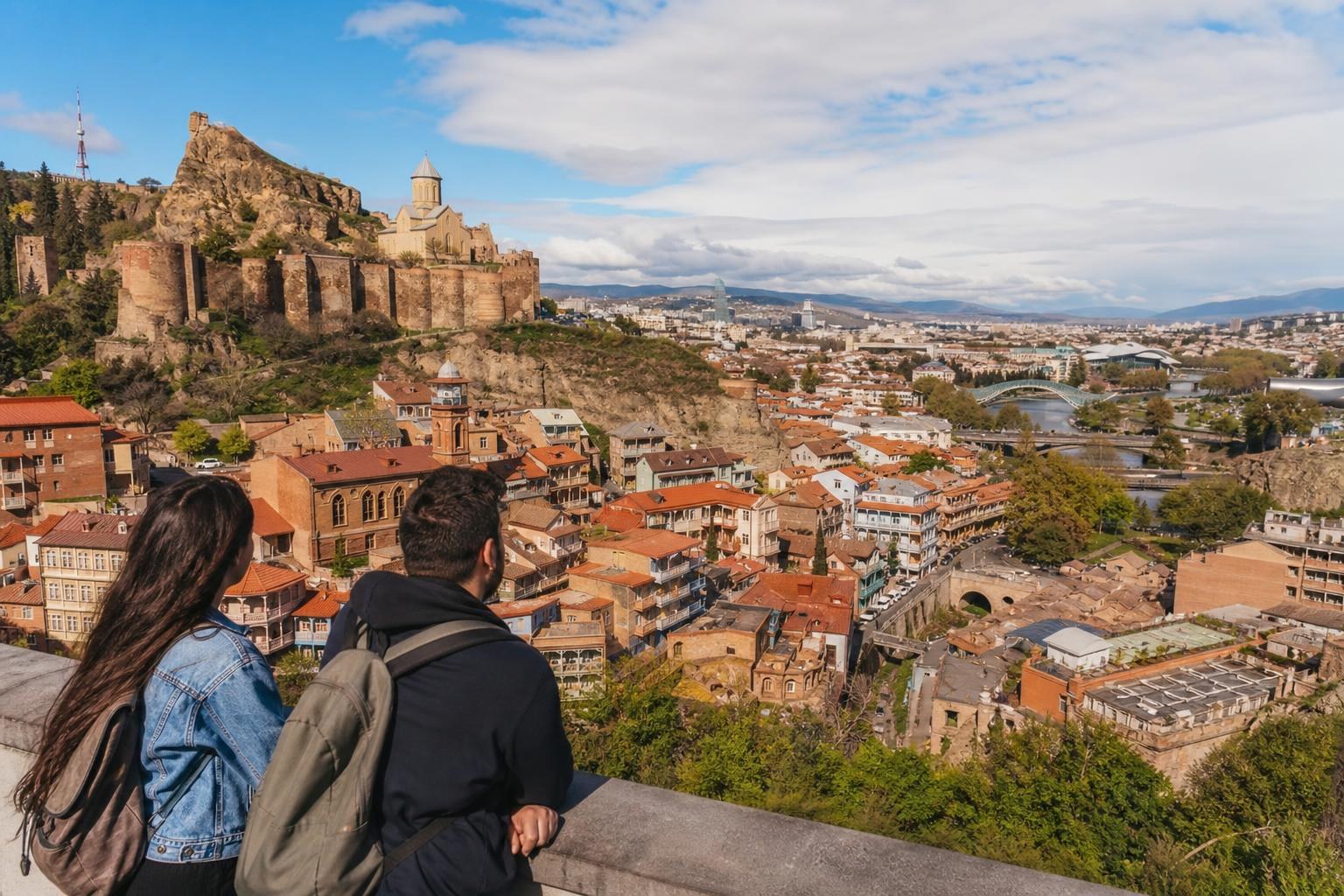
Old Tbilisi, locally called “Dzveli Tbilisi,” is the kind of neighborhood that makes you put your phone away and just look around. The narrow streets twist uphill between wooden balconied houses, many of them leaning at angles that seem to defy physics. This district has been continuously inhabited for roughly 1,500 years, and you feel that weight in the stone walls, the carved doorways, and the grapevines climbing up every available surface.
Walking through Old Tbilisi without a plan is genuinely one of the best things you can do here. You’ll pass tiny churches, courtyard workshops where artisans still work, and hole-in-the-wall bakeries pulling fresh shotis puri (traditional bread) from a tone oven. The neighborhood is compact enough that you won’t get dangerously lost, but winding enough that you’ll always find something unexpected.
Narikala Fortress and Panoramic City Views
Narikala Fortress dates back to the 4th century, making it older than Tbilisi itself. The fortress has been expanded, destroyed, and rebuilt by Persians, Arabs, Mongols, and Georgians over the centuries, and what remains today is a sprawling set of walls and towers perched on a ridge above the Mtkvari River.
You can hike up from Old Tbilisi in about 20 minutes, or take the aerial tramway from Rike Park for 2.50 GEL (roughly $0.90). I’d recommend taking the cable car up and walking down, since the descent through the old streets is half the experience. From the fortress walls, you get a 360-degree view of the city: the gold dome of Sameba Cathedral to the north, Mtatsminda Mountain to the west, and the patchwork of tile roofs and balconies directly below. Sunset is the obvious time to visit, but early morning is quieter and the light hits the old town beautifully.
Inside the fortress walls, the restored Mother of Georgia statue (Kartlis Deda) stands 20 meters tall, holding a sword in one hand and a bowl of wine in the other. It’s a perfect summary of the Georgian character: fierce hospitality alongside a readiness to defend it.
The Sulfur Bath District of Abanotubani
The sulfur baths are the reason Tbilisi exists. Legend says King Vakhtang Gorgasali discovered the hot springs while hunting in the 5th century and decided to build his capital around them. The name “Tbilisi” itself comes from “tbili,” meaning warm. The baths are still fed by natural sulfur springs that push water to the surface at around 40-46°C.
Abanotubani sits in a small valley at the base of Narikala, and the district is instantly recognizable by its low, brick domed rooftops. The most photographed is the Orbeliani Bath, with its blue-tiled facade that looks like it belongs in Isfahan. A private room at the baths runs between 80 and 150 GEL ($29-$55) for an hour, and most include a scrub-down from a professional mekise (bath attendant). It’s not a luxury spa experience: it’s rougher, hotter, and smells strongly of sulfur. But it’s one of those quintessential Tbilisi rituals that connects you to something centuries old.
Shardeni Street and the Rezo Gabriadze Clock Tower
Shardeni Street is the most polished part of Old Tbilisi, lined with cafes, wine bars, and restaurants with outdoor seating that spills across the cobblestones. It’s touristy, yes, but it’s also genuinely pleasant, and the people-watching is excellent.
The real draw here is the Rezo Gabriadze Marionette Theater and its attached clock tower. Every hour, a small angel emerges from the tower and strikes a bell, and twice daily a short puppet show plays out on the tower’s facade. Gabriadze himself, a beloved Georgian filmmaker and artist, designed the tower as a whimsical counterpoint to the ancient churches surrounding it. Catching a performance inside the theater, if tickets are available, is one of the most memorable cultural experiences in the city. Shows are intimate, seating only about 80 people, and they blend humor, sadness, and Georgian folklore in ways that transcend the language barrier.
Architectural Landmarks and Religious Heritage
Tbilisi’s skyline tells the story of a city that has never stopped reinventing itself. Byzantine domes, Art Nouveau facades, Brutalist apartment blocks, and contemporary glass structures all share the same sightline. This architectural layering is part of what makes the city so visually compelling: nothing matches, and somehow it all works.
Holy Trinity Cathedral (Sameba)
Sameba Cathedral is the largest religious building in the South Caucasus, and it dominates the Tbilisi skyline from its hilltop position in the Avlabari district. Completed in 2004, it’s a relatively modern building, but it was designed in a traditional Georgian ecclesiastical style that makes it feel much older. The gold dome rises 84 meters above the ground, and the interior is decorated with frescoes that are still being completed by Georgian artists.
The cathedral complex is free to enter, though visitors should dress modestly: women need to cover their heads (scarves are available at the entrance), and shorts aren’t appropriate for either gender. The grounds around Sameba are worth exploring too, with views over the river and a quiet garden that offers a break from the noise of the city below. For Georgians, this cathedral carries deep significance. It was built to celebrate 2,000 years of Christianity in Georgia and 1,500 years of the Georgian Orthodox Church’s autocephaly.
The Futuristic Bridge of Peace
The Bridge of Peace is the most divisive piece of architecture in Tbilisi. Designed by Italian architect Michele De Lucchi and completed in 2010, it’s a 150-meter glass-and-steel pedestrian bridge that curves over the Mtkvari River, connecting Rike Park to Old Tbilisi. Some locals love it. Others compare it unfavorably to a sanitary pad. Regardless of where you land aesthetically, it’s become one of the city’s most recognizable landmarks.
At night, the bridge lights up with thousands of LEDs that pulse in patterns, and the reflections on the river are genuinely beautiful. It’s also a practical shortcut between the old town and the modern side of the city, so you’ll likely cross it multiple times during your visit. The bridge works best as a symbol of what Tbilisi does so well: placing something boldly contemporary right next to something ancient, and letting the contrast speak for itself.
Cultural Hubs and Modern Districts
The newer parts of Tbilisi are where you see the city’s creative energy most clearly. A growing arts scene, independent cafes, and repurposed Soviet-era buildings have turned several neighborhoods into destinations in their own right.
Rustaveli Avenue and Freedom Square
Rustaveli Avenue is Tbilisi’s main artery, running from Freedom Square to the parliament building. It’s where you’ll find the Georgian National Museum, the Opera House, and several important galleries. The avenue itself is wide and tree-lined, and walking its full length takes about 20 minutes at a comfortable pace.
Freedom Square, anchored by a tall golden statue of St. George, is the emotional center of the city. It’s where Georgians have gathered for protests, celebrations, and political movements for over a century. The square sits at the entrance to Old Tbilisi, making it a natural starting point for exploration. The Georgian National Museum on Rustaveli is particularly worth your time: the archaeological treasury on the ground floor holds gold artifacts from the Colchis civilization dating back to the 2nd millennium BCE.
Fabrika: A Creative Space in a Soviet Sewing Factory
Fabrika is a hostel, co-working space, bar, and cultural venue housed in a converted Soviet sewing factory in the Marjanishvili district. The courtyard is the real attraction: on any given evening, you’ll find locals and travelers sharing tables, street food vendors selling khinkali and lobiani, and DJs or live musicians performing. The walls are covered in murals, and the whole space has a relaxed, unpretentious energy that feels authentically Tbilisi.
Even if you’re not staying at the hostel, Fabrika’s courtyard is worth visiting for a drink and a sense of how Tbilisi’s younger generation is shaping the city’s identity. The surrounding Marjanishvili neighborhood is also excellent for independent restaurants and vintage shops.
Tbilisi Sightseeing Quick Reference Guide
| Attraction | Best Time to Visit | Approximate Cost | Time Needed |
|---|---|---|---|
| Narikala Fortress | Early morning or sunset | Free (cable car 2.50 GEL) | 1-2 hours |
| Abanotubani Sulfur Baths | Late afternoon/evening | 80-150 GEL (private room) | 1-1.5 hours |
| Sameba Cathedral | Morning | Free | 45 minutes |
| Bridge of Peace | After dark | Free | 15 minutes |
| Rustaveli Avenue & National Museum | Midday | Museum: 15 GEL | 2-3 hours |
| Fabrika Courtyard | Evening | Free entry; food/drinks vary | 1-3 hours |
| Botanical Garden | Morning | 4 GEL | 2-3 hours |
| Mtatsminda Park | Afternoon/sunset | Funicular: 15 GEL round trip | 2-3 hours |
Budget travelers will find Tbilisi remarkably affordable. Daily expenses for food, transport, and attractions typically range from $30 to $60 per person, depending on your habits.
Nature and Outdoor Escapes within the City
One of Tbilisi’s underrated qualities is how quickly you can go from crowded streets to genuine green space. The city is built into hills and valleys, and several parks and gardens offer real escapes without requiring a car or a day trip.
The National Botanical Garden of Georgia
The Botanical Garden sits in a gorge directly behind Narikala Fortress, and most visitors discover it by accident while hiking down from the fortress walls. That’s actually the best way to enter: through the back gate at the top, which drops you into the upper trails with views over the canyon.
The garden covers about 128 hectares and contains over 4,500 plant species. The main waterfall, a modest but pretty cascade in the center of the park, is the most visited spot, but the real pleasure is in the quieter trails that wind through bamboo groves and old-growth forest. Entry costs just 4 GEL (about $1.50), and you could easily spend two or three hours here. Bring water: there’s limited shade on some of the upper paths, and Tbilisi summers regularly hit 35°C.
Mtatsminda Park and the Funicular Railway
Mtatsminda is the mountain that looms over Tbilisi’s western side, and the funicular railway that climbs to its summit has been operating since 1905. The ride takes about five minutes, and the views during the ascent are spectacular: the entire city spreads out below you as the carriage climbs.
At the top, Mtatsminda Park is an amusement park with a retro-Soviet charm. The rides are dated but functional, and the real reason to visit is the panoramic terrace, which offers the best aerial view of Tbilisi available without a drone. There’s also a television tower, several restaurants, and a small Ferris wheel that provides an even higher vantage point. The funicular costs 15 GEL round trip, and the park itself is free to enter, with individual ride tickets available separately.
Essential Tips for Navigating Tbilisi
Getting around Tbilisi is straightforward once you understand a few basics. The metro system has two lines and costs 1 GEL per ride (about $0.35), which makes it one of the cheapest urban transit systems anywhere. You’ll need a Metromoney card, available at any station for 2 GEL, which also works on buses.
For taxis, skip the street hails and use Bolt or Maxim, both of which are widely used and keep prices transparent. A ride across the city center rarely exceeds 8-10 GEL. Google Maps works well for walking directions, but it occasionally sends you up staircases that are more like ladders, so stay alert in the hillier neighborhoods.
The Georgian language uses its own unique alphabet, and street signs aren’t always transliterated into Latin script. Download a Georgian language pack on Google Translate before you arrive: offline translation has saved me more than once at a marshrutka station. English is spoken widely in tourist areas and by younger Georgians, but outside the center, a few words of Georgian go a long way. “Madloba” (thank you) and “gamarjoba” (hello) will earn you genuine smiles.
Georgia’s tourism numbers have been climbing steadily, with the country welcoming over 5.5 million international visitors in 2025. Tbilisi absorbs the bulk of that traffic, but the city doesn’t feel overwhelmed the way some European capitals do. Crowds concentrate at a few key spots, and even during peak summer months, you can find quiet corners within minutes.
One practical note on safety: Tbilisi is remarkably safe for a capital city, including for solo female travelers. Petty crime exists but is uncommon in tourist areas, and the police are generally responsive and helpful. The main thing to be cautious about is traffic: drivers in Tbilisi treat lane markings as suggestions, and pedestrian crossings don’t guarantee safety. Look both ways, then look again.
Tbilisi rewards the traveler who stays a little longer than planned. Three days gives you the highlights, but a week lets you settle into the rhythm of the city: morning coffee at a neighborhood bakery, an afternoon wandering a district you hadn’t planned to visit, an evening that starts with wine at a family-run marani and ends with live music somewhere you found by following the sound. The city has a way of making you feel less like a tourist and more like a temporary local, which is the highest compliment any destination can earn. If you’ve been debating whether to visit Tbilisi, stop debating. Book the flight.