
Table of Contents
- The Heart of Georgian Cuisine: Iconic Dough and Cheese Dishes
- Traditional Meat and Vegetable Specialties
- A Guide to Tbilisi’s Best Dining Districts
- Sweet Treats and Local Beverages
- Summary Table: Where to Find the Best Version of Each Dish
- Practical Tips for Navigating Tbilisi’s Food Scene
Georgian food has a way of catching you off guard. You arrive expecting something vaguely Mediterranean or Russian-adjacent, and instead you find a cuisine that feels entirely its own: walnut-laced, herb-heavy, and built on centuries of bread-and-cheese traditions that predate most European culinary canons. Tbilisi is the best place to experience all of it, a city where a 3-lari street khachapuri can rival the version at a 150-lari tasting menu. Gastronomy has become one of the primary forces redefining tourism in Georgia, and for good reason: this is a food city in the truest sense. If you’re trying to figure out what to eat in Tbilisi, the real challenge isn’t finding good food. It’s narrowing down your options. Here’s what actually matters, dish by dish and neighborhood by neighborhood.
The Heart of Georgian Cuisine: Iconic Dough and Cheese Dishes
Bread and cheese form the backbone of Georgian cooking. This isn’t a metaphor. The country has an almost spiritual relationship with dough, and Tbilisi is where you’ll encounter the widest range of styles. Walk through any neighborhood and you’ll smell fresh bread baking in tone ovens, see cheese being stretched and folded, and pass storefronts where golden, bubbling khachapuri emerges every few minutes.
The Georgian word “puri” simply means bread, and it appears in dozens of dish names. Understanding this category first sets the stage for everything else you’ll eat.
Khachapuri: Regional Varieties from Adjaruli to Imeruli
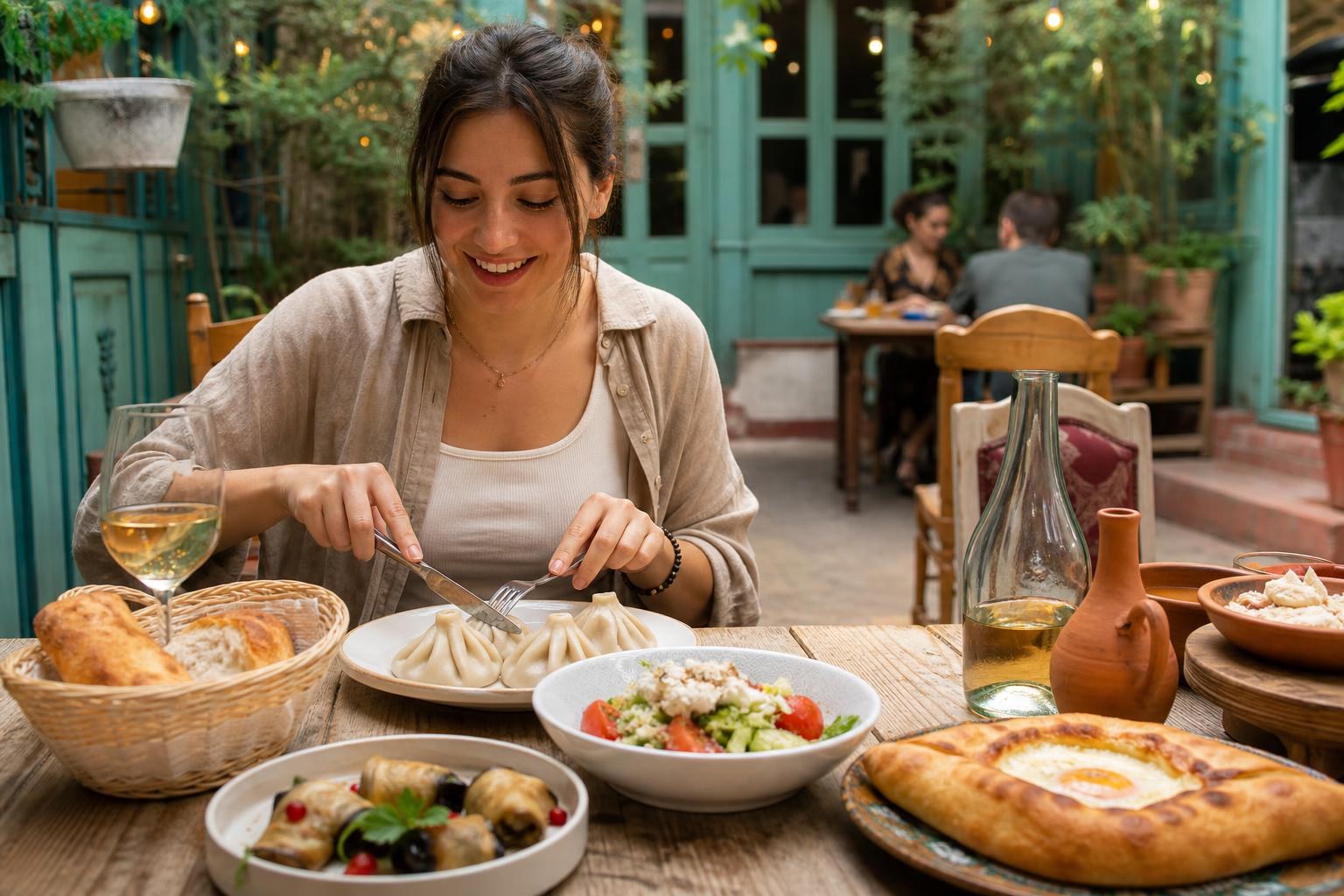
Khachapuri is not one dish. It’s a family of cheese-filled breads, and each region of Georgia claims its own version. The one most visitors recognize is Adjaruli, the boat-shaped bread filled with molten cheese, crowned with a raw egg and a pat of butter. You tear off the pointed ends, stir the egg into the cheese, and use the bread as a scoop. It’s theatrical, rich, and genuinely delicious when done right.
But Imeruli khachapuri is the everyday version, the one Georgians actually eat most often. It’s a flat, round bread stuffed with Imeruli cheese (a brined, slightly tangy variety) and cooked until the crust blisters. A good Imeruli should have a thin, crispy shell and a gooey, salty interior. Expect to pay around 8-12 GEL (roughly $3-4 USD) at a neighborhood bakery.
Then there’s Megruli, which adds a layer of cheese on top of the crust, and Penovani, made with puff pastry. Each version tells you something about the region it comes from. In Tbilisi, you can try all of them in a single day. The bakery chain Machakhela does a reliable Adjaruli, but for Imeruli, seek out smaller spots in the Sololaki neighborhood where grandmothers still shape the dough by hand.
Khinkali: The Art of Eating Georgian Soup Dumplings
Khinkali are Georgia’s answer to soup dumplings, though any Georgian will bristle at the comparison. These large, pleated dumplings are filled with spiced meat (traditionally a mix of pork and beef, seasoned with cumin and black pepper) and sealed with a twisted knob at the top. The key is the broth trapped inside the dough.
The proper technique matters. You pick up a khinkali by the knob, flip it upside down, bite a small hole in the side, and slurp out the hot broth before eating the rest. The knob itself is traditionally left on the plate, uneaten, and at the end of the meal you can count how many you consumed. Five to eight is a respectable showing.
In Tbilisi, the two most famous khinkali spots are Zakhar Zakharich and Pasanauri, both of which serve nothing but dumplings and beer. A single khinkali costs about 1.50-2 GEL, so a full meal rarely exceeds 15 GEL. Beyond the classic meat filling, you’ll find versions stuffed with mushrooms, cheese, or potato. The mushroom variety, flavored with fresh herbs, is a personal favorite and a great option for vegetarians.
Traditional Meat and Vegetable Specialties
Georgian cuisine handles meat and vegetables with equal seriousness. The meat dishes tend toward slow-cooked stews and open-fire grilling, while the vegetable preparations rely on walnuts, pomegranate, and fresh herbs to build complexity without heaviness.
Mtsvadi and Chashushuli: Savory Meat Favorites
Mtsvadi is Georgian barbecue, and it’s simpler than you’d expect. Chunks of pork (sometimes beef or lamb) are threaded onto metal skewers and grilled over grapevine cuttings, which impart a subtle, smoky sweetness. The meat is usually seasoned with nothing more than salt and onion. You’ll find mtsvadi at nearly every restaurant, but the best versions come from roadside grills and family gatherings. In Tbilisi, the restaurant Shavi Lomi does an excellent version, though it’s slightly more refined than the countryside standard.
Chashushuli is the opposite approach: a slow-simmered veal stew with tomatoes, onions, and a generous amount of hot pepper. It’s a winter dish that somehow tastes right in every season. The sauce is thick and deeply savory, meant to be soaked up with fresh shotis puri (the long, canoe-shaped bread baked in a tone oven). A portion typically costs 18-25 GEL at a mid-range restaurant.
Other meat dishes worth seeking out include chakapuli (lamb stewed with tarragon and tkemali plum sauce) and kupati (spiced sausage grilled until the casing snaps). Georgia’s meat-centric cooking reflects culinary traditions that have drawn increasing international attention, particularly as travelers seek out authentic regional food experiences.
Pkhali and Badrijani Nigvzit: Essential Vegetable Appetizers
Georgian cuisine is quietly one of the best in the world for vegetarians, and the appetizer spread is where this becomes obvious. Pkhali is a category of cold dishes made by finely chopping a vegetable (spinach, beet, or cabbage), mixing it with ground walnuts, garlic, vinegar, and fresh herbs, then shaping the mixture into small rounds topped with pomegranate seeds. The flavor is nutty, tangy, and herbaceous all at once.
Badrijani nigvzit takes thin slices of fried eggplant, rolls them around a walnut-garlic paste, and finishes them with pomegranate. It’s one of the most photogenic dishes on any Georgian table, and it tastes as good as it looks. A plate of assorted pkhali and badrijani at a restaurant like Barbarestan (which bases its menu on a 19th-century Georgian cookbook) costs around 12-18 GEL.
Don’t skip lobio, either: a thick stew of red beans cooked in a clay pot with onions, coriander, and spices, served with mchadi (cornbread). It’s humble, filling, and costs almost nothing.
A Guide to Tbilisi’s Best Dining Districts
Tbilisi’s food scene isn’t concentrated in one area. Different neighborhoods offer distinctly different dining experiences, from tourist-friendly taverns to locals-only holes in the wall.
Old Tbilisi: Historic Ambience and Traditional Taverns
The Old Town, centered around the sulfur baths and Narikala Fortress, is where most visitors eat their first Georgian meal. The narrow streets of Abanotubani and Shardeni are lined with restaurants offering full traditional menus, live music, and vine-covered courtyards. The ambience is genuinely beautiful, though prices run 20-30% higher than elsewhere in the city.
For a reliable first experience, Cafe Littera (set in the Writers’ House of Georgia) offers an upscale take on traditional dishes in one of the city’s most stunning courtyards. If you want something more casual, the small duqani (taverns) along Erekle II Street serve honest food at reasonable prices. A full meal with wine for two people at a mid-range Old Town restaurant typically runs 80-120 GEL ($28-42 USD).
Be selective here. Some spots along the main tourist drag coast on location rather than quality. If the menu has photos of every dish and a greeter aggressively waving you inside, keep walking.
Vera and Vake: Modern Twists and Upscale Eateries
Cross the river and head into Vera or Vake, and the dining scene shifts noticeably. These residential neighborhoods have become home to Tbilisi’s growing community of young chefs who blend Georgian ingredients with international techniques. Restaurants like Shavi Lomi (in Vera) and Culinarium (in Vake) represent this new wave, offering dishes like smoked sulguni with truffle honey or deconstructed pkhali with microgreens.
Vera in particular has a great café culture. Tiny coffee shops and wine bars line Ilia Chavchavadze Avenue and the surrounding side streets. The neighborhood feels less performative than Old Town and more like the Tbilisi where locals actually live and eat. A detailed guide to Tbilisi’s best restaurants and cafés can help you sort through the growing number of options in these districts.
Prices in Vake skew slightly higher than the city average, but you’re still looking at 25-35 GEL for a main course at most places, which remains remarkably affordable by European standards.
Sweet Treats and Local Beverages
Georgian meals tend to end with fruit, nuts, or something sweet made from grape must. The dessert tradition here is less about pastry and more about preserved, dried, and concentrated natural flavors.
Churchkhela and Pelamushi: Natural Georgian Sweets
Churchkhela is the candy-colored, candle-shaped snack you’ll see hanging in every market stall. It’s made by threading walnuts (or hazelnuts) onto a string, dipping them repeatedly into thickened grape juice (tatara), and drying the whole thing until it forms a chewy, sweet coating. The best churchkhela has a deep, wine-like flavor and a satisfying chew. The worst tastes like sugary rubber. Buy from vendors who make their own, not the ones selling mass-produced versions in plastic wrap. A single piece costs 3-5 GEL.
Pelamushi is the pudding version of the same concept: grape juice thickened with flour into a dense, sweet porridge, often studded with walnuts. It’s seasonal, appearing mostly in autumn during the rtveli (grape harvest), but some restaurants in Tbilisi serve it year-round. Gulo’s Bakery in the Deserter’s Bazaar area makes a good one.
Tklapi, a thin sheet of dried fruit leather made from plums or other stone fruits, is another traditional sweet worth trying. It doubles as a cooking ingredient in many Georgian sauces.
Qvevri Wine and Lagidze Water: What to Drink
Georgia claims to be the birthplace of wine, and the archaeological evidence backs it up: grape residue found in clay vessels here dates back roughly 8,000 years. Qvevri wine, fermented in large clay pots buried underground, is the traditional method and produces amber wines with a tannic, complex character unlike anything you’ve tasted elsewhere. Orange (amber) wine made this way has become a global trend, but in Tbilisi it’s just how wine has always been made.
For a proper introduction, visit Vino Underground on Gorgasali Street, a natural wine bar that pours exclusively from small Georgian producers. A glass of qvevri wine runs 8-15 GEL. If you want to go deeper, the Wine Museum in Sololaki offers tastings with historical context.
Lagidze water is Tbilisi’s other iconic drink: flavored carbonated water in flavors like tarragon, cream, chocolate, and pear. The original Lagidze shop on Pushkin Street has been serving these since the 19th century. A glass costs about 2 GEL and tastes like pure nostalgia, even if you’ve never been here before.
Summary Table: Where to Find the Best Version of Each Dish
| Dish | Best Spot in Tbilisi | Approximate Price (GEL) | Neighborhood |
|---|---|---|---|
| Adjaruli Khachapuri | Machakhela | 14-18 | Multiple locations |
| Imeruli Khachapuri | Local bakeries in Sololaki | 8-12 | Old Tbilisi |
| Khinkali (meat) | Zakhar Zakharich | 1.50-2 each | Vera |
| Mtsvadi | Shavi Lomi | 20-28 | Vera |
| Chashushuli | Barbarestan | 22-28 | Old Tbilisi |
| Pkhali / Badrijani | Barbarestan | 12-18 | Old Tbilisi |
| Lobio | Pasanauri | 8-12 | Multiple locations |
| Churchkhela | Deserter’s Bazaar vendors | 3-5 | Station Square |
| Qvevri Wine (glass) | Vino Underground | 8-15 | Old Tbilisi |
| Lagidze Water | Lagidze Shop, Pushkin St. | 2 | Central Tbilisi |
Practical Tips for Navigating Tbilisi’s Food Scene
Tbilisi rewards the curious eater, but a few practical notes will save you time and stomach space.
Lunch is the main meal in Georgia, not dinner. Many of the best dishes, especially stews and grilled meats, are prepared fresh for the midday rush. Eating your biggest meal between 1:00 and 3:00 PM aligns you with local rhythms and often means fresher food.
Portions are enormous. Two appetizers, one main, and bread is more than enough for one person. Ordering “one of everything” at a Georgian table is a rookie mistake that leaves you unable to move for hours.
Cash is still king at smaller bakeries, market stalls, and duqani. Most sit-down restaurants accept cards, but carry some lari for street food and bazaar purchases. ATMs are plentiful throughout the city center.
Download the Bolt app for getting between neighborhoods: it’s cheaper and more reliable than hailing cabs on the street. A ride from Old Tbilisi to Vake rarely exceeds 8-10 GEL.
Learn two phrases: “gamardzhoba” (hello) and “madloba” (thank you). Georgians take hospitality seriously. The phrase “stumari ghvtisaa” (a guest is a gift from God) isn’t just a saying here: it’s a lived philosophy. Even basic courtesy in Georgian will be met with warmth that feels almost overwhelming by Western standards.
The best meals in Tbilisi often aren’t the ones you plan. They’re the ones that happen when a shopkeeper invites you to try his wife’s ajika, or when a winemaker at the Deserter’s Bazaar pours you a taste from an unlabeled bottle. Stay open to those moments. The must-try dishes and places listed above will give you a solid foundation, but the city’s real magic lives in the unscripted encounters between bites.