
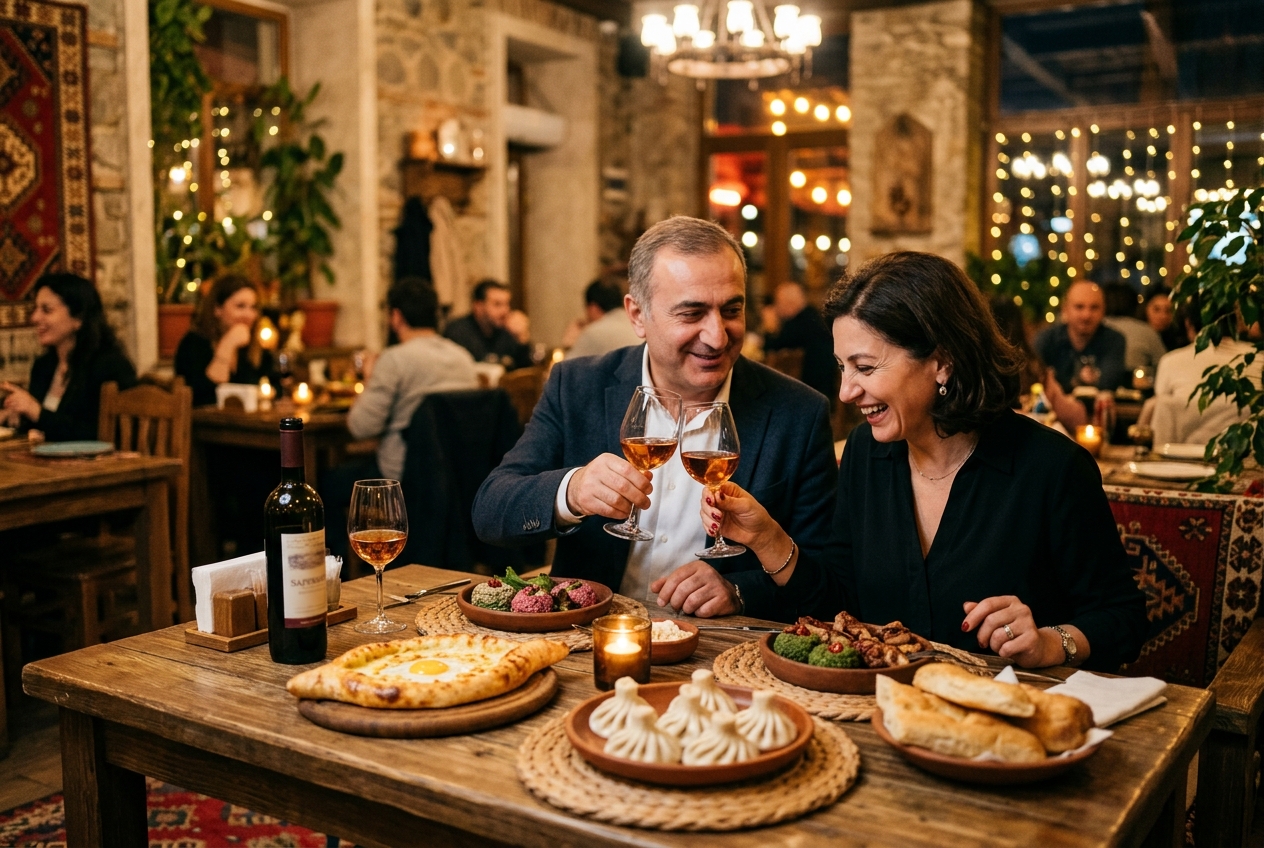
Georgia has always punched above its weight as a travel destination, offering world-class food and wine at prices that make Western Europeans do a double-take. But the country’s dining scene is shifting. Costs have crept upward over the past few years, driven by inflation, a growing tourist economy, and rising demand for quality ingredients. If you’re planning a trip in 2026, or you’re already living in Tbilisi and trying to budget your monthly supra habit, understanding what you’ll actually pay at restaurants across Georgia matters more than ever. The good news? Even with price increases, Georgia remains one of the most affordable culinary destinations in Europe and the Caucasus. A full meal with wine still costs a fraction of what you’d pay in most EU capitals. But the gap is narrowing, and knowing where to eat, what to order, and which regions offer the best value can save you real money. This guide breaks down actual restaurant costs across the country, from Tbilisi’s upscale wine bars to Kutaisi’s family-run kitchens, so you can plan with confidence rather than guesswork.
Current Economic Landscape and 2026 Price Projections
Georgia’s economy has been on a growth trajectory since the post-pandemic recovery, but that growth has come with inflationary pressure that hits the food service sector hard. Restaurant operators are caught between rising ingredient costs and a customer base that still expects Georgian hospitality at Georgian prices. The result is a market where menus are being quietly updated, portion sizes occasionally shrink, and the old “cheap Georgia” reputation is slowly becoming less accurate, though still broadly true by international standards.
Impact of Inflation and Supply Chain Trends
Prices in hotels, cafes, and restaurants rose by 8.1% in January 2026, contributing 0.26 percentage points to annual inflation. That’s a meaningful jump, and it reflects several converging pressures: imported ingredient costs, higher wages in the hospitality sector, and increased demand from both tourists and a growing local middle class.
Supply chain issues from 2022-2024 have largely stabilized, but some effects linger. Georgia imports a significant portion of its processed foods, dairy additives, and specialty ingredients. When global shipping costs fluctuate, Georgian restaurants feel it. Local sourcing helps buffer this, particularly for staples like bread, cheese, herbs, and wine, but anything requiring imported packaging, equipment, or non-native ingredients carries a premium.
One restaurant industry expert noted that “with consumer spending compressed, restaurants won’t be able to raise prices much, so operators will be more focused on controlling costs in 2026.” This means diners may see smaller menus, more seasonal specials, and a shift toward locally sourced ingredients as restaurants try to maintain margins without scaring off customers.
The Lari (GEL) vs. USD Exchange Rate Forecast
For international visitors, the exchange rate matters as much as menu prices. The Georgian Lari has traded in a range of roughly 2.65-2.80 GEL per USD throughout late 2025 and into early 2026. Most forecasts suggest relative stability through the year, barring major geopolitical disruptions.
What this means practically: a 50 GEL dinner converts to roughly $18-19 USD. If the Lari weakens, visitors get even better value. If it strengthens, the price advantage narrows slightly but remains substantial compared to Western Europe. For budgeting purposes, plan on 2.70-2.75 GEL per dollar as a reasonable baseline for 2026.
Keep in mind that most restaurants in tourist areas accept card payments through Bank of Georgia or TBC terminals, but smaller eateries and street food vendors still prefer cash. Having Lari on hand is essential outside Tbilisi’s center.
Average Cost of Dining by Establishment Type
The range of dining options in Georgia is enormous, from a 5 GEL lobiani grabbed from a street window to a 200 GEL tasting menu at a Tbilisi fine dining spot. Understanding the tiers helps you budget accurately.
Budget Eateries and Street Food Markets
A typical meal at a budget-friendly restaurant costs around 20-35 GEL per person, which translates to roughly $7-13 USD. This tier includes the beloved “sasadilo” (canteen-style restaurants), bakeries selling fresh khachapuri and puri, and market stalls offering grilled meats and salads.
Here’s what you can expect at this level:
- Khachapuri (Imeruli style): 8-14 GEL
- Lobiani (bean-filled bread): 5-8 GEL
- A plate of ojakhuri (fried potatoes with meat): 12-18 GEL
- Churchkhela (walnut and grape candy): 3-5 GEL per piece
- Fresh-squeezed pomegranate juice at a market: 5-7 GEL
The Dezerter Bazaar in Tbilisi and the central markets in Kutaisi and Telavi remain the best spots for cheap, authentic food. Don’t expect English menus or Instagram-worthy plating. Do expect grandmothers who will pile your plate higher than you asked for.
Mid-Range Traditional Georgian Restaurants
This is where most tourists and locals celebrating a night out end up. Mid-range Georgian restaurants, the ones with proper tablecloths, full menus, and a good wine list, typically run 45-80 GEL per person for a full meal with drinks.
A standard dinner for two at a well-regarded traditional restaurant in Tbilisi might look like this: a shared plate of pkhali and badrijani, individual servings of khinkali or mtsvadi, a bottle of house wine, and perhaps churchkhela or gozinaki for dessert. Total: 120-180 GEL for two people, or roughly $45-65 USD.
Restaurants like Shavi Lomi, Barbarestan, and Cafe Littera sit at the upper end of this range, while neighborhood spots in Sololaki or Vera offer similar quality for 20-30% less. The difference often comes down to location and ambiance rather than food quality.
Fine Dining and Upscale Wine Bars
Georgia’s fine dining scene has matured considerably. Tbilisi now has restaurants that would hold their own in any European capital, with tasting menus, natural wine programs, and chefs trained internationally.
Expect to pay 100-250 GEL per person at these establishments, or $37-92 USD. A tasting menu at a top-tier restaurant like Shavi Lomi’s special events or newer concepts in the Fabrika area can push past 300 GEL with wine pairings. Upscale wine bars in the old town charge 25-60 GEL per glass for rare qvevri wines, though you can still find excellent bottles for 40-80 GEL.
This tier represents the fastest-growing segment of Georgia’s restaurant scene, driven by both wealthy locals and international food tourists who’ve read about Georgian cuisine in publications like Bon Appétit and The New York Times.
Regional Price Disparities Across Georgia
Where you eat matters almost as much as what you eat. Georgia’s restaurant prices vary significantly by region, and understanding these differences can stretch your budget dramatically.
Tbilisi: The Capital’s Premium Pricing
Tbilisi is, unsurprisingly, the most expensive city for dining. The capital commands a 20-40% premium over most other regions, particularly in the tourist-heavy areas of the Old Town, Rustaveli Avenue, and the Vera/Vake neighborhoods.
A khachapuri that costs 10 GEL in Kutaisi might run 16-18 GEL at a tourist-facing restaurant near the sulfur baths. Khinkali priced at 1.20 GEL each in Pasanauri (where they’re said to have been invented) cost 1.80-2.50 GEL in central Tbilisi.
That said, Tbilisi also offers the widest range of options. You can eat incredibly well for 25 GEL if you know where to look, particularly in neighborhoods like Didube, Samgori, or the areas around the universities where local workers and students eat. The trick is stepping two blocks away from any tourist attraction.
Batumi and the Black Sea Coast Seasonality
Batumi operates on a seasonal pricing model that can catch visitors off guard. During peak summer months (June through August), restaurant prices in the coastal city inflate by 15-30% compared to the off-season. A seafood dinner that costs 50 GEL in April might cost 65-70 GEL in July.
The beachfront boulevard restaurants are the most expensive, often matching or exceeding Tbilisi prices. But head a few streets inland, particularly toward the old town or the market area, and prices drop noticeably. Batumi’s Turkish and Adjarian culinary influences also mean unique dishes like borano (cheese fondue with butter) and sinori (cottage cheese rolls) that you won’t find as easily elsewhere.
Off-season visits (October through April) offer the best value, with many restaurants running promotions to attract the smaller winter tourist crowd.
Regional Values in Kakheti and Kutaisi
For the best restaurant value in Georgia, head to Kakheti or Imereti. Kakheti, the wine region, offers full meals at family-run guesthouses and restaurants for 15-30 GEL per person, often including homemade wine. Towns like Sighnaghi, Telavi, and Kvareli have charming restaurants where 100 GEL feeds three people generously.
Kutaisi, Georgia’s second city, maintains prices roughly 25-35% below Tbilisi. The central market area has exceptional cheap eats, and the city’s restaurant scene has grown significantly without the price inflation that tourism brings to the capital. I’ve had some of my best meals in Georgia at unmarked Kutaisi restaurants where the owner simply brings you whatever was cooked that day for 15 GEL.
Estimated Prices for Signature Georgian Dishes
Georgian cuisine has a distinct vocabulary, and knowing what dishes cost helps you read a menu with confidence. Here’s a realistic price table for 2026, based on mid-range restaurant pricing in Tbilisi:
| Dish | Price Range (GEL) | Price Range (USD) |
|---|---|---|
| Khachapuri Adjaruli | 18-28 | $6.50-10 |
| Khinkali (5 pieces) | 8-14 | $3-5 |
| Mtsvadi (pork skewers) | 14-22 | $5-8 |
| Shkmeruli (garlic chicken) | 22-35 | $8-13 |
| Ostri (beef stew) | 18-28 | $6.50-10 |
| Pkhali (3 varieties) | 12-18 | $4.50-6.50 |
| Badrijani (stuffed eggplant) | 10-16 | $3.50-6 |
| Lobio (bean stew) | 10-15 | $3.50-5.50 |
| Chakapuli (lamb with tarragon) | 24-38 | $9-14 |
Prices outside Tbilisi typically fall at the lower end of these ranges, and portions tend to be larger. Georgian restaurants generally serve family-style portions, so two people can comfortably share three to four dishes plus bread.
One thing that catches newcomers off guard: bread (puri or shotis puri) is usually free or costs just 2-3 GEL, and it arrives hot from a tone oven. Don’t fill up on it before the main dishes arrive, tempting as it is.
Beverage Costs: From House Wine to Craft Beer
Georgia is the cradle of winemaking, with 8,000 years of viticultural history, so it would be criminal to visit without exploring the drinks menu. The good news is that wine remains remarkably affordable even as food prices climb.
House wine at a mid-range restaurant costs 5-10 GEL per glass, and a full bottle of solid Georgian wine (Saperavi, Rkatsiteli, Mukuzani) runs 25-60 GEL at restaurant markup. Qvevri-aged wines and natural wines from boutique producers command higher prices, typically 50-120 GEL per bottle at restaurants, but these are wines that would cost three to four times as much in a London or Berlin wine bar.
Beer has become a growing segment. Local craft breweries like Argo, Black Lion, and Shavi Lomi’s brewery have expanded rapidly. A craft beer at a bar or restaurant costs 8-15 GEL, while mass-market options like Natakhtari or Kazbegi run 4-7 GEL. Imported beers are pricier at 10-18 GEL.
Non-alcoholic options deserve mention too. Georgian lemonades (tarkhuna, cream soda, pear) cost 4-8 GEL and are ubiquitous. Turkish-style coffee runs 5-8 GEL, and specialty coffee shops in Tbilisi charge 8-15 GEL for a flat white or pour-over, approaching European capital prices.
Chacha, Georgia’s grape brandy, is often offered complimentary at the end of a meal in traditional restaurants. If it’s on the menu, expect 8-15 GEL per shot for quality versions.
Service Charges and Tipping Etiquette in 2026
Tipping culture in Georgia has evolved over the past decade, largely influenced by the influx of international tourists. Here’s what you need to know for 2026.
Most mid-range and upscale restaurants in Tbilisi now add a 10% service charge to the bill automatically. Check your receipt before tipping on top of it. At budget eateries and outside the capital, service charges are less common, and a 10-15% tip is appreciated but not strictly expected.
Practical tipping guidelines:
- Budget restaurants and street food: round up to the nearest 5 GEL or leave 5-10% if service was good
- Mid-range restaurants: 10% if no service charge is included, 5% extra if it is and service was exceptional
- Fine dining: 10-15% on top of any service charge for outstanding service
- Delivery drivers (Wolt, Glovo): 2-5 GEL is standard
Cash tips are preferred, even if you pay the bill by card. This ensures the money goes directly to your server rather than being pooled or taxed. A simple “madloba” (thank you) when handing over the tip goes a long way.
One cultural note: Georgia’s hospitality tradition, rooted in the concept of “stumari ghvtisaa” (the guest is from God), means that servers and restaurant owners genuinely care about your experience. Tipping is a way of honoring that care, not an obligation. I’ve been in situations where a restaurant owner refused to let me pay for a meal because I was a guest in their country. That spirit still exists, especially outside Tbilisi, and it’s one of the things that makes dining in Georgia unlike anywhere else.
Planning Your 2026 Georgia Food Budget
Restaurant prices across Georgia in 2026 reflect a country in transition: still far more affordable than Western Europe, but no longer the absurdly cheap destination it was five years ago. Budget travelers can eat well for $15-20 USD per day by sticking to street food and canteen-style restaurants. Mid-range diners should plan for $25-45 USD daily, which covers two proper restaurant meals with wine. Fine dining enthusiasts will spend $50-100 USD for a memorable evening out, which remains a bargain by global standards.
The smartest approach is mixing tiers: grab khachapuri from a bakery for breakfast, have a leisurely mid-range lunch, and splurge on a nice dinner every few days. Spend time in Kakheti and Kutaisi where your money stretches further, and save the upscale Tbilisi restaurants for a special occasion. Georgia rewards the curious eater who wanders off the main tourist path, both with better food and better prices.