
Table of Contents
- Skiing in Svaneti: A Guide to Tetnuldi and Hatsvali
- The Winter Drive from Zugdidi to Mestia
- Flight Alternatives: Flying to Queen Tamar Airport
- Tetnuldi Ski Resort: The Freeride Frontier
- Hatsvali: Forest Runs and Panoramic Views
- Comparing the Resorts: Which One Should You Choose?
- Winter Logistics: Where to Stay and How to Get Around
- Best Time for Svaneti Skiing and Seasonal Expectations
- Frequently Asked Questions About Svaneti in Winter
Georgia’s Svaneti region has two ski resorts worth knowing about: Tetnuldi and Hatsvali. Both sit within striking distance of the medieval tower-village of Mestia, and both offer something genuinely different from the polished European ski circuit. The skiing here is raw, affordable, and uncrowded, but getting to Mestia in winter is half the adventure. The road from Zugdidi climbs through avalanche-prone gorges, flights are weather-dependent, and you’ll need real preparation if you’re driving yourself. This guide covers the practical side: road conditions, resort differences, logistics, and what to actually expect when you show up in winter.
Skiing in Svaneti: A Guide to Tetnuldi and Hatsvali
Svaneti sits in the highest inhabited part of Georgia’s Greater Caucasus, and its two ski areas serve very different purposes. Hatsvali opened first, around 2011, and functions as Mestia’s local hill: short runs, family-friendly, and walkable from town. The Tetnuldi ski resort came later, opening in stages from 2016, and it’s the one that draws serious skiers. It sits beneath the 4,858-meter peak of Mount Tetnuldi itself and offers genuine alpine terrain.
The infrastructure across both resorts is managed by the Mountain Trails Agency, a government body responsible for developing Georgia’s mountain tourism. That means lift passes are subsidized and cheap by any international standard: a day pass at either resort typically runs 50-60 GEL (roughly $18-22 USD as of the 2025-2026 season, though verify current pricing on arrival). Compare that to $80-150 at most European resorts and you start to understand the appeal.
The ski season in Svaneti typically opens around late December, with both resorts usually running through March or early April depending on snowfall. January and February deliver the most consistent conditions. The vibe here is nothing like the Alps or Rockies: there are no ski-in/ski-out hotels, no après-ski bars at the base, and the lift lines rarely exceed a few minutes. You ski, you eat khinkali in Mestia, you sleep.
The Winter Drive from Zugdidi to Mestia
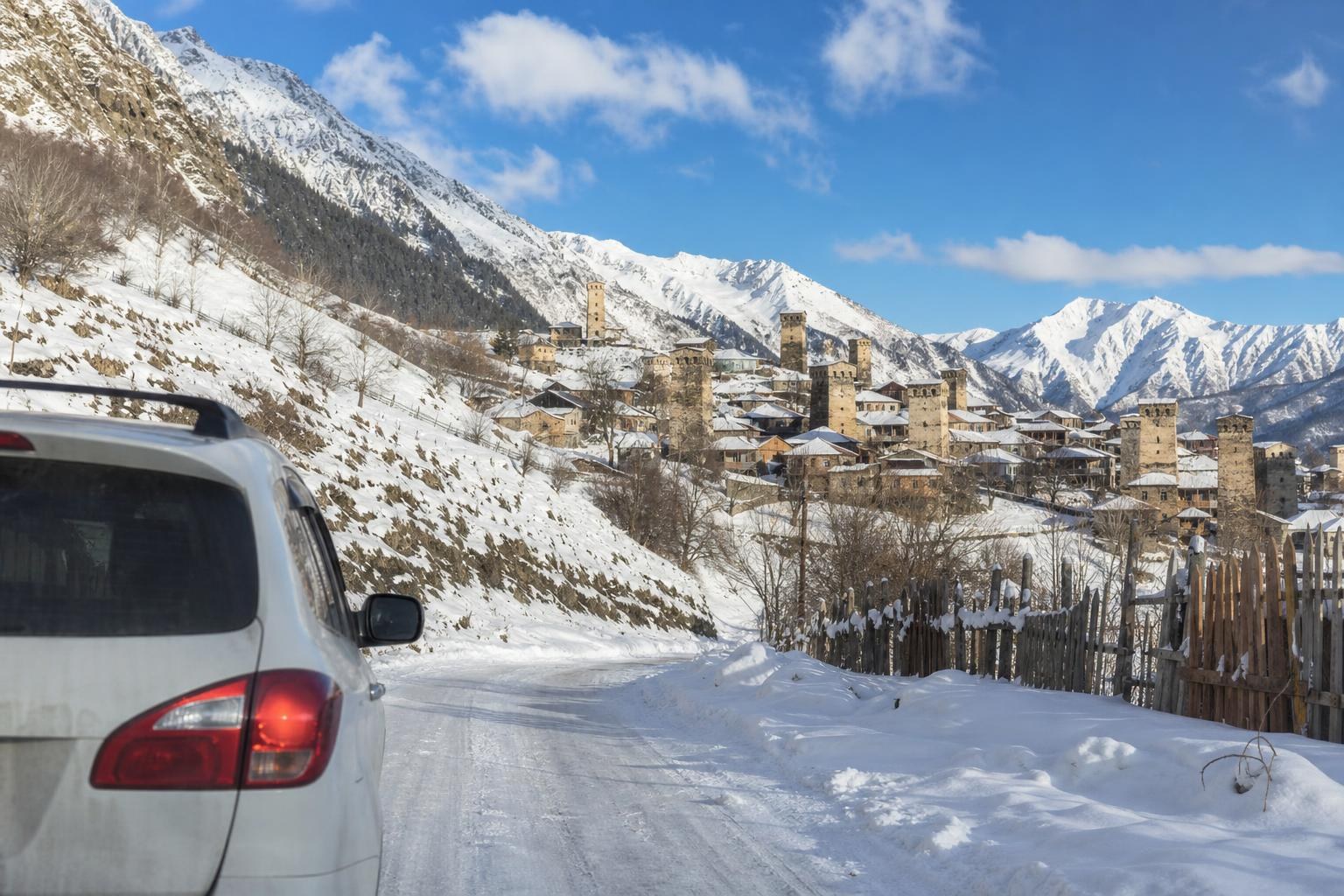
The 130-kilometer road from Zugdidi to Mestia is the main overland route into Svaneti, and in winter it demands respect. The drive follows the Enguri River gorge upstream, climbing from lowland Samegrelo into high mountain terrain. In good conditions, it takes about 3.5 to 4 hours. In bad conditions, it doesn’t happen at all.
The road is paved the entire way, but “paved” in this context means everything from smooth asphalt near Zugdidi to patched, narrow stretches higher up. Winter transforms the route: snow, ice, and limited daylight compress your margin for error. Start early in the morning, and don’t plan to drive this road after dark.
Road Conditions and Avalanche Risks
The biggest hazard isn’t the road surface itself: it’s avalanches. Several sections between Khaishi and Mestia pass through known avalanche corridors, and the road can be closed for hours or even days after heavy snowfall. Georgian road authorities sometimes deploy controlled avalanche blasting, but closures are unpredictable. Check local sources (Mestia municipality Facebook pages, local guesthouse owners) the morning you plan to drive.
Ice is the other constant. Shaded sections of the gorge road may not see direct sunlight for weeks in January, and black ice forms reliably in the same spots year after year. Even with chains and a capable vehicle, take corners slowly and keep generous following distance.
Important: The Zugdidi to Mestia winter road can close without warning due to avalanche risk. Always confirm road status the morning of your drive, carry food and water for potential delays, and never attempt the route at night.
Essential Gear: Chains, 4×4, and Fuel
If you’re renting a car for this drive, get a 4×4. Front-wheel-drive sedans can technically make it in dry winter conditions, but one snowfall changes the equation entirely. A Mitsubishi Pajero, Toyota Prado, or similar SUV with winter tires is the baseline. Carry chains even if you have proper snow tires: you may need them on the upper sections.
- Chains that fit your tire size (test them before you leave Zugdidi)
- A full tank of fuel (fill up in Zugdidi; Mestia has fuel but supply can be inconsistent in deep winter)
- A shovel, tow rope, and flashlight
- Phone charger and offline maps (Google Maps works, but cell service drops in parts of the gorge)
Tip: If you’re picking up a rental car in Tbilisi or Kutaisi, confirm with the rental company that winter tires are fitted and chains are included. Not all agencies provide them automatically.
Flight Alternatives: Flying to Queen Tamar Airport
Mestia has a small airport: Queen Tamar Airport, with a runway carved into the valley floor. Vanilla Sky operates small turboprop flights from Tbilisi’s Natakhtari airfield, and the flight takes about 45 minutes. It’s a spectacular approach through mountain passes, and it eliminates the winter road entirely.
The catch is reliability. These flights are heavily weather-dependent. Fog, snow, or low cloud cover in the Mestia valley cancels flights regularly, sometimes for days at a stretch. You cannot build a tight itinerary around them. Book a flight, but have a backup plan (the drive from Zugdidi, or an extra day’s flexibility in your schedule).
Flights are inexpensive: 90 GEL one way from Natakhtari or 50 GEL from Kutaisi. Seats are limited, so book well ahead during peak winter weeks (late December through mid-February). Luggage allowance is restricted on the small aircraft, so pack ski gear thoughtfully or plan to rent in Mestia.
Tip: If your inbound flight gets cancelled, marshrutka minibuses run from Zugdidi to Mestia daily (weather permitting). They’re not comfortable, but they’re an option when your plans fall apart.
Tetnuldi Ski Resort: The Freeride Frontier
This is the resort that put Svaneti on the international ski map. Tetnuldi’s terrain sits between 2,265 and 3,165 meters, giving it reliable snow coverage and a proper alpine feel. The resort operates 5 lifts serving 30 km of groomed pistes, including a standout 9.5 km run with a 1,700-meter vertical drop: one of the longest continuous descents in the Caucasus.
The groomed runs are solid, but the real draw is the off-piste terrain. The mountain’s broad, open bowls and treeless upper slopes create natural freeride corridors that rarely see tracks. There’s no formal avalanche control beyond the pistes, though, so backcountry skiing here requires your own avalanche safety gear (beacon, probe, shovel) and ideally a local guide. Several operators in Mestia offer guided freeride days.
The base area is minimal: a couple of buildings with a cafeteria, rental shop, and ticket office. Don’t expect a resort village. You ski here for the mountain, not the amenities.
Getting There by Car: Mestia to Tetnuldi
The resort base sits about 15 km from Mestia, roughly a 25-30 minute drive along a mountain road that climbs steadily through the Mulakhi valley. In winter, this road is usually maintained but can be icy, especially in the morning.
| Detail | Info |
|---|---|
| Distance | ~15 km from Mestia center |
| Drive time | 25-30 minutes |
| Road surface | Paved, narrow in sections |
| 4×4 needed? | Strongly recommended in winter |
| Parking | Free lot at the base area |
Shared taxis from Mestia to the resort base run during ski season and cost around 15-20 GEL per person each way. If you have your own vehicle, the drive is straightforward but watch for ice on shaded bends.
Hatsvali: Forest Runs and Panoramic Views
Hatsvali is the smaller, gentler sibling. Its base sits just 6 km from Mestia center, and the resort tops out around 2,347 meters. The terrain is more compact: a handful of runs through forested slopes, served by a gondola and a chairlift. The vertical drop is modest (around 500 meters), and the runs suit intermediate skiers and beginners well.
What Hatsvali lacks in scale, it compensates with accessibility and views. The gondola ride itself offers a panorama of the Svaneti valley and the Caucasus ridge that’s worth the ticket price alone. The forest runs are atmospheric: skiing through snow-heavy pines with medieval towers visible in the valley below.
Hatsvali also tends to stay open on days when Tetnuldi closes due to wind. Its lower elevation and tree cover provide natural wind protection. If you’re spending a week in Mestia, expect to ski Hatsvali on at least a couple of days when conditions push you off the higher mountain.
Comparing the Resorts: Which One Should You Choose?
| Feature | Tetnuldi | Hatsvali |
|---|---|---|
| Distance from Mestia | 15 km (25-30 min drive) | 6 km (10 min drive) |
| Elevation range | 2,265 – 3,165 m | 1,865 – 2,347 m |
| Piste length | ~30 km | ~6 km |
| Longest run | 9.5 km | ~2.5 km |
| Best for | Intermediate to advanced, freeride | Beginners to intermediate |
| Freeride terrain | Extensive, open bowls | Limited |
| Wind exposure | High (exposed alpine terrain) | Low (forest protection) |
| Crowds | Very low | Low |
| Lift pass (approx.) | 50-60 GEL/day | 50-60 GEL/day |
The honest answer: ski both. They complement each other perfectly. Spend your bluebird days at Tetnuldi for the big terrain and long descents. Use Hatsvali for warm-up days, stormy weather, or when you want a relaxed morning close to town. A week in Mestia with access to both resorts is the ideal setup.
Winter Logistics: Where to Stay and How to Get Around
Mestia is your base for both resorts. The town has dozens of guesthouses and a growing number of small hotels. Most guesthouses include breakfast and dinner (half-board), and the quality of home-cooked Svan food is genuinely excellent. Expect to pay 80-150 GEL per person per night for half-board at a good guesthouse. Book ahead for New Year’s week and February weekends.
Getting around Mestia itself is easy on foot: the town is compact. For resort transfers, you have three options:
- Your own rental car (most flexible, essential if you want to explore beyond skiing)
- Shared taxis that run to both resorts each morning (ask your guesthouse to arrange)
- Hitchhiking, which is common and culturally normal in Svaneti
Ski rental is available in Mestia town and at both resort bases. Quality varies: if you’re particular about your equipment, bring your own boots at minimum. Helmets and avalanche safety gear can be harder to find for rent, so serious freeriders should pack their own.
Planning your route through Georgia? Triproadwayplanner’s driving guides can help you map the full journey from Tbilisi or Kutaisi through to Svaneti, including seasonal road updates.
Best Time for Svaneti Skiing and Seasonal Expectations
The season typically runs late December through early April, but the sweet spot depends on what you’re after.
- January: Deep snow, cold temperatures (-10 to -15°C at altitude), shortest days. Best powder but highest avalanche risk on the access road.
- February: The prime month. Stable snowpack, longer days, and the best balance of conditions and accessibility.
- March: Spring skiing begins. Warmer temperatures, corn snow in the afternoons, and the most reliable road access. Some upper runs may start thinning late in the month.
- Early April: Hit or miss. Some years the lifts are still spinning; others, the season is done by mid-March.
Wind is the wildcard at Tetnuldi. The upper lifts sit on exposed ridgelines and can close for wind even on sunny days. Hatsvali’s sheltered position makes it the reliable fallback.
Note: Avalanche conditions in the backcountry are not formally monitored or published for Svaneti the way they are in the Alps. If you’re planning off-piste skiing, hire a local guide who knows the terrain and current snowpack.
Frequently Asked Questions About Svaneti in Winter
Is the Zugdidi to Mestia road safe in winter?
It’s manageable with the right vehicle and conditions, but it carries real risk. Avalanche closures happen multiple times each winter, and ice is a constant factor. A 4×4 with winter tires and chains is the minimum. Check road status the morning of your drive, and don’t attempt it after dark.
Can I ski Tetnuldi as a beginner?
The lower runs are manageable for confident beginners, but the resort’s real strength is intermediate and advanced terrain. Beginners are better served at Hatsvali, where the slopes are gentler and the runs shorter. You can always take the gondola up Hatsvali for a first day and move to the bigger mountain once you’re comfortable.
Do I need a guide for freeride skiing at Tetnuldi?
You don’t technically need one for the marked pistes, but if you’re heading off-piste, yes. There’s no organized avalanche control or rescue infrastructure beyond the groomed runs. Local guides know the terrain, the snowpack history, and the safe lines. It’s not worth the risk without one.
How reliable are flights to Mestia in winter?
Not very. Cancellation rates during winter months are high due to weather. Treat the flight as a bonus, not a certainty. Always have a backup plan for reaching Mestia overland.
Is there nightlife or après-ski in Mestia?
Not in the conventional sense. There are a few bars and restaurants, and your guesthouse host will likely pour you chacha (Georgian grape brandy) after dinner. The social life revolves around shared meals and conversation, not clubs. If you drink chacha with your hosts, walk back to your room: don’t drive.
Svaneti in winter is one of the most compelling ski destinations you’ve probably never considered. The mountains are massive, the terrain is open, and the crowds are almost nonexistent. But it asks more of you than a typical resort trip: you need to plan your transport carefully, pack for real winter conditions, and accept that weather dictates the schedule. If that sounds like your kind of skiing, Mestia is waiting.