
Table of Contents
- Gudauri 2026/27 Season Opening: What to Expect
- Driving to Gudauri: Route, Distance, and Logistics
- Navigating the Georgian Military Highway and Jvari Pass
- Parking at Gudauri Ski Resort: Best Zones for Day Trippers
- Gudauri Lift Pass Prices and Ticket Options for 2026/27
- Skiing by Month: Best Times for Snow Quality
- Where to Stay: Parking-Friendly Accommodations
- Essential Winter Driving Gear and Safety Tips
- Frequently Asked Questions About Gudauri Travel
- Final Advice for Your Gudauri Road Trip
Georgia’s premier ski resort sits at 3,279 meters on the Greater Caucasus ridge, roughly two hours north of Tbilisi by car. If you’re planning to drive up for the 2026/27 season, the practical details matter more than the scenery: when does the season start, what do you need on your tires, where do you park, and how much does a lift pass cost? I’ve spent multiple winters making this drive, and the gap between what you read online and what you actually face on the Georgian Military Highway can be significant. This guide covers the season practicalities you need to plan a self-drive ski trip to Gudauri without surprises.
One thing to flag before anything else: as of January 1, 2026, all foreign tourists entering Georgia are legally required to hold valid health and accident insurance for the duration of their stay. Standard travel policies often exclude skiing, so check that yours includes an adventure sports or skiing add-on that covers mountain rescue and specialized medical costs. Don’t skip this. Helicopter evacuation from a Caucasus mountainside is not something you want to self-fund.
Gudauri 2026/27 Season Opening: What to Expect
The ski season is projected to begin on January 2, 2027, and run through April 11, 2027. That’s a roughly 14-week window, though actual opening and closing dates shift based on snowfall. In lean years, the upper lifts may open while lower runs stay bare; in heavy snow years, skiing can extend into late April.
The resort has been investing heavily in reliability. Infrastructure upgrades for this season include 7.5 km of new artificial snowmaking, two new T-bar lifts, and a 200-meter covered magic carpet in the snowpark. The snowmaking is a big deal: it means the lower runs and the area around New Gudauri should hold coverage even during warm spells that previously shut things down in March.
New lighting systems have also been installed in the New Gudauri area to support expanded night skiing. If you’re driving up for a day trip, this effectively extends your skiing window past sunset, which makes the two-hour drive from Tbilisi feel more worthwhile.
Tip: Opening dates are announced close to the season start. Follow the resort’s official social media channels for real-time updates rather than relying on projected dates.
Driving to Gudauri: Route, Distance, and Logistics
The drive from Tbilisi to the resort follows one route: north on the Georgian Military Highway (E60/S3) through Mtskheta, Ananuri, and Pasanauri, then up through the Jvari Pass to the resort. There are no alternative roads.
| Detail | Info |
|---|---|
| Starting city | Tbilisi |
| Distance | ~120 km |
| Drive time (dry roads) | 1.5 – 2 hours |
| Drive time (winter conditions) | 2.5 – 4 hours |
| 4×4 required? | Not mandatory, but strongly recommended |
| Road surface | Paved the entire way, but icy and narrow above Pasanauri |
A front-wheel-drive car with proper winter tires and chains can make it in good conditions. But “good conditions” on the Georgian Military Highway in January is a relative term. The road narrows significantly after Pasanauri, with sharp switchbacks, no guardrails in places, and regular ice patches. If you’re renting a car, request a vehicle with winter tires already fitted. Most Tbilisi rental agencies offer this as a seasonal option from December through March.
Navigating the Georgian Military Highway and Jvari Pass
The stretch between Pasanauri and the resort is where things get real. You climb from roughly 1,000 meters to over 2,300 meters in about 40 km, crossing the Jvari (Cross) Pass at 2,379 meters. The road is a single carriageway for most of this section, with oncoming traffic including trucks, minibuses, and other skiers.
Winter conditions here can change within minutes. You might leave Tbilisi in sunshine and hit a whiteout above Pasanauri. The most hazardous sections are the switchbacks just below the pass, where black ice forms overnight and persists well into the morning.
Snow Chain Rules and Enforcement
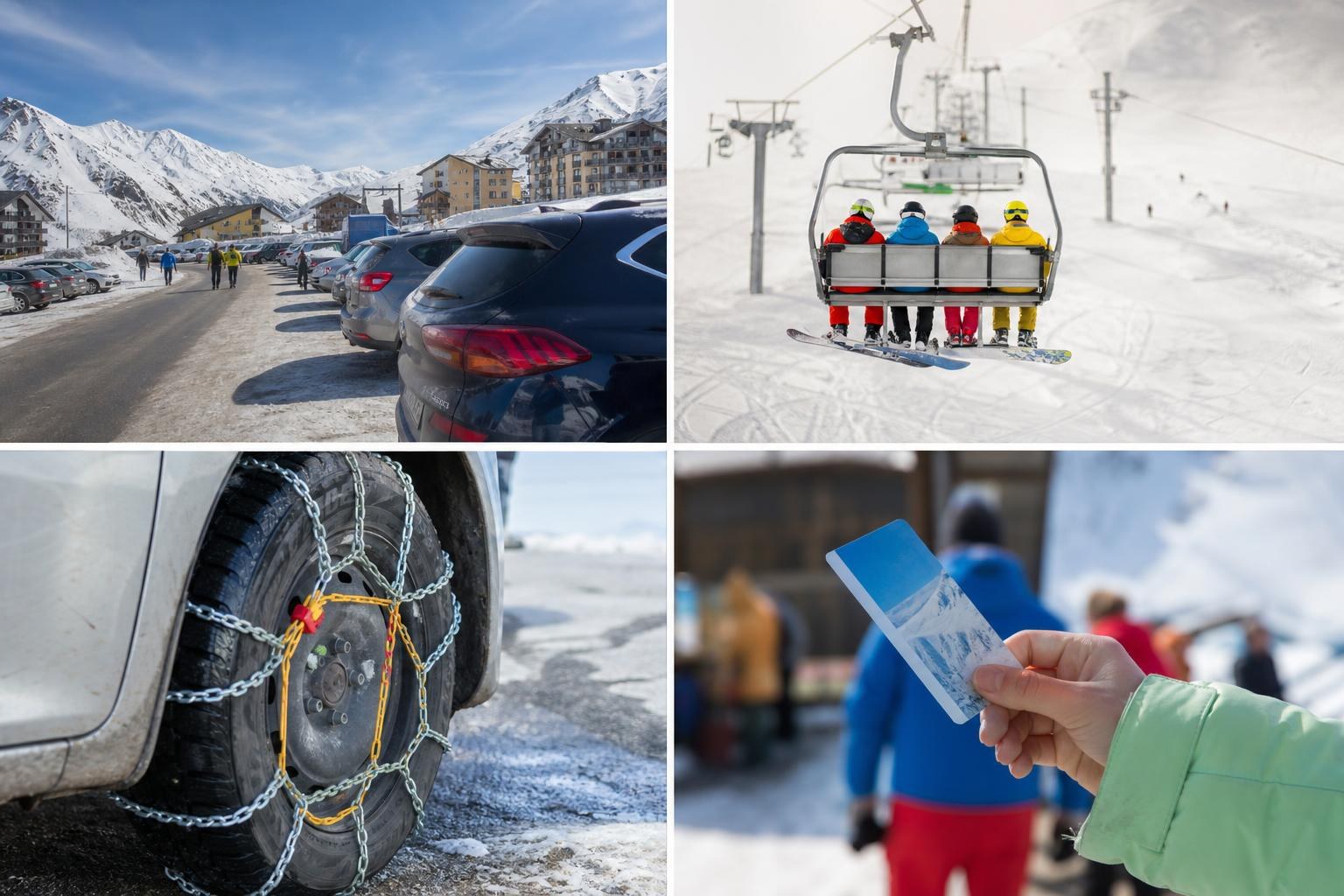
Georgian traffic police enforce snow chain requirements on the Military Highway during winter. When conditions deteriorate, officers set up checkpoints – usually near Pasanauri or at the base of the steeper sections – and will not allow vehicles through without chains fitted or visible in the vehicle.
Here’s what you need to know:
- Carry chains that fit your tire size. Universal chains often don’t grip properly.
- Practice fitting them before your trip. Doing it for the first time in freezing wind on a mountain road is miserable.
- Even with winter tires (M+S or snowflake-rated), police may require chains during heavy snowfall or when the road is actively icy.
- Chains are available at roadside vendors near Pasanauri, but sizes sell out fast on heavy snow days. Buy yours in Tbilisi.
Important: If police close the road and you don’t have chains, you’ll be turned back. There’s no negotiating this. Carry chains every time you drive up between December and March.
Checking Road Closures and Traffic Status
The Jvari Pass closes periodically due to avalanche risk, heavy snowfall, or accidents. Closures can last anywhere from a few hours to a full day. There’s no single official English-language source that reliably updates road status in real time, which is frustrating.
Your best options for checking conditions:
- The Georgian Ministry of Internal Affairs posts road closure updates on their Facebook page in Georgian – Google Translate handles it reasonably well.
- Local Telegram groups and Facebook groups (search “Gudauri” or “Georgian Military Highway”) often have faster, driver-reported updates than official channels.
- Call your hotel or guesthouse before departing. They know local conditions and can tell you if the pass is open.
Plan a buffer day if you’re driving up for a weekend. Getting stranded in Pasanauri because the pass closed at noon is a real possibility, and it happens to someone every single weekend during peak season.
Parking at Gudauri Ski Resort: Best Zones for Day Trippers
Parking at the resort is free but chaotic, especially on weekends. There’s no centralized parking structure – just a series of informal lots and roadside spots along the highway and around the lift stations.
For day trippers driving up from Tbilisi, your main options are:
- The lots near the lower gondola station (around 2,196 meters elevation) fill up first. Arrive before 9:00 AM on weekends or you’ll be walking.
- Roadside parking along the highway through the resort area is common but risky: cars get boxed in by snow plows, and tow trucks do operate here.
- The New Gudauri complex has extremely limited parking. Unless you’re staying at a hotel there with dedicated spots, don’t count on finding space.
Note: Parking in the New Gudauri area is so constrained that booking accommodation with dedicated onsite parking is the only reliable way to avoid circling for 30 minutes. If you’re day-tripping, stick to the lower lots near the main gondola.
On weekdays, parking is rarely a problem. You can usually find a spot within a short walk of the lifts even arriving at 10:00 AM.
Gudauri Lift Pass Prices and Ticket Options for 2026/27
Lift pass prices for the 2026/27 season had not been officially confirmed at the time of writing. Prices typically get announced in December, close to the season opening. For the 2026/27 season, the standard adult day pass has stabilized at 70 GEL, but verify current pricing on the resort’s official channels or ticket offices before purchasing.
Multicard vs. Day Passes
The resort uses a reloadable card system. You buy a plastic card (a small one-time fee) and load days or hours onto it. This is the same card system used across Georgian ski resorts, so if you’ve skied Bakuriani, you may already have one.
- Day passes cover all operating lifts for the full day.
- Half-day passes are sometimes available and offer better value if you’re arriving after lunch.
- Multi-day passes (3, 5, or 7 days) typically come with a discount per day, making them worthwhile for longer stays.
- Children and students usually get reduced rates with valid ID.
Buy your card at the ticket windows near the main gondola base station. Lines build up between 9:00 and 10:00 AM on weekends, so arriving early or buying during a quieter weekday saves time.
Skiing by Month: Best Times for Snow Quality
Not all weeks of the season are equal. Here’s a rough breakdown based on typical conditions:
| Month | Snow Conditions | Crowds | Notes |
|---|---|---|---|
| Early January | Fresh but variable coverage | Moderate (holiday crowds) | Season just opening; some runs may be limited |
| Late January | Good base building | Lower | Best balance of snow and quiet slopes |
| February | Peak snow depth | High on weekends | Coldest month; best powder days |
| March | Spring snow begins | Moderate | Warm afternoons make morning skiing best |
| Early April | Corn snow, slushy afternoons | Low | Upper runs only; great for sunny skiing |
February consistently delivers the best snow quality. If you can only make one trip, aim for a weekday in February. March is warmer and more pleasant for standing around on the mountain, but the snow gets heavy and sticky by early afternoon.
The new snowmaking systems should help extend reliable coverage into March and early April on the lower slopes, which historically suffered first during warm spells.
Where to Stay: Parking-Friendly Accommodations
If you’re driving, where you stay matters as much as where you ski. The resort area is essentially a strip of hotels, guesthouses, and apartment buildings along the highway, plus the newer developments uphill.
Most guesthouses and small hotels along the main highway have informal parking – usually a cleared area in front of the building. Confirm parking availability when you book. Some places charge a small fee; others include it.
New Gudauri vs. Lower Gudauri Logistics
New Gudauri is the modern apartment complex perched above the main resort area. It’s ski-in/ski-out, which is fantastic, but parking is extremely tight. Most apartments don’t come with a guaranteed parking spot, and the access road gets icy.
Lower Gudauri (along the highway) has easier parking, more affordable accommodation, and direct access to the main gondola. The trade-off is that you’ll need to walk or take a short shuttle to reach the lifts. For self-drive visitors, lower Gudauri is usually the more practical choice.
If you’re booking through platforms like Booking.com or Airbnb, filter for properties that explicitly mention parking. A listing that says “parking nearby” often means “on the highway shoulder, maybe.”
Essential Winter Driving Gear and Safety Tips
Beyond snow chains and winter tires, pack these items in your car:
- A small shovel (folding or compact) for digging out if you get stuck in a parking area
- A phone charger or power bank: cold drains batteries fast, and you need your phone for navigation and road closure updates
- A blanket and warm layers in the car, not just on your body, in case you’re stuck waiting for the pass to reopen
- A full tank of fuel before leaving Tbilisi: there’s a fuel station in Pasanauri, but nothing reliable above that point
- Sunglasses for driving: the glare off snow at altitude is intense and causes real fatigue
Drive with your headlights on at all times on the Military Highway, even during the day. Visibility drops fast in mountain weather, and oncoming drivers on narrow sections need to see you early.
If you’re using a rental car, take photos of the vehicle’s condition before departure. Mountain roads throw up gravel and ice, and you don’t want disputes over chips and scratches when you return the car.
Triproadwayplanner’s route guides can help you plan the drive with current road condition notes if you want more detail on the highway itself.
Frequently Asked Questions About Gudauri Travel
Do I need a 4×4 to drive to Gudauri in winter?
Not strictly, but it’s strongly recommended. A front-wheel-drive car with quality winter tires and chains can make the trip in moderate conditions. In heavy snow or ice, a 4×4 with winter tires gives you a real margin of safety, especially on the switchbacks below the pass.
Can I buy snow chains on the way?
Yes, roadside vendors near Pasanauri sell chains, but selection is limited and prices are higher than in Tbilisi. Buy chains in the city before your trip and confirm they fit your tire size.
Is there a bus or shuttle from Tbilisi?
Marshrutkas (minibuses) run from Tbilisi’s Didube station to Gudauri, and several private shuttle services operate during ski season. But if you want flexibility with timing, especially for day trips, driving yourself or renting a car is far more practical.
How do I check if the Jvari Pass is open?
Monitor the Georgian Ministry of Internal Affairs’ social media pages and local Facebook/Telegram groups. Your accommodation host is also a reliable source. There is no single English-language hotline for real-time updates.
Is travel insurance really mandatory now?
Yes. Since January 1, 2026, Georgia requires all foreign visitors to carry valid health and accident insurance. If you’re skiing, make sure your policy explicitly covers winter sports, including mountain rescue. Standard policies often exclude these activities.
Final Advice for Your Gudauri Road Trip
Driving to Gudauri is one of the most rewarding winter road trips you can do in the Caucasus, but it demands preparation. Get your chains sorted in Tbilisi, check the pass status before you leave, arrive early for parking on weekends, and verify your insurance covers skiing. The 2026/27 season’s infrastructure improvements, particularly the expanded snowmaking and night skiing, make the resort more reliable than it’s been in previous years. Plan your trip around a weekday in February if snow quality is your priority, or aim for March if you prefer warmer temperatures and don’t mind spring conditions. Either way, fill that tank in Pasanauri and keep your chains within arm’s reach.