
Table of Contents
- Overview of Skiing in the Caucasus Mountains
- Top Rated Ski Resorts in Georgia
- Best Time to Visit: Season and Snow Conditions
- Après-Ski and Georgian Culture on the Slopes
- Practical Travel Tips for Your Georgia Ski Trip
- Your Caucasus Ski Season Starts Here
Georgia’s Caucasus Mountains have quietly become one of Europe’s most exciting ski destinations, offering powder-filled slopes at a fraction of the price you’d pay in the Alps. I spent my first season there expecting modest hills and outdated infrastructure. What I found instead was world-class freeriding terrain, surprisingly modern lifts, and a culture that treats every visitor like family. If you’re wondering where to ski in Georgia and which resorts deserve your time, this guide covers the best options, the ideal season windows, and the practical details that most travel blogs skip entirely.
Overview of Skiing in the Caucasus Mountains
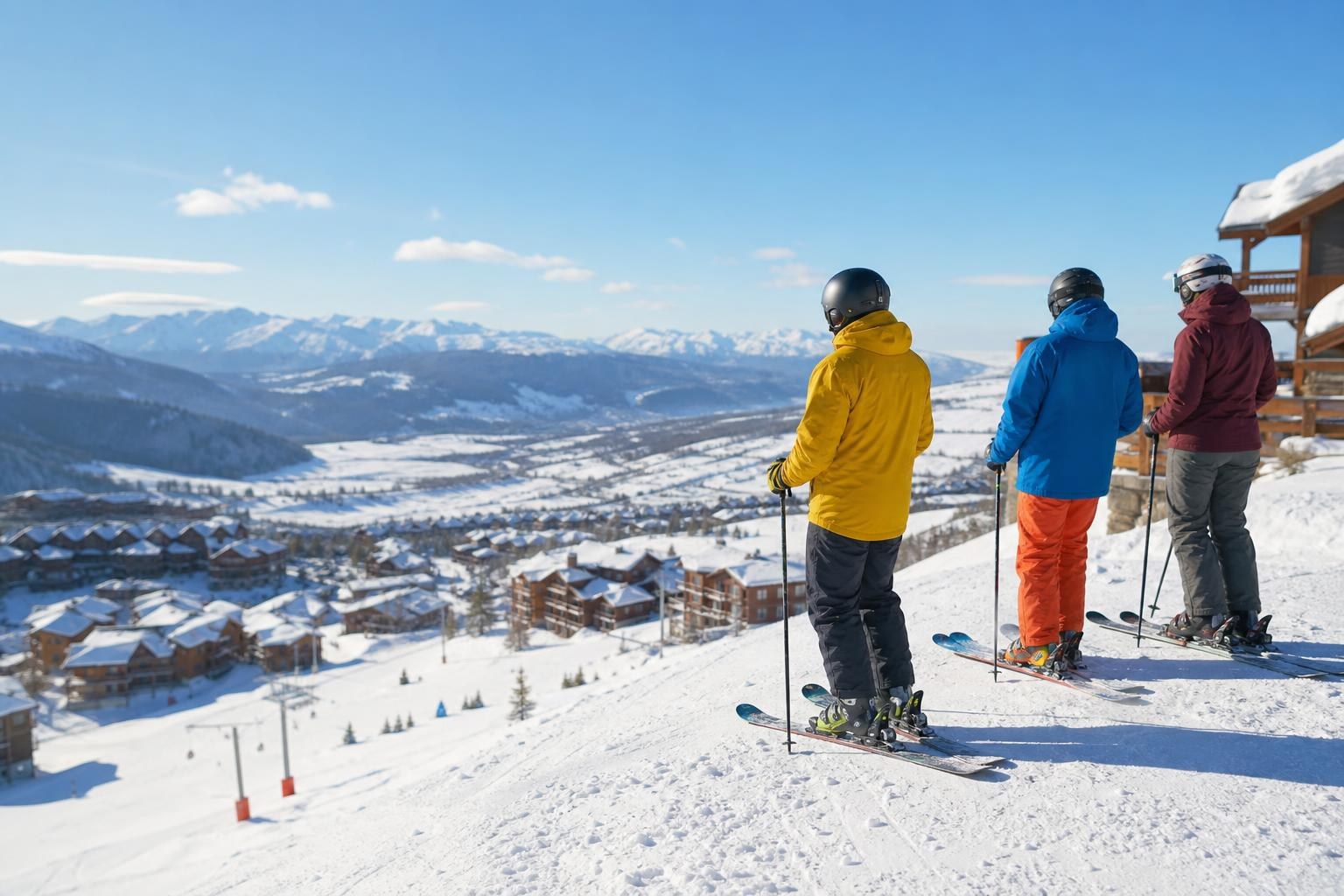
The Greater Caucasus range runs along Georgia’s northern border, forming a dramatic wall of peaks that regularly exceed 4,000 meters. This geography creates something special: consistent snowfall, long vertical drops, and vast backcountry terrain that remains largely untouched compared to the overcrowded resorts of Western Europe. Georgia’s ski infrastructure has grown rapidly over the past decade, with the government investing heavily in lift systems, hotels, and road access.
The country’s ski resorts span impressive altitude ranges, with some offering over 1,000 meters of vertical drop. That’s comparable to many mid-tier Alpine resorts, but with lift ticket prices hovering around 30-50 GEL (roughly $11-18 USD) per day. A week of skiing in Gudauri costs less than a single weekend in Chamonix or Verbier, and the snow quality often rivals both.
Georgia’s tourism sector has been on a strong upward trajectory. The country’s tourism revenue grew by 7.3% in 2024, and winter tourism has been a significant driver of that growth. The government sees ski development as a strategic priority, and it shows: new gondolas, improved grooming equipment, and better avalanche control systems appear each season.
What sets Georgian skiing apart from other budget destinations like Bulgaria or Serbia is the sheer scale of the terrain. These aren’t gentle, forested hills. The Caucasus delivers above-treeline alpine bowls, steep couloirs, and glacier-fed valleys that feel genuinely wild. If you’re an intermediate to advanced skier looking for value and adventure, Georgia belongs on your shortlist.
At a Glance: Resort Comparison Table
| Feature | Gudauri | Bakuriani | Mestia (Hatsvali/Tetnuldi) |
|---|---|---|---|
| Base Elevation | 2,196 m | 1,700 m | 1,865 m (Hatsvali) / 2,260 m (Tetnuldi) |
| Top Elevation | 3,279 m | 2,700 m | 3,040 m (Tetnuldi) |
| Best For | Freeriding, advanced skiers | Families, beginners | Backcountry, adventure seekers |
| Lift Ticket (approx.) | 40-50 GEL/day | 25-35 GEL/day | 30-40 GEL/day |
| Distance from Tbilisi | ~120 km (2 hrs) | ~180 km (2.5 hrs) | ~470 km (8-9 hrs by road) |
| Season | Dec – Apr | Dec – Mar | Dec – Apr |
| Night Skiing | Limited | Yes | No |
| Accommodation Options | Hotels, guesthouses, apartments | Hotels, Soviet-era sanatoriums, guesthouses | Family guesthouses, small hotels |
Top Rated Ski Resorts in Georgia
Georgia currently has three primary ski regions, each with a distinct personality. Gudauri is the flagship, Bakuriani is the heritage pick, and Mestia is the wild card that serious skiers dream about. Choosing between them depends entirely on what kind of experience you’re after.
All three resorts have received infrastructure upgrades in recent years. The Georgian government, through the Mountain Tourism Development Agency, has been actively developing mountain resort infrastructure across the country. This isn’t lip service: you can see the results in new chairlifts, improved snowmaking capabilities, and better safety protocols at each location.
Gudauri: The Hub for Freeriding and Modern Lifts
Gudauri sits on a south-facing plateau of the Greater Caucasus at about 2,200 meters, roughly two hours north of Tbilisi along the Georgian Military Highway. It’s the country’s largest and most developed resort, with around 70 km of marked runs and a modern lift system that has been expanded with new installations over recent seasons.
The resort’s real draw, though, isn’t the groomed pistes. It’s the off-piste terrain. Gudauri has become internationally recognized for heli-skiing and freeride touring, with vast open bowls above the treeline that hold powder for days after a storm. The terrain between the marked runs is largely accessible without hiking, which makes it unusually friendly for freeriders who don’t want to earn every turn with a bootpack.
The Freeride World Tour has recognized Georgia as a premier freeride destination, with events held in the Caucasus that have put Georgian skiing on the global map. This isn’t just a marketing exercise: the terrain genuinely delivers steep lines, consistent snow, and the kind of wide-open faces that competition riders need.
Gudauri’s lift system tops out at 3,279 meters, giving you access to high-alpine conditions that hold snow well into April. On a clear day, you can see Mount Kazbegi (5,054 m) from the upper stations. The resort village itself is compact and walkable, with a growing selection of hotels, restaurants, and rental shops. Expect to pay around 150-250 GEL ($55-90 USD) per night for a decent hotel room during peak season.
One honest caveat: Gudauri can get foggy. The south-facing aspect means warm air from the lowlands occasionally rolls in and blankets the mountain. When it clears, though, the skiing is extraordinary.
Bakuriani: Family-Friendly Slopes and Olympic History
Bakuriani has a longer skiing pedigree than any resort in Georgia. It hosted events during the Soviet era and served as a training base for Olympic athletes. The town sits at about 1,700 meters in the Borjomi Gorge, surrounded by pine forests that give the runs a completely different character from Gudauri’s open alpine terrain.
The winter ski season at Bakuriani’s Kokhta slopes typically launches in mid to late December, with the resort offering a mix of beginner and intermediate runs that are well-suited for families. The terrain tops out around 2,700 meters, and most of the skiing happens through or just above the treeline. If you’re traveling with kids or less experienced skiers, Bakuriani is the obvious choice.
The town retains a slightly Soviet-era charm, with older sanatorium-style buildings mixed alongside newer hotels. Accommodation is cheap: you can find guesthouses for 80-120 GEL ($30-45 USD) per night, and a full Georgian dinner with wine rarely exceeds 40 GEL per person. The local khinkali (Georgian dumplings) spots near the main square are worth seeking out.
Bakuriani also has night skiing on select runs, which is a nice bonus if you’re spending a few days there. The resort has invested in snowmaking equipment to extend its season, though natural snow coverage tends to thin out by late March at these lower elevations.
Mestia: Remote Adventure in Svaneti (Hatsvali and Tetnuldi)
Mestia is where things get genuinely wild. Located in the Svaneti region of western Georgia, this ancient mountain town sits beneath some of the most dramatic peaks in the Caucasus. Two ski areas operate here: Hatsvali, a small resort just above town, and Tetnuldi, a larger development about 15 km away that opened in 2016.
Tetnuldi is the more impressive of the two, with lifts reaching 3,040 meters and long, sustained runs through open bowls. The infrastructure is modern but minimal: don’t expect a base village with restaurants and shops. You ski, then you return to Mestia for everything else. Hatsvali is smaller and more accessible, with a gondola that offers stunning views of Mount Ushba, one of the most iconic peaks in the Caucasus.
The remoteness is both Mestia’s greatest strength and its main challenge. Getting there from Tbilisi takes 8-9 hours by car, or you can fly into Mestia’s tiny airstrip from Kutaisi (weather permitting, and flights cancel frequently). But the reward is uncrowded slopes, genuine backcountry access, and a cultural experience unlike anything at the other resorts. Svaneti’s medieval stone towers dot the valley, and the local Svan culture has its own distinct traditions, cuisine, and even language.
For experienced skiers willing to make the journey, Mestia offers some of the best ski touring in the Caucasus. Local guides can take you into valleys that see maybe a dozen skiers all season.
Best Time to Visit: Season and Snow Conditions
Georgia’s ski season generally runs from mid-December through mid-April, though the exact dates shift depending on snowfall and elevation. The higher resorts like Gudauri and Tetnuldi hold snow longer, while Bakuriani’s lower elevation means a shorter window.
Snow conditions in the Caucasus are influenced by moisture from the Black Sea to the west and cold continental air from the north. This combination produces reliable snowfall, with Gudauri averaging around 3-4 meters of cumulative snowfall per season. January and February are typically the snowiest months, with base depths at upper elevations regularly exceeding 2 meters.
Temperature varies significantly by altitude. At Gudauri’s base (2,200 m), January temperatures hover between -5°C and -10°C. At the summit stations, expect -15°C or colder, with wind chill making it feel considerably worse. Pack layers and a good face covering for the upper mountain.
Peak Season vs. Spring Skiing
Peak season runs from late January through mid-March. This is when snow coverage is most reliable, crowds are at their highest (though still modest by European standards), and prices tick up slightly. Russian and Eastern European tourists make up a significant portion of visitors during this window, particularly around the New Year holidays in early January.
Spring skiing from late March through April offers a different experience entirely. Warmer temperatures mean corn snow in the afternoons, longer days, and the ability to ski in a t-shirt on sunny days. The trade-off is that lower-elevation runs start to thin out, and some lifts may close early. Gudauri and Tetnuldi handle spring conditions best due to their higher terrain.
If you want the best balance of snow quality and manageable crowds, aim for late February through early March. You’ll catch the tail end of peak snowfall with slightly fewer visitors than the holiday periods.
Après-Ski and Georgian Culture on the Slopes
Georgian après-ski is nothing like the DJ-fueled champagne spraying you’ll find in Austrian resorts. Here, the post-skiing ritual revolves around food, wine, and genuine hospitality. The Georgian concept of “stumari ghvtisaa” (the guest is from God) isn’t just a saying: it shapes how locals interact with visitors at every level.
In Gudauri, a handful of bars and restaurants line the main road, serving khachapuri (cheese-filled bread), mtsvadi (grilled meat skewers), and local wines by the bottle. A full meal with a bottle of Saperavi rarely costs more than 50-60 GEL ($18-22 USD). Some spots have live music on weekends, and the vibe is relaxed and social rather than performative.
Bakuriani’s après scene is quieter but arguably more authentic. Small family-run guesthouses often serve home-cooked supras (traditional feasts) where a tamada (toastmaster) leads elaborate toasts with homemade chacha (grape brandy). If your host invites you to dinner, say yes. These meals can stretch for hours, and they’re among the most memorable experiences you’ll have in Georgia.
Mestia offers the most culturally immersive experience. Svan cuisine differs from the rest of Georgia: try kubdari (meat-filled bread) and local honey. The medieval towers and mountain setting make even a simple walk through town feel like stepping back several centuries. You can watch footage of the Svaneti skiing experience to get a sense of what awaits.
Practical Travel Tips for Your Georgia Ski Trip
Visa requirements for Georgia are minimal: citizens of most European, North American, and many Asian countries can enter visa-free for up to one year. The currency is the Georgian Lari (GEL), and as of early 2026, 1 USD buys roughly 2.7 GEL. Credit cards are widely accepted at hotels and larger restaurants in resort towns, but carry cash for smaller shops and guesthouses.
Mobile data is cheap and reliable. Buy a Magti or Geocell SIM card at Tbilisi airport for about 15-20 GEL, and you’ll have 4G coverage at Gudauri and Bakuriani. Mestia’s coverage is patchier but functional in town. Download offline maps on Google Maps before heading into the mountains, and grab the Google Translate offline pack for Georgian: the alphabet looks like nothing you’ve seen before, and road signs outside major routes are often only in Georgian script.
Transportation from Tbilisi and Kutaisi
Most international flights arrive in Tbilisi, making it the natural starting point. Gudauri is the easiest resort to reach: the drive north on the Georgian Military Highway takes about two hours in good conditions, though winter road closures due to avalanche risk can add delays. Shared minivans (marshrutkas) run from Tbilisi’s Didube station to Gudauri for around 15-20 GEL per person.
For Bakuriani, take the highway toward Borjomi (about 2.5 hours), then a short climb into the resort. The narrow-gauge train from Borjomi to Bakuriani is a charming option if you have time: it takes about 2.5 hours and costs almost nothing, winding through gorgeous gorge scenery.
Mestia requires more planning. You can drive from Kutaisi (5-6 hours) or Tbilisi (8-9 hours), or attempt the small prop-plane flight from Kutaisi’s Kopitnari airport. Flights are around 65 GEL one way but cancel frequently in bad weather. Bolt and Yandex Go work in Tbilisi for getting to bus stations, but once you’re in the mountains, you’ll need to arrange private transfers or rent a car with winter tires.
Equipment Rentals and Ski School Options
All three major resorts have rental shops offering skis, snowboards, boots, and helmets. Quality has improved significantly in recent years: you’ll find reasonably current equipment at Gudauri, while Bakuriani and Mestia’s rental stock is a bit older. Expect to pay 40-70 GEL ($15-26 USD) per day for a full ski or snowboard setup.
Ski schools operate at Gudauri and Bakuriani, with group lessons running around 80-120 GEL per session. English-speaking instructors are available but should be booked in advance during peak season. For backcountry guiding in Mestia or off-piste tours at Gudauri, hire a certified mountain guide through the Mountain Tourism Development Agency or a reputable local outfitter. Guided freeride days typically cost 200-400 GEL per person depending on group size and terrain.
If you’re bringing your own equipment, Georgian Airways and most European carriers allow ski bags, though oversize baggage fees vary. Check your airline’s policy before booking.
Your Caucasus Ski Season Starts Here
Georgia offers something genuinely rare in 2026: serious mountain terrain, authentic culture, and prices that make a week-long trip feasible on a modest budget. Whether you’re chasing powder in Gudauri’s alpine bowls, teaching your kids to ski at Bakuriani, or seeking untouched lines in the remote valleys of Svaneti, this small Caucasus nation delivers far beyond what its price tag suggests.
The best approach is to start with Gudauri for accessibility and terrain variety, then plan a return trip to Mestia once you’ve fallen for Georgian hospitality, which you will. Book your accommodation early for February and March, bring layers for the summit, and leave room in your schedule for long dinners with too much wine. The mountains will be there in the morning.