
Table of Contents
- Visiting the Dry Bridge Fleamarket: Where and When to Go
- What You’ll Find: From Soviet Memorabilia to Christmas Gifts
- How to Haggle Politely and Avoid Fakes
- Frequently Asked Questions about the Tbilisi Flea Market
The Dry Bridge market sits in Dedaena Park beside Tbilisi’s Dry Bridge, and it’s the best single spot in the city for Soviet relics, enamel jewellery and old paintings. Go on a weekend, bring cash, and expect to bargain. If you’re hunting for Christmas gifts that won’t turn up in any airport shop, this is the place to start.
The tricky parts are knowing what’s genuine, what’s fair, and what you can actually take home.
Visiting the Dry Bridge Fleamarket: Where and When to Go
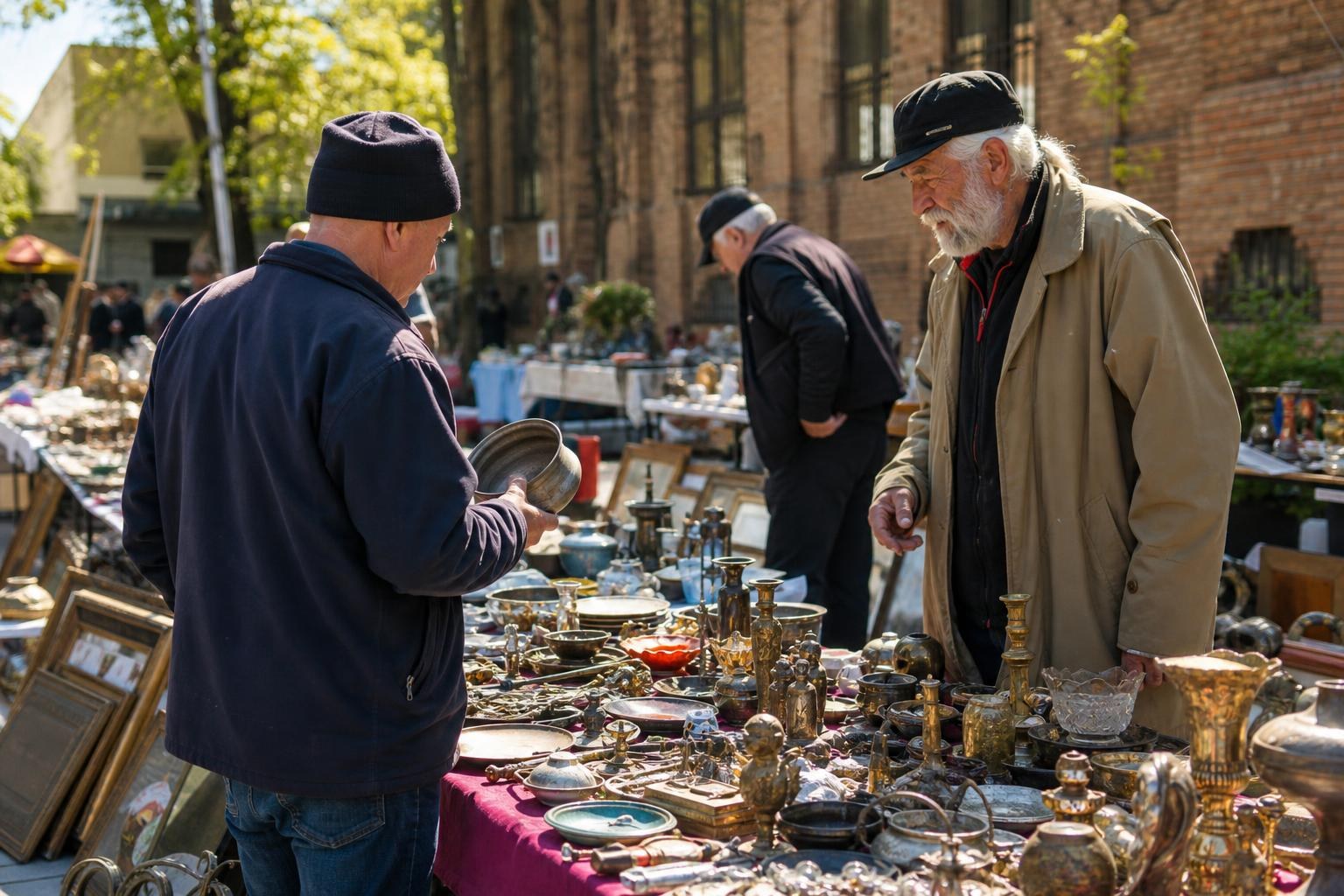
Vendors spread their wares across Dedaena Park and along the railings of the Dry Bridge, on the left bank of the Mtkvari River. The market runs daily from roughly 10:00 to 17:00. Weekends are the peak time, when the most sellers turn up with Soviet memorabilia and Tbilisi souvenirs.
Weekdays are quieter. You’ll find fewer stalls but get more time to chat with sellers. Hours shift with the season and the weather, so check locally in 2026 before you plan a day around it.
Note: Heavy rain or snow empties the park fast. Many vendors simply don’t set up, so watch the forecast in winter.
Getting there by car
- Starting city: Tbilisi (the market is central, so 0 km)
- Drive time: 5-15 minutes from most central districts, depending on traffic
- Road condition: paved city streets
- 4×4 needed: no
- Parking: limited street parking nearby, or use Rike Park and walk across the Peace Bridge
- Seasonal closures: none, but rain cuts vendor numbers
If you’ve rented a car for a road trip around Georgia, honestly consider leaving it at your hotel for this one. A short Bolt ride saves you circling for a space.
What You’ll Find: From Soviet Memorabilia to Christmas Gifts
The tables are chaotic in the best way. You’ll see a Lenin bust beside a Zenit camera, beside a velvet tray of silver rings. Everything here has a past, which is exactly why it makes a good holiday gift.
These are the main categories to look for:
- Soviet medals and cameras: medals, badges and Zenit or FED cameras appeal to collectors and history fans.
- Cloisonné enamel (minankari): this is Georgia’s signature craft, made as pendants, earrings and cufflinks.
- Carpets: you’ll find Caucasian rugs and kilims, which are heavy but special.
- Oil paintings: these range from Old Town street scenes to Soviet-era landscapes.
- Drinking horns (kantsi): horns used for toasts at a Georgian supra.
- Jewellery: look for silver, old filigree and amber.
| Item | Quality tip | Export note |
|---|---|---|
| Soviet medals | Check for crisp edges; recasts look soft | Genuine awards may be restricted |
| Cameras | Test the shutter and look through the lens | Usually fine |
| Cloisonné enamel | Even colour with no bubbles; ask about silver hallmarks | New pieces are fine |
| Carpets | Look at the back: hand-knotted shows irregular knots | Pieces older than 50 years need a certificate |
| Oil paintings | Check canvas age, signature and stretcher | Significant art needs a certificate |
| Drinking horns | Real horn has natural grain, not a uniform plastic sheen | Usually fine; check customs at home |
| Jewellery | Ask to see stamps and test with a magnet | Antique pieces may need a certificate |
How to Haggle Politely and Avoid Fakes
Bargaining is expected here, but it should stay friendly. Sellers usually open with a padded figure. The common advice is to counter at roughly half to two-thirds of that price and then meet somewhere in the middle.
Start with “gamarjoba” (hello) and show real interest in the item. Bundling two or three pieces usually earns a better price. If you can’t agree, say “madloba” (thank you) and walk away calmly.
Tip: Carry cash in Georgian lari, with small notes included. Cards are rarely accepted, and ATMs are a short walk away near Rustaveli Avenue.
Fakes are common among so-called “vintage” pieces. Antiques deserve careful inspection, so watch for these warning signs:
- Many identical “rare” medals on the same table
- Artificial patina that rubs off on your finger
- Modern screws or glue on supposedly old objects
- Paintings that have been “aged” with tea staining
Export Rules for Antiques and Art
Items older than 50 years, and significant works of art, need a certificate from Georgia’s Ministry of Culture before they can leave the country. Without one, customs can confiscate the piece at the airport or at a land border.
Important: These export rules can change. Verify the current 2026 procedure with the Ministry or a licensed dealer before you buy anything valuable, and keep your receipts.
Honest sellers will tell you whether a piece needs paperwork. Some can even help you arrange it.
Frequently Asked Questions about the Tbilisi Flea Market
When is the best time to visit?
Go on a weekend morning, before noon. You’ll get the widest choice before the crowds arrive.
What’s nearby?
Rike Park is just across the Peace Bridge, and Old Town is a 10-15 minute walk away. Together they make an easy half-day loop.
Are there other gift ideas beyond the flea market?
Yes. Wine, churchkhela and spices are all popular. Our separate guide on what to bring home from Georgia covers them, including packing and customs tips.
Is it safe to carry cash?
Generally, yes. Still, keep your money in a front pocket, especially when weekend crowds are heavy.
Arrive early, bring lari, haggle with a smile, and check any genuine antique for its paperwork before you pay. Do that, and the dry bridge market will reward you with gifts that come with a story attached. That beats any snow globe. For more practical Georgia guides on driving routes, seasonal events and local rules, keep exploring Triproadwayplanner before your next trip.