
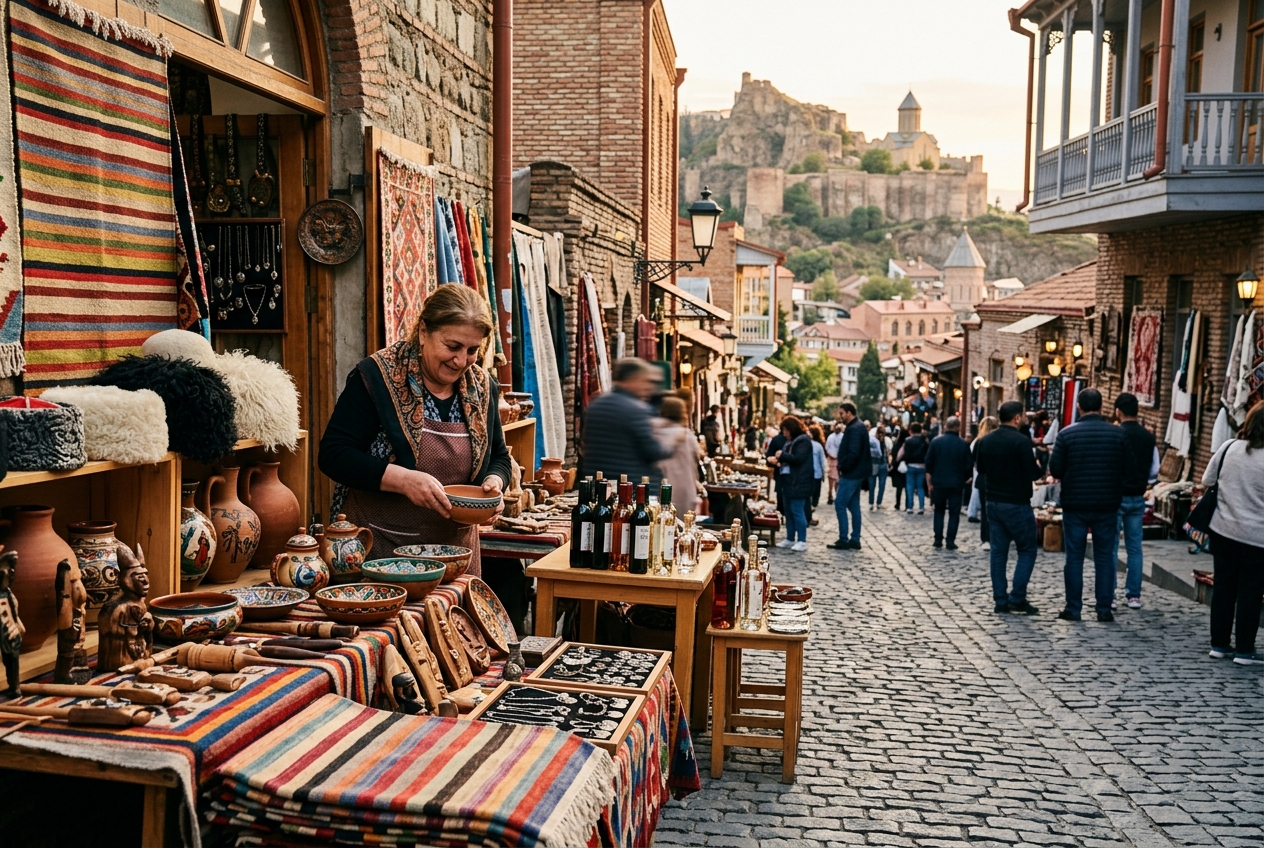
Tbilisi is one of those cities where shopping feels less like a transaction and more like an education. Every stall, boutique, and wine cellar tells a story about Georgia’s tangled history: the centuries of empire, the Soviet decades, and the creative renaissance happening right now. If you’re wondering where to purchase Georgian souvenirs in Tbilisi, the honest answer is that the best finds rarely come from the obvious tourist shops lining Rustaveli Avenue. They come from flea markets where you’ll haggle over Soviet-era cameras, from underground bazaars selling cloisonné enamel, and from family-run wine shops where the owner insists you try five vintages before buying one. With tourism expenditure reaching 15 billion GEL in 2025 and shopping accounting for 28% of that spend, the city has responded with a range of places that cater to every taste and budget. The average traveler spends around 2,187 GEL per trip, and a good chunk of that goes home in a suitcase. Here’s how to spend it wisely.
The Dry Bridge Market for Antiques and Curiosities
If Tbilisi has a soul, part of it lives at the Dry Bridge Market. Spread along the banks of the Mtkvari River near the Dry Bridge itself, this open-air flea market runs daily but peaks on weekends when hundreds of vendors lay out their wares on blankets, card tables, and sometimes just the bare ground. The atmosphere is chaotic and wonderful: old men playing backgammon between sales, cats sleeping on piles of vintage postcards, and the occasional accordion player providing an unasked-for soundtrack.
What makes this market special isn’t just the variety but the authenticity. Unlike curated tourist shops, the Dry Bridge is where Tbilisi residents themselves come to buy and sell. You’ll find Georgian families clearing out attics alongside professional dealers who’ve been working the same patch of sidewalk for twenty years. Prices are flexible, the inventory changes daily, and there’s a genuine thrill in discovering something nobody else will have.
Plan to spend at least two hours here. The market stretches further than it looks, and the best stalls are often tucked behind the more visible ones. Mornings are less crowded, but late afternoon sometimes yields better deals as vendors prepare to pack up.
Soviet Memorabilia and Vintage Artifacts
The Dry Bridge is arguably the best place in the South Caucasus for Soviet-era memorabilia. You’ll find Red Army medals, propaganda posters, vintage Zenit cameras, old Georgian film reels, and Soviet-era wristwatches (the Raketa and Pobeda brands are popular collector’s items). Prices range from 5 GEL for a small pin to several hundred for rare military decorations.
A word of caution: not everything is genuine. Mass-produced “Soviet” pins and medals have flooded the market in recent years, manufactured specifically for tourists. The real ones tend to have visible wear, slightly uneven coloring, and heavier weight. If you’re spending serious money, ask the vendor about the item’s provenance. Most long-time sellers are honest and will tell you straight if something is a reproduction.
Vinyl records are another standout find. Georgian folk music pressings from the Melodiya label, old jazz recordings, and even rare classical albums turn up regularly. Expect to pay 10-30 GEL for common pressings and significantly more for rarities.
Handmade Jewelry and Traditional Metalwork
Several Dry Bridge vendors specialize in handmade jewelry, particularly pieces featuring minankari, the traditional Georgian cloisonné enamel technique that dates back centuries. Authentic minankari pieces can cost at least 35 GEL in brass and 120 GEL in silver, though gold settings push the price much higher. The telltale signs of real minankari are slightly raised enamel cells, rich color depth, and minor imperfections that machine production can’t replicate.
Beyond enamel work, look for traditional Georgian daggers called khanjar or kindjal. These ornamental blades feature intricate metalwork on the scabbard and handle. Genuine antique examples are increasingly rare and expensive, but skilled modern craftspeople produce beautiful reproductions that make striking wall decorations. Just confirm airline regulations before purchasing, as carrying bladed items requires checked luggage and sometimes export documentation.
Artisan Boutiques and Concept Stores in Old Tbilisi
Old Tbilisi, the historic district centered around the sulfur baths and Narikala Fortress, has transformed over the past decade into a hub for independent artisans and concept stores. The narrow streets between Shardeni and Leselidze are packed with small shops, and while some sell generic tourist trinkets, others stock genuinely beautiful handmade goods.
The key to finding quality in Old Tbilisi is to look beyond the ground-floor shops on the main pedestrian streets. Many of the best studios are on upper floors, down side alleys, or in converted courtyards. Follow the hand-painted signs, peek into open doorways, and don’t be afraid to climb a rickety staircase – some of the finest ceramics and textile studios in the city operate from what look like residential apartments.
Meidan Bazaar: An Underground Treasure Trove
Meidan Bazaar sits beneath Meidan Square, the historic trading hub near the Metekhi Bridge. This underground market was renovated in recent years and now houses dozens of small vendors selling everything from handmade ceramics to traditional felt hats called nabadi. The bazaar has a curated feel compared to the Dry Bridge, with higher average quality and somewhat fixed prices.
Ceramics are a particular strength here. Georgian pottery traditions vary by region: Shrosha ware features bold geometric patterns, while Kutaisi-style pieces tend toward floral motifs. Several Meidan vendors work directly with village potters and can tell you exactly which family made the bowl you’re holding. A hand-painted wine pitcher typically runs 25-60 GEL, and they pack items carefully for travel.
The bazaar is also a good spot for Georgian calligraphy art. The Mkhedruli script, with its distinctive rounded letters, makes for beautiful decorative pieces. Local artists sell framed prints, hand-lettered parchment, and even custom name translations for 15-50 GEL.
Contemporary Georgian Design at Fabrika and Wine Factory
Tbilisi’s creative scene has exploded in recent years, and two converted industrial spaces showcase it best. Fabrika, a former Soviet sewing factory in the Marjanishvili district, now houses a hostel, coworking space, and a cluster of independent shops and studios. Brands like Rooms Hotel’s gift shop and various local designers sell modern Georgian fashion, homeware, and art that feels distinctly of this place without being kitschy.
Wine Factory, located near the First Republic Square, follows a similar model. This repurposed facility hosts pop-up shops, galleries, and permanent retail spaces where young Georgian designers sell everything from screen-printed tote bags to handmade leather goods. Prices here are higher than market stalls but still reasonable by European standards: a handmade leather wallet might cost 80-150 GEL.
Both spaces represent a new generation of Georgian creatives who blend traditional motifs with contemporary design. If you want souvenirs that don’t scream “tourist purchase,” these are your best bet.
Authentic Edible Souvenirs and Wine Shops
Georgia’s culinary heritage is arguably its greatest cultural export, and edible souvenirs consistently rank among the most popular purchases for visitors. The good news is that Tbilisi offers everything from high-end wine boutiques to neighborhood markets where spice vendors will custom-blend mixtures for you on the spot.
Premium Qvevri Wines and Chacha Spirits
Georgian wine isn’t just old: it’s the oldest. With an 8,000-year winemaking tradition and over 500 indigenous grape varieties, this is one souvenir category where you genuinely can’t replicate the purchase back home. The qvevri method, where wine ferments in large clay vessels buried underground, produces amber wines with a character unlike anything from France or California.
| Wine Type | Typical Price Range (GEL) | Best For |
|---|---|---|
| Saperavi (red, commercial) | 15-40 | Everyday drinking, gifts |
| Rkatsiteli amber (qvevri) | 30-80 | Wine enthusiasts |
| Natural/organic small-batch | 50-200+ | Collectors, special occasions |
| Chacha (grape brandy) | 20-60 | Spirits lovers |
The best wine shops in Tbilisi for souvenir purchases include Vinotel on Elene Akhvlediani Street, which doubles as a wine bar, and g.Vino’s retail section. Both stock wines from small family producers that you won’t find in supermarkets. Staff typically speak English and will help you choose based on taste preferences and luggage constraints.
Chacha, Georgia’s potent grape brandy, is another popular take-home item. Commercial bottles from producers like Askaneli or Sarajishvili are safe bets, but if you’re feeling adventurous, some wine shops sell artisanal chacha from family distillers. These homemade versions range from smooth and fruity to eye-wateringly strong.
Churchkhela and Traditional Georgian Spices
Churchkhela – those candle-shaped strings of walnuts or hazelnuts dipped in thickened grape juice – are Georgia’s most iconic edible souvenir. You’ll see them hanging in every market and many street stalls. Quality varies enormously. The best churchkhela uses fresh nuts and pure grape juice with no added sugar, resulting in a chewy, complex sweetness. Budget versions use cheap fillers and artificial flavoring.
The Dezerter Bazaar, Tbilisi’s largest indoor market near the train station, is the best place to buy churchkhela in quantity. Vendors there let you taste before buying, and prices run 2-5 GEL per piece. Buy from vendors whose churchkhela has a slightly matte surface rather than a glossy sheen, as the glossy ones often contain added sugar.
For spices, the same market is unbeatable. Georgian cuisine relies on a distinctive spice palette: blue fenugreek (utskho suneli), dried marigold petals, and the iconic khmeli suneli blend. A generous bag of khmeli suneli costs just 3-5 GEL and will transform your cooking at home for months.
Textiles and Fashion: From Blue Tablecloths to Modern Apparel
Georgia’s textile traditions reflect its position at the crossroads of Europe and Asia. Persian influences, Caucasian mountain craft, and Orthodox Christian iconography all show up in the fabrics, patterns, and techniques you’ll find across Tbilisi’s shops and markets.
Traditional ‘Lurji Supra’ Blue Tablecloths
The lurji supra, or blue tablecloth, is one of Georgia’s most recognizable textile traditions. These indigo-dyed cotton cloths feature white block-printed patterns of grapes, pomegranates, and geometric borders. They’ve been used on Georgian feast tables (the supra) for generations, and a genuine hand-printed lurji supra makes a stunning and practical souvenir.
The best place to find authentic versions is the Ethnographic Museum gift shop on Turtle Lake or specialty textile shops in Old Tbilisi. Machine-printed reproductions are common and cost 20-40 GEL, while hand-blocked originals from workshops in Tbilisi or Signagi run 60-150 GEL. The difference is visible up close: hand-printed versions show slight irregularities in the pattern and richer indigo saturation.
Hand-Knitted Accessories and Caucasian Carpets
Wool products from Georgia’s mountain regions are exceptional. Tusheti and Khevsureti, highland areas with centuries-old weaving traditions, produce distinctive patterned socks, hats, and scarves using natural dyes. You’ll find these at the Dry Bridge Market and in several Old Tbilisi shops, typically priced between 15-50 GEL for smaller items.
Caucasian carpets are a more serious investment. Genuine hand-knotted rugs from the region feature bold geometric patterns in deep reds, blues, and creams. Prices start around 200 GEL for small pieces and climb steeply for larger or antique examples. While regional markets are becoming increasingly important for authentic crafts, Tbilisi remains the most convenient place to compare quality and prices across multiple dealers. Several reputable carpet shops on Erekle II Street will provide certificates of authenticity and handle shipping for larger purchases.
Practical Tips for Shopping in Tbilisi
Knowing what to buy is only half the equation. How you buy, pay, and get your purchases home matters just as much, especially when dealing with antiques, alcohol, and food items that may face customs scrutiny.
Bargaining Etiquette and Payment Methods
Bargaining is expected at the Dry Bridge Market and tolerated at most bazaars, but it’s not the aggressive sport you might encounter in Istanbul or Marrakech. Georgian vendors generally appreciate a friendly negotiation rather than hardball tactics. A good rule: offer about 70% of the asking price and expect to settle around 80-85%. If the vendor seems offended, you’ve gone too low.
Fixed-price shops, concept stores, and wine boutiques don’t expect haggling. Attempting it there will just create awkwardness.
Card payments are widely accepted in established shops, and contactless payments work in most places. Market vendors and small stalls, however, are cash-only. Georgian lari is the only accepted currency: don’t try to pay in dollars or euros, as vendors will either refuse or give you a terrible exchange rate. ATMs are plentiful throughout central Tbilisi, and exchange offices on Kote Abkhazi Street typically offer fair rates.
Ride-hailing apps like Bolt and Yandex Go are essential for getting purchases home safely, especially if you’ve bought fragile ceramics or multiple wine bottles. A ride across central Tbilisi rarely exceeds 8-10 GEL.
Navigating Export Regulations for Antiques
Georgia has specific rules about exporting items of cultural or historical significance. Anything genuinely old, particularly items predating the 20th century, may require an export permit from the Ministry of Culture. This applies to antique jewelry, religious artifacts, old manuscripts, and historical weapons.
In practice, most Soviet-era items and modern handicrafts pass through customs without issue. But if you’re buying something that looks genuinely antique at the Dry Bridge, ask the vendor whether export documentation is needed. Reputable dealers will know and can sometimes help arrange permits.
For wine, you can carry up to 4 liters per person in checked luggage on most airlines without issues. Anything beyond that may require a customs declaration at your destination. Wrap bottles in bubble wrap and clothing, or buy a purpose-built wine suitcase from one of the travel shops near Liberty Square.
Tbilisi, which accounts for over a third of all visits in Georgia, concentrates the country’s best shopping into a walkable area. You can hit the Dry Bridge in the morning, browse Old Tbilisi boutiques over lunch, and stock up on wine and churchkhela in the afternoon. The city rewards curiosity and patience: skip the first souvenir shop you see, wander a little further, and you’ll find something worth carrying home. Your suitcase will be heavier on the way back. That’s how you know the trip was good.