
Table of Contents
- Winter Weather in Tbilisi and Essential Travel Data
- Cozy Cultural Experiences and Indoor Attractions
- Winter Markets and Festive Celebrations
- Traditional Georgian Comfort Food and Wine
- Day Trips for Snow Lovers
- Practical Tips for Navigating the City in Winter
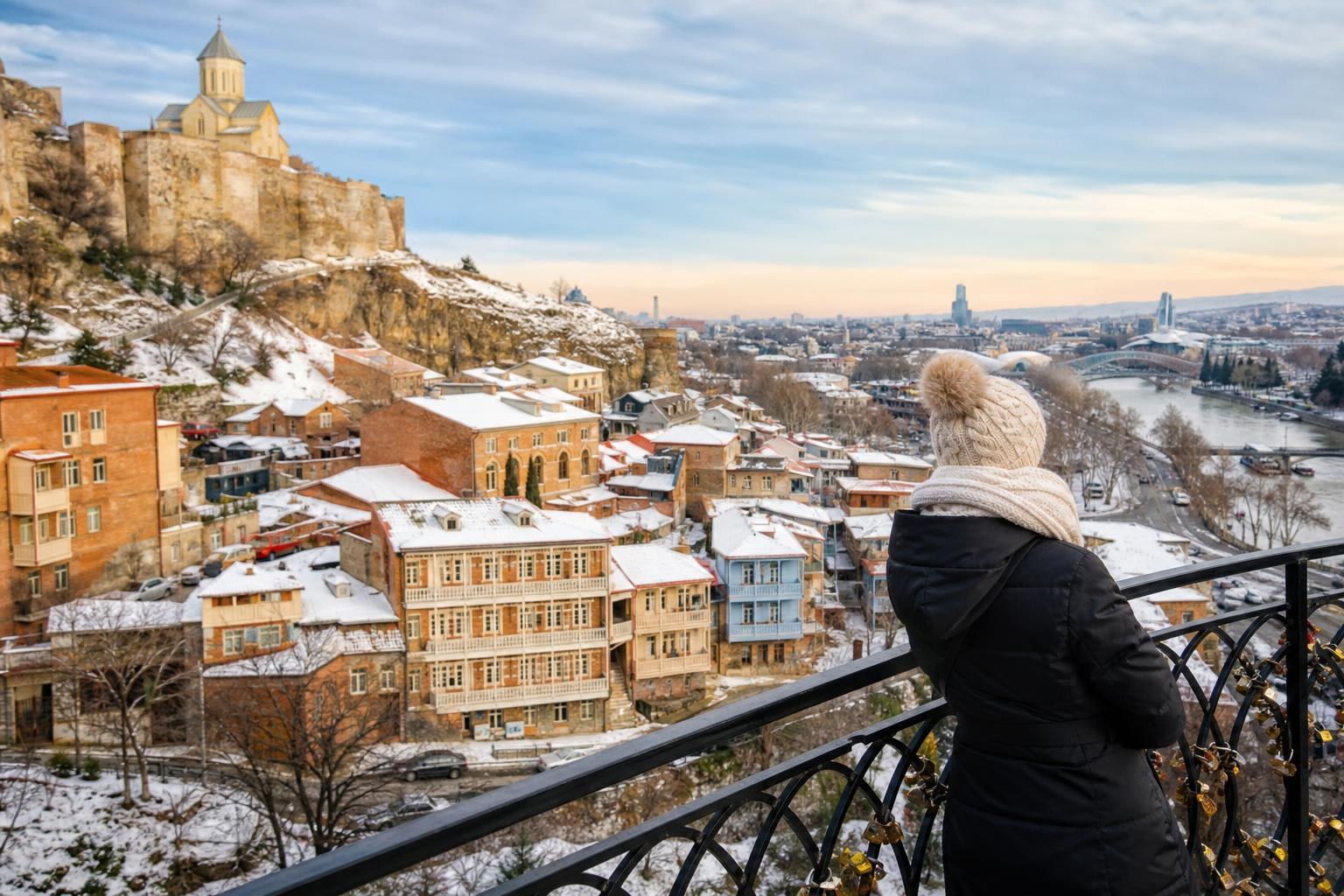
Tbilisi in winter is one of Europe’s best-kept secrets, though that’s changing fast. While summer crowds pack the cobblestone streets of the Old Town and fill every rooftop bar in sight, the cold months strip the city down to something more intimate, more honest. Temperatures hover between 0°C and 7°C from December through February, and the pace slows enough that you can actually sit in a sulfur bath without elbowing a stranger. Georgia has been named among the top travel destinations for 2026, and winter is arguably the most rewarding time to understand why. The food is heartier, the wine flows more freely, and the city’s mix of Soviet architecture, ancient churches, and Art Nouveau facades looks genuinely stunning under a light dusting of snow. If you’re wondering what to do in Tbilisi during winter, the short answer is: eat, drink, soak, and explore. The longer answer fills the rest of this page.
Winter Weather in Tbilisi and Essential Travel Data
Tbilisi sits in a valley along the Mtkvari River, shielded from the harshest Caucasus winds but still subject to genuine cold. Winters are mild compared to northern Europe, but they’re not warm. Expect overcast skies, occasional snowfall that rarely sticks for more than a day or two in the city center, and crisp mornings that make a hot cup of Turkish-style coffee feel essential. The city gets roughly 5 to 6 hours of daylight sunshine in December, stretching to about 7 by late February.
Rain is more common than snow at lower elevations. January tends to be the driest month, while December and February can bring intermittent showers. The good news: Tbilisi rarely experiences the kind of bone-chilling wind that makes cities like Budapest or Krakow brutal in winter.
Monthly Temperature and Precipitation Table
| Month | Avg. High (°C) | Avg. Low (°C) | Avg. Precipitation (mm) | Avg. Snow Days |
|---|---|---|---|---|
| December | 7 | 0 | 28 | 3-4 |
| January | 6 | -1 | 20 | 4-5 |
| February | 8 | 0 | 27 | 3-4 |
These numbers make Tbilisi comparable to cities like Lisbon in terms of temperature, though with less sunshine. The real cold hits at night, so plan indoor activities for evenings.
What to Pack for a Georgian Winter
Skip the heavy arctic gear. A mid-weight down jacket, a good scarf, and waterproof boots with decent grip will handle 90% of conditions. Layers matter more than bulk: mornings can be near freezing, but afternoon sun in a sheltered courtyard can push things up to 10°C or higher.
Bring a compact umbrella. Tbilisi’s rain tends to come in short bursts rather than all-day drizzle, so you won’t need full waterproof trousers. If you’re planning a day trip to the mountains (more on that later), pack thermal base layers and proper ski gloves separately.
Cozy Cultural Experiences and Indoor Attractions
Winter pushes Tbilisi’s cultural life indoors, and the city rewards you for following. Museums are uncrowded, theaters run full seasons, and the sulfur baths become less of a tourist activity and more of a genuine local ritual. This is the season when Tbilisi feels most like a living city rather than a destination.
Warming Up in the Abanotubani Sulfur Baths
The sulfur baths in the Abanotubani district are the single most Tbilisi thing you can do. The naturally heated, sulfur-rich water has been drawing visitors since the city’s founding legend, which claims King Vakhtang Gorgasali discovered the hot springs while hunting with a falcon. The brick-domed bathhouses cluster along a narrow street at the base of the Narikala Fortress.
Private rooms at places like Chreli Abano or the Royal Bath House cost between 80 and 150 GEL per hour (roughly $28-$53 USD), and you can add a traditional scrub and massage for another 30-50 GEL. The public sections at Bathhouse No. 5 run as low as 5 GEL, though the experience is more communal and less polished. Winter is the best time for the baths: stepping from the cold air into that warm, mineral-scented water hits differently when it’s actually cold outside.
Exploring the Georgian National Museum and Art Galleries
The Georgian National Museum’s main branch on Rustaveli Avenue houses a remarkable collection that spans from Bronze Age gold artifacts to Soviet-era political history. The Treasury Room alone, with its Colchian gold jewelry dating back 3,000 years, justifies the 15 GEL entry fee. Give yourself at least two hours.
For contemporary art, the Museum of Modern Art on Rustaveli is small but well-curated. The galleries along Atoneli Street in the Old Town rotate exhibitions regularly, and winter shows tend to feature emerging Georgian artists who blend traditional motifs with sharp modern commentary. Most galleries are free to enter.
Catching a Performance at the Gabriadze Puppet Theater
Rezo Gabriadze’s puppet theater on Shavteli Street is one of the most charming cultural institutions in the Caucasus. The tiny theater seats around 80 people, and performances blend puppetry, live music, and Gabriadze’s distinctive storytelling style. Shows run in Georgian with occasional English-friendly performances: check the schedule a few days ahead, because tickets sell out quickly even in winter. Expect to pay around 30-40 GEL per seat.
The building itself is a work of art, with a clock tower that stages a brief mechanical puppet show at noon and 7 PM. Even if you can’t get tickets, the attached café serves excellent coffee and the surrounding block is one of the most photogenic corners of the city.
Winter Markets and Festive Celebrations
Georgian winter celebrations follow the Orthodox calendar, which shifts the holiday season later than most Western countries. This means Tbilisi is festive well into January, and the city’s Christmas markets and street celebrations have a character that feels distinctly un-commercialized.
Navigating the Tbilisi Christmas Markets
The main Christmas market sets up along Rustaveli Avenue and in the area around First Republic Square, typically running from mid-December through early January. Stalls sell churchkhela (the walnut-and-grape-juice candy that looks like a candle), handmade wool socks, enamel jewelry, and hot drinks. Mulled wine here costs 5-8 GEL, and a serving of freshly made lobiani (bean-filled bread) runs about 4 GEL.
The market atmosphere peaks between December 25 (Western Christmas) and January 7 (Orthodox Christmas), when the city essentially celebrates a two-week holiday stretch. The Tbilisi Christmas tree, usually erected near the Parliament building, serves as the unofficial gathering point. Street musicians, pop-up food vendors, and impromptu toasts with strangers are all standard.
Celebrating Orthodox Christmas and Bedoba
Orthodox Christmas on January 7 is the main event. The Alilo procession, a parade of children and clergy dressed in traditional costumes, winds through the city streets carrying gifts for orphanages and shelters. It’s one of the most genuinely moving public celebrations I’ve seen anywhere: no corporate sponsors, no branded floats, just community.
Bedoba, celebrated on January 2, is Georgia’s version of a “first footer” tradition. The first person to enter your home in the new year is believed to bring the household’s luck for the entire year. Families choose their Bedoba carefully, preferring someone considered fortunate or good-natured. If a Georgian friend invites you to be their Bedoba, take it seriously: it’s a real honor.
Traditional Georgian Comfort Food and Wine
Georgian cuisine is built for winter. The dishes are heavy, warming, and meant to be shared over long meals with too much wine. Georgia has rapidly become a hot new winter destination partly because travelers discover that the food alone justifies the trip.
Must-Try Winter Dishes: Khinkali and Khachapuri
Khinkali are large soup dumplings, twisted at the top and filled with spiced meat (or mushrooms, or cheese). The correct technique: hold the twisted knob, bite a small hole, sip the broth, then eat the dumpling. You leave the knob on your plate as a count of how many you’ve eaten. A plate of five costs 5-8 GEL at most local restaurants.
Khachapuri, the cheese-filled bread, comes in regional variations. The Adjarian style, shaped like a boat and topped with a raw egg and butter, is the most dramatic. But in winter, the Imeretian version, a simple round bread stuffed with salty Imeretian cheese, is the one locals eat daily. Pair it with a bowl of chikhirtma, a lemony chicken soup thickened with egg, and you have the perfect cold-weather lunch for under 20 GEL.
Other winter staples worth seeking out: lobio (stewed beans served in a clay pot), ostri (spicy beef stew), and kuchmachi (organ meat sautéed with pomegranate and walnuts). None of these will win beauty contests, but they’re deeply satisfying.
Wine Tasting in Old Tbilisi’s Cellars
Georgia’s 8,000-year winemaking tradition isn’t just marketing: the qvevri method, where wine ferments in large clay vessels buried underground, is UNESCO-recognized and still practiced by small producers across the country. Tbilisi’s Old Town has a growing number of wine bars and tasting rooms where you can try amber wines (made from white grapes with extended skin contact) that taste like nothing you’ve had before.
Vino Underground on Tabidze Street is a reliable starting point, with rotating selections from natural winemakers across Kakheti and Kartli. A tasting flight runs 25-40 GEL. For something more structured, the Wine Museum in the Ethnographic Museum complex offers guided tastings with historical context. Budget travelers will appreciate that a solid bottle of Saperavi or Rkatsiteli costs just 12-25 GEL at most wine shops, and daily expenses in Tbilisi remain very manageable for international visitors.
Day Trips for Snow Lovers
Tbilisi’s winter highlights extend well beyond the city limits. Two of Georgia’s best mountain destinations sit within a few hours’ drive, and both offer snow experiences that rival more expensive European alternatives at a fraction of the cost.
Skiing and Snowboarding in Gudauri
Gudauri is Georgia’s premier ski resort, located about two hours north of Tbilisi along the Georgian Military Highway. The resort sits between 2,200 and 3,300 meters elevation, with reliable snow cover from December through April. A full-day lift pass costs around 70-80 GEL (under $30 USD), and equipment rental adds another 50-70 GEL. Compare that to the Alps, where a lift pass alone can exceed €60.
The resort has expanded significantly in recent years, with new gondolas and improved grooming. Freeride terrain off the marked runs is excellent, though avalanche awareness is essential: hire a local guide if you’re venturing off-piste. Gudauri also hosts winter events, including the Tbilisi Open Air 2026 Winter Edition, which brings live music to the slopes. Marshrutka minibuses run from Tbilisi’s Didube station to Gudauri for about 15-20 GEL, though hiring a private driver (around 150-200 GEL round trip) is more comfortable and lets you stop at the Ananuri fortress along the way.
The Scenic Railway to Bakuriani
The Kukushka narrow-gauge railway from Borjomi to Bakuriani is one of the most charming train rides in the Caucasus. Built in the 1890s, the little train climbs through snow-covered pine forests for about 2.5 hours, crossing bridges and passing through tunnels at a pace slow enough to actually enjoy the scenery. A ticket costs just 2 GEL.
Bakuriani itself is a smaller, more family-friendly ski resort than Gudauri, with gentler slopes and a quieter atmosphere. It’s ideal if you want a day of casual skiing or snowshoeing without the more intense terrain. To reach Borjomi from Tbilisi, take a train from the central station (about 4 hours, 9-15 GEL depending on class). The whole Tbilisi-Borjomi-Bakuriani loop makes an excellent overnight trip.
Practical Tips for Navigating the City in Winter
Getting around Tbilisi in winter is straightforward, but a few specifics will save you hassle. The metro system runs two lines, costs 1 GEL per ride (loaded onto a reusable card), and covers the main areas between Didube in the north and Varketili in the southeast. Trains run until about 11:30 PM.
For taxis, use the Bolt app exclusively. Street taxis still operate, but pricing is unpredictable and you’ll occasionally encounter drivers who quote inflated fares to foreign faces. Bolt rides within the city center rarely exceed 5-8 GEL. Google Maps works well for navigation, though downloading an offline Georgian language pack for Google Translate is essential: English proficiency outside hotels and tourist restaurants drops off quickly.
Sidewalks can be icy in the mornings, especially on the steep streets climbing toward Mtatsminda and Sololaki. Those waterproof boots with good grip aren’t optional: they’re a safety measure. ATMs are everywhere, and card payments are accepted at most restaurants and shops, though market vendors and marshrutka drivers deal in cash only. The Georgian lari trades at roughly 2.8 GEL to 1 USD as of early 2026.
One cultural note: Georgians are famously hospitable, and the concept of “stumari ghvtisaa” (the guest is a gift from God) is more than a saying. Don’t be surprised if a shopkeeper offers you coffee, a wine bar owner pours you a free glass, or a taxi driver insists on giving you his phone number in case you need anything. Accept graciously. This isn’t transactional: it’s how Georgians have treated visitors for centuries, and it intensifies in winter when fewer tourists are around and locals have more time to share.
Georgia has grown from a niche Caucasus destination into a top global travel choice, and winter remains the season where you experience the country on its own terms. The sulfur baths are warmer, the khinkali tastes better when it’s cold outside, and the mountains are at their most dramatic under fresh snow. Tbilisi in winter doesn’t try to impress you with spectacle. It impresses you with warmth: the literal kind from the baths and fireplaces, and the human kind from the people who live there. Book a flight, pack layers, and give yourself at least five days. You’ll wish you’d planned for ten.