
Table of Contents
- Navigating the Major Pharmacy Chains in Tbilisi
- Quick Reference Guide to 24-Hour Pharmacies by District
- How to Identify a 24-Hour Pharmacy on the Street
- Essential Tips for Buying Medication in Georgia
- Emergency Alternatives and Home Delivery Services
- Finding What You Need, When You Need It
Finding a pharmacy after midnight in an unfamiliar city can feel like a small crisis, especially when you’re running a fever, dealing with an allergic reaction, or simply need basic medication for a child who won’t stop coughing. Tbilisi, thankfully, is better equipped for this than most cities its size. The Georgian capital has a surprisingly well-developed network of round-the-clock pharmacies, most of them operated by a handful of dominant chains that keep select branches open through the night. Whether you’re an expat settling into life here, a tourist passing through, or a long-term resident who’s never had to think about it until now, knowing where to find 24-hour pharmacies in Tbilisi before you actually need one is the kind of preparation that pays off at 3 a.m. I’ve personally stood in a Tbilisi pharmacy at two in the morning buying antihistamines after an unexpected reaction to something I ate at a supra, and I can tell you: the experience was surprisingly smooth, but only because I already knew where to go. This guide covers the major chains, specific locations, how to spot an all-night pharmacy on the street, and practical tips for buying medication in Georgia, including what you can and can’t get without a prescription.
Navigating the Major Pharmacy Chains in Tbilisi
Tbilisi’s pharmacy market is dominated by a few large chains, and understanding which ones operate 24-hour branches will save you a lot of wandering. The three names you need to know are PSP, Aversi, and GPC (sometimes called Pharmadepot for its budget-oriented branches). Each chain has hundreds of locations across the city, but only a fraction stay open around the clock. The good news: those overnight branches tend to be in high-traffic areas that are easy to reach by taxi or on foot.
PSP Pharmacy Locations and Availability
PSP Pharma is the single largest pharmacy chain in Georgia. The company holds roughly 35% of the country’s pharmacy market share, operating between 350 and 400 branches nationwide. In Tbilisi alone, you’ll find PSP outlets on practically every major street and in most shopping centers.
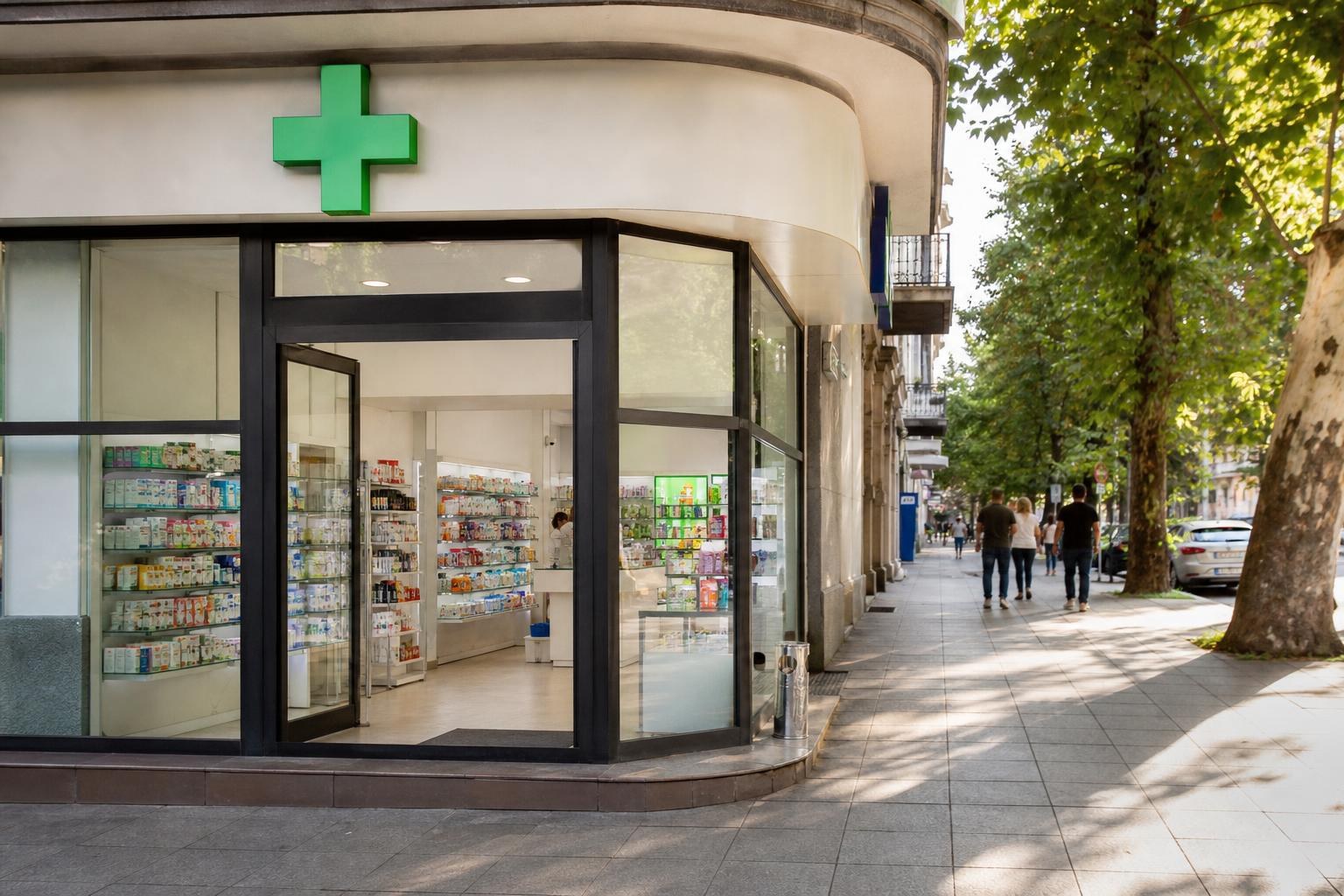
Not all PSP branches run 24 hours, but the chain maintains several all-night locations in key districts. The ones near Rustaveli Avenue, Marjanishvili, and Station Square (Sadguris Moedani) are reliably open through the night. PSP’s branding is distinctive: look for the bright green cross and green-and-white signage. Their stores tend to be well-stocked, and staff at the larger branches often speak enough English or Russian to help foreign customers.
One practical tip: PSP has its own mobile app (PSP Pharma) where you can check stock availability and locate the nearest branch. The app interface is available in Georgian, but Google Translate handles it well enough if you’re just trying to find an address.
Aversi: Where to Find 24/7 Branches
Aversi is PSP’s main competitor and the second-largest pharmacy chain in the country. The company has been a major player in making medication more accessible across Georgia, and its founder has publicly proposed measures to make medicine prices more affordable in collaboration with the government.
Aversi’s 24-hour branches are scattered across Tbilisi, with reliable overnight locations on Chavchavadze Avenue, near Delisi Metro Station, and in the Saburtalo district. Their stores are recognizable by blue-and-white branding with a distinctive “A” logo. Aversi pharmacies tend to carry a wide range of both Georgian-manufactured and imported medications, and their prices are generally competitive with PSP’s.
If you’re staying in Vake or Saburtalo, Aversi is likely your closest overnight option. The chain also operates a call center (available in Georgian and Russian) that can confirm which branches are currently open 24 hours, since schedules occasionally shift.
GPC and Pharmadepot Night Services
GPC (Georgian Pharmaceutical Company) rounds out the big three. While GPC’s own branded pharmacies are common, you’ll also encounter Pharmadepot, which operates as a budget-friendly arm offering lower prices on generic medications. GPC has 24-hour branches, though fewer than PSP or Aversi.
The most reliably open GPC/Pharmadepot overnight locations are near Didube and in the Isani-Samgori area on the eastern side of the city. These branches cater heavily to local residents rather than tourists, so English-speaking staff are less common here. Prices at Pharmadepot tend to be 10-20% lower than at PSP or Aversi for equivalent generic medications, which makes them worth seeking out if cost is a concern.
One thing I’ve noticed: GPC branches are often smaller and carry a more limited selection of imported brands. If you need a specific Western-brand medication, PSP or Aversi are better bets for overnight shopping.
Quick Reference Guide to 24-Hour Pharmacies by District
Tbilisi is divided into several distinct districts, and knowing which pharmacies operate overnight in your part of the city eliminates guesswork. The table below covers the most reliable all-night pharmacy locations as of 2026. Keep in mind that individual branches occasionally change their hours, so confirming via phone or app before making a late-night trip is always smart.
Table: Top 24-Hour Pharmacy Locations and Contact Details
| District | Pharmacy Chain | Approximate Location | Phone Number | Notes |
|---|---|---|---|---|
| Mtatsminda / Old Town | PSP | Near Rustaveli Ave / Freedom Square | +995 32 2 55 22 55 (PSP hotline) | Central, easy taxi access |
| Vake | Aversi | Chavchavadze Ave | +995 32 2 95 25 25 (Aversi hotline) | Well-stocked, some English-speaking staff |
| Saburtalo | Aversi | Near Delisi Metro | +995 32 2 95 25 25 | Residential area, reliable hours |
| Didube | GPC / Pharmadepot | Near Didube Metro / Bus Terminal | +995 32 2 52 25 25 (GPC hotline) | Budget-friendly, limited English |
| Isani-Samgori | GPC | Isani area, near Samgori Metro | +995 32 2 52 25 25 | Eastern Tbilisi, serves local population |
| Marjanishvili | PSP | Marjanishvili Square area | +995 32 2 55 22 55 | Left bank, walkable from Old Town |
| Station Square | PSP | Sadguris Moedani | +995 32 2 55 22 55 | Near central train station |
The hotline numbers listed are chain-wide customer service lines. Calling them is the fastest way to confirm whether a specific branch is currently operating 24 hours. If you’re using Google Maps, searching “აფთიაქი 24 საათი” (pharmacy 24 hours in Georgian) often surfaces results with user-verified hours.
How to Identify a 24-Hour Pharmacy on the Street
If you’re walking around Tbilisi at night and need to spot an open pharmacy without pulling out your phone, there are a few visual cues that help. Georgian pharmacies almost universally display a green cross, similar to the European standard. This cross is usually illuminated, so if you see a glowing green cross on a building at 2 a.m., that’s your target.
The phrase to look for on signage is “24 საათი” (24 saati), which means “24 hours.” Many pharmacies display this prominently on their storefront or on a separate sign near the entrance. Some branches use a rotating or flashing green cross to signal that they’re open around the clock, as opposed to standard-hours locations where the cross may be lit but static.
Here’s something that trips up newcomers: a pharmacy might have its main entrance shuttered at night but operate through a small service window. This is common at GPC and some smaller independent pharmacies. You’ll see a lit window or a small booth-like opening where a pharmacist serves customers one at a time. Don’t assume a pharmacy is closed just because the front door is locked. Walk around to the side or look for a buzzer.
The Georgian word for pharmacy is “აფთიაქი” (aptiaki), and you’ll see it on every pharmacy sign. If you can recognize those characters, you’ll spot pharmacies everywhere. The chains also use their brand names in Latin script (PSP, Aversi, GPC), so those are easy to identify even without reading Georgian.
Essential Tips for Buying Medication in Georgia
Georgia’s medication regulations are more relaxed than what most Western Europeans or North Americans are used to, but there are still important rules. Understanding how prescriptions work here, and how to communicate what you need, can make a late-night pharmacy visit much less stressful.
Understanding Prescription Requirements (Group I, II, III)
Georgian medications are classified into three groups. Group III drugs are available over the counter without any prescription. This category is broad and includes many medications that would require a prescription in the EU or US: certain antibiotics, some anti-inflammatory drugs, and various other medications. Pharmacists in Tbilisi will often recommend and dispense these directly.
Group II medications require a prescription, but enforcement can be inconsistent. These include stronger antibiotics, some hormonal medications, and certain controlled substances. In practice, some pharmacists at smaller or independent pharmacies may dispense Group II drugs without a written prescription if you explain your situation, though the larger chains like PSP and Aversi tend to follow the rules more strictly.
Group I drugs are strictly controlled: opioids, strong sedatives, and psychotropic medications. You will not get these without a valid prescription from a Georgian doctor, and the prescription must be on a specific form. Foreign prescriptions are generally not accepted for Group I medications. If you need something in this category, you’ll need to visit a clinic first.
A useful resource for understanding which medications fall into which category is available through formulary databases, though the Georgian-language documentation from the Ministry of Health is the definitive source.
Language Barriers and Communication at Night
During daytime hours at busy branches, you’ll often find at least one pharmacist who speaks conversational English. At night, your odds drop significantly. Russian is widely understood among older pharmacists, so if you speak any Russian, use it.
For English-only speakers, here’s what actually works: bring the generic (scientific) name of the medication you need, written down. Georgian pharmacists are trained professionals and will recognize international generic names like “ibuprofen,” “amoxicillin,” or “cetirizine” even if they don’t speak English. Brand names vary by country, so saying “Advil” or “Zyrtec” might not register, but the generic equivalent will.
Google Translate’s camera function works reasonably well for translating Georgian packaging into English, and downloading the Georgian language pack for offline use is something I’d recommend before you ever need it. A few key phrases to have ready: “მტკივა” (mtkiva) means “it hurts,” “ალერგია” (alergia) means “allergy,” and “ტემპერატურა” (temperatura) means “fever/temperature.”
Emergency Alternatives and Home Delivery Services
Sometimes you can’t get to a pharmacy, whether because of illness, mobility issues, or simply not wanting to venture out at 4 a.m. in an unfamiliar city. Tbilisi has developed solid alternatives for these situations.
For genuine medical emergencies, call 112 (Georgia’s universal emergency number). Ambulance services in Tbilisi are free and will respond to your location. If your situation isn’t an emergency but you need medical advice at night, several private clinics operate 24-hour urgent care, including MediClub Georgia and the Todua Clinic. These facilities have English-speaking doctors and can write prescriptions on the spot if needed.
For non-emergency situations, pharmacy delivery has become increasingly viable. Both PSP and Aversi offer delivery through their own apps and websites, though availability during overnight hours can be limited depending on your district. The turnaround is typically 30-60 minutes during daytime, stretching to 1-2 hours late at night.
Using Wolt and Glovo for Late-Night Supplies
Wolt and Glovo, the two dominant delivery apps in Tbilisi, both partner with pharmacy chains to offer medication delivery. This is genuinely useful if you’re stuck in your apartment or hotel and need something basic like pain relievers, cold medicine, or bandages.
The process is straightforward: open Wolt or Glovo, search for “pharmacy” or “აფთიაქი,” and browse available products from partnered locations. Selection is more limited than what you’d find in-store, focusing on common over-the-counter items. Prescription medications are generally not available through these platforms.
A few practical notes: delivery fees through Wolt and Glovo typically run 3-7 GEL (roughly $1-2.50 USD in 2026), and late-night delivery times can stretch to 45 minutes or more depending on courier availability. The apps function in English, which removes the language barrier entirely. Payment by card is standard.
One limitation worth knowing: if you need a specific medication that isn’t listed on the app, you’re better off calling the pharmacy chain’s hotline directly and asking about their in-house delivery service. The hotline staff can check stock at nearby branches and arrange delivery for items that aren’t listed on third-party platforms. Expats living in Tbilisi have compiled helpful guides covering pharmacy logistics that include additional tips on using these services effectively.
Finding What You Need, When You Need It
Tbilisi’s pharmacy infrastructure is genuinely better than what you’d find in many European capitals of similar size. The combination of major chains keeping branches open 24 hours, relatively relaxed medication regulations, and the growing availability of delivery apps means that a middle-of-the-night health need rarely turns into a real crisis here.
The most important thing you can do is prepare before you need help. Save the PSP and Aversi hotline numbers in your phone. Download Google Translate’s Georgian offline pack. Know the generic name of any medication you rely on regularly. And if you’re staying in a specific district, identify your nearest overnight pharmacy during daylight hours so you’re not searching for the first time while feeling terrible.
Tbilisi is a city that takes care of its guests: the Georgian concept of “stumari ghvtisaa” (the guest is a gift from God) extends even to its pharmacists. I’ve been helped with patience and genuine concern at pharmacies here at hours when most of the city was asleep. That said, a little preparation on your part goes a long way toward making sure the experience is as smooth as possible.