
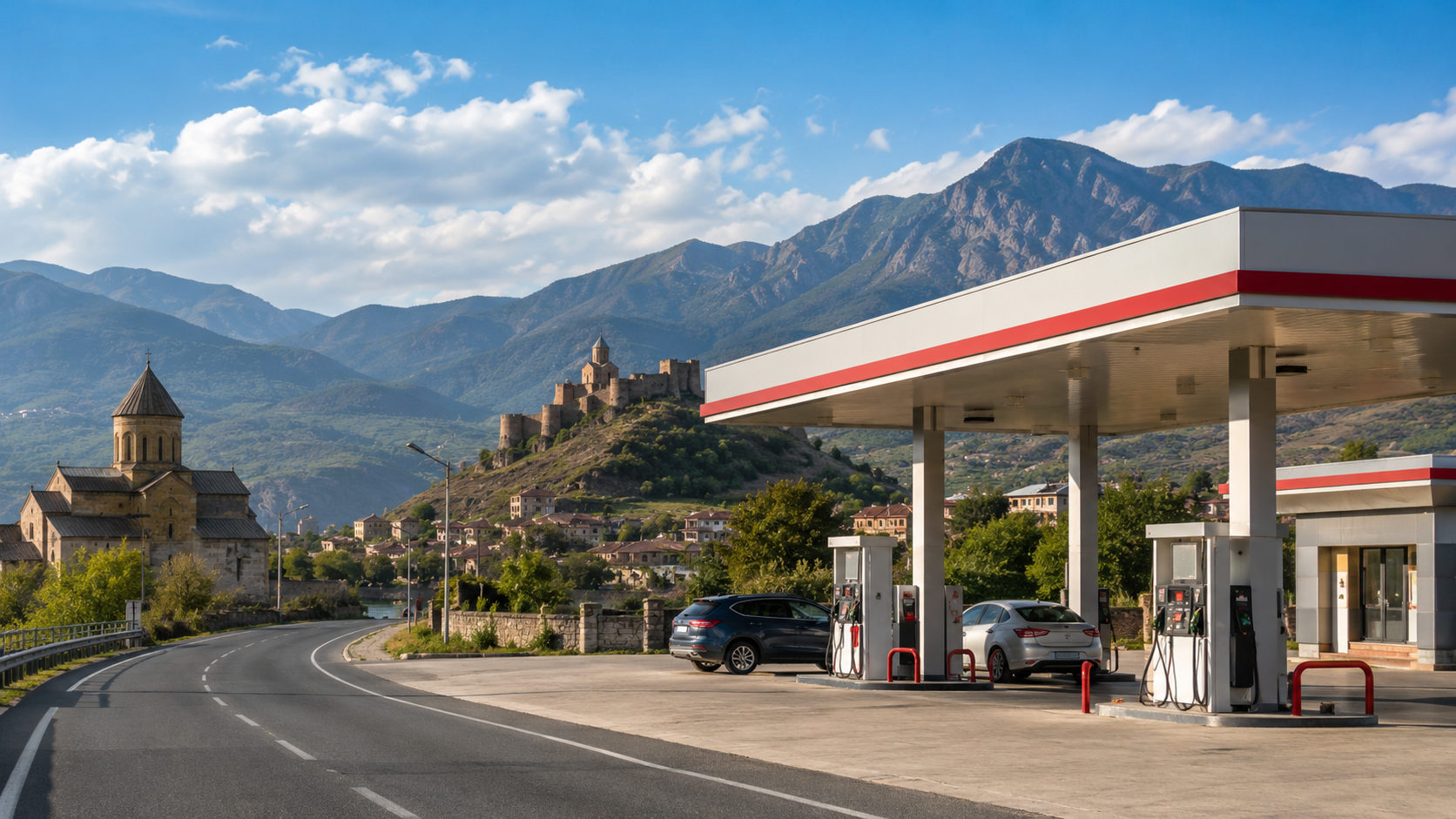
Georgia sits at the crossroads of Europe and Asia, a country where ancient trade routes still pulse with modern traffic. Whether you’re driving from Tbilisi to the Black Sea coast, crossing the Caucasus toward Kazbegi, or hauling freight through the country’s transit corridors, you’ll need to refuel – and the experience at Georgian fuel stations has changed dramatically over the past decade. The country’s fuel retail sector is a fascinating mix of homegrown brands, international players, and a rapidly shifting energy mix that reflects Georgia’s ambitions as a transit hub and its complicated relationship with regional geopolitics. For travelers and residents alike, understanding how fueling works here – from pricing quirks to payment methods to what you’ll find beyond the pump – can save real money and headaches on the road.

Overview of the Fuel Market in Georgia
Georgia’s fuel market is almost entirely import-dependent. The country produces negligible amounts of crude oil domestically, which means every liter of petrol and diesel arrives by pipeline, rail, or tanker. In 2024, Georgia imported 918 million litres of gasoline, marking a 7.6% annual increase that reflects both growing car ownership and the country’s expanding role as a regional transit corridor.
That import dependence creates a unique vulnerability. The country’s fuel prices are tightly linked to global crude benchmarks, the Turkish lira (since a significant share of refined products comes through Turkey), and the Russian ruble. The geopolitical dimension is hard to ignore: 74% of Georgia’s diesel imports in 2024 originated from Russia, a statistic that carries obvious political weight given the two countries’ fraught relationship since the 2008 war.
Major Domestic and International Brands
The Georgian fuel retail market is dominated by a handful of recognizable names. Gulf, Socar, Wissol, and Lukoil operate the largest networks, with Rompetrol and several smaller chains filling in the gaps. Wissol is probably the most visible domestic brand – you’ll spot their green-and-yellow stations from Batumi to Telavi. Gulf, backed by the Hinduja Group, has expanded aggressively since entering the market and now operates over 100 locations.
Socar, Azerbaijan’s state oil company, runs a substantial network and benefits from pipeline access that gives it a logistics edge. Lukoil, despite being a Russian brand, maintains a significant presence, though its market share has become a topic of public debate given the political climate. Smaller operators exist, particularly in rural areas, but the top four or five chains control the vast majority of volume.
Fuel Quality Standards and Regulations
Georgia has made real progress on fuel quality over the past decade. The country adopted Euro 5 fuel standards, which brought sulfur content limits and other specifications closer to EU norms. The Georgian National Agency for Standards and Metrology (GeoSTM) oversees compliance, and random inspections at retail stations have become more common.
That said, quality can still vary. I’ve heard enough stories from mechanics in Tbilisi about engine issues traced back to substandard fuel – particularly from no-name stations in remote areas – to recommend sticking with major brands when possible. The big chains have reputations to protect and supply chain transparency that smaller operators sometimes lack.
Types of Fuel and Availability
The fuel mix at Georgian stations has diversified considerably, though the core offerings remain traditional petroleum products. What’s changed is the growing availability of alternative fuels and the early-stage buildout of EV infrastructure.
Petrol and Diesel Varieties
Most stations offer three grades of petrol: Regular (92 octane), Premium (95 octane), and Super/Premium Plus (98 octane). Diesel is universally available, and many stations now carry “Euro Diesel” branded as a higher-quality option with better cold-weather performance – useful if you’re heading up to Gudauri or crossing the mountain passes in winter.
| Fuel Type | Typical Octane/Grade | Availability | Common Use |
|---|---|---|---|
| Regular Petrol | 92 RON | Universal | Older vehicles, budget driving |
| Premium Petrol | 95 RON | Universal | Most modern cars |
| Super Petrol | 98 RON | Major stations only | Performance vehicles |
| Standard Diesel | EN 590 equivalent | Universal | Trucks, SUVs, diesel cars |
| Euro Diesel | Low sulfur | Major chains | Newer diesel engines |
| CNG | Compressed Natural Gas | Growing network | Taxis, converted vehicles |
| LPG | Autogas | Moderate network | Converted older vehicles |
Natural Gas (CNG) and LPG Infrastructure
CNG has become genuinely popular in Georgia, especially among taxi drivers and fleet operators. The economics are compelling: compressed natural gas costs roughly 40-50% less per kilometer than petrol. Tbilisi’s taxi fleet has shifted heavily toward CNG, and you’ll see conversion shops on practically every major road in the capital.
LPG (autogas) stations are less common but still present, particularly along the main highways. The infrastructure is concentrated in urban areas – Tbilisi, Kutaisi, Batumi – with sparse coverage in mountainous regions. If you’re driving a converted LPG vehicle toward Tusheti or Svaneti, plan your fills carefully.
Electric Vehicle (EV) Charging Stations
EV infrastructure in Georgia is in its infancy but growing. Wissol and several other companies have installed charging stations at select locations, primarily along the Tbilisi-Batumi highway and within the capital itself. The Georgian government has signaled support for EV adoption through reduced import duties on electric vehicles, and you’ll see a growing number of Teslas and Nissan Leafs on Tbilisi’s streets.
The reality, though, is that Georgia’s charging network isn’t yet reliable enough for long-distance EV travel outside the main corridors. Apps like PlugShare show scattered stations, but availability and charging speeds vary wildly. For now, EVs work best as urban commuters in Tbilisi, not as road-trip vehicles.
Pricing and Payment Methods
Fuel pricing in Georgia reflects the country’s position as a small, import-dependent market caught between global commodity swings and local economic pressures.
Understanding Price Fluctuations
As of mid-April 2026, the average price for a gallon of regular gasoline in Georgia was $3.71, though prices at individual stations can vary by 10-15 tetri per liter depending on location and brand. Mountain stations and those in remote tourist areas tend to charge premiums of 5-10% over Tbilisi prices – a markup that reflects real transportation costs, not just opportunism.
Price fluctuations track global oil markets with a slight delay. When Brent crude spikes, Georgian pump prices follow within one to two weeks. The reverse is also true, though stations are predictably slower to lower prices than to raise them. Global tensions keep oil prices volatile, but Georgia’s gas-tax policies have helped prevent sharper increases at the pump, offering some buffer for consumers.
Loyalty Programs and Fleet Cards
The major chains all run loyalty programs, and they’re worth signing up for if you’re spending any significant time in Georgia. Wissol’s loyalty card is probably the most widely used, offering point accumulation that translates to fuel discounts and convenience store purchases. Gulf runs a similar program with tiered rewards.
Fleet cards are available from most major operators for business customers. These typically offer volume discounts, centralized billing, and detailed transaction reporting – useful for logistics companies and rental fleets. Socar and Wissol both have dedicated fleet programs with online account management. Payment at the pump is straightforward: cash in lari is accepted everywhere, and Visa/Mastercard work at virtually all branded stations. Apple Pay and Google Pay have also rolled out at many locations. Smaller rural stations might still be cash-only, so keep some lari on hand when heading off the beaten path.
On-Site Amenities and Services
Georgian fuel stations have evolved well beyond simple pump-and-go operations. The major chains have invested heavily in turning their locations into mini rest stops, particularly along highways.
Convenience Stores and Dining Options
The gas station convenience store in Georgia deserves special mention because it’s genuinely better than what you’d expect. Wissol’s attached stores are practically small supermarkets, stocking everything from fresh bread and churchkhela (the traditional walnut-and-grape candy) to phone chargers and basic automotive supplies. Gulf stations often feature decent coffee bars, and some locations along the Tbilisi-Batumi highway have full restaurant-style dining.
The gas station industry in Georgia encompasses approximately 4,913 businesses with convenience stores, though this number has declined slightly – about 0.6% annually from 2021 to 2026 – as smaller operators consolidate or close. The survivors tend to be better equipped and better stocked than what existed five years ago.
For travelers, these stations serve as essential rest stops. Clean restrooms (a genuine concern on Georgian roads outside the main highways), hot food, and reliable Wi-Fi make branded stations the default break point on long drives. I’ve had surprisingly good khachapuri at a Gulf station outside Khashuri – not grandmother-quality, but perfectly acceptable road food.
Car Wash and Maintenance Facilities
Automated car washes are standard at most major-brand stations in urban areas. Prices run between 5-15 lari depending on the wash type. Some stations also offer basic maintenance services: tire pressure checks, windshield washer fluid top-ups, and emergency tire changes.
Full-service mechanics aren’t typically on-site, but many stations in Tbilisi and Kutaisi have partnerships with nearby garages. If you break down near a branded station, the staff can usually point you toward a trusted mechanic. This informal network is part of how things work in Georgia – personal connections fill gaps that formal infrastructure doesn’t cover yet.
Regional Coverage and Strategic Locations
The distribution of fueling stations across Georgia tells you a lot about the country’s geography and economic patterns.
Urban Centers vs. Rural Mountain Passes
Tbilisi, Kutaisi, and Batumi are saturated with options. In the capital alone, you’ll pass a fuel station every few hundred meters on major roads. Competition keeps prices sharp and amenities high. The story changes dramatically once you leave the lowlands.
Driving toward Svaneti, Tusheti, or the upper reaches of the Aragvi Valley, stations thin out fast. The stretch from Zugdidi to Mestia has limited fueling options, and what exists tends to be small, independently operated, and sometimes out of stock. The road to Ushguli? Fill up in Mestia and don’t count on anything beyond that. Same principle applies to the military highway toward Kazbegi: fuel up in Stepantsminda (Kazbegi town) because there’s nothing reliable beyond it heading toward the Russian border.
A practical rule: if your GPS shows more than 80 kilometers to your next town in mountainous Georgia, fill your tank before you leave the last one.
Fueling Along Major Transit Corridors
Georgia’s position on the East-West Highway connecting Azerbaijan to Turkey makes its transit corridors critical for international freight. The Tbilisi-Kutaisi-Batumi highway is the best-served route in the country, with branded stations every 30-40 kilometers offering diesel, CNG, and full amenities.
The north-south corridor toward the Russian border via the Dariali Gorge is less developed but improving. The Tbilisi-Rustavi stretch serves heavy truck traffic heading toward Azerbaijan, and several large truck stops with dedicated diesel lanes have opened in recent years. For international drivers, these stations often have staff who speak Russian or basic English, and payment systems that accept international cards.
Future Trends in Georgian Fuel Infrastructure
The Georgian fuel sector is projected to reach $4.1 billion in 2026, and several trends are shaping where that money flows. EV charging infrastructure will expand, driven by government incentives and falling battery costs, but the timeline for meaningful rural coverage is likely five to ten years out. CNG will continue gaining market share as conversion costs drop and the price advantage over petrol remains compelling.
The bigger structural question is import diversification. Georgia’s heavy reliance on Russian diesel creates both economic and political risk. Efforts to source more refined products from Romania, Greece, and Turkmenistan are underway, but pipeline and port logistics make rapid diversification difficult. The Kulevi and Batumi oil terminals on the Black Sea coast will play a central role in any shift.
Consolidation among smaller operators will likely continue, with the major brands absorbing independent stations or pushing them out through superior amenities and pricing power. For consumers, this probably means better average quality but less price competition in areas where only one or two brands operate.
Digital payment integration is another area of active development. Several chains are building app-based payment and loyalty systems that let you pay at the pump without going inside – a convenience that’s standard in Western Europe but still novel in the South Caucasus. Bolt and Yandex Go drivers, who make up a huge share of Tbilisi’s fuel demand, are particularly likely to benefit from these streamlined payment flows.
Georgia’s fuel infrastructure reflects the country itself: rapidly modernizing in the cities, still catching up in the mountains, and always shaped by the geopolitical currents flowing through this small but strategically vital country. Whether you’re a tourist renting a car for a week or a logistics operator running trucks through the Caucasus, understanding how gas stations in Georgia work – where to find them, what they offer, and what to expect on price – makes your time on these roads significantly smoother. Fill up at branded stations, carry cash for the mountain roads, and don’t pass a pump in Svaneti without topping off. Your future self, somewhere on a switchback at 2,500 meters, will thank you.