
Table of Contents
- Discovering the Svaneti Capital: An Overview of Mestia
- Exploring the Iconic Svan Towers and Local Culture
- Top Hiking Trails: From Glaciers to Alpine Lakes
- Adventure and Views: Hatsvali Cable Car and Zuruldi Ridge
- Comparing Popular Mestia Hiking Routes
- Savoring Svan Cuisine and Mountain Hospitality
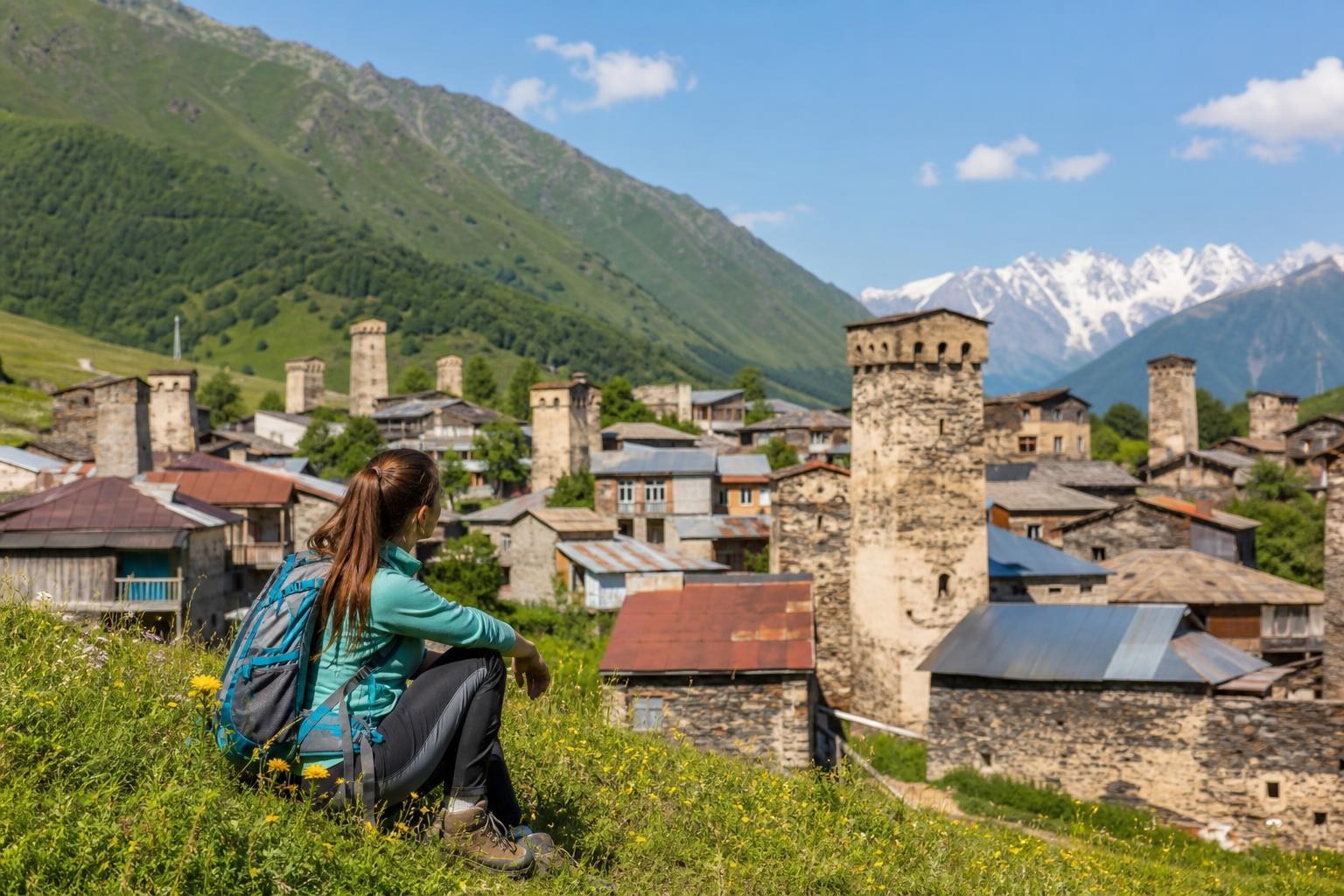
Mestia sits at 1,500 meters in the Upper Svaneti region of Georgia, a place where medieval stone towers punctuate a valley floor backed by some of the highest peaks in the Caucasus. I first visited in 2019, when the road from Zugdidi still felt like an endurance test. Returning in 2026, the difference is striking: the infrastructure has improved, a small but growing number of direct flights connect Mestia to Tbilisi, and yet the town still feels like a place that belongs more to the mountains than to any tourist circuit. The Svan towers, some standing for over a thousand years, remain the visual heartbeat of the town, while glaciers like Chalaadi and Shkhara carve through valleys just a short drive away. If you’re wondering what to do in Mestia, the honest answer is that the list is longer than most people expect from a town of roughly 2,500 residents. Between the hiking, the food, the history, and the raw scale of the scenery, Mestia rewards travelers who give it more than a day trip. This guide covers the essentials: where to go, what to eat, and how to plan your time in one of Europe’s most underrated mountain destinations.
Discovering the Svaneti Capital: An Overview of Mestia
Mestia is the administrative center of the Svaneti region, but calling it a “capital” might set the wrong expectations. It’s a small, walkable town where cows still wander the main road and the loudest sound most mornings is a rooster. What makes it special isn’t urban energy but geographic drama: the town sits in a bowl surrounded by peaks that exceed 4,000 meters, including Mount Ushba (4,710 m), one of the most technically challenging climbs in the Caucasus.
The town has changed considerably since Georgia’s government began investing in Svaneti as a tourism corridor. A Zaha Hadid-designed police station and several modern guesthouses now sit alongside centuries-old tower houses. The growth in passenger numbers at Georgian airports has brought more international visitors, and Mestia’s Queen Tamar Airport receives small Vanilla Sky flights from Tbilisi (weather permitting). Despite the modernization, Mestia retains a village character that larger Georgian cities like Batumi have long since outgrown.
The Svan people have their own distinct identity within Georgia: their own language (Svan, which has no written form), their own culinary traditions, and a fierce historical independence. The defensive towers that define the skyline weren’t decorative. They were built between the 9th and 13th centuries as family fortifications during blood feuds and foreign invasions. Understanding this context makes walking through Mestia feel less like sightseeing and more like stepping into a living archive.
Mestia Travel Essentials: Logistics and Best Time to Visit
Getting to Mestia requires a bit of commitment. The most common route is a marshrutka (shared minivan) from Zugdidi, which takes about three hours on a winding but fully paved road. From Tbilisi, you’re looking at roughly eight hours by road, or a 40-minute flight that operates only in clear weather and books out fast in summer. Download the Bolt app for taxi transfers within the region, and keep Google Translate’s Georgian offline pack on your phone: English is spoken at guesthouses but rarely on the street.
The best window for visiting is mid-June through September. July and August offer the warmest weather and the most reliable trail conditions, though guesthouses fill up and prices rise. June brings wildflowers and fewer crowds but some higher trails may still have snow. September is arguably the sweet spot: stable weather, golden light, and thinner crowds.
Budget travelers will find Mestia reasonable. A guesthouse bed with breakfast and dinner typically runs 60-90 GEL (about $22-33 USD) per person per night. A plate of kubdari at a local café costs 8-12 GEL. The ATM situation has improved, but carrying cash remains wise for smaller establishments and trail-side purchases.
Exploring the Iconic Svan Towers and Local Culture
The Svan towers, or koshkebi, are the first thing you notice and the last thing you forget. Roughly 175 towers survive in the Mestia area, clustered in family compounds across the town and surrounding villages. They range from 20 to 25 meters tall, built from local stone with minimal mortar, and they’ve withstood earthquakes, wars, and centuries of Caucasian winters. UNESCO recognized the Upper Svaneti region as a World Heritage Site in 1996, largely because of these towers and the cultural traditions they represent.
What surprises most visitors is that many towers are still privately owned by Svan families. Some have been converted into small museums or guesthouses; others remain closed to outsiders. The towers served multiple purposes: defensive refuge during attacks, storage for grain and valuables, and symbols of family status. A family without a tower was a family without standing.
Walking through the Lanchvali and Lagami neighborhoods gives you the densest concentration of towers. Early morning and late afternoon light turns the stone golden against the snow-capped backdrop of Ushba and Tetnuldi. Mestia is also preparing to host an international street art festival called Gamo Khate in 2026, which will add a contemporary layer to the town’s ancient visual identity.
The Svaneti Museum of History and Ethnography
This museum, housed in a modern building near the town center, is one of the best small museums in the entire Caucasus. Its collection includes medieval icons, gold and silver jewelry, illuminated manuscripts, and weaponry spanning several centuries. The icons are particularly remarkable: some date to the 10th century and were preserved in Svaneti’s remote churches, safe from the invasions that destroyed similar works elsewhere in Georgia.
Plan for about 90 minutes inside. The entry fee is 7 GEL, and English-language signage is decent though not exhaustive. The museum also contextualizes Svan culture: their legal codes, their relationship with the Georgian crown, and their role as guardians of religious treasures smuggled into the mountains during times of invasion.
Climbing the Margiani House Museum Tower
If you visit only one tower interior, make it this one. The Margiani family has preserved their ancestral compound as a museum, and for a small fee (5 GEL), you can climb the narrow internal ladders to the top of their tower. The rooms inside are set up to show how families actually lived: ground floor for livestock, middle floors for living and storage, top floor for defense.
The climb is steep and claustrophobic in places, so skip it if you have mobility concerns. From the top, the 360-degree view over Mestia’s rooftops and the surrounding peaks is one of those moments that justifies the entire trip. The Margiani family members who run the museum are often happy to share stories about their ancestors and the tower’s history, though a few words of Georgian or a translation app help enormously.
Top Hiking Trails: From Glaciers to Alpine Lakes
Mestia is, above all, a hiking town. The trails radiating from the valley range from easy half-day walks to multi-day treks that demand real fitness and preparation. The three most popular routes take you to glaciers, alpine lakes, and the highest settlements in Europe, and each one delivers scenery that rivals anything in the Alps at a fraction of the cost and crowds.
Trail conditions in 2026 are generally well-maintained along the most popular routes, with improved signage compared to even a few years ago. That said, this isn’t Switzerland: you won’t find mountain huts with hot meals every few kilometers. Carry water, snacks, rain gear, and a basic first aid kit on every hike. Cell service drops out on most trails beyond the first kilometer.
The Chalaadi Glacier Trek
This is the most accessible glacier hike from Mestia, and it’s the one I recommend for anyone with limited time. The trailhead is about a 20-minute drive from town (or a 45-minute walk), and the hike itself takes roughly three hours round trip. The path follows the Mestiachala River through dense forest before opening up to a rocky moraine and the glacier’s blue-white face.
The glacier has receded visibly over the past decade, which makes the experience both beautiful and sobering. You can get quite close to the ice, though be cautious of falling rocks and shifting debris near the terminus. No special equipment is needed, just sturdy hiking shoes and a willingness to scramble over some boulders in the final stretch.
Ascending to the Koruldi Lakes
Koruldi is the hike that earns Mestia its place on Instagram, and for once, the photos don’t lie. The lakes sit at roughly 2,740 meters, and on a clear day, the reflection of Mount Ushba in the water is genuinely surreal. The hike is significantly harder than Chalaadi: expect five to seven hours round trip with about 1,200 meters of elevation gain.
You can also drive partway up via a rough 4×4 track, which cuts the hiking time roughly in half. I’d recommend walking at least one direction to appreciate the transition from forest to alpine meadow. Bring layers: temperatures at the lakes can be 10-15 degrees cooler than in town, even in August. The trail information available through regional travel guides can help you plan timing and logistics.
The Shkhara Glacier and Ushguli Day Trip
Ushguli, often cited as the highest continuously inhabited settlement in Europe (at around 2,200 meters), sits about 45 kilometers from Mestia. The road is rough enough that most people take a shared jeep (around 50 GEL per person each way) rather than attempting it in a rental car. The village itself is a cluster of towers and stone houses that feels frozen in the medieval period.
From Ushguli, a trail leads to the Shkhara Glacier, which sits beneath Mount Shkhara (5,193 m), the highest peak in Georgia. The glacier hike takes about four to five hours round trip from the village. You can also book a combined 4×4 and hiking excursion to the Shkhara Glacier for a more structured experience. The scale of the ice and the mountain above it is staggering, and the relative absence of other hikers compared to Chalaadi makes it feel genuinely remote.
Adventure and Views: Hatsvali Cable Car and Zuruldi Ridge
For those who want mountain views without a full day of hiking, the Hatsvali cable car is the answer. It runs year-round (weather permitting) and takes you from the valley floor to 2,347 meters in about 15 minutes. A one-way ticket costs 10 GEL. In winter, Hatsvali operates as a small ski resort, but in summer it serves as a launchpad for ridge walks and a destination in itself.
From the upper station, a short walk brings you to Zuruldi Ridge, where a panoramic restaurant offers food with a view that most five-star hotels would envy. The ridge walk itself is gentle and suitable for all fitness levels, with unobstructed views of Ushba, Tetnuldi, and the Svaneti valley below. I spent an afternoon up here with a bottle of local wine and a plate of cheese, and it was one of the most peaceful meals I’ve had anywhere.
If you’re feeling more ambitious, you can hike from Hatsvali’s upper station to the Koruldi Lakes, which cuts out the steep lower section of that trail. This combination of cable car and hiking is a smart way to see more of the high country without destroying your knees.
Comparing Popular Mestia Hiking Routes
| Trail Name | Difficulty | Duration (Round Trip) | Distance |
|---|---|---|---|
| Chalaadi Glacier | Easy to Moderate | 3 hours | ~8 km |
| Koruldi Lakes | Moderate to Hard | 5-7 hours | ~16 km |
| Shkhara Glacier (from Ushguli) | Moderate | 4-5 hours | ~12 km |
| Hatsvali to Zuruldi Ridge | Easy | 1-2 hours | ~4 km |
| Mestia to Ushguli (multi-day) | Hard | 3-4 days | ~58 km |
The multi-day trek from Mestia to Ushguli deserves special mention. It’s one of the most celebrated long-distance hikes in the Caucasus, passing through remote villages, over high passes, and along river valleys. You’ll need to carry supplies or arrange guesthouse stays in villages along the route. Most hikers complete it in four days, though strong trekkers can push through in three.
Savoring Svan Cuisine and Mountain Hospitality
Svan food is mountain food: calorie-dense, heavily spiced, and built around bread, meat, cheese, and potatoes. It’s distinct from the cuisine you’ll find in Tbilisi or Kakheti, shaped by altitude, isolation, and the need to sustain people through brutal winters. The signature spice blend, svanuri marili (Svan salt), is a mix of garlic, blue fenugreek, coriander, and other dried herbs that appears in nearly every dish.
Eating in Mestia is almost always a guesthouse affair. Most accommodation includes half-board (breakfast and dinner), and the meals are enormous. Expect platters of cheese, fresh bread, salads, stews, and homemade wine or chacha (grape brandy). The concept of stumari ghvtisaa, meaning “a guest is a gift from God,” runs deep here. Hosts will keep refilling your plate until you physically cannot eat another bite.
Georgia’s remote regions are entering a new era of development, and Svaneti is no exception. A handful of dedicated restaurants have opened in Mestia over the past few years, but the guesthouse table remains the most authentic and affordable way to experience the food.
Must-Try Dishes: Kubdari and Tashmijabi
Kubdari is the dish that defines Svan cooking. It’s a round bread stuffed with spiced, minced meat (traditionally beef or pork, sometimes a mix), baked until the crust is golden and the filling is juicy. Every family has their own recipe, and debates about whose kubdari is best can get genuinely heated. A good kubdari costs 8-12 GEL at a café and is a meal in itself.
Tashmijabi is the comfort food counterpart: mashed potatoes blended with copious amounts of Svan cheese until the texture becomes stretchy and almost fondue-like. It’s simple, rich, and exactly what your body craves after a day of hiking at altitude. Pair it with a bowl of bean soup and fresh bread, and you have a meal that costs under $5 and leaves you unable to move for an hour.
Other dishes worth seeking out include chvishtari (cornbread stuffed with cheese), various preparations of trout from local rivers, and churchkhela (the walnut-and-grape-juice candy strung on threads that you’ll see hanging in every market). The annual festival calendar in Georgia often includes food-focused events in Svaneti during summer months, which are worth timing your visit around if you can.
Mestia isn’t a place you visit for one attraction. It’s a place where towers, glaciers, trails, and food weave together into something that feels both ancient and alive. Give it at least three full days: one for the town and museums, one for Chalaadi or Koruldi, and one for the Ushguli day trip. If you have a fourth day, spend it on the Hatsvali cable car and a long lunch at Zuruldi. The mountains will still be there when you leave, but the memory of Svan hospitality, the taste of kubdari fresh from the oven, and the sight of Ushba catching the last light of day will stay with you far longer than any alpine resort ever could.