
Table of Contents
- Understanding Tbilisi Weather in May
- Mastering the Art of Layering for Spring
- Footwear for Cobblestones and Hills
- Cultural Dress Codes: Churches and Dining
- Essential Accessories and Gear
- Final Packing Checklist for a Georgian Spring
May in Tbilisi is one of those sweet spots that seasoned travelers talk about in hushed, almost protective tones. The city is warm but not sweltering, the gardens along Rustaveli Avenue are exploding with green, and the outdoor cafe culture is in full swing without the crushing tourist crowds of July and August. But packing for it? That’s where most people get tripped up. The weather shifts more than you’d expect for a city this far south, and the cultural expectations around dress – especially for church visits – catch a lot of first-timers off guard. I’ve spent multiple springs in Georgia’s capital, and every time I’ve had to rethink what I threw in my suitcase. Tbilisi in May demands a wardrobe that handles 30°C afternoons, cool evenings that dip into the low teens, and the occasional downpour that rolls in from the Caucasus foothills with zero warning. Add in the fact that you’ll be walking steep, uneven cobblestones in Old Town and potentially dressing up for a dinner at a rooftop restaurant in Vera, and you start to understand why a generic “spring packing list” won’t cut it. This guide is built from real experience on the ground, covering everything from fabric choices and footwear to cultural dress codes and the accessories that actually earn their space in your bag. If you’re figuring out what to wear in Tbilisi during May, this is the spring packing list I wish someone had handed me before my first trip.
Understanding Tbilisi Weather in May
Tbilisi sits in a valley surrounded by hills, which creates a microclimate that can feel genuinely unpredictable if you’re not prepared. May marks the transition from a mild, sometimes rainy spring into the dry heat of summer, but it doesn’t commit fully to either. You’ll get days that feel like mid-summer and others where a jacket is non-negotiable by 7 PM.
The city’s continental climate means temperature swings within a single day are the norm, not the exception. Morning might start around 13-15°C, climb to 27-30°C by early afternoon, and then drop back down once the sun sets behind Mtatsminda. That range is significant enough that your outfit at breakfast could leave you shivering at a rooftop bar later that night.
Rainfall is moderate but real. May typically sees 6-8 rainy days, and when it rains in Tbilisi, it can be intense – short bursts rather than all-day drizzle. The storms tend to build in the afternoon, so mornings are usually your safest bet for outdoor exploration.
May Climate Data: Temperature and Rainfall Table
| Metric | Early May (1-10) | Mid May (11-20) | Late May (21-31) |
|---|---|---|---|
| Avg High | 22°C (72°F) | 25°C (77°F) | 28°C (82°F) |
| Avg Low | 12°C (54°F) | 14°C (57°F) | 16°C (61°F) |
| Rainfall Days | 2-3 | 2-3 | 1-2 |
| Avg Sunshine Hours | 8-9 hrs | 9-10 hrs | 10-11 hrs |
| UV Index | 6-7 (High) | 7-8 (High) | 8 (Very High) |
The progression through the month is noticeable. If you’re visiting in the first week of May, pack slightly warmer layers than if you’re arriving at month’s end. Late May can genuinely feel like summer, with temperatures occasionally pushing past 32°C.
The Sunny Days and Sudden Spring Showers
Here’s what catches people off guard: Tbilisi’s May rain doesn’t follow a polite schedule. You can wake up to a perfectly blue sky, spend the morning at the Dry Bridge flea market, and get caught in a 20-minute downpour while walking back through Sololaki. The storms blow through quickly, but they’re heavy enough to soak you completely.
The trick is understanding that these showers are almost always afternoon phenomena. Plan your outdoor walking tours and market visits for the morning, and keep a compact rain layer accessible after lunch. The sun returns fast, and the post-rain light over Old Tbilisi is genuinely stunning – the kind of golden hour that makes photographers lose their minds.
Humidity tends to hover around 55-65% in May, which is comfortable compared to the sticky July and August months. The combination of warm sunshine and moderate humidity means breathable fabrics aren’t just a preference; they’re a necessity for staying comfortable during long days of exploration.
Mastering the Art of Layering for Spring
Layering is the single most important packing strategy for a May trip to Tbilisi. The temperature swings I mentioned earlier aren’t theoretical – they’re something you’ll feel in your bones every single day. The goal is to build outfits from three components: a base layer, a mid-layer, and an outer layer that you can add or remove as the day evolves.
Your base layer should be lightweight and moisture-wicking. Cotton tees work fine for casual sightseeing, but if you’re planning long walks through the hilly neighborhoods of Sololaki or up to Narikala Fortress, a synthetic or merino wool base keeps you much more comfortable. Mid-layers handle the morning and evening chill: think cardigans, light sweaters, or a thin flannel. The outer layer is your rain protection and wind barrier.
The fashion culture in Tbilisi is worth noting here. This is a city with a thriving and eclectic fashion scene that blends European minimalism with bold, experimental choices. You won’t feel out of place in well-put-together casual wear, but showing up in head-to-toe athletic gear for anything other than hiking will draw some looks.
Lightweight Jackets and Cardigans
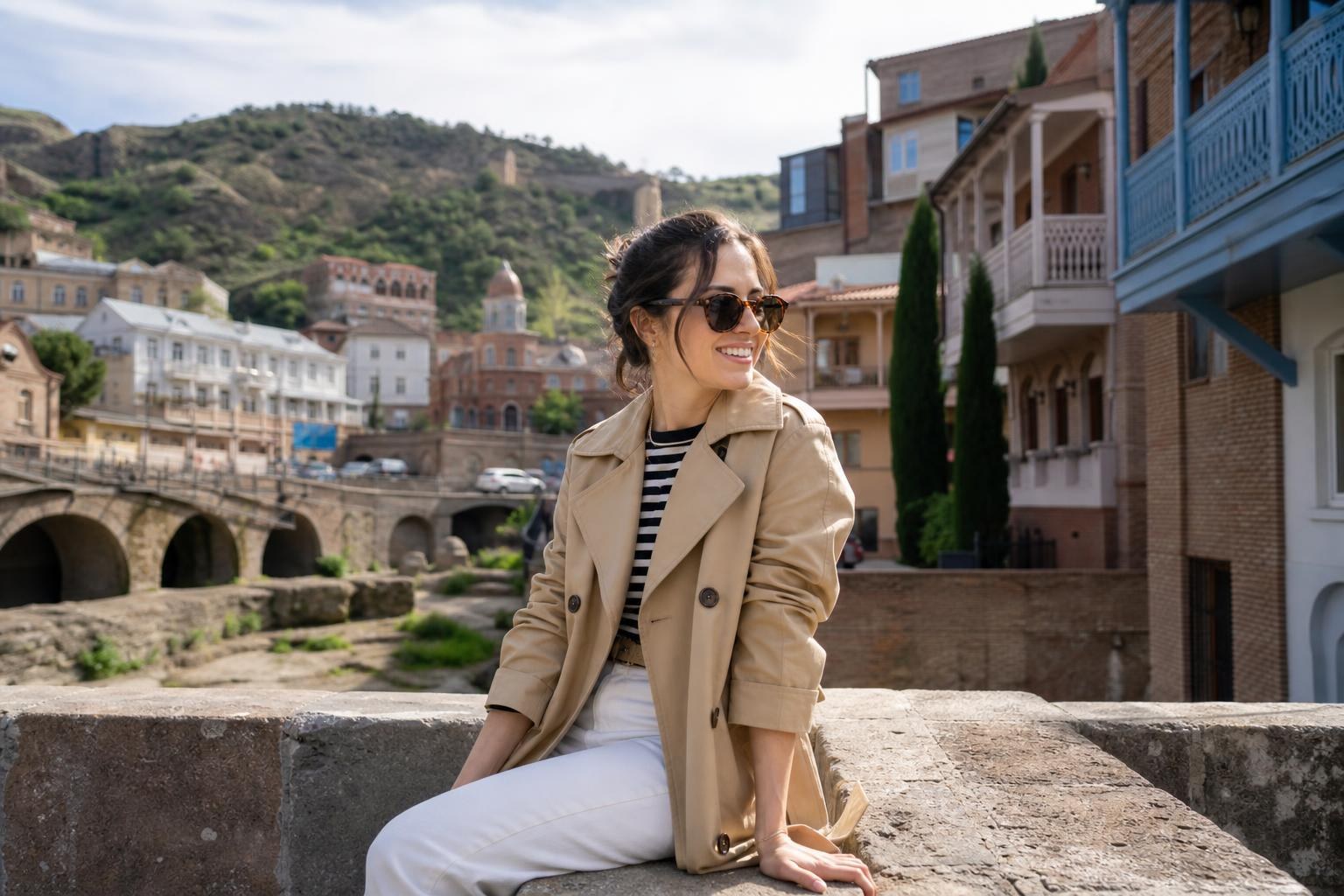
A lightweight jacket is the single most versatile piece you can pack. I’d recommend something unlined, ideally with a collar you can pop against wind, in a neutral color that pairs with everything else in your bag. A cotton or linen blend blazer works surprisingly well if you want something that transitions from daytime sightseeing to an evening out.
For cooler mornings and evenings, a cardigan or thin merino sweater is ideal. You want something you can tie around your waist or stuff into a daypack without it taking up much space. Avoid heavy knits – you simply won’t need them in May unless you’re heading into the mountains outside the city.
A packable rain jacket deserves its own mention. Not a fashion piece, not a heavy winter shell – just a simple, lightweight waterproof layer that folds down small. You’ll use it 2-3 times during a week-long trip, and each time you’ll be grateful you brought it.
Breathable Fabrics for Midday Warmth
Between 11 AM and 4 PM, Tbilisi in late May can feel genuinely hot. The sun reflects off the stone buildings and narrow streets of Old Town, creating pockets of heat that make synthetic fabrics unbearable. This is where fabric choice matters more than style.
Linen is king here. A linen shirt or blouse breathes beautifully in the heat and actually looks better slightly rumpled, which is convenient for travel. Cotton-linen blends offer a good compromise if you find pure linen too wrinkly for your taste. Lightweight cotton works too, but avoid anything too thick or structured.
For bottoms, lightweight chinos, linen trousers, or flowy skirts and dresses handle the heat well. Jeans are fine for cooler days or evenings, but wearing denim while climbing the hills to the Botanical Garden at noon in late May is a choice you’ll regret within minutes. Georgia’s tourism resources consistently recommend packing light, breathable layers for spring travel, and that advice is spot-on.
Footwear for Cobblestones and Hills
Tbilisi will test your footwear like few European cities can. The Old Town streets are paved with uneven cobblestones, many of them polished smooth and slippery when wet. The hills are steep – genuinely steep, not “slight incline” steep. And you’ll walk far more than you planned, because the city keeps revealing hidden courtyards, vine-covered balconies, and tucked-away wine bars that pull you off your intended route.
Bring two pairs of shoes. That’s my firm recommendation. One pair for daily walking and exploration, and one pair that handles rain or doubles as your evening shoe. Trying to do everything in a single pair leads to blisters by day three and regret by day five.
Comfortable Walking Shoes for Old Town
Your primary walking shoe needs three things: a grippy sole, ankle support (or at least stability), and enough cushioning for 15,000+ step days. Low-profile hiking shoes, quality leather sneakers, or supportive walking sandals with back straps all work well.
I’ve seen travelers tackle Tbilisi in fashion sneakers with flat soles and wince their way through every downhill stretch in Abanotubani. The sulfur bath district and the paths around Narikala are particularly unforgiving. Invest in shoes with actual tread patterns designed for mixed terrain.
Break your shoes in before the trip. This sounds obvious, but I’ve watched enough people limp through the Dezerter Bazaar in brand-new boots to know it bears repeating. Give yourself at least two weeks of regular wear before departure.
Water-Resistant Options for Rainy Days
Your second pair should offer some water resistance. This doesn’t mean you need full waterproof hiking boots – a pair of leather shoes or boots treated with a water-repellent spray works fine. The rain in May is warm enough that your feet won’t get cold, but walking on wet cobblestones in canvas sneakers is a recipe for soggy, miserable feet and potential slips.
If you prefer sandals for warm days, bring a pair with a textured sole. Leather-soled sandals on wet Georgian cobblestones are genuinely dangerous. Rubber or Vibram soles grip much better on the polished stone surfaces you’ll encounter throughout the historic center.
For evening outings, a clean pair of leather shoes or low boots serves double duty as your rain shoe and your dinner shoe. Tbilisi restaurants rarely enforce strict dress codes, but looking put-together is part of the local culture, and decent shoes make a big difference.
Cultural Dress Codes: Churches and Dining
Georgia is a deeply Orthodox Christian country, and the church is not a museum – it’s an active place of worship. The dress expectations are real and enforced, not just suggested. On the other end of the spectrum, Tbilisi’s dining and nightlife scene has its own unwritten codes that are worth understanding before you pack.
Modest Attire for Orthodox Cathedrals
Every major church and monastery in Tbilisi requires modest dress. For women, this means covered shoulders, covered knees, and a head covering. For men, long trousers and covered shoulders are expected. Some churches provide wraps and scarves at the entrance, but don’t count on it – especially at smaller, less-touristed churches.
The dress code at Georgian churches requires women to wear skirts or dresses that cover the knees and a headscarf, while men should avoid shorts. I always pack a lightweight scarf that doubles as a head covering for church visits and a wrap for cool evenings. It’s the most versatile single item you can bring.
If you’re visiting Sameba (Holy Trinity Cathedral), Sioni Cathedral, or Anchiskhati Basilica, plan your outfit accordingly. Wearing shorts and a tank top means either skipping the visit or awkwardly wrapping yourself in borrowed fabric at the door. A midi skirt or loose trousers with a sleeved top solves the problem entirely.
The expectation extends beyond just churches. Visitors to religious sites should dress respectfully as a sign of cultural awareness, and locals genuinely appreciate when tourists make the effort. It’s one of those small gestures that opens doors – sometimes literally, as monks and priests are more welcoming to respectfully dressed visitors.
Tbilisi Nightlife and Smart-Casual Dining
Tbilisi’s restaurant and bar scene has exploded over the past few years, and the dress culture reflects a city that takes both food and appearance seriously. You don’t need formal wear, but smart-casual is the baseline for most sit-down restaurants in neighborhoods like Vera, Vake, and along Aghmashenebeli Avenue.
For women, a nice blouse or top with well-fitting trousers or a dress works perfectly. For men, a collared shirt or clean knit with chinos is the sweet spot. Georgians tend to dress up slightly more than Western Europeans for dinner, and showing up in hiking gear to a restaurant where the chef is doing a tasting menu feels disrespectful to the effort they’ve put in.
The nightlife scene, particularly around the clubs on the left bank of the Mtkvari, is more relaxed and experimental. Dark, minimal outfits work well. Pack one “going out” outfit that you feel good in – it doesn’t need to be fancy, just intentional.
Essential Accessories and Gear
The right accessories can make or break your comfort level in Tbilisi’s May weather. Some of these are obvious, others are things you only learn to pack after getting caught without them.
Scarves, Sunglasses, and Sun Protection
A scarf is the single most versatile accessory for this trip. It covers your head in churches, wraps around your shoulders on cool evenings, shields your neck from sun during midday walks, and adds a pop of color to a simple outfit. Pack at least one – ideally a large, lightweight cotton or modal scarf in a neutral tone.
Sunglasses are non-negotiable. The May sun in Tbilisi is strong, with UV index readings regularly hitting 7-8 by mid-month. Polarized lenses help enormously with the glare off light-colored stone buildings and the river.
Sunscreen (SPF 30 minimum, SPF 50 preferred) should go on every morning. You can buy sunscreen in Tbilisi at any pharmacy – look for the green cross signs – but the selection and prices are better if you bring your own. A small tube of SPF lip balm is worth its weight in gold after a full day of walking in the sun.
Daypacks and Portable Umbrellas
A compact daypack (20-25 liters) is essential for carrying your layers, water bottle, umbrella, and whatever you inevitably buy at the Dry Bridge Market or a wine shop in Kakheti. Choose one with a water-resistant bottom panel if possible – setting your bag down on wet cobblestones is inevitable.
A travel umbrella that fits inside your daypack is more useful than a rain jacket on days when the rain is warm. The compact, windproof models weigh almost nothing and save you from ducking into doorways every time a cloud opens up. I prefer an umbrella over a rain jacket for May because the temperature is warm enough that a waterproof shell can feel suffocating.
One more thing worth packing: a reusable water bottle. Tbilisi’s tap water is safe to drink, and you’ll save both money and plastic by refilling throughout the day. The city also has public drinking fountains scattered through the parks and along major walking routes.
Final Packing Checklist for a Georgian Spring
Here’s the condensed version of everything above, organized for quick reference when you’re standing in front of your suitcase:
- 3-4 lightweight tops (linen, cotton, or blends)
- 1-2 long-sleeve shirts or blouses
- 2 pairs of lightweight trousers or a mix of trousers and skirts
- 1 pair of jeans or heavier trousers for cooler days
- 1 lightweight jacket (water-resistant preferred)
- 1 cardigan or thin sweater
- 1 large scarf (doubles as church head covering)
- Comfortable walking shoes with good grip
- Water-resistant second pair of shoes
- Sunglasses (polarized)
- SPF 30-50 sunscreen and lip balm
- Compact umbrella
- 20-25L daypack
- Reusable water bottle
- 1 smart-casual outfit for dining out
This packing list for Tbilisi in May keeps your bag light while covering every scenario the city throws at you: hot afternoons, cool evenings, sudden rain, church visits, and dinners that stretch past midnight with endless toasts of chacha. Pack with intention, leave room for the wine and spices you’ll inevitably bring home, and trust that Tbilisi rewards travelers who show up prepared but open to surprise. The city has a way of making you feel like you belong – and dressing thoughtfully for its rhythms is the first step toward earning that feeling.