
Table of Contents
- Navigating Tbilisi’s Diverse Bar Districts
- Top-Rated Bars by Atmosphere and Experience
- Comparison of Tbilisi’s Best Nightlife Spots
- The Rise of Georgian Craft Beer and Spirits
- Cocktail Culture and Speakeasies
- Essential Tips for a Night Out in the Capital
- Your Next Evening in Tbilisi
Tbilisi has quietly become one of Europe’s most exciting cities for nightlife, and 2026 is proving to be the year the rest of the world finally caught on. Georgia’s tourism revenues in January 2026 alone surged by 13.4% compared to the previous year, and a significant chunk of that growth is driven by visitors who come for the food, the wine, and yes, the bars. The capital’s drinking scene is a strange and wonderful collision of 8,000-year-old winemaking traditions, Soviet-era nostalgia, and a young creative class that spent the last decade building something genuinely original. Whether you’re after a natural wine bar tucked into a crumbling Art Nouveau courtyard, a craft beer taproom inside a converted Soviet sewing factory, or a speakeasy that requires a password whispered into an intercom, this city delivers. I’ve spent considerable time walking Tbilisi’s streets at night, glass in hand, and what follows is an honest guide to the bars worth your time and money right now.
Navigating Tbilisi’s Diverse Bar Districts
Tbilisi is not a city where nightlife concentrates in a single strip. The drinking scene is scattered across distinct neighborhoods, each with its own personality, price range, and crowd. Understanding the geography saves you from wasting half your evening in a taxi when the best spot was a five-minute walk in the other direction.
The city’s bar districts roughly follow the Mtkvari River, stretching from the ancient lanes of Old Tbilisi in the east to the leafy residential streets of Vake in the west. In between, you’ll find the creative hubs around Marjanishvili and Fabrika, the bohemian energy of Vera, and pockets of surprise along Aghmashenebeli Avenue. Each district attracts a different crowd. Old Town bars cater to tourists and history buffs. Marjanishvili pulls artists, digital nomads, and young Georgians. Vera and Vake draw a slightly older, more polished clientele.
What makes Tbilisi unusual compared to cities like Budapest or Lisbon is how affordable it remains. A well-made cocktail rarely exceeds 25-30 GEL (about $9-11 USD), and a pint of local craft beer sits around 8-12 GEL ($3-4.50). Wine by the glass at a quality bar runs 10-18 GEL. These prices let you explore multiple neighborhoods in a single evening without the financial hangover you’d nurse in Western Europe.
The Hipster Enclaves of Fabrika and Marjanishvili
Fabrika is the anchor of Tbilisi’s creative nightlife. This former Soviet sewing factory on Egnate Ninoshvili Street was converted into a hostel, co-working space, and courtyard complex around 2016, and it has only grown more magnetic since. The courtyard fills up after 9 PM on warm evenings, with a rotating cast of pop-up bars, food stalls, and DJ sets. The permanent bars inside and around Fabrika tend to skew casual: think mismatched furniture, local craft beer on tap, and a crowd that mixes Georgian art students with backpackers and remote workers.
Walk five minutes south and you’re in Marjanishvili proper, a neighborhood that has transformed dramatically. The streets around Marjanishvili Square now host some of the city’s most interesting small bars. Places here tend to be owner-operated, with menus that change seasonally and bartenders who actually care about what they’re making. You’ll find natural wine bars with hand-written menus, tiny cocktail spots with six stools and no sign, and the occasional underground club entrance disguised as a residential door.
The crowd in this district trends young, typically 20s to mid-30s, and the vibe is unpretentious. Dress codes are essentially nonexistent. Shorts and sneakers won’t get you a second glance. Prices here are among the lowest in the city’s bar scene: expect to spend 15-25 GEL on cocktails and as little as 6 GEL for a local draft beer.
One practical note: Marjanishvili is well-served by the metro (Marjanishvili station sits right on the square), making it easy to reach from anywhere in the city. If you’re staying in Old Town or Vake, a Bolt ride will cost 3-5 GEL.
Vera and Vake: Sophisticated Lounges and Wine Bars
Head northwest from the city center and the atmosphere shifts. Vera is Tbilisi’s most architecturally charming residential neighborhood: tree-lined streets, wrought-iron balconies, and a quiet confidence that extends to its bars. This is where you’ll find the city’s best wine bars, places that take Georgia’s qvevri winemaking tradition seriously while also stocking bottles from small European producers.
Wine bars in Vera typically offer flights of four to six Georgian wines for 20-35 GEL, which is a remarkable way to taste your way through Kakheti, Imereti, and Kartli regions without leaving your barstool. Several of these spots double as small restaurants, serving cheese boards, pkhali, and other Georgian small plates that pair perfectly with a glass of Saperavi or Rkatsiteli.
Vake, the neighborhood just beyond Vera, is where Tbilisi’s moneyed class goes out. The bars here are sleeker, the lighting is lower, and the cocktail menus are more ambitious. Expect to pay a premium: cocktails run 25-40 GEL, and some spots enforce a smart-casual dress code. The trade-off is a more polished experience, with trained mixologists, imported spirits, and interiors that wouldn’t look out of place in Berlin or London.
The restaurant and bar scene in this part of town has been recognized for its growing sophistication, with several establishments earning national awards for their food and drink programs. If you want a quieter, more refined evening, Vera and Vake are your districts.
Old Tbilisi: Hidden Courtyards and Tourist Favorites
The oldest part of the city, clustered around Shardeni Street, Erekle II Square, and the sulfur bath district, is where most visitors start their Tbilisi nightlife journey. And honestly, it’s not a bad place to start, as long as you know which spots to trust and which to avoid.
Shardeni Street is the most obvious bar strip: a narrow pedestrian lane lined with terraces, hookah lounges, and places with English-language menus displayed prominently outside. Some of these are perfectly fine. Others are tourist traps charging 30-40 GEL for mediocre cocktails in a city where that money buys something exceptional elsewhere. The rule of thumb: if a bar on Shardeni has a guy outside actively trying to get you to sit down, keep walking.
The real gems in Old Tbilisi are hidden. Tbilisi’s courtyard culture means that some of the best bars are literally behind unmarked doors, inside residential courtyards, or down staircases you’d never notice without a tip from a local. These hidden spots tend to be small, atmospheric, and surprisingly affordable. A few have become semi-famous on social media, which means they’re no longer truly hidden, but they still feel like discoveries when you find them.
Old Tbilisi is also where you’ll find the most traditional drinking experiences. Dukani-style wine cellars serve house wine from clay qvevri pots for as little as 3-5 GEL per glass. These aren’t fancy, but they’re authentic, and sitting in a centuries-old cellar drinking wine made the way it was made 8,000 years ago is an experience no cocktail bar can replicate.
Top-Rated Bars by Atmosphere and Experience
Picking the top bars in Tbilisi in 2026 means acknowledging that “best” depends entirely on what kind of night you’re after. A rooftop lounge with panoramic views of Narikala Fortress serves a completely different purpose than a basement bar playing Georgian punk rock at 2 AM. Both can be excellent.
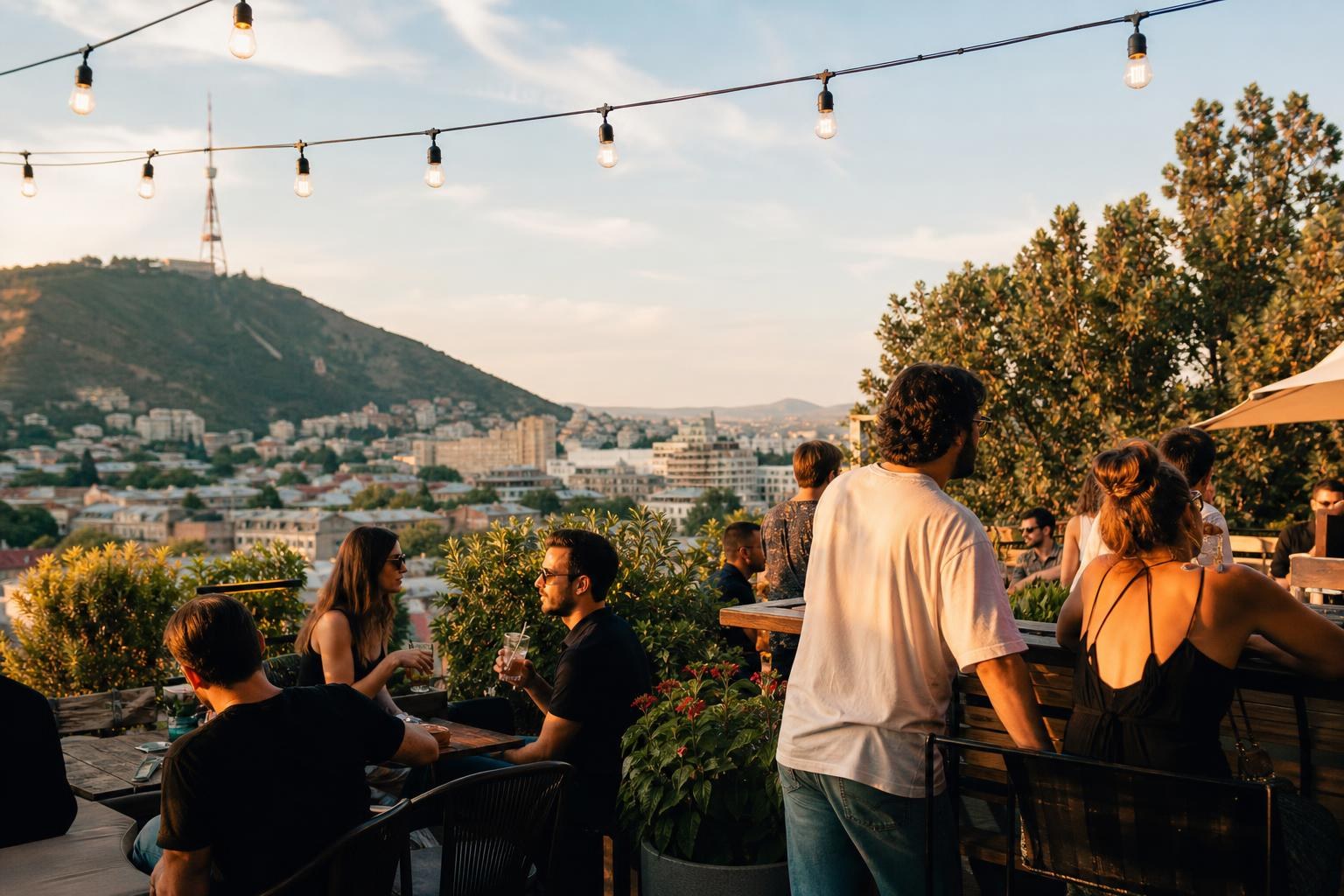
For sheer atmosphere, the rooftop bars overlooking Old Town are hard to beat. Several hotels and standalone venues along the ridge near the Botanical Garden offer terraces where you can drink with the illuminated Metekhi Church and the Mother of Georgia statue as your backdrop. These spots charge a premium for the view, typically 25-35 GEL per cocktail, but on a warm summer evening, it’s money well spent.
If you prefer intimate, conversation-friendly spaces, look for the small wine bars in Vera or the cocktail dens around Aghmashenebeli Avenue. These places seat 20-30 people, play vinyl records at a reasonable volume, and attract regulars who know the bartender by name. The experience feels personal in a way that larger venues can’t match.
For energy and social buzz, the Fabrika courtyard and the bars clustered around Bassiani (Tbilisi’s famous techno club) draw the biggest crowds. Even if you’re not into techno, the surrounding area has developed its own ecosystem of pre-game bars, late-night food spots, and after-hours lounges. The energy peaks between midnight and 3 AM on Friday and Saturday nights.
Live music bars are another category worth mentioning. Georgian jazz has a long and proud tradition dating back to the Soviet era, and several bars in the city center host live sets on weeknights. You’ll also find bars featuring traditional Georgian polyphonic singing, which, if you haven’t heard it before, is genuinely spine-tingling. These performances are a core part of what makes Georgian hospitality unique, blending music, food, and drink into a single communal experience.
For solo travelers, especially solo female travelers, Tbilisi is remarkably safe at night compared to many European capitals. The bar districts are well-lit, walkable, and Georgian social culture tends to be protective of guests. That said, standard precautions apply: use Bolt or Yandex Go for late-night rides rather than unmarked taxis, and keep your phone charged.
Comparison of Tbilisi’s Best Nightlife Spots
Choosing where to spend your evening is easier with a direct comparison. The table below breaks down the key districts and what you can expect from each.
| District | Vibe | Avg. Cocktail Price (GEL) | Best For | Peak Hours | Dress Code |
|---|---|---|---|---|---|
| Fabrika/Marjanishvili | Creative, casual, young | 15-25 | Craft beer, socializing, bar hopping | 9 PM – 2 AM | Anything goes |
| Vera | Bohemian, intimate | 20-30 | Wine bars, quiet dates, solo exploration | 8 PM – midnight | Casual smart |
| Vake | Upscale, polished | 25-40 | Cocktail lounges, special occasions | 10 PM – 2 AM | Smart casual |
| Old Tbilisi (Shardeni) | Touristy, lively | 20-35 | First-night orientation, terraces, people-watching | 7 PM – 1 AM | Casual |
| Old Tbilisi (Hidden) | Atmospheric, local | 10-20 | Wine cellars, authentic experiences | 8 PM – midnight | Casual |
| Bassiani Area | High-energy, club-adjacent | 15-25 | Pre-club drinks, late nights | 11 PM – 5 AM | Club-appropriate |
A few patterns emerge from this comparison. If budget is your priority, the hidden bars in Old Tbilisi and the Marjanishvili area offer the best value. If you want the most polished experience, Vake is your neighborhood, though you’ll pay for it. And if you’re after something uniquely Georgian rather than a bar that could exist in any European city, the traditional wine cellars and chacha bars in Old Town are irreplaceable.
One thing worth noting about Tbilisi’s nightlife geography: distances between districts are short. You can walk from Fabrika to Old Town in about 20 minutes, or from Vera to Marjanishvili in 15. This makes bar-hopping across neighborhoods entirely practical, especially on warm evenings when half the fun is the walk itself along the river or through the winding streets.
The Rise of Georgian Craft Beer and Spirits
Georgia is synonymous with wine, and rightfully so. But the craft beer and spirits scene has exploded in the last few years, and 2026 finds it in a genuinely exciting place. A decade ago, your beer options in Tbilisi were limited to Natakhtari, Kazbegi, and whatever imported lager the bar stocked. Today, the city has over a dozen craft breweries producing everything from hoppy IPAs to sour ales aged in Georgian oak.
The craft beer movement here draws from both American and Belgian traditions, but the best brewers are starting to incorporate local ingredients: Georgian honey, wild herbs from the Caucasus mountains, even grape must from wine production. The result is a beer scene that doesn’t just copy what’s happening in Portland or Brussels but actually tastes like it belongs in Georgia.
Georgian spirits are having a similar moment. Chacha, the grape brandy that’s been distilled in Georgian households for centuries, is being reinterpreted by a new generation of distillers who are applying modern techniques to traditional recipes. Where chacha was once a rough, homemade spirit that could strip paint, the premium versions now available in Tbilisi bars are smooth, complex, and genuinely impressive.
Must-Visit Craft Beer Taprooms
The craft beer taproom scene in Tbilisi has matured significantly. These aren’t just places to drink beer: many double as social hubs with food menus, outdoor seating, and regular events.
- Black Dog Bar: One of the original craft beer spots in Tbilisi, located near Marjanishvili. They rotate 10-12 taps of Georgian and international craft beers. A half-liter pint runs about 8-12 GEL. The atmosphere is relaxed pub-style, and they serve solid bar food including burgers and wings.
- Drunk Rabbit: A newer addition to the scene, this taproom focuses exclusively on Georgian craft producers. Their beer flights (four 150ml pours for around 15 GEL) are a smart way to sample the local brewing scene without committing to a full pint of something you might not love.
- Fabrika’s rotating taps: The bars within the Fabrika complex frequently feature guest taps from small Georgian breweries. This is one of the easiest places to try beers you won’t find anywhere else, since the selection changes weekly.
- Ludi Brewery Taproom: Ludi has been pushing boundaries with barrel-aged and sour beers that rival what you’d find in Belgium. Their taproom in Didube is a bit off the tourist track, but worth the 10-GEL taxi ride if you’re serious about beer.
The craft beer crowd in Tbilisi skews slightly older than the cocktail scene, typically late 20s to 40s, and the taproom atmosphere tends to be more conversational than party-oriented. These are good spots for a relaxed early evening before heading somewhere louder.
Chacha Bars: Sampling Georgia’s Traditional Firewater
Chacha deserves its own category because nothing else in Tbilisi’s drinking scene is quite like it. This clear grape brandy, sometimes called “Georgian grappa,” is the national spirit in everything but official designation. Every family in the countryside makes their own, and the quality ranges from transcendent to terrifying.
In Tbilisi, the best chacha bars curate selections from small regional producers and serve them in proper tasting portions rather than the shot-glass-and-wince approach. Expect to pay 5-10 GEL per pour for premium chacha, with some aged varieties reaching 15-20 GEL. The aged versions, rested in oak barrels for several years, develop notes of dried fruit, vanilla, and honey that genuinely surprise people who’ve only encountered the rough homemade stuff.
A few bars in Old Tbilisi specialize entirely in chacha and Georgian spirits, offering flights that walk you through different grape varieties and regions. These tastings typically include four to six pours with explanations of the production methods, and they cost 20-35 GEL. It’s one of the most distinctly Georgian experiences you can have in the capital.
One cultural note: Georgians traditionally drink chacha as a digestif, often at the end of a long supra (feast). Ordering it as your first drink of the evening won’t offend anyone, but you might get a knowing smile from your bartender. The spirit is strong, typically 40-65% ABV, so pace yourself accordingly.
Cocktail Culture and Speakeasies
Tbilisi’s cocktail scene has undergone a transformation that would have been unimaginable even five years ago. Where the city once offered a choice between wine, beer, and chacha, it now boasts a generation of bartenders trained in international programs who are creating drinks that incorporate Georgian ingredients in genuinely creative ways.
The cocktail bars worth visiting fall into two broad categories: the visible and the hidden. The visible ones occupy ground-floor spaces on busy streets, have Instagram-worthy interiors, and publish their menus online. These are easy to find and generally deliver a reliable experience. Bars like Warszawa on Aghmashenebeli Avenue and several spots along Chardin Street fall into this category. Cocktails run 20-35 GEL, and the menus lean toward modern interpretations of classics: think a Negroni made with Georgian vermouth, or an Old Fashioned sweetened with Caucasian honey.
The speakeasy scene is where things get more interesting. Tbilisi has embraced the hidden bar concept with genuine enthusiasm, and unlike cities where “speakeasy” just means a bar with a curtain over the door, some of these places actually require effort to find. One well-known spot operates behind a functioning barbershop. Another requires you to call a phone number listed on a plain door in a residential building. A third is accessed through what appears to be a refrigerator door in a sandwich shop.
These hidden bars tend to be small, seating 20-40 people, and they attract a crowd that’s genuinely interested in cocktail craft rather than just looking for a drink. The bartenders at these spots are often the owners, and they take pride in creating original recipes. Expect to see ingredients like Georgian tkemali (plum sauce), tarragon, walnut liqueur, and churchkhela-infused spirits showing up in cocktails that taste distinctly of this place.
Pricing at speakeasies is comparable to the visible cocktail bars: 22-35 GEL for most drinks, with some elaborate multi-step creations reaching 40-45 GEL. The experience is worth the premium. Sitting in a candlelit room behind a hidden door, drinking something made with ingredients you’ve never encountered before, while the bartender explains the Georgian tradition behind each component: that’s the kind of evening you remember.
The cocktail community here is also surprisingly collaborative. Bartenders from different establishments regularly guest at each other’s bars, and pop-up cocktail events happen monthly during the warmer months. Tbilisi’s nightlife has developed a reputation for creative reinvention that keeps the scene from getting stale.
For anyone interested in cocktail culture specifically, I’d recommend visiting on a weeknight. The speakeasies are less crowded Tuesday through Thursday, the bartenders have more time to talk, and you’re more likely to score a seat without a reservation.
Essential Tips for a Night Out in the Capital
A few practical considerations will make your evenings in Tbilisi significantly smoother. The city’s nightlife culture has its own rhythms and unwritten rules that differ from what you might be used to in Western Europe or North America.
Tbilisi runs late. Georgians rarely head out before 9 or 10 PM, and many bars don’t hit their stride until 11 PM or midnight. If you show up at a cocktail bar at 7 PM, you’ll likely have the place to yourself. This can be pleasant if you want a quiet drink, but if you’re after atmosphere, calibrate your schedule accordingly. Restaurants, by contrast, fill up earlier, so the typical Georgian evening involves dinner at 8-9 PM followed by drinks from 10 PM onward.
Cash is increasingly unnecessary. Most bars accept card payments, and contactless is widely available. That said, some of the smaller wine cellars and hidden bars in Old Town operate on a cash-only basis. Carrying 50-100 GEL in small bills is smart insurance. ATMs are plentiful throughout the city center and charge minimal fees for international cards.
Language is rarely a barrier in the bar districts. Most bartenders in tourist-frequented areas speak functional to excellent English, and menus are typically bilingual. In more local spots outside the center, Google Translate’s Georgian offline pack is useful. Learning a few Georgian phrases goes a long way: “gagimarjos” (cheers) and “madloba” (thank you) will earn you genuine warmth.
Tipping culture in Tbilisi bars is evolving. A 10-15% tip is appreciated but not strictly expected at bars. At sit-down cocktail bars and wine bars with table service, 10% is standard. At taprooms and casual spots where you order at the bar, rounding up or leaving a few lari is sufficient.
Understanding Dress Codes and Entry Policies
Dress codes in Tbilisi are generally relaxed compared to cities like London or Dubai, but they exist in certain venues. Here’s a rough breakdown:
- Casual bars, taprooms, and Fabrika: Wear whatever you want. Flip-flops, shorts, band t-shirts: all fine.
- Wine bars in Vera: Smart casual is appreciated but not enforced. Clean jeans and a decent shirt will fit right in.
- Upscale lounges in Vake: Some venues enforce smart-casual minimums. Avoid athletic wear and open-toed shoes for men. Women have more flexibility.
- Clubs and club-adjacent bars: Bassiani and similar venues have door policies that prioritize attitude over attire, but looking like you just came from the gym won’t help your chances.
- Speakeasies: No formal dress code, but the intimate atmosphere means most patrons dress with some intention. You won’t be turned away in casual clothes, but you might feel underdressed.
Entry policies are straightforward at most bars: walk in, find a seat, order. No cover charges at standard bars. Clubs are a different story, with covers ranging from 20-50 GEL depending on the night and the DJ. Some speakeasies require reservations on weekends, and a few operate on a referral basis, though this is rare and usually just means asking your hotel concierge or hostel staff for the current password.
One policy that catches some visitors off guard: Georgia has strict drug laws, and venues take this seriously. Clubs like Bassiani conduct thorough searches at the door, and possession of even small amounts of controlled substances can result in significant legal trouble. This isn’t a gray area: Georgia’s drug enforcement is far stricter than what you might be used to in Amsterdam or Berlin.
Best Times to Visit and Reservation Advice
The optimal time of year for Tbilisi’s bar scene is May through October, when outdoor terraces, rooftop bars, and courtyard venues are all operational. July and August are the hottest months, with temperatures regularly exceeding 35°C, which pushes nightlife even later as people wait for the evening cool. September and October offer the best balance: warm enough for outdoor drinking, cool enough to be comfortable, and the city buzzes with post-summer energy.
Winter has its own charm. The courtyard bars close or move indoors, but the cozy wine cellars and intimate cocktail bars become even more appealing when it’s cold outside. December brings holiday markets and festive pop-up bars, while January and February are the quietest months: great for travelers who prefer their bars uncrowded.
Georgia’s hospitality industry has been undergoing significant modernization, and reservation systems are part of that shift. Here’s when you need to book ahead:
- Friday and Saturday nights at popular cocktail bars: Reserve. Most accept bookings via Instagram DM or WhatsApp. Call if you prefer.
- Speakeasies on any night: Reserve if possible. With only 20-30 seats, these fill quickly.
- Wine bars in Vera on weekends: Recommended but not always essential. Arrive before 9 PM for walk-in odds.
- Taprooms and casual bars: No reservation needed. Just show up.
- Rooftop bars in summer: Reserve for sunset slots (7-9 PM). Later in the evening, tables open up.
A practical tip: many Tbilisi bars are most responsive on Instagram. If you can’t find a phone number or website, send a DM to the bar’s Instagram account to ask about availability. This is standard practice here and not considered unusual.
Your Next Evening in Tbilisi
The drinking scene in Tbilisi rewards curiosity. The best nights I’ve had in this city didn’t follow a plan: they started with a glass of amber wine in a courtyard, continued with a cocktail in a bar I found by accident, and ended with chacha and conversation with strangers who became friends. That’s the magic of this place. The city is small enough to wander, affordable enough to experiment, and culturally rich enough that every bar tells a different story.
If you’re visiting for the first time, start in Marjanishvili or Fabrika to get your bearings, then work your way through the neighborhoods over subsequent evenings. Don’t skip the traditional wine cellars in Old Town just because they lack Instagram polish: they offer something no cocktail bar can. And if someone offers you homemade chacha, say yes, but only once.
Tbilisi’s bar scene in 2026 is the product of a city that’s figured out how to honor its traditions while building something new. Catch it now, while it still feels like a secret the rest of the world is just beginning to discover.