
Table of Contents
- Tbilisi June Climate and Weather Statistics
- Essential Fabrics and Clothing Items for the Heat
- Dressing for Cultural and Religious Sites
- Footwear for Cobblestones and Hills
- Evening Style and Tbilisi Nightlife
- Sun Protection and Practical Accessories
- Packing Smart for Tbilisi’s June Heat
Tbilisi in June is a different animal than the mild, breezy city you might have read about in spring travel guides. Temperatures regularly push past 30°C, the sun is relentless on exposed sidewalks, and the humidity can make even a short walk to a café feel like a workout. But here’s the thing: Tbilisi is also one of the most stylish cities in the Caucasus, and locals put real thought into how they dress, even in the heat. You can’t just show up in athletic shorts and flip-flops and expect to blend in, especially if you plan to visit churches, dine at upscale restaurants, or hit the nightlife scene on Shardeni Street. The trick is packing clothes that keep you cool while still looking intentional. I’ve spent multiple summers in Sakartvelo (what Georgians call their country), and the packing mistakes I made my first trip taught me lessons I still carry. This guide covers the specific fabrics, footwear, and accessories you need for Tbilisi’s June heat, along with cultural dress codes that catch many visitors off guard. Whether you’re wandering the Old Town, climbing to Narikala Fortress, or sipping natural wine on a rooftop terrace at midnight, the right wardrobe choices make the difference between misery and actually enjoying the city.
Tbilisi June Climate and Weather Statistics
June marks the real start of summer in Tbilisi, and the shift from May’s pleasant warmth to June’s genuine heat catches some travelers off guard. The city sits in a valley surrounded by hills, which traps heat and creates a microclimate that feels hotter than the raw numbers suggest. Afternoon temperatures frequently hit 32-35°C, and the concrete and stone of the Old Town absorb and radiate that heat well into the evening.
Rain is still possible, mostly in short, intense bursts rather than all-day drizzle. You might get a dramatic thunderstorm that rolls through in 20 minutes and leaves the cobblestones steaming. These storms are more common in early June and tend to taper off toward the end of the month. The key takeaway for packing: plan for heat as your primary challenge, but don’t be shocked by an occasional downpour.
Average Temperatures and Humidity Levels
Average highs in June hover around 29-31°C, but peak days easily reach 35°C or higher, particularly in the second half of the month. Nighttime temperatures drop to a more comfortable 17-20°C, which is why evening strolls along the Mtkvari River feel so pleasant after a sweltering day. Humidity levels typically range from 50-65%, which isn’t tropical, but combined with the heat, it creates enough stickiness to make synthetic fabrics unbearable.
The UV index in June regularly hits 8-10, which is classified as “very high.” If you’re fair-skinned, you’ll burn in under 15 minutes without protection during midday hours. This isn’t a hypothetical: I watched a fellow traveler turn lobster-red after a two-hour walking tour that started at noon. Plan your outdoor sightseeing for mornings or late afternoons when possible.
Table: June Weather Data for Tbilisi
| Metric | Early June (1-10) | Mid-June (11-20) | Late June (21-30) |
|---|---|---|---|
| Avg High (°C) | 28-30 | 30-32 | 31-35 |
| Avg Low (°C) | 17-18 | 18-19 | 19-20 |
| Humidity (%) | 55-65 | 50-60 | 50-58 |
| Rainy Days | 4-5 | 3-4 | 2-3 |
| UV Index | 8-9 | 9-10 | 9-10 |
| Daylight Hours | ~15 | ~15.3 | ~15.3 |
Essential Fabrics and Clothing Items for the Heat
Fabric choice is the single biggest factor determining whether you’ll be comfortable or miserable in Tbilisi’s summer heat. The wrong material turns a pleasant sightseeing day into a sweaty ordeal, while the right one lets you walk for hours without that clammy, stuck-to-your-skin feeling. Georgians themselves tend to favor natural fibers, and you’ll notice that well-dressed locals rarely look like they’re suffering, even on the hottest days.
Breathable Fabrics: Linen, Cotton, and Silk
Linen is your best friend in Tbilisi’s June climate. It breathes better than almost any other fabric, dries quickly after those surprise rain showers, and actually looks better slightly wrinkled, which is convenient when you’re living out of a suitcase. A linen shirt or blouse in white, cream, or light blue handles the heat beautifully and fits right into Tbilisi’s aesthetic.
Cotton is the obvious second choice, but stick with lightweight weaves. Heavy cotton t-shirts will absorb sweat and cling. Look for cotton voile, poplin, or chambray instead. Silk works surprisingly well for evenings: it’s temperature-regulating and drapes elegantly, which matters if you’re heading to a nicer restaurant or wine bar.
Avoid polyester, nylon, and most synthetic blends for daytime wear. They trap heat and odor in ways that natural fibers simply don’t. The one exception is modern moisture-wicking underwear, which genuinely performs better than cotton in extreme heat. Georgian fashion trends in 2026 lean toward natural, locally sourced fabrics, so you’ll fit right in with linen and cotton.
Daytime Sightseeing Outfits for Men and Women
For men, the winning formula is simple: linen or cotton trousers (not jeans, which are punishing in 33°C heat), a breathable button-down or well-fitted crew-neck tee, and comfortable walking shoes. Chinos in khaki, olive, or navy work well and transition easily from daytime sightseeing to a casual dinner. Shorts are fine for walking around the city, but opt for tailored ones that hit above the knee rather than basketball-length athletic shorts.
Women have more flexibility. Midi dresses in cotton or linen are ideal because they’re cool, modest enough for church visits with minimal adjustment, and look polished without effort. Wide-leg linen pants paired with a lightweight camisole or blouse work equally well. Maxi skirts are another strong option, especially since they double as church-appropriate attire. A good packing strategy for women visiting Tbilisi involves building a capsule wardrobe around pieces that work for multiple settings, from casual cafés to cultural sites.
Both men and women should stick to a neutral color palette with a few pops of color. Light colors reflect heat, and earth tones photograph beautifully against Tbilisi’s warm-toned architecture.
Dressing for Cultural and Religious Sites
This is where many visitors stumble. Georgia is a deeply Orthodox Christian country, and its churches and monasteries are active places of worship, not museums. The dress expectations are real, enforced, and taken seriously by locals. I’ve seen tourists turned away from Sioni Cathedral for wearing tank tops, and the awkwardness is entirely avoidable with a little preparation.
Orthodox Church Dress Code Requirements
Women must cover their heads and shoulders when entering Georgian Orthodox churches. Knees should also be covered, meaning shorts and short skirts are not acceptable. Many churches keep a basket of headscarves and wrap-around skirts near the entrance for unprepared visitors, but these are often well-worn and shared among dozens of people daily. Bringing your own is more hygienic and more comfortable.
Men need to wear long pants (no shorts) and cover their shoulders. Hats should be removed before entering. These rules apply to every Orthodox church you visit, from the grand Holy Trinity Cathedral (Sameba) to tiny village chapels if you take day trips outside the city.
The dress code isn’t just about entry: it’s about respect. Georgians have a saying, “stumari ghvtisaa,” meaning “a guest is a gift from God.” That hospitality extends to welcoming you into sacred spaces, but the expectation is that you’ll honor the space in return. Treating the dress code as a minor inconvenience rather than an imposition goes a long way.
Versatile Layers: Scarves and Lightweight Wraps
A large, lightweight scarf is the single most versatile item you can pack for Tbilisi in June. It serves as a headscarf for church visits, a shoulder cover when you’re wearing a sleeveless top, a light blanket on air-conditioned buses, and even a makeshift beach towel if you take a day trip to a nearby lake.
Look for cotton or modal scarves in a size large enough to drape over your head and shoulders simultaneously. Viscose blends work well too and pack down to almost nothing. I keep one in my daypack at all times in Tbilisi because you never know when you’ll pass a beautiful church you want to duck into.
A lightweight cardigan or linen shirt worn open also works for shoulder coverage. The key is having something you can throw on in 10 seconds without rummaging through your bag.
Footwear for Cobblestones and Hills
Tbilisi will destroy flimsy shoes. This isn’t an exaggeration. The Old Town is a maze of uneven cobblestones, cracked sidewalks, and steep inclines. The walk up to Narikala Fortress involves rough stone paths that are genuinely treacherous in anything without grip. I watched someone in fashion sandals twist their ankle on Leselidze Street within an hour of arriving.
Your primary shoes should be comfortable walking sandals with ankle support or lightweight sneakers with good traction. Brands like Birkenstock, Teva, or Ecco work well. If you prefer closed-toe shoes, breathable mesh sneakers keep your feet cooler than leather options. Break in any new shoes before you travel: blisters in 33°C heat are a special kind of misery.
For evenings, a pair of clean, simple leather sandals or loafers works for both men and women. Tbilisi’s nightlife scene is stylish but not overly formal, so you don’t need heels or dress shoes unless you’re attending a specific event. Women who want a dressier option should consider block-heeled sandals with straps: they handle cobblestones far better than stilettos. Packing lists for Georgia consistently recommend sturdy, broken-in footwear as a non-negotiable item, and after walking the city’s hills, you’ll understand why.
Bring a total of three pairs: your main walking shoes, evening sandals or loafers, and a pair of flip-flops for your accommodation and any sulfur bath visits. That covers every scenario without eating up half your luggage space.
Evening Style and Tbilisi Nightlife
Tbilisi after dark is a different city. The temperature drops to a comfortable 18-22°C, the terraces fill up, and the energy shifts from daytime exploration to something more social and electric. The nightlife scene ranges from underground techno clubs (Tbilisi has been a serious electronic music destination since the Bassiani era) to elegant wine bars in restored caravanserais.
The dress code for evening outings depends heavily on where you’re going. For a casual dinner in the Abanotubani or Sololaki neighborhoods, clean versions of your daytime clothes work fine: swap the sweaty shirt for a fresh one, and you’re set. For rooftop bars and upscale restaurants, Georgians tend to dress up more than Western Europeans might expect. Men in well-fitted dark trousers and a linen shirt look right at home. Women often wear silk or satin pieces, statement earrings, and strappy sandals.
If you’re heading to a club like Bassiani or Khidi, the vibe is distinctly Berlin-influenced: dark colors, minimal logos, and comfortable shoes you can dance in for hours. Leave the flashy designer labels at home. The door policy at some clubs can be selective, and looking like a tourist in bright vacation clothes won’t help your chances.
One thing that surprises many visitors: Tbilisi evenings in June are genuinely pleasant, sometimes even cool enough for a light jacket. A thin cotton or linen overshirt handles this perfectly and adds a layer of style.
Sun Protection and Practical Accessories
The Tbilisi sun in June is no joke, and I say this as someone who underestimated it badly on my first visit. The combination of high UV index, reflective stone surfaces in the Old Town, and hours of outdoor walking creates serious sun exposure that basic sunscreen alone won’t fully address.
Must-Have Items: Hats, Sunglasses, and SPF
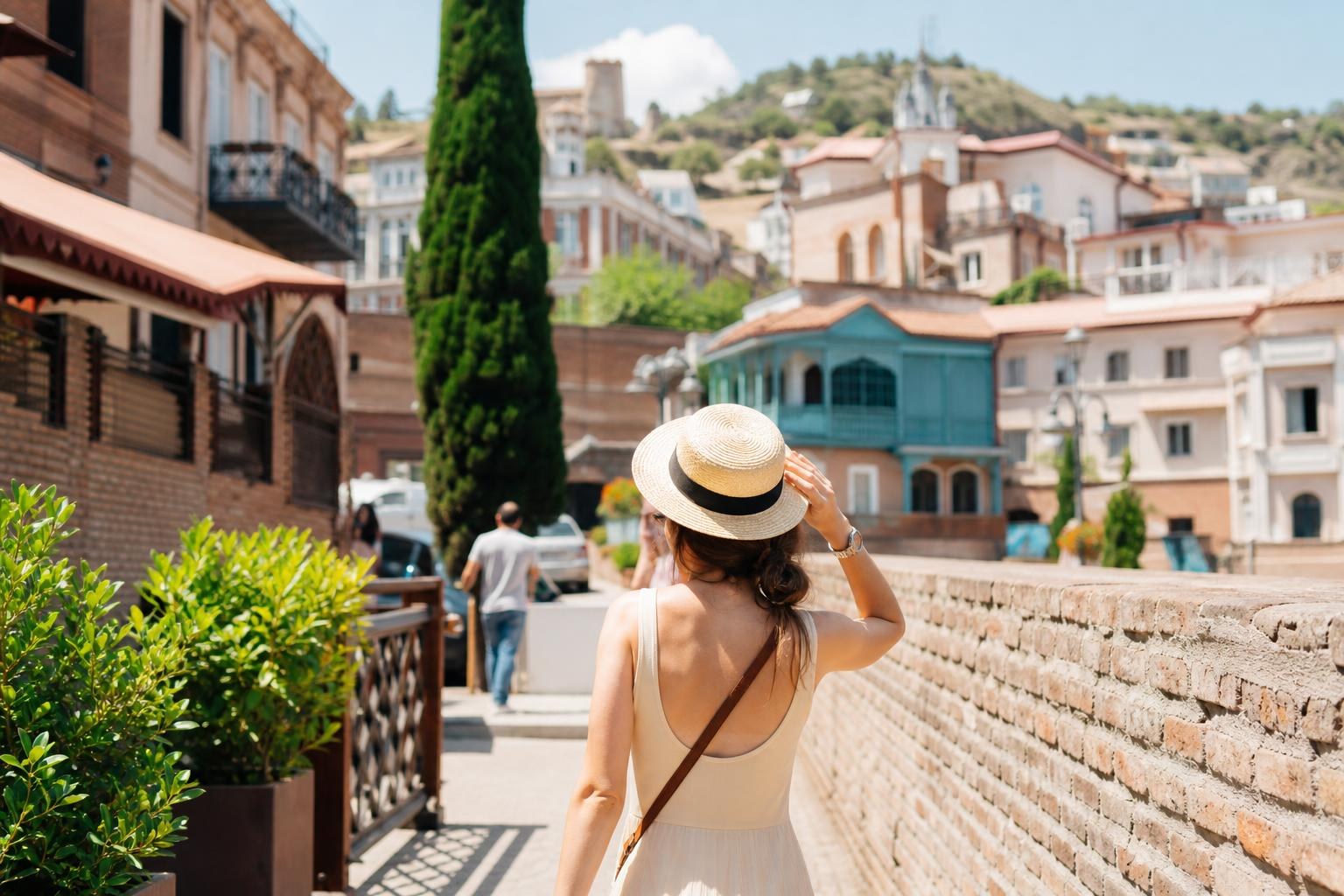
A wide-brimmed hat is essential, not optional. Baseball caps leave your ears and neck exposed, which are exactly the spots that burn worst during long walking days. A packable straw hat or a wide-brimmed canvas hat provides far better coverage. Men sometimes resist this advice, but a linen bucket hat or a panama-style hat looks perfectly natural in Tbilisi and saves you from painful sunburn.
Sunglasses should have UV400 protection: not just dark lenses, but actual UV filtering. The glare off Tbilisi’s pale stone buildings is intense, and cheap sunglasses without proper UV protection can actually cause more damage by dilating your pupils while letting UV rays through.
For sunscreen, bring SPF 50 and reapply every two hours, especially if you’re sweating. Sunscreen in Tbilisi’s pharmacies (called “aptiaki”) is available but tends to be more expensive than what you’d pay at home, typically 25-40 GEL (roughly $9-15 USD) for a decent brand. Bring your preferred product from home and save the pharmacy run for emergencies.
Day-to-Night Transition Accessories
The right accessories let you shift from daytime explorer to evening-ready without a full outfit change. A crossbody bag in leather or canvas works for both settings and keeps your hands free on cobblestone streets. Swap your daytime hat for statement earrings or a simple necklace, switch your walking sandals for dressier ones, and you’ve transformed your look in under five minutes.
A compact reusable water bottle is arguably your most important practical accessory. Tbilisi has excellent tap water (it comes from mountain sources and is perfectly safe to drink), so you can refill throughout the day. Dehydration sneaks up fast in 33°C heat, and buying bottled water constantly adds up: a half-liter at a kiosk runs about 1-1.50 GEL, which seems cheap until you’re buying six a day.
A small portable fan or a cooling towel might sound excessive, but during peak afternoon heat, either one can make a 30-minute wait for a marshrutka (minibus) much more bearable. Download the Bolt app for affordable taxi rides when the heat becomes truly oppressive: a ride across central Tbilisi rarely costs more than 5-8 GEL.
Packing Smart for Tbilisi’s June Heat
The best wardrobe for Tbilisi in June comes down to a few core principles: natural fabrics, neutral colors, versatile pieces that work across settings, and sturdy footwear. Pack less than you think you need. Tbilisi has excellent laundry services (most guesthouses offer same-day washing for a few lari), and the city’s boutiques and markets sell beautiful locally made clothing if you find yourself needing something unexpected.
Bring a lightweight scarf for churches, SPF 50 for the relentless sun, and at least one outfit that makes you feel polished for Tbilisi’s genuinely impressive evening scene. Skip the synthetic fabrics, leave the stilettos at home, and remember that Georgians value guests who show respect for their culture through small gestures, including how you dress.
Tbilisi rewards travelers who arrive prepared. The heat is real, the hills are steep, and the churches have rules. But with the right clothes in your bag, you’ll spend your energy on what actually matters: the food, the wine, the people, and a city that has a way of making you want to stay longer than you planned.