
Table of Contents
- Weather and What to Pack for Tbilisi in March
- Exploring Old Town and Botanical Gardens in Bloom
- Celebrating Spring Holidays and Cultural Events
- Relaxing in the Sulfur Baths and Indoor Museums
- Day Trips from Tbilisi: Snow vs. Greenery
- Practical Tips for Navigating Tbilisi in the Shoulder Season
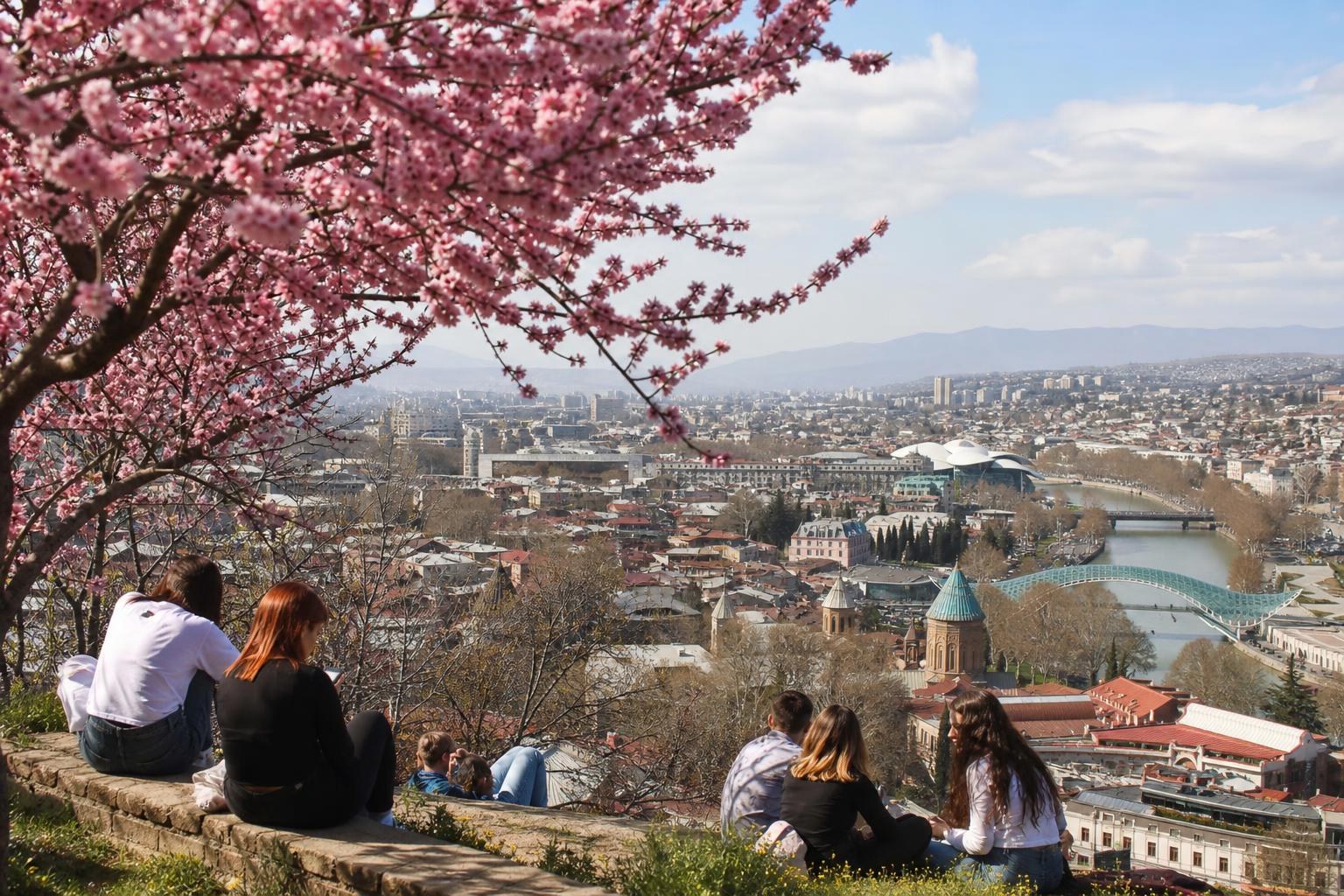
March in Tbilisi is one of those months that rewards the curious traveler. The city sits in a transitional state: winter’s grip loosens, café terraces start filling up again, and the first almond blossoms appear along the Mtkvari River. Crowds are thin, prices are low, and the energy of a city waking up after a cold season is genuinely infectious. If you’re wondering what to do in Tbilisi in March, the answer is: quite a lot, and most of it without fighting for elbow room. Georgia welcomed a record 5.5 million tourists in 2025, but the bulk of that traffic hits between June and October. March gives you the real Tbilisi, with locals outnumbering visitors and a pace that lets you actually absorb the place. I’ve found that shoulder-season travel here offers something you can’t buy during peak months: unscripted encounters with a city that hasn’t yet put on its tourist face.
Weather and What to Pack for Tbilisi in March
Understanding the Transition from Winter to Spring
March in Tbilisi is genuinely unpredictable, and that’s part of its charm. The first week can feel like late winter, with chilly mornings hovering around 2-4°C and the occasional dusting of snow on the surrounding hills. By the last week, you might be walking around in a light jacket at 15°C, watching locals drink coffee outside without a care.
The key is layering. Bring a warm mid-layer (fleece or light down jacket), a waterproof outer shell, and a scarf you can stuff into your bag when the afternoon sun appears. Comfortable walking shoes with decent grip matter more than style here: Tbilisi’s Old Town streets are cobblestoned and uneven, and rain makes them slippery. Tbilisi’s March weather averages around 6-7 days of rainfall, so an umbrella earns its space in your bag.
Don’t overpack heavy winter gear. Tbilisi sits in a sheltered valley, so it’s consistently warmer than the surrounding countryside. A pair of sunglasses is surprisingly useful: the spring sun reflecting off pale stone buildings can be intense even when the air is cool.
Tbilisi March Climate Data Table
| Metric | Early March | Mid-March | Late March |
|---|---|---|---|
| Average High | 10°C (50°F) | 13°C (55°F) | 16°C (61°F) |
| Average Low | 2°C (36°F) | 4°C (39°F) | 6°C (43°F) |
| Rainfall Days | 2-3 | 2-3 | 2-3 |
| Daylight Hours | ~11.5 | ~12 | ~12.5 |
| UV Index | Low-Moderate | Moderate | Moderate |
The temperature swing between early and late March is significant. If you’re visiting in the first half, pack as you would for late autumn. For the second half, think early spring. Either way, evenings cool down fast once the sun drops behind the hills.
Exploring Old Town and Botanical Gardens in Bloom
Walking Through the Narikala Fortress and Abanotubani
Old Tbilisi in March has a quality that’s hard to replicate in summer: silence. Not total silence, of course, but the kind where you can hear your own footsteps on the cobblestones and catch fragments of conversation drifting from open windows. The narrow streets of Abanotubani, the historic bathhouse district, feel almost meditative without the usual crowds.
Start at the base of Narikala Fortress and either hike up the switchback trail or take the cable car from Rike Park (2 GEL each way, roughly $0.75). From the fortress walls, the view of the city is spectacular in March: the red and ochre rooftops contrast against patches of green just starting to return to the hillsides. On clear days, you can see the snow-capped Caucasus range to the north.
Walking back down through the Old Town, stop at the Leghvtakhevi waterfall, a small cascade hidden in a gorge right in the city center. In March, the waterfall runs stronger thanks to snowmelt and spring rains. The surrounding cliffs have a raw, almost wild quality that feels surprising just minutes from restaurants and shops.
Early Blossoms at the National Botanical Garden
The National Botanical Garden sits directly behind Narikala Fortress, and March is when it starts to come alive. Entry costs 4 GEL (about $1.50), and you’ll have entire pathways to yourself on weekday mornings. The first blooms you’ll notice are almond and cherry trees, their white and pink flowers appearing against still-bare branches.
The garden covers roughly 128 hectares, so it’s genuinely large. The lower sections near the entrance warm up first and show the most spring color in March. Higher elevations within the garden remain cooler and more dormant, which creates an interesting visual contrast as you walk uphill. Bring a thermos of coffee from one of the Old Town cafés: there’s no better place to sit and watch a city transition between seasons.
Celebrating Spring Holidays and Cultural Events
Mother’s Day and International Women’s Day Traditions
March 8th is a major event in Tbilisi, and if you happen to be in the city on that date, you’ll notice it immediately. International Women’s Day, locally known as Dedis Dghe (which translates to Mother’s Day in Georgian culture), blends the two celebrations into one. Flower vendors appear on every corner, and the streets fill with men carrying bouquets of roses, tulips, and mimosa branches.
This isn’t a commercial holiday in the way Valentine’s Day can feel elsewhere. Georgian families gather for meals, and women genuinely receive the day off from household responsibilities. Restaurants fill up for long lunches. If you’re invited to join a Georgian table on March 8th, say yes: the tamada (toastmaster) tradition turns any meal into something memorable, with elaborate toasts to mothers, grandmothers, and women in general. Expect wine, khachapuri, and an emotional sincerity that might catch you off guard.
The week surrounding March 8th also sees pop-up markets and small cultural performances in venues around the city. Check the Tbilisi Concert Hall and the Rustaveli Theatre for special programming.
Lenten Cuisine and Food Festivals
March typically falls during Great Lent in the Georgian Orthodox calendar, which means a surprising number of restaurants and home cooks shift to plant-based menus. This isn’t a limitation: Georgian Lenten food, called samarkhvo, is genuinely excellent. Dishes like lobio (spiced bean stew), pkhali (walnut-herb spreads), and ajapsandali (vegetable stew) are hearty, flavorful, and available everywhere.
For travelers who happen to be vegetarian or vegan, March is arguably the best time to eat in Tbilisi. Bakeries sell special Lenten bread, and even churchkhela (the walnut-and-grape-juice candy) qualifies as a Lenten snack. Street food stalls near the Dezerter Bazaar sell fresh lobiani (bean-filled bread) for 2-3 GEL, and it’s one of the most satisfying cheap meals you’ll find anywhere.
Some restaurants host special Lenten tasting menus during this period, offering multi-course meals that showcase the depth of Georgian cuisine without any meat or dairy. These dinners typically run 40-60 GEL per person (about $15-22) and are worth booking in advance.
Relaxing in the Sulfur Baths and Indoor Museums
Booking a Traditional Bathhouse Experience
The sulfur baths of Abanotubani have operated for centuries, and March is an ideal time to visit. The warm, sulfur-rich water feels particularly restorative when the air outside is still cool, and you won’t face the long waits that plague summer visits.
You have two main options: public baths or private rooms. Public baths at Bathhouse No. 5 cost around 5 GEL and give you an authentic, no-frills experience alongside locals. Private rooms at Orbeliani Baths (the famous blue-tiled facade) or Royal Bath House start at 60-100 GEL per hour depending on the room size and include a private pool, steam room, and the option to book a kisi scrub from a professional mekise (bath attendant) for an additional 20-30 GEL.
Book private rooms at least a day ahead during March weekends. Weekday mornings are the easiest time to walk in without a reservation. The experience itself lasts about an hour, and you’ll emerge feeling genuinely renewed: the sulfur water has a noticeable effect on skin and muscles.
Art and History at the Georgian National Museum
Rainy March afternoons are made for museums, and Tbilisi has several worth your time. The Georgian National Museum on Rustaveli Avenue houses a remarkable collection spanning millennia. The Treasury, located in the basement, contains gold artifacts from the Colchis civilization dating back to the 3rd millennium BCE. These pieces are genuinely stunning and rival anything you’d see in major European museums.
The Soviet Occupation exhibit on the top floor is sobering and important: it documents Georgia’s 70-year period under Soviet rule through photographs, documents, and personal testimonies. Allow at least two hours for the full museum. Entry is 15 GEL (about $5.50), a bargain for what you get.
If you still have energy, the Museum of Fine Arts nearby holds an impressive collection of Georgian medieval art, including religious icons and manuscripts. March’s quieter visitor numbers mean you can take your time with pieces that deserve close attention.
Day Trips from Tbilisi: Snow vs. Greenery
Late-Season Skiing in Gudauri
Here’s something most spring visitors don’t realize: Gudauri, Georgia’s premier ski resort, is still fully operational in March. The resort sits at 3,300 meters and typically holds snow through mid-April. March actually offers some of the best skiing conditions of the season, with warmer temperatures, longer days, and well-packed slopes.
Gudauri is roughly two hours north of Tbilisi by car. A day pass costs around 70 GEL (about $26), and equipment rental runs another 50-60 GEL. You can hire a driver for the round trip for approximately 150-200 GEL, or join one of the shared minibuses that depart from Tbilisi’s Didube station early in the morning.
The drive itself is spectacular: the Georgian Military Highway climbs through the Aragvi Valley past the medieval Ananuri fortress and over the Jvari Pass, where snow-covered mountains frame the road. Even if you don’t ski, the scenery alone justifies the trip. March conditions on the road are generally good, though chains or winter tires are occasionally needed after fresh snowfall.
Wine Tasting in the Kakheti Region
In the opposite direction from Gudauri, the Kakheti wine region sits about 90 minutes east of Tbilisi and offers a completely different March experience. The vineyards are still dormant in early March, but by the month’s end, the first buds appear on the vines. The real draw is the wine itself: Georgia’s 8,000-year winemaking tradition is best experienced in the cellars and family-run wineries of Kakheti.
Visit Sighnaghi, a hilltop town with views of the Alazani Valley, and stop at Pheasant’s Tears or Okro’s Wines for tastings that focus on qvevri-made natural wines. Tastings typically cost 20-40 GEL and include 5-7 wines paired with local cheeses and bread. The Kakheti region draws visitors year-round, but March means you’ll often be the only group in the tasting room, which leads to longer, more personal conversations with winemakers.
A day trip combining Sighnaghi, a winery visit, and lunch at a local restaurant can be done independently with a rental car or through a guided tour (typically 80-120 GEL per person including transport and tastings).
Practical Tips for Navigating Tbilisi in the Shoulder Season
March sits squarely in Tbilisi’s shoulder season, and a few practical details will make your trip smoother. The Tbilisi metro runs two lines and costs 1 GEL per ride using a rechargeable transit card, which you can buy at any station for 2 GEL. Bolt and Yandex Go are the dominant ride-hailing apps: a typical cross-city ride costs 5-8 GEL, making taxis absurdly affordable by European standards.
English proficiency in Tbilisi has improved significantly over the past few years, especially among younger Georgians and anyone working in hospitality. That said, download the Georgian language pack for Google Translate before you arrive: it’s invaluable at markets, in taxis, and in smaller restaurants where menus might be Georgian-only.
Accommodation in March runs 30-50% cheaper than peak season rates. A well-reviewed guesthouse in the Old Town costs 80-150 GEL per night (roughly $30-55), and you’ll often get upgraded simply because rooms are available. Airbnb options are plentiful and tend to offer better value than hotels for stays longer than three nights.
A few things to keep in mind:
- Currency exchange offices on Rustaveli Avenue and in the Old Town offer competitive rates without commission. Avoid exchanging at the airport.
- Most restaurants and cafés accept card payments, but carry cash for markets, marshrutkas (minibuses), and smaller shops.
- Tbilisi tap water is safe to drink and tastes good: no need to buy bottled water.
- The city is generally very safe, including for solo female travelers. Petty crime exists but is uncommon in tourist areas.
For getting oriented, I’d recommend spending your first afternoon simply walking from Freedom Square down Rustaveli Avenue, turning into the Old Town, and ending at the sulfur baths. That single walk introduces you to the city’s layers: Soviet-era grandeur, Art Nouveau facades, medieval churches, and the organic chaos of the old quarters.
March in Tbilisi won’t give you guaranteed sunshine or Instagram-perfect cherry blossom tunnels. What it gives you is something better: a real city in a real moment of transition, with warm people, extraordinary food, and the kind of quiet beauty that only exists when the crowds haven’t arrived yet. If you’re the type of traveler who’d rather share a bottle of Saperavi with a winemaker than jostle for a photo at a viewpoint, this is your month. Book the trip, pack your layers, and let Tbilisi surprise you.