
Table of Contents
- Is Dashbashi Canyon Worth the Drive? The Quick Verdict
- Getting to Dashbashi by Car: Route, Roads, and Parking
- The Diamond Bridge: Experience and Safety at Tsalka Canyon
- Hiking to the Weeping Wall Waterfall
- Planning Your Visit: Costs, Hours, and Best Season
- Extending Your Trip: What to See Near Tsalka
- Dashbashi Canyon vs. Martvili and Okatse Canyons
- Frequently Asked Questions About Dashbashi Canyon
A two-hour drive south of Tbilisi, a massive volcanic canyon cuts through the Javakheti highlands, and someone decided to hang a glass bridge across it. Dashbashi Canyon has become one of Georgia’s most talked-about attractions since the bridge opened, pulling in a growing wave of international visitors – including a significant surge from Asian markets like India, Israel, and the UAE in recent seasons. But is it worth burning half a day to get there and back? The short answer: yes, for most people, but with some caveats depending on what kind of traveler you are and when you visit.
Is Dashbashi Canyon Worth the Drive? The Quick Verdict
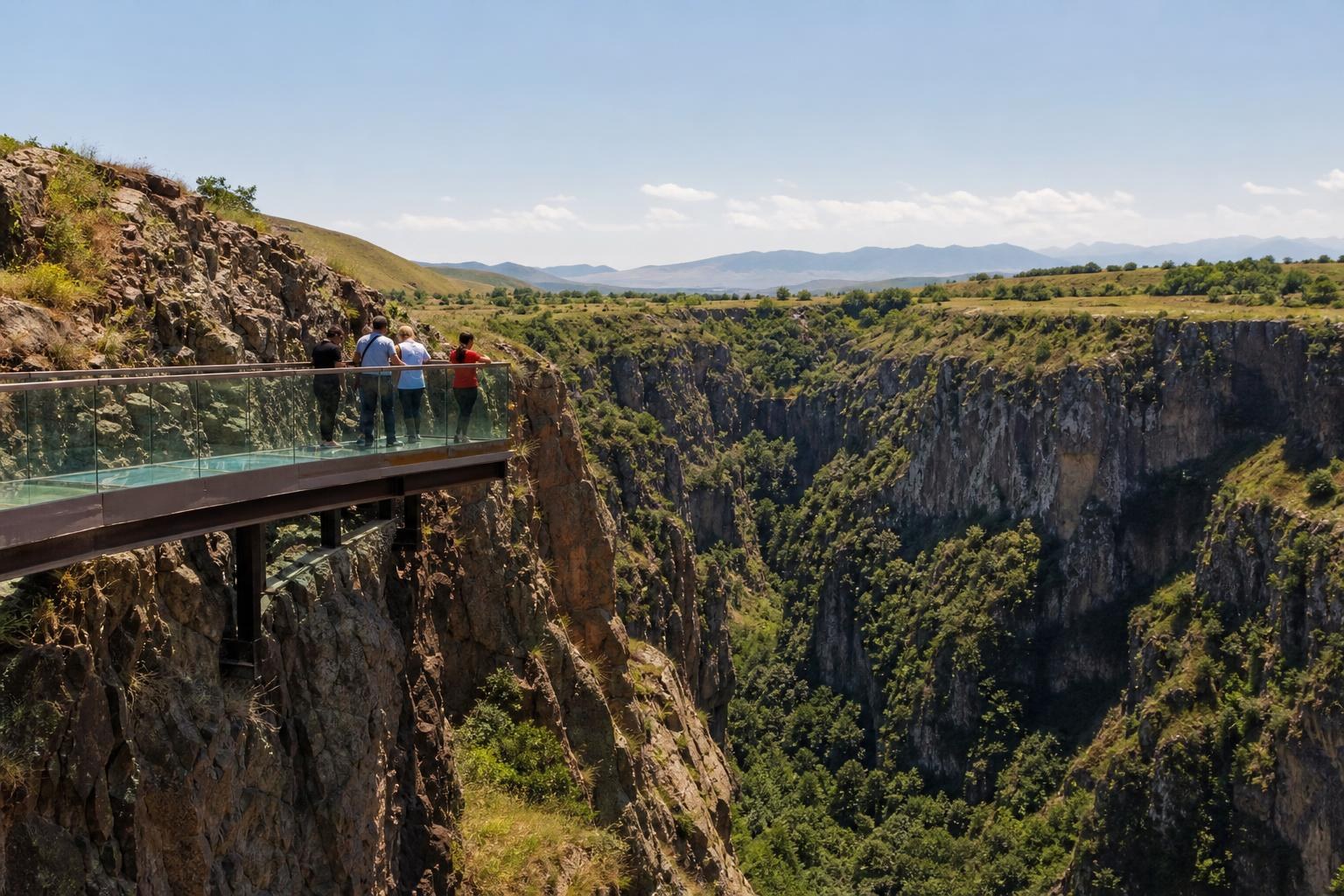
If you’re spending more than three or four days in Georgia and you have access to a car, the drive to Dashbashi is one of the more rewarding day trips from Tbilisi. The canyon itself is genuinely dramatic: a deep, green-walled gorge carved by the Ktsia River, with a waterfall spilling from the cliff face. The glass “Diamond Bridge” adds a modern spectacle that feels slightly surreal against the raw volcanic landscape.
That said, this isn’t a wilderness hike or an ancient monastery. It’s a commercial attraction with an entrance fee, a cocktail bar suspended over the void, and zip-line cables strung across the gap. If you’re expecting untouched nature with no other tourists, recalibrate. The site attracts crowds, especially on weekends from May through September.
Who should go? Couples, families with older kids, and anyone who enjoys a mix of scenery and mild adrenaline. Who might skip it? Budget travelers who balk at the entrance fee, or hikers who’d rather spend their day on a trail in Tusheti or Svaneti. The canyon rewards a visit of two to three hours, which makes it perfect to combine with other stops in the Tsalka region.
Getting to Dashbashi by Car: Route, Roads, and Parking
The most direct route from Tbilisi runs south through Manglisi and then continues toward Tsalka. The total distance is roughly 115 km, and the drive takes about 1 hour and 45 minutes to 2 hours depending on traffic leaving the capital.
The road is fully paved and manageable in any standard rental car – no 4×4 needed. The first stretch on the E001 highway toward Manglisi is a well-maintained two-lane road that climbs steadily through forested hills. After Manglisi, the road narrows slightly and winds through open highland terrain. Watch for livestock on the road, especially in the last 30 km before the canyon. Cows and sheep treat the asphalt as their personal lounge.
| Detail | Info |
|---|---|
| Starting point | Tbilisi center |
| Distance | ~115 km |
| Drive time | 1 hr 45 min – 2 hrs |
| Road surface | Paved throughout |
| 4×4 required? | No |
| Parking | Free lot at the site entrance |
| Seasonal closures | None, but winter conditions (Nov-Mar) can make the highland stretch icy |
Parking is free at the main entrance. On busy summer weekends, the lot fills up by late morning, so arriving before 11:00 helps. If you’re renting a car in Tbilisi for a self-drive trip around Georgia, this route doubles nicely as the first leg of a longer loop through the Javakheti region.
Tip: Fill up your tank in Tbilisi or Manglisi. Fuel stations become sparse once you pass Manglisi heading toward Tsalka.
The Diamond Bridge: Experience and Safety at Tsalka Canyon
The centerpiece of the Dashbashi Canyon complex is the glass suspension bridge, marketed as the “Diamond Bridge.” It spans 240 meters in length and hangs 280 meters above the canyon floor, making it one of the longest and highest transparent pedestrian bridges in Europe. The structure is anchored into the canyon walls on both sides, and the glass panels in the walkway give you a direct view straight down to the river below.
Is it safe? The bridge was engineered to international standards and has been operating without incident since its opening. The glass panels are multi-layered and load-tested. Staff regulate the number of people on the bridge at any given time, so you won’t feel it swaying under a crowd. If you have a serious fear of heights, this will test you – but the handrails are solid and the walkway is wide enough that you don’t feel exposed.
Walking the Glass Bridge and the Diamond Bar
The walk across takes about five to ten minutes if you don’t stop, but most people pause repeatedly to look down, take photos, and process the vertigo. Roughly halfway across, you’ll find the Diamond Bar: a small cocktail lounge with a transparent floor, suspended directly over the canyon. You can order a drink and sit above 280 meters of empty air. It’s gimmicky, sure, but genuinely memorable. Prices for drinks are higher than Tbilisi bar rates, as you’d expect from a captive-audience situation.
The bridge experience is included in your entrance ticket. You don’t need to reserve a specific time slot in advance, though during peak season (July-August), expect a queue of 15 to 30 minutes before crossing.
Adventure Add-ons: The Bicycle Zip-line and Swing
Beyond the bridge itself, the complex offers two adrenaline activities at additional cost:
- Bicycle zip-line: You pedal a bicycle mounted on a cable strung across the canyon. It’s slower and more controlled than a traditional zip-line, which makes it both less terrifying and more photogenic. The ride takes a few minutes.
- Canyon swing: A large pendulum swing that launches you out over the gorge. This one is genuinely intense and not for the faint-hearted.
Prices for these add-ons change periodically, so check at the ticket office on arrival. Both activities require signing a waiver and have weight/age restrictions.
Important: Activity availability can be weather-dependent. High winds or rain may shut down the zip-line and swing even when the bridge remains open.
Hiking to the Weeping Wall Waterfall
The canyon isn’t just about the bridge. A hiking trail leads from the complex down to the canyon floor, where a wide curtain waterfall – called the “Weeping Wall” – streams down the rock face. The trail is approximately 1.8 km long and takes about one hour for the round trip, though I’d budget closer to 90 minutes if you want to actually enjoy the waterfall rather than just tag it and turn around.
The path descends steeply through forested switchbacks. It’s well-maintained with steps and handrails in the steepest sections, but proper footwear matters. Flip-flops are a bad idea here. The trail can be slippery after rain, and the final stretch near the waterfall gets misty and wet.
The waterfall itself is striking: water seeps through porous volcanic rock across a wide cliff face, creating a curtain effect rather than a single powerful stream. The mist at the base keeps the area cool even in midsummer, which is a relief after the exposed highland heat above. This is the part of the visit that nature lovers will appreciate most. If you skip the bridge and only do the hike, you’ll still leave satisfied.
Note: Bring a light rain jacket or at least a layer you don’t mind getting damp. The spray near the waterfall is constant.
Planning Your Visit: Costs, Hours, and Best Season
The standard entrance fee for international visitors is 79 GEL (roughly $29 USD as of 2026). Children under three enter free. This ticket covers the bridge crossing and access to the hiking trail. Adventure activities cost extra.
The site operates year-round, though winter visits (November through March) come with colder temperatures, potential ice on the highland road, and reduced activity availability. The best months to visit are May through October, with June and September offering the sweet spot of good weather and fewer crowds than July-August.
| Month | Weather | Crowds | Verdict |
|---|---|---|---|
| May | Mild, occasional rain | Low-moderate | Great time to visit |
| Jun | Warm, mostly dry | Moderate | Ideal |
| Jul-Aug | Hot, dry | High | Busy weekends |
| Sep | Warm, clear | Moderate | Excellent |
| Oct | Cool, autumn colors | Low | Beautiful but cooler |
| Nov-Mar | Cold, possible snow | Very low | Risky road conditions |
Georgia’s protected areas saw record visitor numbers in 2025, welcoming over 1.2 million visitors, and the trend is continuing into 2026. Dashbashi is feeling that growth. Weekday mornings remain the least crowded option.
Extending Your Trip: What to See Near Tsalka
The canyon sits in a highland region that most tourists pass through without stopping, which is a shame. If you’ve already driven 115 km from Tbilisi, adding an hour or two to explore the surroundings makes the trip feel much richer.
Tsalka Lake and the Javakheti Plateau
Tsalka Lake is a large reservoir about 20 minutes past the canyon. The shoreline is quiet and undeveloped – a good spot for a picnic or just stretching your legs after the drive. The broader Javakheti Plateau beyond it is one of Georgia’s least-visited regions: high-altitude grasslands dotted with ancient churches and seasonal herding camps. The landscape feels more like central Turkey or the Armenian highlands than the lush green valleys most visitors associate with Georgia.
The town of Tsalka itself is small and functional. You can find basic supplies and a few local restaurants serving hearty Georgian food. Don’t expect tourist infrastructure beyond the basics.
Combining Dashbashi with Manglisi or Tabatskuri
On the drive back to Tbilisi, the town of Manglisi makes a worthwhile stop. Its 7th-century cathedral is one of the oldest in Georgia, and the town’s cooler elevation made it a popular retreat during the Soviet era. A few cafes serve decent coffee and khachapuri.
For a longer loop, consider continuing past Tsalka to Lake Tabatskuri, a volcanic crater lake at about 2,000 meters elevation. The road is rougher and a higher-clearance vehicle helps, but the lake’s isolation and stark beauty reward the effort. You can loop back to Tbilisi via Bakuriani, turning the day trip into a full highland circuit of roughly 300 km.
Dashbashi Canyon vs. Martvili and Okatse Canyons
Georgia has several canyon attractions, and travelers often ask which one to prioritize. Here’s an honest comparison:
- Dashbashi Canyon is the most accessible from Tbilisi (2 hours vs. 5+ hours to western Georgia). The glass bridge is unique in the country. The entrance fee is the highest of the three, but you get a polished, modern facility with multiple activities. Best for: day-trippers from Tbilisi, thrill-seekers, families.
- Martvili Canyon in Samegrelo offers boat rides through a narrow, mossy gorge. The atmosphere is more intimate and natural. It’s a completely different experience: think tranquil boat glide vs. adrenaline bridge walk. Best for: nature lovers, photographers, those already traveling in western Georgia.
- Okatse Canyon near Kutaisi features a metal walkway bolted to the cliff face above a deep gorge. It’s dramatic and less commercial than Dashbashi, but the infrastructure is older and less maintained. Best for: hikers, budget travelers, those combining it with Martvili (they’re 30 minutes apart).
If you’re based in Tbilisi and only have time for one canyon, Dashbashi is the practical choice. If you’re doing a road trip through western Georgia, Martvili and Okatse together make a stronger combination. You don’t need to choose one forever – Georgia is small enough that you can hit all three in a week-long trip with a rental car.
Frequently Asked Questions About Dashbashi Canyon
Can I visit the canyon without a car?
Organized day tours run from Tbilisi, typically costing 80-120 GEL per person including transport but not the entrance fee. However, having your own vehicle gives you flexibility to combine the canyon with other stops and avoid the group schedule. Shared taxis to Tsalka exist but aren’t reliable for tourist timing.
Is the glass bridge safe for children?
Yes. The bridge has solid handrails and the glass panels are designed to handle significant weight. Children of all ages are allowed, though very young kids may find the transparent floor unsettling. There’s no minimum age for crossing.
How long should I plan for the whole visit?
Budget two to three hours for a comfortable visit that includes the bridge crossing, a drink at the Diamond Bar, and the hike to the waterfall. If you add the zip-line or swing, add another 30-45 minutes including wait times.
Is there food available at the site?
The complex has a cafe and the Diamond Bar on the bridge. Options are limited and priced above average. Bringing snacks and water is a smart move, especially if you plan to hike.
Do I need to book tickets in advance?
As of 2026, tickets can be purchased at the entrance without advance booking. During peak weekends in July and August, arriving early helps avoid long queues.
The canyon at Dashbashi delivers a rare combination for Georgia: a natural wonder paired with modern infrastructure that actually works. The glass bridge is the headline act, but the waterfall hike gives the visit substance beyond the Instagram moment. For anyone spending time in Tbilisi with a car, the two-hour drive south is one of the most efficient ways to experience Georgia’s highland landscape without committing to a multi-day expedition. Check road conditions on Triproadwayplanner before heading out, especially if you’re visiting between November and March, and give yourself enough time to wander the plateau rather than just rushing to the bridge and back. The highlands around Tsalka deserve more than a glance from the parking lot.