
Table of Contents
-
Mtskhetoba 2026: Essential Travel Guide and Festival Overview
-
The Spiritual Heart of Georgia: Svetitskhovloba and the Cathedral Liturgy
-
Mtskhetoba Festival Highlights: Folk Music, Crafts, and Churchkhela Stalls
-
Expanding Your Itinerary: Jvari Monastery and Dress Code Tips
October 14, 2026, is a Wednesday and a public holiday across Georgia, and if you’re anywhere near Tbilisi, you should be heading to Mtskheta. The ancient capital sits just 25 km north of the city, and on this particular day it hosts Mtskhetoba – a national celebration that this year carries extraordinary weight. The 1,700th anniversary of Christianity becoming Georgia’s state religion falls in 2026, and the celebrations centered on Svetitskhoveli Cathedral will be unlike anything in recent memory. But here’s the catch: tens of thousands of people have the same idea, and the road between Tbilisi and Georgia’s spiritual capital turns into a slow-moving parking lot by mid-morning. This guide covers the festival itself, the drive, and – most critically – how to actually get there and back without losing half your day in traffic.
Mtskhetoba 2026: Essential Travel Guide and Festival Overview
Mtskhetoba (sometimes written Mtskheta Day) is one of Georgia’s most significant public holidays. It always falls on October 14 and honors the city’s role as the cradle of Georgian Christianity. In a typical year, the festival draws large crowds. In 2026, the scale will be something else entirely.
This year marks the 1,700th anniversary of Christianity’s proclamation as Georgia’s state religion, tracing back to 326 AD when King Mirian III converted. A special state-church commission has been overseeing preparations, and the culmination of the jubilee year lands squarely on October 14 in Mtskheta, featuring events including the “God, Homeland, Man” Symposium. Expect heightened security, larger crowds than usual, and a festival atmosphere that extends well beyond the cathedral grounds.
For independent travelers and expats, the day trip from Tbilisi to Mtskheta is one of the easiest and most rewarding excursions you can do by car. The distance is short, the highway is modern, and the return trip takes under 30 minutes on a normal day. On Mtskhetoba, though, “normal” goes out the window. Planning your timing, parking, and route in advance is the difference between a memorable day and a frustrating one.
Important: As of January 2026, all foreign tourists entering Georgia must hold health and accident insurance with minimum coverage of 30,000 GEL. Make sure your policy is active before heading out.
The Spiritual Heart of Georgia: Svetitskhovloba and the Cathedral Liturgy
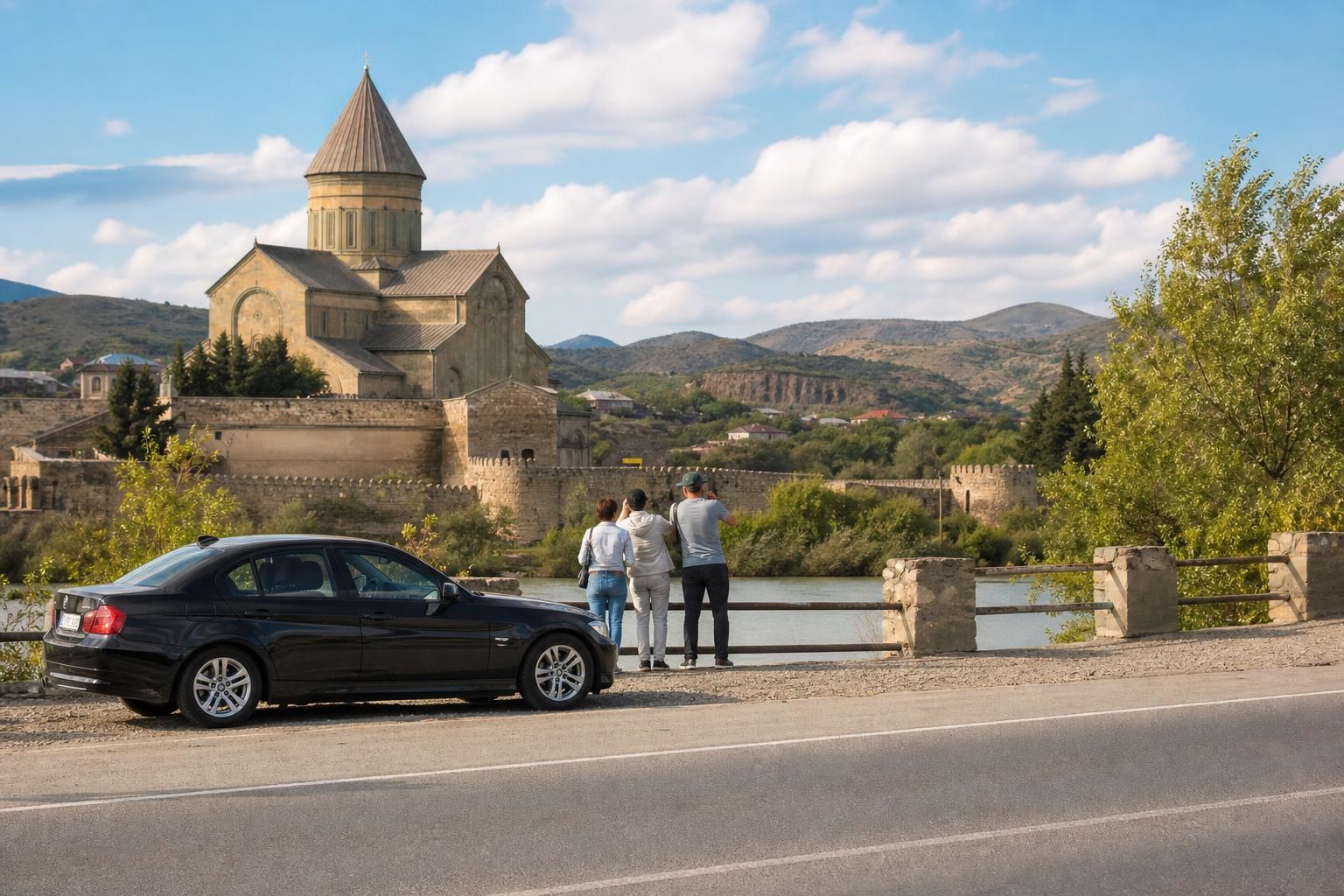
The religious name for this holiday is Svetitskhovloba, referring directly to Svetitskhoveli Cathedral – the massive 11th-century church that dominates the Mtskheta skyline. The word “Svetitskhoveli” translates roughly to “the Living Pillar,” rooted in a legend about a wooden pillar that miraculously rose from the ground during the cathedral’s construction. The pillar is said to mark the burial site of Christ’s robe, brought to Georgia by a local man named Elias who witnessed the crucifixion.
The liturgy on October 14 is the centerpiece of the day. The Catholicos-Patriarch of All Georgia typically leads the service, and in 2026, with the 1,700th anniversary, expect a ceremony of unusual grandeur. The liturgy begins in the morning, usually around 10:00 AM, and can last two to three hours. The cathedral interior fills quickly, and many worshippers follow the service from the courtyard outside, where speakers broadcast the proceedings.
Even if you’re not religious, standing in the courtyard of a cathedral built a thousand years ago while hundreds of people sing hymns in polyphonic Georgian harmony is a genuinely moving experience. I’ve seen plenty of secular travelers get emotional during the liturgy – the music alone is worth the trip. Just be aware that the cathedral and its immediate surroundings are treated as active worship spaces throughout the day, so respectful behavior matters more than usual.
The liturgy tends to wrap up by early afternoon, after which the atmosphere shifts from solemn worship to open celebration. That transition is when the festival really comes alive.
Mtskhetoba Festival Highlights: Folk Music, Crafts, and Churchkhela Stalls
Once the liturgy ends, Mtskheta’s old town transforms into an open-air festival. The streets around Svetitskhoveli Cathedral fill with vendors, performers, and food stalls that stretch from the cathedral walls down toward the Aragvi River.
Here’s what you’ll find:
-
Folk music and dance: Regional ensembles perform throughout the afternoon. Georgian polyphonic singing (a UNESCO-recognized tradition) is the highlight, but expect energetic dance performances with the sharp, precise footwork that Georgian folk dance is known for.
-
Craft vendors: Potters, silversmiths, and textile artists set up stalls selling traditional wares. Cloisonné enamel jewelry (minankari) is a particularly Georgian specialty worth browsing.
-
Churchkhela stalls: These walnut-and-grape-juice “candles” are everywhere. Freshly made churchkhela from festival vendors is vastly better than the packaged versions sold in Tbilisi supermarkets. Expect to pay 3-8 GEL per piece in 2026.
-
Wine and chacha tastings: Small producers pour samples of their qvevri wines and homemade chacha (grape brandy). The quality varies wildly, but that’s half the fun.
Note: If you’re driving back to Tbilisi, skip the chacha and wine tastings entirely, or designate a non-drinking driver. Georgian police conduct random breathalyzer checks on the highway, and the legal blood alcohol limit is 0.0 for drivers. Use a taxi or stay overnight if you want to drink.
The festival typically winds down by early evening, around 6:00-7:00 PM, though some vendors and performers stay later. The best window for enjoying the crafts and food is roughly 1:00 PM to 5:00 PM.
Driving from Tbilisi to Mtskheta: Routes and Logistics
The drive from Tbilisi to Mtskheta is one of the simplest road trips in Georgia – on any day except October 14. The highway is excellent, the distance is short, and navigation is straightforward. But the details matter on festival day.
Getting There by Car: Practical Trip Data
|
Detail |
Information |
|---|---|
|
Distance |
~25 km from central Tbilisi |
|
Normal drive time |
20-30 minutes |
|
Mtskhetoba drive time |
45-90+ minutes (depending on departure) |
|
Route |
E60 highway north toward Gori/Kutaisi |
|
Road condition |
Excellent – modern divided highway, no 4×4 needed |
|
Fuel |
Fill up in Tbilisi; stations available on the highway |
|
Tolls |
None |
The E60 is Georgia’s main east-west highway, and the Mtskheta exit is well-signed. From central Tbilisi, you’ll head north through the Digomi district, merge onto the highway, and exit at Mtskheta after roughly 20 km. On a normal weekday, this is a 25-minute drive with zero complications.
On Mtskhetoba, the exit ramp and the final 2-3 km into the old town become the bottleneck. Traffic police redirect vehicles, some roads close entirely, and the limited parking fills fast. The highway itself usually stays moving, but the approach to the town center is where you’ll sit.
How to Beat the Mtskhetoba Traffic Jams
This is the section that will actually save your day. The traffic on October 14 is predictable, and predictable means beatable – if you plan ahead.
Optimal Departure Times and Morning Road Closures
The single most important decision you’ll make is when to leave Tbilisi. Here’s the pattern based on previous years:
-
Before 7:30 AM: Roads are clear. You’ll arrive in 25-30 minutes and have your pick of parking spots. This is the sweet spot if you want to attend the liturgy.
-
8:00-9:30 AM: Traffic builds steadily on the E60. The last few kilometers into Mtskheta slow to a crawl. Budget 45-60 minutes.
-
10:00 AM-12:00 PM: Peak congestion. Road closures around Svetitskhoveli Cathedral are in full effect. Expect 60-90 minutes or more, with stretches of standstill traffic near the town entrance.
-
After 1:00 PM: The inbound rush eases slightly, but parking is nearly impossible. You’ll spend more time circling for a spot than you spent driving.
Police typically close several streets around the cathedral starting at 9:00 AM. The exact closures vary year to year, so watch for temporary signage and follow police directions. Do not try to outsmart the road blocks – they’re there for crowd safety, and officers will redirect you firmly.
Tip: Consider taking the modernized commuter train from Tbilisi Central Station, which reaches Mtskheta in 25-33 minutes and bypasses road congestion entirely. If you still want a car for Jvari Monastery afterward, park at the Mtskheta train station lot and take a taxi up the hill.
Minibuses (marshrutkas) also depart from Tbilisi’s Didube Bus Station every 15-20 minutes for roughly 1-2 GEL, though these get packed on festival day.
Strategic Parking and Walking Routes to Svetitskhoveli
Parking in Mtskheta’s old town is extremely limited on Mtskhetoba. The small lots near the cathedral gate are reserved for clergy and officials. Here’s what actually works:
-
Park along the main road entering Mtskheta, 1-2 km before the old town. Informal roadside parking opens up on both sides. Arrive before 9:00 AM for the closest spots.
-
Use the lot near the Mtskheta Archaeological Museum, about a 10-minute walk from the cathedral. This fills by mid-morning but turns over as early visitors leave.
-
If you arrive late, park near the Samtavro Monastery area and walk south toward Svetitskhoveli. The walk is about 15 minutes and takes you through quieter streets with less foot traffic.
Wear comfortable shoes. The old town streets are cobblestoned and uneven, and you’ll be on your feet for hours. October weather in Mtskheta is typically mild – daytime highs around 18-22°C – but mornings can be cool, so bring a light jacket.
Expanding Your Itinerary: Jvari Monastery and Dress Code Tips
If you’ve come all the way to Mtskheta by car, skipping Jvari Monastery would be a mistake. And since you’re visiting active churches, knowing the dress code saves you from an awkward turn-away at the door.
Visiting Jvari Monastery on Festival Day
Jvari sits on a hilltop across the confluence of the Aragvi and Mtkvari rivers, about 8 km from the town center by road. The 6th-century monastery is a UNESCO World Heritage Site and offers one of the most photographed views in Georgia – the rivers meeting below, Svetitskhoveli Cathedral in the distance, and the Caucasus foothills beyond.
The access road is a winding two-lane climb. It’s paved but narrow, and on Mtskhetoba the small parking area at the top fills quickly. To avoid the crowds and secure parking, plan to visit Jvari before 10:00 AM, as the lot typically reaches capacity by 11:00 AM. If you’re attending the cathedral liturgy first, consider visiting Jvari in the late afternoon when many visitors have already left.
There’s no entrance fee. The monastery itself is small – you can see everything in 20-30 minutes – but most people spend longer just sitting on the stone walls and taking in the panorama. Bring water; there are no vendors at the top.
Svetitskhoveli Cathedral Dress Code and Etiquette
Georgian Orthodox churches enforce a dress code, and Svetitskhoveli is no exception – especially on its feast day. Here’s what you need to know:
-
Women must cover their hair (scarves are often available at the entrance, but bring your own to be safe) and wear skirts or dresses below the knee. Shoulders should be covered.
-
Men should wear long trousers. Shorts are not permitted inside. Hats should be removed.
-
Photography is generally allowed inside the cathedral, but do not use flash during the liturgy. Video recording during services is considered disrespectful.
-
Silence or very quiet conversation is expected inside. The acoustics amplify everything.
These rules apply at Jvari Monastery too, though enforcement there tends to be less strict. If you’re wearing shorts or a sleeveless top, pack a wrap or light scarf in your bag – it takes almost no space and prevents an awkward situation.
Tip: Carry a lightweight headscarf and a knee-length wrap skirt in your daypack. They weigh nothing and work for every church visit across Georgia, not just Mtskheta.
Frequently Asked Questions About Mtskhetoba
Is October 14 a public holiday in Georgia? Will shops be open? Yes, Mtskhetoba-Svetitskhovloba is an official public holiday. Banks and government offices close. Most shops and restaurants in Tbilisi operate on reduced hours. In Mtskheta itself, the festival stalls more than compensate – you won’t lack for food or drink.
Can I visit Mtskheta without a car on festival day? Absolutely. The commuter train from Tbilisi Central Station takes 25-33 minutes and avoids all road congestion. Marshrutkas from Didube Station run frequently for 1-2 GEL. The only thing you’ll miss without a car is easy access to Jvari Monastery, which requires a taxi or rideshare from the town center.
Is the festival free to attend? Yes. There’s no entrance fee for the cathedral, the liturgy, or the festival grounds. Food and crafts cost money, obviously, but the event itself is open to everyone.
How crowded does it actually get? Very. In a typical year, tens of thousands visit. With the 1,700th anniversary in 2026, expect significantly larger crowds. If you dislike dense crowds, arrive early for the liturgy or come in the late afternoon when numbers thin out.
Do I need travel insurance to visit Georgia in 2026? Yes. Since January 2026, foreign tourists must carry health and accident insurance with a minimum coverage of 30,000 GEL. This applies regardless of whether you’re driving or taking public transport.
Mtskhetoba 2026 is shaping up to be one of the most significant cultural events Georgia has hosted in years. The 1,700th anniversary adds a layer of national pride and ceremony that makes this particular October 14 worth prioritizing. The practical reality is simple: leave Tbilisi before 7:30 AM if you’re driving, park strategically, dress appropriately for the churches, and give yourself the full day. Combine Svetitskhoveli Cathedral with Jvari Monastery, enjoy the folk performances and churchkhela, and head back to Tbilisi in the early evening when traffic has cleared. If you’d rather avoid driving stress entirely, the commuter train is a smart alternative – especially for the inbound trip. However you get there, this is a day that connects you to something 1,700 years old, and that doesn’t happen often.