
Table of Contents
- Current Status of Land Border Crossings Between Georgia and Azerbaijan
- Primary Border Checkpoints and Routes
- Essential Documentation and Vehicle Requirements
- Comparison of Border Crossing Options
- Practical Tips for a Smooth Road Trip Transition
- Alternative Transportation Methods During Land Closures
- Getting There When the Border Finally Opens
Yes, you can technically drive from Georgia to Azerbaijan, but whether the border is actually open when you arrive is a different question entirely. For years, travelers planning overland routes through the South Caucasus have hit the same frustrating wall: Azerbaijan’s land borders remain closed under a policy that has outlived the pandemic by a wide margin. The country’s “Special Quarantine Regime” has been extended repeatedly, and as of 2026, there’s still no firm reopening date that anyone can count on.
I’ve spent a lot of time tracking this situation, talking to travelers who’ve attempted the crossing, and monitoring official announcements. The reality is messy and often contradictory: some people report getting through, while others are turned away. This guide covers everything you need to know about driving from Georgia to Azerbaijan, from the specific checkpoints and required documents to what your backup options look like if the border stays shut. Whether you’re planning a road trip through the Caucasus or trying to get a vehicle from Tbilisi to Baku, the details here will save you from showing up unprepared.
Current Status of Land Border Crossings Between Georgia and Azerbaijan
The single most important thing to understand before planning an overland crossing into Azerbaijan is the border status itself. Since March 2020, Azerbaijan has maintained restrictions on its land borders that were originally tied to COVID-19 but have since taken on a life of their own. The closures have been extended so many times that many Caucasus travelers treat them as semi-permanent.
The situation is genuinely unusual. Azerbaijan’s airports have been fully open to international travelers since 2022, and you can fly into Baku without any quarantine or special restrictions. But the land borders operate under a completely different set of rules, creating a bizarre two-tier system where your mode of arrival determines whether you’re welcome.
Understanding Azerbaijan’s Special Quarantine Regime
Azerbaijan’s Cabinet of Ministers has repeatedly extended the Special Quarantine Regime, which gives the government broad authority to restrict movement across land borders. The regime was extended through at least early 2025, and subsequent extensions have pushed the timeline further. Reports from early 2026 indicate that the land border closures now stretch into mid-2026 at minimum, with no concrete reopening plan announced.
The government hasn’t provided a clear rationale for maintaining land border closures years after abandoning all other COVID-related restrictions. Some analysts speculate it’s connected to security concerns along the border with Iran and Russia, while others point to bureaucratic inertia. Whatever the reason, the practical effect is the same: don’t assume you can drive across.
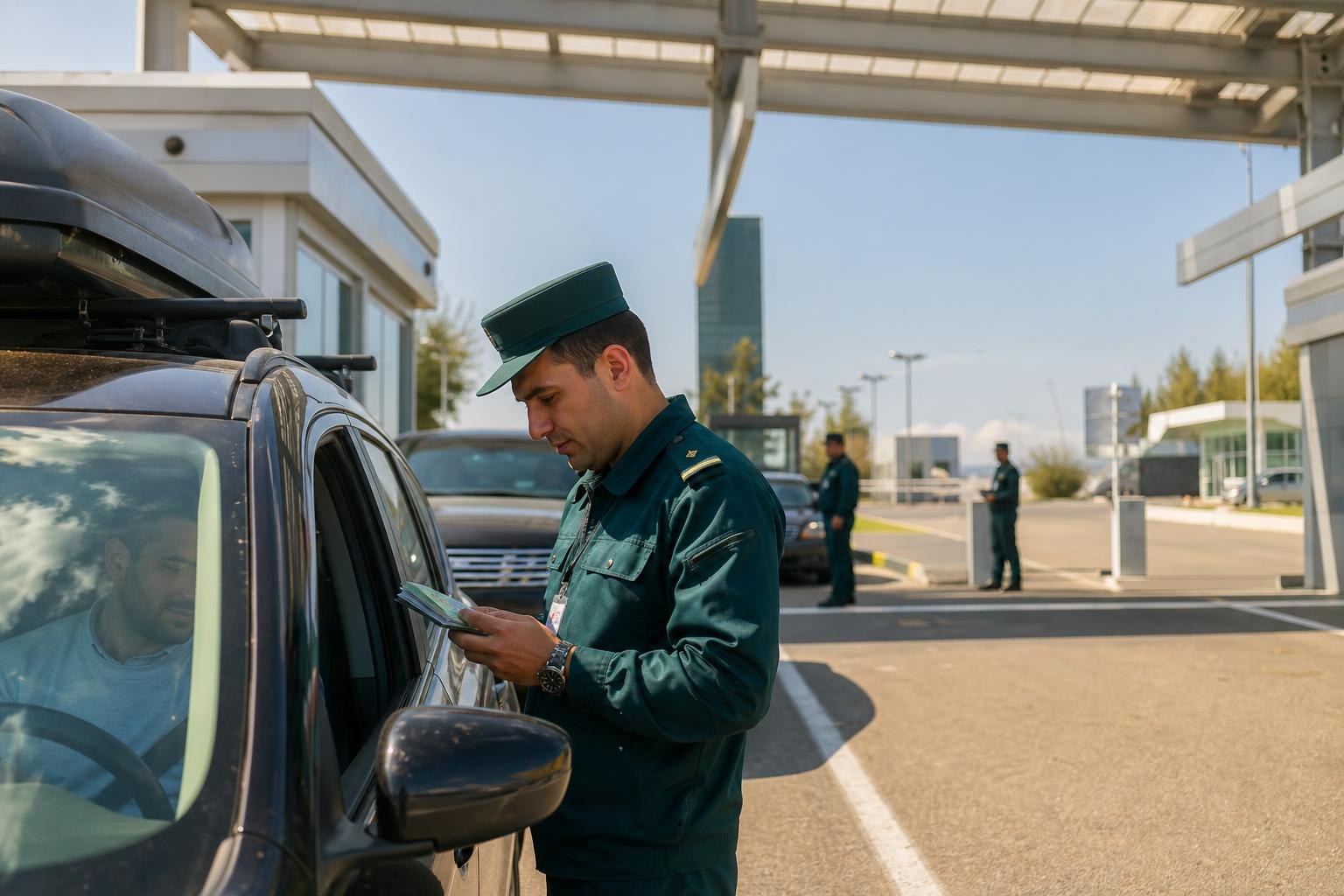
There are exceptions. Azerbaijani citizens, diplomats, and individuals with special government permission can sometimes cross by land. Cargo trucks continue to move through border checkpoints. But ordinary tourists and foreign residents driving personal vehicles face the closure head-on.
Entry vs. Exit: Differences for Travelers
Here’s a wrinkle that catches people off guard: exiting Azerbaijan by land has sometimes been possible even when entry is restricted. Several travelers have reported successfully leaving Azerbaijan through the Georgia border while being unable to enter the same way. The logic seems to be that Azerbaijan doesn’t want to trap people inside the country, but it also doesn’t want to process incoming land arrivals.
This asymmetry matters if you’re planning a one-way trip. Flying into Baku and then driving out through Georgia with a rental car (assuming the rental company permits it) has occasionally worked. But policies shift without warning, and what worked for someone three months ago may not work for you today. Always check the latest reports on forums and travel groups before committing to a plan.
Primary Border Checkpoints and Routes
Two main crossings connect Georgia and Azerbaijan by road. Each has a different character, serves different routes, and appeals to different types of travelers. Understanding both helps you plan regardless of which direction you’re coming from.
Red Bridge (Tsiteli Khidi): The Main Arterial Route
The Red Bridge crossing sits on the Kura River between the Georgian town of Sadakhlo and the Azerbaijani side at Sinig Körpü. This is the primary border checkpoint and handles the vast majority of traffic between the two countries. The crossing sits along the main highway connecting Tbilisi to western Azerbaijan, making it the natural choice for anyone driving from the Georgian capital.
The drive from Tbilisi to Red Bridge takes roughly 90 minutes under normal conditions, covering about 110 kilometers of decent road. On the Azerbaijani side, you’re looking at another 4 to 5 hours to reach Baku, depending on road conditions and how quickly you clear customs. The route passes through Gazakh and then joins the main east-west highway.
When the border was fully operational (pre-2020), crossing at Red Bridge typically took 1 to 3 hours, though waits could stretch much longer during holidays or peak travel periods. The infrastructure is relatively modern compared to other regional crossings.
Lagodekhi / Balakan: The Scenic Northern Crossing
The northern crossing at Lagodekhi connects Georgia’s Kakheti wine region with Azerbaijan’s Balakan district. This route is significantly more scenic, passing through the foothills of the Greater Caucasus Mountains. If you’re combining a wine tour of Kakheti with onward travel to Azerbaijan, this crossing makes geographic sense.

The road from Tbilisi to Lagodekhi is about 170 kilometers and takes roughly 2.5 to 3 hours. The border crossing options between the two countries are well-documented by overland travel communities, and Lagodekhi is consistently described as quieter and less hectic than Red Bridge. On the Azerbaijani side, you’ll pass through Balakan and Sheki before eventually reaching Baku, a drive of 6 to 7 hours.
Sheki itself is worth a stop: the Khan’s Palace is a UNESCO World Heritage Site, and the town has some of the best caravanserais in the region. If you’re doing this drive for the experience rather than speed, the northern route wins easily.
Essential Documentation and Vehicle Requirements
Even if the border reopens tomorrow, you can’t just roll up with a driver’s license and a smile. The documentation requirements for driving into Azerbaijan are specific and strictly enforced.
Visa Policies and ASAN E-Visa Requirements
Most nationalities need a visa to enter Azerbaijan. The good news: the ASAN e-visa system is straightforward. You apply online, pay $26 (standard processing), and typically receive approval within 3 business days. The e-visa is valid for 30 days from the date of issue and allows a stay of up to 30 days.
A few things to watch out for:
- Your passport must be valid for at least 6 months beyond your planned entry date
- Citizens of Armenia and those with Armenian heritage face severe restrictions and are effectively barred from entry
- If your passport contains stamps from the Nagorno-Karabakh region (from before Azerbaijan’s 2023 military operation), you may face questioning or denial of entry
- Some nationalities qualify for visa-free entry: check the Azerbaijani Ministry of Foreign Affairs website for the current list
Print your e-visa. Don’t rely on showing it on your phone. Border officials in the region often prefer paper documents, and cell service at crossing points can be spotty.
Vehicle Registration and International Insurance (Green Card)
Bringing a vehicle into Azerbaijan requires several documents beyond your personal travel papers:
- Original vehicle registration certificate (not a copy)
- International Driving Permit (IDP) alongside your national license
- Green Card insurance valid for Azerbaijan, or the ability to purchase local third-party insurance at the border
- Vehicle inspection certificate from your home country
The Green Card international insurance system covers Azerbaijan, but not all European insurers include it in their standard coverage. Check your policy carefully. If your Green Card doesn’t list Azerbaijan (country code “AZ”), you’ll need to buy local insurance at the border, which typically costs $30 to $50 for a 30-day policy.
Power of Attorney for Rented or Borrowed Cars
This is where many travelers hit an unexpected wall. If you’re driving a car that isn’t registered in your name, you need a notarized power of attorney from the registered owner explicitly authorizing you to take the vehicle into Azerbaijan. A standard rental agreement is not sufficient.
Most international rental companies like Hertz or Europcar prohibit taking vehicles across this border entirely. Local Georgian rental companies are sometimes more flexible, but you’ll need to negotiate this upfront and get proper documentation. The power of attorney should be translated into Azerbaijani or at minimum into Russian, which border officials generally read.
Comparison of Border Crossing Options
| Feature | Red Bridge (Tsiteli Khidi) | Lagodekhi / Balakan |
|---|---|---|
| Distance from Tbilisi | ~110 km (1.5 hours) | ~170 km (2.5-3 hours) |
| Distance to Baku | ~480 km (5-6 hours) | ~550 km (7-8 hours) |
| Traffic volume | High | Low |
| Typical wait time (pre-closure) | 1-3 hours | 30 min – 1.5 hours |
| Scenic value | Moderate | High (Caucasus foothills) |
| Key stops en route | Gazakh | Sheki, Balakan |
| Infrastructure quality | Better facilities | Basic facilities |
| Best for | Speed and efficiency | Scenic road trips |
Both crossings follow the same documentation requirements and customs procedures. The choice comes down to whether you prioritize getting to Baku quickly or want to enjoy the drive itself.
Practical Tips for a Smooth Road Trip Transition
Assuming the border does reopen for your trip, the crossing itself is only part of the challenge. The shift from Georgian to Azerbaijani driving conditions, regulations, and infrastructure requires some adjustment.
Customs Regulations and Prohibited Items
Azerbaijan’s customs rules are stricter than Georgia’s in several areas. Alcohol limits are particularly relevant for travelers coming from Georgia’s wine country: you can bring in a maximum of 1.5 liters of alcoholic beverages. If you’ve been stocking up on Saperavi and Rkatsiteli in Kakheti, leave most of it in the car or ship it separately.
Other restrictions to know:
- Drone imports require prior government approval: don’t bring one without paperwork
- Religious literature in large quantities can trigger additional inspection
- Currency declarations are required for amounts exceeding $10,000 or equivalent
- Medications containing controlled substances need a doctor’s prescription translated into English or Azerbaijani
- Photographs or maps showing Nagorno-Karabakh as anything other than Azerbaijani territory can create serious problems
Georgian customs on the exit side is generally relaxed. The main concern is ensuring you’re not exporting protected cultural artifacts or antiquities.
Currency Exchange and Fuel Quality Considerations
Georgia uses the lari (GEL), while Azerbaijan uses the manat (AZN). As of early 2026, 1 AZN trades at roughly 0.59 USD, and the manat is pegged to the dollar, so it’s relatively stable. Don’t exchange large amounts of lari to manat at the border: the rates are terrible. Withdraw manat from ATMs in the first Azerbaijani town you reach.
Fuel quality differs noticeably between the two countries. Azerbaijan produces its own oil, and fuel is cheap: roughly 0.50 to 0.60 AZN per liter for 95-octane gasoline (about $0.30 USD per liter). That’s significantly cheaper than Georgia’s prices. Fill up on the Azerbaijani side. The fuel quality at major brand stations (SOCAR is everywhere) is reliable, but avoid unmarked roadside sellers.
One practical tip: download offline maps for Azerbaijan before crossing. Google Maps coverage is decent but not perfect in rural areas. Yandex Maps often provides better routing for this region.
Alternative Transportation Methods During Land Closures
If the land border remains closed when you’re ready to travel, you’re not stuck. Several alternatives exist, and some of them are genuinely enjoyable.
The Baku-Tbilisi train service has resumed passenger operations and runs an overnight service between the two capitals. The journey takes about 12 to 13 hours, departing in the evening and arriving the next morning. Tickets cost between 25 and 60 AZN depending on class, making it one of the most affordable cross-border options in the region. The Tbilisi to Baku train route passes through some beautiful scenery, though you’ll sleep through most of it.
Direct flights between Tbilisi and Baku take about 1.5 hours and are offered by multiple carriers including Azerbaijan Airlines (AZAL) and Georgian Airways. Prices typically range from $80 to $200 one-way, depending on season and how far ahead you book.
For travelers who specifically need to get a vehicle to Azerbaijan, there’s no easy workaround during the land closure. Some people have explored shipping vehicles by rail or through third-country routes (Georgia to Turkey to Iran to Azerbaijan), but these are expensive, time-consuming, and bureaucratically painful. The honest advice: if you need a car in Azerbaijan, rent one in Baku and save yourself the headache.
Shared taxis and marshrutkas (minibuses) between Tbilisi and the border area run regularly, but they’re only useful if the border is actually open. During closures, these services terminate at the Georgian side with nowhere to go.
Getting There When the Border Finally Opens
The Georgia-Azerbaijan land border will reopen eventually. The question is when, and whether the reopening will come with new requirements or restrictions that don’t exist yet. My best advice: build flexibility into your Caucasus travel plans. Don’t book a rigid itinerary that depends on a specific border crossing date.
Keep monitoring the latest extension announcements from Azerbaijani government sources. Join overland travel forums where people share real-time crossing reports. The Caravanistan forums are particularly good for this, with travelers posting updates within days of attempting crossings.
If you do get the green light, the drive itself is genuinely rewarding. The route from Tbilisi through either crossing point takes you through landscapes that shift from Georgian green hills to the drier, more austere beauty of western Azerbaijan. Sheki’s architecture, the roadside tea houses, the gradual approach to Baku’s modern skyline: it’s a road trip worth taking.
Until then, take the train. It’s comfortable, it’s cheap, and unlike the land border, it’s actually running.