
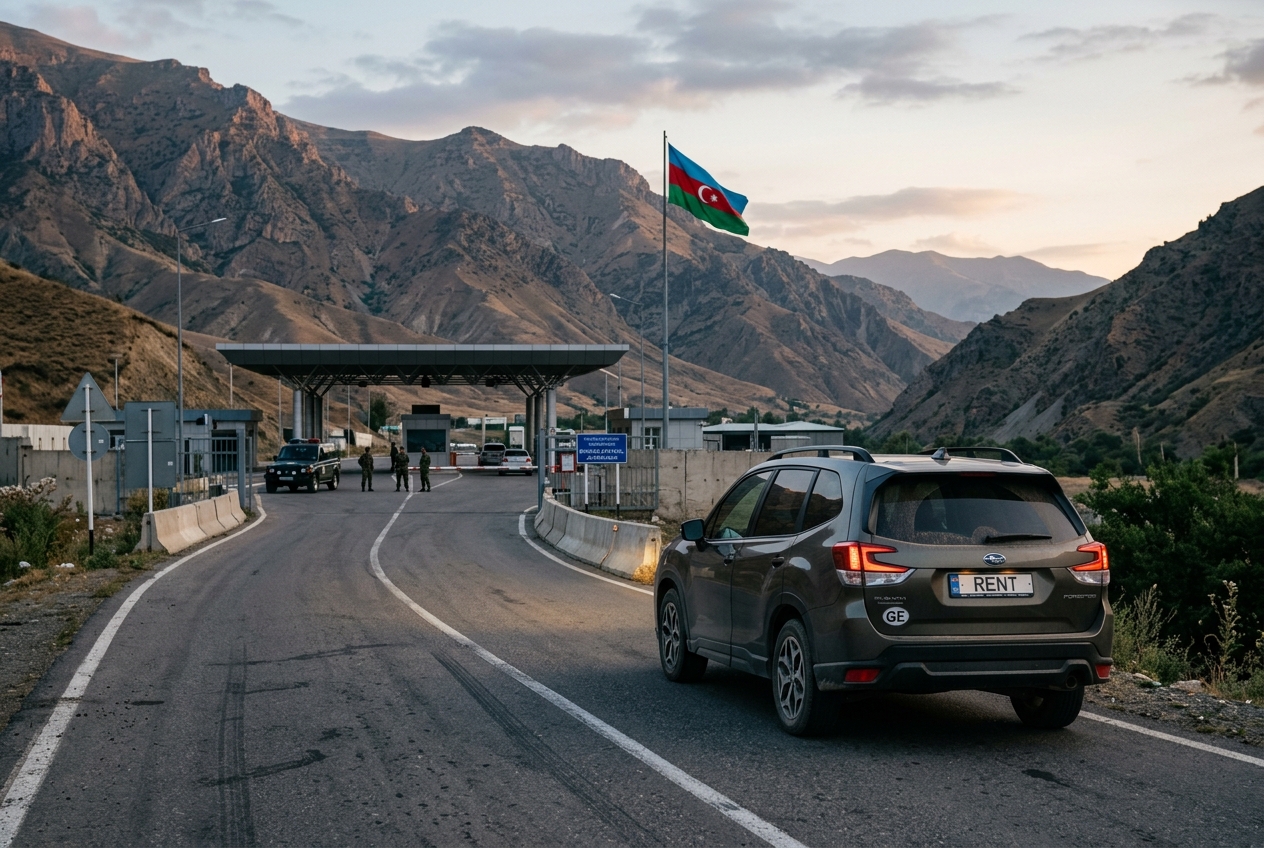
One of the most common questions travelers ask while planning a Caucasus road trip is whether they can cross the border to Azerbaijan with a rental car from Georgia. The short answer is complicated, and the long answer involves closed borders, reluctant rental agencies, stacks of paperwork, and a healthy dose of patience. The Caucasus region rewards overland travelers with stunning scenery and rich culture, but getting a Georgian rental car into Azerbaijan is one of the trickiest logistical puzzles in the area. I’ve spent years helping travelers sort through this exact problem, and the reality on the ground shifts frequently. What worked for a friend in 2019 may be completely irrelevant today. If you’re considering this route, you need current, specific information, not recycled blog posts from five years ago. This guide breaks down the border situation, rental company rules, required documents, and realistic alternatives so you can make an informed decision before you commit money and time to a plan that might not work.

Current Status of Land Border Crossings Between Georgia and Azerbaijan
The first thing you need to understand is that the question of driving a rental car into Azerbaijan is, for most travelers, currently moot. The border situation has changed dramatically since 2020, and many people planning trips aren’t aware of just how restricted things have become.
The Impact of Azerbaijan’s Land Border Closures
Azerbaijan’s land borders have been generally closed for entry to foreign travelers since 2020. Initially tied to pandemic-era restrictions, these closures have persisted far longer than most travelers expected. While Azerbaijani citizens and certain categories of residents can cross, the average tourist holding a foreign passport cannot simply drive up to the border and enter.
This isn’t a case of extra paperwork or longer wait times. The borders are functionally closed to inbound foreign visitors traveling overland. Flights into Baku’s Heydar Aliyev International Airport remain the primary legal entry method for tourists. The Azerbaijani government has not provided a firm timeline for reopening land borders to all travelers, which makes planning a cross-border road trip extremely uncertain.
Some travelers report hearing rumors of imminent reopenings, but these have circulated for years without materializing. The safest assumption for trip planning purposes is that you cannot currently enter Azerbaijan by land as a foreign tourist, regardless of whether you’re in your own car, a rental, or a shared taxi.
One-Way vs. Round-Trip Restrictions
Even before the 2020 closures, the border crossings between Georgia and Azerbaijan operated with some quirks. As of January 2025, the Lagodekhi to Balakan border crossing was closed to foreign visitors traveling from Georgia into Azerbaijan, though movement in the opposite direction (Azerbaijan to Georgia) was sometimes possible for certain travelers.
This one-way dynamic catches people off guard. You might meet someone in Tbilisi who just arrived overland from Baku and assume the route works both ways. It doesn’t, at least not consistently or for all passport holders. The Red Bridge (Tsiteli Khidi) crossing near Rustavi has historically been the more commonly used border point, but it too has been subject to the same inbound restrictions for foreign nationals.
If and when borders reopen, expect the rules to shift quickly and without much advance notice. Check with the Azerbaijani embassy in Tbilisi within days of your planned crossing, not weeks.
Rental Agency Policies and Cross-Border Permits
Assuming the land borders eventually reopen to foreign tourists, you’ll face a second major hurdle: actually finding a rental company willing to let you take their vehicle across an international border.
The Notarized Power of Attorney Requirement
Taking a rental car across any international border in the Caucasus requires explicit written permission from the vehicle’s owner, which in this case is the rental agency. This isn’t a simple checkbox on a rental agreement. You need a notarized power of attorney (in Georgian, minardobebi) that specifically authorizes you to drive that vehicle into Azerbaijan. This document previously cost around 300 GEL (roughly $110 USD) from the rental company, and it had to be prepared at a Georgian notary office.
The catch? Most rental companies won’t do it. It’s generally difficult to find rental companies that allow their cars to cross the border from Georgia into Azerbaijan. The reasons are practical: increased risk of accidents on unfamiliar roads, complications with insurance coverage across borders, and the hassle of recovering a vehicle if something goes wrong in another country.
Smaller, locally owned rental agencies in Tbilisi are your best bet for finding one willing to issue the power of attorney. Larger international chains are far less flexible.
Additional Cross-Border Fees and Insurance Premiums
Even the rental companies that do permit cross-border travel charge significantly more for the privilege. Expect a cross-border surcharge on top of the standard daily rental rate, plus a separate fee for the notarized document itself.
Major international brands like Hertz have explicit restrictions on driving their rental vehicles into Azerbaijan. This means your standard booking through a global aggregator site won’t work for a cross-border trip. You’ll need to contact agencies directly, explain your itinerary, and negotiate terms.
| Cost Factor | Estimated Amount (USD) |
|---|---|
| Standard daily rental (economy car) | $25 – $50 |
| Cross-border surcharge | $50 – $150 (one-time) |
| Notarized power of attorney | ~$110 (300 GEL) |
| Additional insurance premium | $15 – $30/day |
| Azerbaijan compulsory insurance | $15 – $40 |
Budget for these extras carefully. A week-long trip that looks affordable at the base rental rate can easily double in cost once cross-border fees and insurance are factored in.
Mandatory Documentation for Driving in Azerbaijan
If you do manage to secure a rental car with cross-border permission and the land borders reopen, you’ll still need the right paperwork to legally drive in Azerbaijan. Missing even one document can result in fines, vehicle impoundment, or being turned away at the border.
International Driving Permit (IDP) Regulations
Azerbaijan requires foreign drivers to carry an International Driving Permit alongside their home country’s license. Your regular driver’s license alone is not sufficient, even if it’s in English or uses Latin script. The IDP serves as a standardized translation recognized under international conventions.
You must obtain your IDP before leaving your home country. In the US, AAA offices issue them for about $20. In the UK, the Post Office handles applications. The process takes anywhere from a few days to a couple of weeks, so don’t leave this until the last minute. The IDP is valid for one year and covers driving in most countries worldwide, making it useful well beyond a single Caucasus trip.
Carry both your original license and the IDP at all times while driving. Azerbaijani police do conduct roadside checks, particularly on highways between major cities, and they will ask to see both documents.
Compulsory Local Third-Party Insurance
Your Georgian rental car insurance almost certainly does not cover you in Azerbaijan. You’ll need to purchase compulsory third-party liability insurance (known locally as ICBTA) upon entering the country. This is non-negotiable and will be checked at the border.
The insurance can typically be purchased at or near the border crossing point. It covers damage you might cause to other vehicles or property but does not cover your own rental car. This is a critical gap: if the rental car is damaged in Azerbaijan, you may be personally liable for repair costs unless you’ve arranged supplemental coverage with the rental agency beforehand.
Ask your rental company specifically what happens if the car is damaged abroad. Get the answer in writing. Some agencies offer optional full-coverage add-ons for cross-border travel, while others simply won’t cover damages incurred outside Georgia under any circumstances.
Logistical Challenges and Border Procedures
The paperwork is only half the battle. The actual border crossing experience between Georgia and Azerbaijan involves its own set of challenges that can eat up a surprising chunk of your travel day.
Red Bridge and Matsimi Border Points
Two primary land crossings connect Georgia and Azerbaijan. The Red Bridge (Tsiteli Khidi), located about 40 kilometers southeast of Tbilisi near the town of Rustavi, is the most commonly used crossing for vehicle traffic. The Lagodekhi-Balakan crossing in northeastern Georgia, near the Matsimi checkpoint, serves travelers heading toward Azerbaijan’s northern regions.
Red Bridge handles more traffic and tends to have better infrastructure, including currency exchange booths and basic facilities. The Lagodekhi crossing is quieter but more remote, with fewer services available on either side. If you’re driving from Tbilisi, Red Bridge is the logical choice. If you’re coming from Kakheti’s wine region or Tusheti, Lagodekhi may save you backtracking.
Neither crossing operates 24 hours. Plan to arrive during standard operating hours (typically 8 AM to 8 PM, though this can vary) and never on a major national holiday without confirming in advance that the checkpoint is staffed.
Vehicle Inspection and Customs Declarations
Crossing the border by car can take a couple of hours even under normal conditions. The process involves exiting Georgia (passport control, vehicle check, exit stamp), walking or driving through a neutral zone, and then entering Azerbaijan (passport control, vehicle inspection, customs declaration, insurance purchase).
Azerbaijani customs officers will inspect the vehicle and may ask to see the trunk, glove compartment, and under seats. They’re looking for prohibited items, undeclared goods, and anything that doesn’t match your customs declaration. Be honest and thorough on the declaration form. Carrying large amounts of cash (over $10,000 equivalent) requires declaration. Drone regulations are strict in Azerbaijan, so if you’re carrying one, declare it and be prepared for potential confiscation or registration requirements.
Have all your documents organized and accessible before you reach the checkpoint: passport, IDP, rental agreement, notarized power of attorney, and vehicle registration papers. Fumbling through a bag while border officers wait does not make a great impression.
Alternative Transportation Methods for Regional Travel
Given the current border closures and the difficulty of arranging a cross-border rental, most travelers are better served by alternative approaches. These aren’t consolation prizes: they’re genuinely practical solutions that many experienced Caucasus travelers prefer even when driving is theoretically possible.
Flight Options Between Tbilisi and Baku
Direct flights between Tbilisi and Baku take about one hour and are operated by several carriers, including Azerbaijan Airlines (AZAL) and Georgian Airways. Prices fluctuate but typically range from $80 to $200 one-way, depending on how far in advance you book.
Flying eliminates every border headache described above: no power of attorney, no cross-border insurance, no multi-hour border waits. You arrive in Baku fresh and ready to explore. The Baku airport is well-connected to the city center via express bus and taxi (use the Bolt app for fair pricing).
For budget travelers, the flight cost often compares favorably to the total cross-border surcharges, extra insurance, and fuel costs associated with driving a rental car across. Factor in the time saved, and flying becomes even more attractive.
Renting Separate Vehicles in Each Country
The approach I recommend most often is renting a car in Georgia, returning it, flying to Baku, and renting a second car there. Yes, it involves two separate rental transactions. But it eliminates every cross-border complication in one stroke.
Rental cars in Baku are readily available through both international chains and local agencies. Prices are comparable to Georgian rentals, and you’ll have a vehicle with proper local insurance and registration. You won’t need a power of attorney, and you won’t spend your trip worrying about what happens if the car breaks down in a foreign country with no coverage.
This two-rental strategy also gives you flexibility. You can drop off in Baku and fly home from there, or continue onward. You’re not locked into a round-trip itinerary that requires you to return the car to Tbilisi.
Final Checklist for a Trans-Caucasian Road Trip
Whether the border situation changes tomorrow or remains closed for another year, having a clear plan saves you from wasted money and frustration. Here’s what to verify before committing to any cross-border driving plan:
- Confirm Azerbaijan’s current land border status with the Azerbaijani embassy in Tbilisi no more than 72 hours before your planned crossing
- Obtain an International Driving Permit in your home country before departure
- Contact local Georgian rental agencies directly (not through aggregator websites) to ask about cross-border permissions
- Get the notarized power of attorney prepared at least two business days before your border crossing date
- Budget for all additional fees: cross-border surcharge, notary costs, and Azerbaijani compulsory insurance
- Carry printed copies of every document, not just digital versions on your phone
- Download offline maps for both countries (Google Maps and Maps.me both work well in the region)
- Have a backup plan: book a refundable flight between Tbilisi and Baku in case the land crossing falls through
The Caucasus is one of the most rewarding regions in the world for road trips, with Georgia’s mountain passes and Azerbaijan’s Caspian coastline offering completely different but equally spectacular driving experiences. The border situation between these two countries is frustrating, but it shouldn’t stop you from visiting both. Adjust your expectations, plan for the two-rental approach as your primary strategy, and treat a successful overland crossing as a bonus if conditions allow. The flexibility to pivot when plans change is the single most valuable skill for travel in this part of the world.