
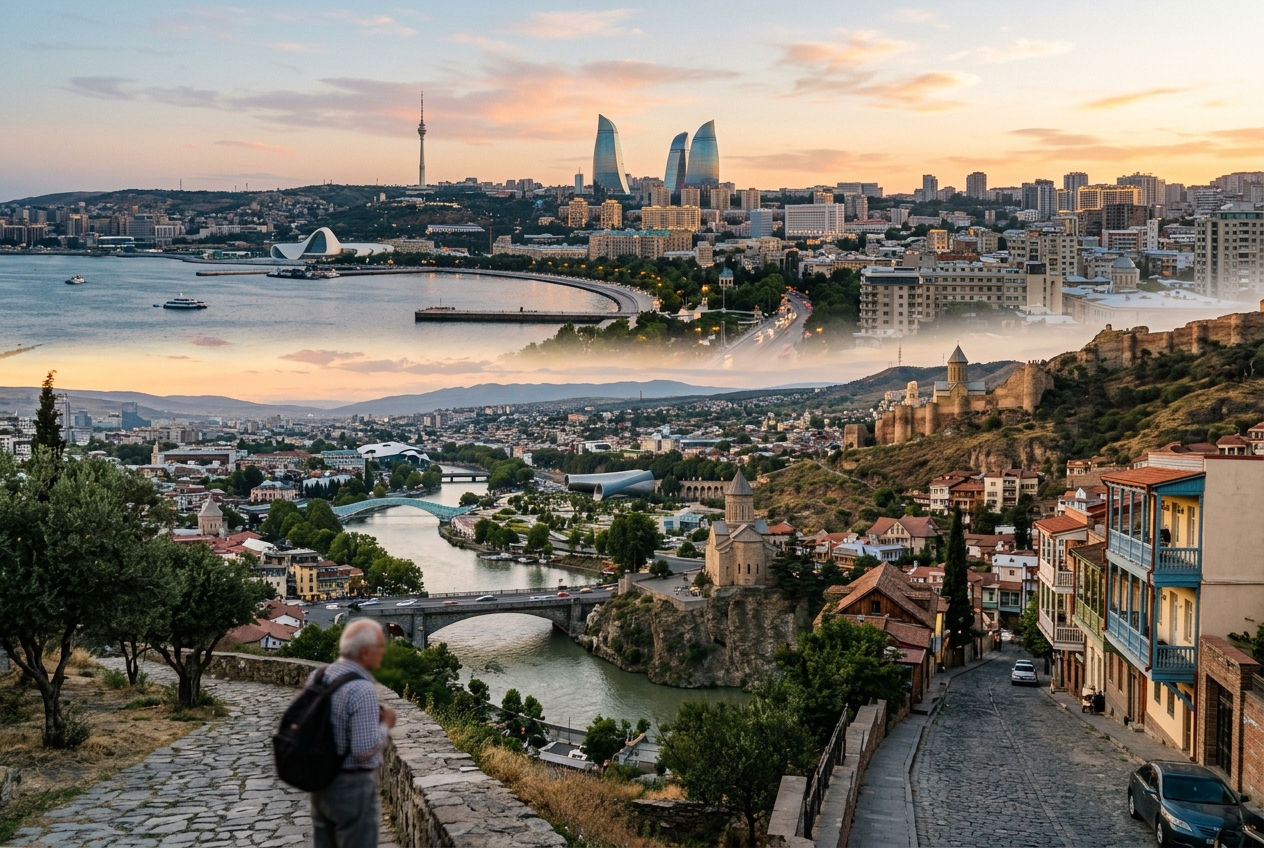
Both Baku and Tbilisi have earned reputations as affordable alternatives to Western European capitals, drawing a growing wave of tourists, remote workers, and expats. But if you’re choosing between Azerbaijan’s oil-rich capital and Georgia’s bohemian heart, the question of cost inevitably comes up. Is Baku cheaper than Tbilisi, or does the Georgian capital still hold the budget crown? The answer isn’t as straightforward as you might expect. While headline figures suggest one city is clearly cheaper, the reality shifts depending on your lifestyle, spending habits, and how long you plan to stay. I’ve spent considerable time in both cities, and the price differences often surprised me in ways that aggregate data doesn’t capture. A cheap meal in Baku might cost more than its Tbilisi equivalent, but your monthly rent could tell a completely different story. This comparison breaks down the real costs across every major spending category so you can plan with actual numbers rather than guesswork.
Comparative Overview of Living Costs in Baku and Tbilisi
The broad strokes paint a clear picture: Baku is approximately 20% less expensive than Tbilisi overall, which might shock anyone who associates Azerbaijan’s capital with its flashy Flame Towers and Formula 1 Grand Prix. That same source ranks Baku as the 6,681st most expensive city globally with a monthly cost index of around $820, while Tbilisi sits at 5,462nd with a cost of roughly $1,028. These rankings flip the common assumption that Georgia is always the cheaper option.
That said, not every source agrees on the exact margin. One comparison suggests Baku is about 6.7% cheaper than Tbilisi, a much narrower gap. The discrepancy comes down to methodology: some indices weight housing more heavily, others focus on consumer goods. The truth likely sits somewhere in between, and your personal experience will depend on what you actually spend money on.
Currency Strength and Exchange Rate Impact
Azerbaijan’s manat (AZN) is pegged to the US dollar at roughly 1.70 AZN per dollar, which means its value is relatively stable and predictable. Georgia’s lari (GEL), on the other hand, floats freely and has experienced noticeable fluctuations over the past few years, hovering between 2.6 and 2.8 GEL per dollar. For travelers coming from the US or Europe, the manat’s peg offers a sense of pricing certainty, while the lari’s shifts can either work in your favor or against it depending on timing.
This matters more than people think. If you’re a digital nomad earning in dollars or euros, a weakening lari effectively gives you a discount on everything in Tbilisi. Conversely, the manat’s stability means Baku prices don’t swing much regardless of when you arrive. Keep an eye on exchange trends before committing to a longer stay in either city.
General Affordability for Tourists vs. Digital Nomads
Short-term visitors and long-term residents experience these cities very differently in terms of cost. Tbilisi has long been a magnet for budget backpackers and digital nomads precisely because of its low baseline costs, and one estimate puts a comfortable monthly budget for a single person in Tbilisi at around $1,200 to $1,500. Baku, while cheaper on paper for certain categories, tends to feel pricier for tourists because its attractions and tourist-facing restaurants carry higher markups.
For digital nomads, the calculus changes. Baku’s lower rent and utility costs can offset the higher price of dining out, especially if you cook at home. Tbilisi’s coworking scene is more developed, with spaces like Terminal and Impact Hub offering affordable monthly passes, while Baku’s options are fewer and sometimes pricier. One travel comparison noted that Tbilisi generally suits travelers with lower daily budgets, which aligns with my experience: Tbilisi is easier to do cheaply, while Baku rewards those who plan their spending strategically.
Accommodation and Housing Expenses
Housing is where the cost comparison gets genuinely interesting, because the two cities diverge sharply depending on whether you’re booking a weekend stay or signing a lease.
Short-term Rentals and Hotel Prices
Tbilisi’s short-term rental market is saturated, which works in your favor. A well-located Airbnb in Vera or Saburtalo runs $25 to $45 per night for a one-bedroom apartment, and decent hostels start at $8 to $12 per bed. Mid-range hotels in the Old Town typically charge $50 to $90 per night. Baku’s short-term market is slightly more expensive. Expect to pay $35 to $60 per night for a comparable Airbnb near Fountain Square or the Boulevard, and mid-range hotels hover around $60 to $120.
The gap narrows during off-peak months (November through March in both cities), when Baku hotel rates drop significantly. Tbilisi’s prices also dip but less dramatically because the city’s digital nomad crowd keeps demand relatively steady year-round.
Long-term Apartment Leasing in City Centers
Here’s where Baku often wins. A one-bedroom apartment in central Baku, say near Nizami Street or 28 May, typically costs $300 to $500 per month. An equivalent spot in Tbilisi’s Vake, Vera, or Saburtalo neighborhoods runs $400 to $700, with prices having climbed noticeably since 2022 due to an influx of Russian and Belarusian relocators.
To put it in concrete terms, maintaining a similar living standard costs roughly 6,502 lari in Baku compared to 7,700 lari in Tbilisi. Utilities in Baku run cheaper too: expect around $50 to $70 monthly for a standard apartment versus $60 to $90 in Tbilisi, partly because Georgia’s older building stock is less energy-efficient.
| Expense | Baku (Monthly) | Tbilisi (Monthly) |
|---|---|---|
| 1-bed apartment (center) | $300–$500 | $400–$700 |
| Utilities (electric, gas, water) | $50–$70 | $60–$90 |
| Internet (high-speed) | $15–$20 | $12–$18 |
| Short-term Airbnb (per night) | $35–$60 | $25–$45 |
Dining Out and Grocery Costs
Food is one of the most personal budget categories, and both cities deliver excellent value compared to Western Europe. The differences come down to cuisine culture and where you choose to eat.
Restaurant Prices: Local Eateries vs. Fine Dining
Tbilisi is a food paradise for budget eaters. A massive plate of khinkali (Georgian dumplings) costs around 1 to 1.50 GEL per dumpling, and a full meal at a local spot like Machakhela or Sakhachapure rarely exceeds $5 to $8 per person. Even a proper sit-down dinner with wine at a respected restaurant like Shavi Lomi or Barbarestan runs $20 to $35 per person.
Baku’s local dining is slightly pricier. A plate of plov or dushbara at a neighborhood restaurant costs around $5 to $10, and a nice dinner at a place like Dolma or Firuze runs $25 to $45. Where Baku really costs more is in its international dining scene: sushi, Italian, and steakhouse-style restaurants carry prices that approach European levels, sometimes $50 or more per person. Tbilisi has similar upscale options, but they tend to be 20 to 30 percent cheaper than their Baku counterparts.
Wine lovers will find Tbilisi unbeatable. A bottle of excellent Georgian wine costs $4 to $8 at a shop and $8 to $15 at a restaurant. Azerbaijan has its own wine tradition, but the selection is smaller and prices are comparable or slightly higher.
Market Staples and Supermarket Comparison
Grocery shopping tells a more nuanced story. Basic staples like bread, eggs, rice, and seasonal vegetables are similarly priced in both cities, usually within 10 to 15 percent of each other. A dozen eggs costs around $1.50 to $2.00 in both places. A kilogram of chicken breast runs about $3 to $4 in Baku and $3.50 to $5 in Tbilisi.
Tbilisi’s Dezerter Bazaar is one of the best fresh markets in the Caucasus, where seasonal produce is absurdly cheap: tomatoes for $0.50 per kilo in summer, bundles of fresh herbs for pennies. Baku’s Teze Bazaar offers similar variety, though prices tend to sit about 10 percent higher for most items. Imported goods, especially Western brands, cost more in both cities, but Baku’s import tariffs make items like imported cheese or specialty coffee noticeably pricier than in Tbilisi, where the market is more open.
Transportation and Getting Around
Getting around both cities is cheap by global standards, but the experience and cost structure differ in meaningful ways.
Public Transit and Metro Systems
Both Baku and Tbilisi have Soviet-era metro systems that have been modernized to varying degrees. Baku’s metro is cleaner, newer-feeling, and costs 0.40 AZN (about $0.24) per ride using the BakiKart contactless card. Tbilisi’s metro charges 1 GEL (about $0.37) per ride with the Metromoney card. Baku wins on price, and its stations, especially the newer ones, are genuinely impressive.
Tbilisi’s bus network is more extensive and connects neighborhoods the metro doesn’t reach, like Mtatsminda and the outer residential areas. Baku’s bus system is decent but less intuitive for newcomers. Both cities’ transit cards are easy to purchase at metro stations, and neither requires a local phone number to set up.
Taxi Services and Fuel Costs
Taxis are where the cost difference becomes noticeable. In Tbilisi, a Bolt or Yandex Go ride across the city center rarely exceeds $2 to $3, and even a trip from the airport to downtown costs $8 to $12. Baku’s ride-hailing prices are slightly higher: a similar city-center trip runs $3 to $5, and an airport transfer costs $12 to $18.
I’d recommend downloading Bolt for Tbilisi and both Bolt and Uber for Baku. Avoid unmarked taxis in both cities, as they’ll quote inflated prices, especially near tourist landmarks. Fuel costs are lower in Baku (Azerbaijan is an oil producer, after all), but this only matters if you’re renting a car. Gasoline in Baku runs about $0.55 per liter versus $1.10 in Tbilisi, making road trips from Baku significantly cheaper.
Entertainment and Sightseeing Budgets
Both cities offer rich cultural experiences without draining your wallet, though the spending patterns differ.
Museum Entry Fees and Cultural Attractions
Tbilisi’s major attractions are remarkably affordable. The Georgian National Museum charges about 15 GEL ($5.50), the Narikala Fortress is free to visit, and the sulfur baths in Abanotubani range from 5 GEL for the public pool to 50 to 100 GEL for a private room. Most churches and historic sites are free.
Baku’s cultural sites carry slightly higher entry fees. The Heydar Aliyev Center costs 15 AZN ($8.80), the Palace of the Shirvanshahs is 15 AZN, and the Maiden Tower runs 15 AZN as well. These aren’t expensive by European standards, but they add up faster than Tbilisi’s mostly free or very cheap attractions. The Baku Museum Pass can help if you plan to visit multiple sites, bundling several entries for around 40 AZN.
Nightlife and Social Activity Spending
Tbilisi’s nightlife scene punches well above its weight class. The city has become a legitimate clubbing destination, with venues like Bassiani and Khidi drawing international DJs. Cover charges range from free to 30 GEL ($11), and drinks inside run $3 to $6 for cocktails. A night out including entry, drinks, and a late-night taxi home can cost as little as $20 to $30.
Baku’s nightlife is more polished but pricier. Clubs and lounges along Nizami Street and near the waterfront charge $10 to $20 cover, with cocktails running $6 to $12. A comparable night out in Baku easily hits $40 to $60. Baku also has stricter social norms around alcohol consumption, and the vibe skews more toward upscale lounges than underground clubs. If budget nightlife matters to you, Tbilisi wins by a wide margin.
Casual social activities like cinema tickets are comparable: around $4 to $6 in both cities. Gym memberships run $25 to $40 monthly in Tbilisi and $30 to $50 in Baku.
Final Verdict: Which City Offers Better Value?
The answer depends entirely on your lifestyle. If you’re renting long-term, cooking at home, and using public transit, Baku can genuinely be cheaper than Tbilisi, especially given the recent rent increases in Georgia’s capital. The data supports this: multiple cost-of-living indices place Baku 7 to 20 percent below Tbilisi in overall expenses.
But if you’re a short-term traveler eating out daily, visiting attractions, and enjoying nightlife, Tbilisi stretches your money further. Its cheaper restaurants, free cultural sites, and affordable social scene make it the better choice for budget-conscious visitors. The food alone, honestly, is reason enough.
My recommendation: pick the city that matches how you actually live, not just the one with the lower headline number. A frugal month in Baku might cost $700 to $900, while a comfortable month in Tbilisi runs $1,200 to $1,500 but delivers a richer day-to-day experience for many people. Both cities are extraordinary values by global standards, and choosing between them is less about saving a few dollars and more about which version of Caucasus life speaks to you.