
Table of Contents
- Tbilisi Climate Overview and Monthly Temperature Averages
- Summer in Tbilisi: Heat and Sunshine
- Winter Weather: Does it Snow in Tbilisi?
- Spring and Autumn: The Best Times to Visit
- What to Pack: Dressing for the Georgian Climate
- Microclimates and Regional Variations Near the Capital
- Planning Your Tbilisi Trip Around the Weather
Tbilisi sits in a subtropical valley where the Mtkvari River carves through volcanic hills, creating a pocket of warmth that feels almost Mediterranean compared to the rest of Georgia. If you’re wondering what the temperature in Tbilisi looks like across different seasons, the short answer is: it swings dramatically. Winters hover near freezing, summers push past 35°C, and the transitional months offer some of the most pleasant city weather in the Caucasus. That range catches a lot of first-time visitors off guard, especially those arriving from cooler parts of Europe expecting mild conditions year-round.
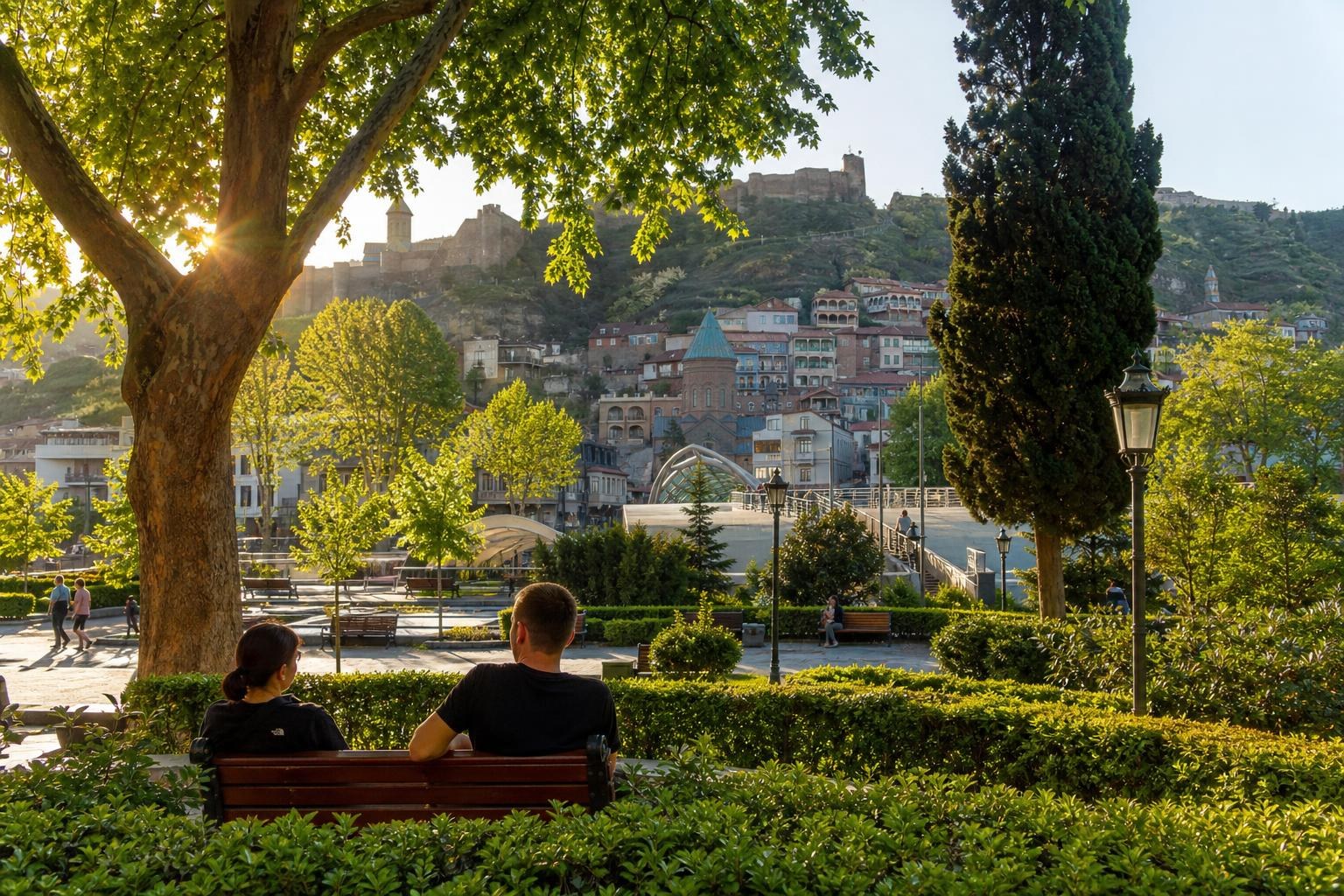
I’ve walked Tbilisi’s cobblestoned Old Town in every season, and each one reshapes the city. July turns the sulfur baths district into a humid sauna. December coats Narikala Fortress in frost. And those golden October afternoons along Rustaveli Avenue? They’re the reason so many travelers time their trips for autumn. This seasonal guide breaks down what to actually expect month by month, what to wear, and why the capital’s weather patterns don’t always match the rest of the country.
Tbilisi Climate Overview and Monthly Temperature Averages
Tbilisi’s climate is classified as humid subtropical (Cfa under the Köppen system), but that label undersells the continental influence that pushes winter lows below zero and summer highs well above 30°C. The city’s elevation of roughly 380-770 meters above sea level, combined with its position in a sheltered river valley, creates conditions that trap heat in summer and funnel cold air from the Greater Caucasus in winter.
Annual average temperature sits around 13-14°C, which sounds moderate until you realize that’s the mean of two extremes. January averages hover near 1-2°C, while July regularly averages 25-26°C. The warmest recorded days in recent years have hit 40°C or higher, and overnight winter lows can dip to -8°C during cold snaps.
Rainfall is distributed fairly evenly throughout the year, with a slight peak in May and June. Annual precipitation totals around 500-600mm, which is modest compared to western Georgia’s Black Sea coast (where Batumi gets nearly 2,500mm). Tbilisi’s relatively dry climate means you’ll see plenty of sunshine: around 250 sunny or partly sunny days per year.
Average Highs and Lows Table
Here’s a month-by-month breakdown of what to expect. These figures reflect recent climate data for central Tbilisi.
| Month | Avg High (°C) | Avg Low (°C) | Rainfall (mm) | Sunny Days |
|---|---|---|---|---|
| January | 6 | -2 | 20 | 14 |
| February | 8 | -1 | 25 | 14 |
| March | 13 | 3 | 30 | 17 |
| April | 19 | 8 | 45 | 18 |
| May | 23 | 12 | 75 | 20 |
| June | 28 | 16 | 65 | 23 |
| July | 31 | 19 | 35 | 26 |
| August | 31 | 19 | 30 | 26 |
| September | 27 | 15 | 30 | 23 |
| October | 20 | 9 | 35 | 20 |
| November | 13 | 4 | 30 | 15 |
| December | 8 | 0 | 22 | 13 |
Humidity and Rainfall Patterns
Spring storms are the main weather disruption to plan around. May and June bring the heaviest rainfall, often in the form of intense afternoon thunderstorms that can dump 20-30mm in a few hours. Georgia’s National Environment Agency has warned of heavy rain, strong winds, and landslide risk across the country during these months, and Tbilisi isn’t immune to flash flooding in its lower-lying neighborhoods.
Humidity peaks in summer but rarely reaches the oppressive levels of coastal cities. July and August relative humidity averages 55-65%, which feels sticky but manageable if you stay hydrated. Winter humidity is actually higher in percentage terms (around 70-75%), but the cold air holds less moisture overall, so it doesn’t feel damp the way a London winter does.
The driest months are January and December, when precipitation drops below 25mm. This makes winter a surprisingly clear time to photograph the city, even if temperatures don’t cooperate for long outdoor walks.
Summer in Tbilisi: Heat and Sunshine
Summer transforms Tbilisi into one of the hottest capitals in the broader European region. From mid-June through early September, daytime temperatures consistently exceed 30°C, and the city’s concrete and stone architecture absorbs and radiates heat well into the evening. If you’ve visited Athens or Seville in summer, you’ll recognize the feeling: hot pavement, warm nights, and a rhythm of life that shifts toward early mornings and late evenings.
The heat is dry enough that shade provides genuine relief, unlike tropical destinations where stepping under a tree barely helps. Tbilisi’s famous plane trees along Rustaveli Avenue and in Vake Park earn their keep in July and August, providing corridors of shade that drop the felt temperature by several degrees. Outdoor cafes deploy misting systems, and the city’s public fountains become gathering spots.
Tourism peaks during summer, partly because European and Middle Eastern visitors have school holidays and partly because Georgia’s mountain regions (Svaneti, Tusheti, Kazbegi) are only accessible June through September. Tbilisi often serves as a transit hub, so hotels fill up even though the city itself is uncomfortably warm. Georgia’s tourism sector has experienced significant growth in recent years, with visitor numbers climbing steadily and putting pressure on accommodation prices during peak months.
Coping with the July and August Peaks
July and August are the two months where Tbilisi’s heat genuinely affects your itinerary. Here’s how to handle it:
- Start early: Most outdoor attractions, including the Narikala Fortress hike and the Botanical Garden, are best visited before 10 AM or after 5 PM. Midday temperatures of 35-38°C make sustained walking miserable.
- Use the metro: Tbilisi’s metro system is air-conditioned and costs just 1 GEL (about $0.35). It connects key areas like Rustaveli, Liberty Square, and the train station. The Bolt app works well for rides to spots the metro doesn’t reach.
- Hydrate aggressively: Tap water in Tbilisi is safe and tastes good. Carry a refillable bottle. Street vendors sell cold mineral water (Borjomi or Nabeghlavi) for 1-2 GEL everywhere.
- Embrace the sulfur baths: Counterintuitively, the hot sulfur baths in Abanotubani feel restorative even in summer, especially in the evening. A private room at Chreli Abano runs about 80-120 GEL ($28-42) for an hour.
- Escape to higher ground: Mtatsminda Park, accessible by funicular, sits 300 meters above the city center and is noticeably cooler. The Turtle Lake area is another popular retreat.
Winter Weather: Does it Snow in Tbilisi?
Yes, it snows in Tbilisi, but not as much as you might expect for a Caucasus capital. The city typically sees 5-10 days of snowfall per year, mostly in January and February. Accumulation rarely exceeds 10-15cm, and snow on the ground usually melts within a few days. Tbilisi is not Moscow or Yerevan: its sheltered valley position and relatively mild maritime influence from the Black Sea keep true arctic blasts at bay.
That said, winter is genuinely cold. December through February averages are near freezing, and nighttime lows regularly hit -5°C. Wind chill along the river corridor can make it feel colder still. The city’s older buildings, particularly the charming but drafty wooden-balcony houses in the Old Town, aren’t always well-insulated, so budget accommodations can feel chilly indoors.
Winter is the low season for tourism, which has its advantages. Hotel prices drop 30-50% compared to summer, restaurants are quieter, and you can visit the National Museum or MOMA Tbilisi without crowds. The Christmas and New Year period (Georgia celebrates both on December 25 and January 7 for Orthodox Christmas) brings festive markets and light displays along Rustaveli Avenue.
Daytime vs. Nighttime Temperatures
The daily temperature swing in winter is one of the things that trips up visitors. A sunny January afternoon might reach 8-10°C, warm enough for a brisk walk with a good jacket. But once the sun drops behind Mtatsminda around 4:30 PM, temperatures plummet quickly. By 7 PM, you could be looking at -3°C.
This gap means layering is essential. I’ve seen tourists in Tbilisi wearing heavy parkas at noon and sweating, then shivering in the same outfit at dinner because they didn’t account for the windchill near the river. A base layer, fleece, and windproof outer shell works better than a single heavy coat. Thermal socks matter more than you’d think, especially if you’re walking the cobblestones in Sololaki.
Fog is another winter feature worth mentioning. The Mtkvari valley traps cold air, and morning fog can reduce visibility significantly. Air quality also dips in winter due to increased vehicle emissions and heating, though the National Environment Agency has reported decreasing concentrations of solid particles in ambient air in recent monitoring, a positive trend for the city.
Spring and Autumn: The Best Times to Visit
If you’re planning a trip to Tbilisi and have flexibility on dates, aim for late April through mid-June or September through mid-October. These windows offer the best combination of comfortable temperatures, manageable crowds, and lower prices compared to peak summer.
Spring brings the city to life after winter dormancy. Cherry blossoms and wisteria drape over Old Town balconies in April, and the surrounding hills turn vivid green. Temperatures climb from the low teens in April to the low twenties by late May, making all-day walking comfortable. The main drawback is rain: May is the wettest month, and thunderstorms and landslide risks have been forecast across Georgia through late June in recent years, so pack a compact rain jacket.
Autumn is arguably the single best season. Temperatures mirror spring but with less rain, and the light takes on a golden quality that makes the city’s terra-cotta rooftops and stone churches look spectacular. The wine harvest (rtveli) happens in September and October, and Tbilisi’s restaurants and wine bars celebrate with special menus featuring new-vintage wines from Kakheti.
The Mild Transition of May and June
May and June represent a sweet spot where temperatures are warm but not yet punishing. Expect daily highs of 23-28°C, cool evenings around 14-18°C, and long daylight hours (sunrise before 6 AM, sunset after 8:30 PM by late June).
This is prime time for Tbilisi’s outdoor food scene. Rooftop restaurants in the Old Town open for the season, and the Dry Bridge flea market is at its most vibrant. Street food vendors set up along Leselidze Street, where you can grab a lobiani (bean-filled bread) for 3-4 GEL or a fresh-squeezed pomegranate juice for 5 GEL.
One practical note: late May and early June coincide with Georgian school holidays, so domestic tourism picks up. Popular day-trip destinations like Mtskheta and Jvari Monastery get busier on weekends. Weekday visits are noticeably calmer.
September and October: Ideal Sightseeing Weather
September averages 27°C during the day and 15°C at night: nearly perfect for sightseeing. Rain is minimal (around 30mm for the month), and the summer haze clears, giving you sharp views of the Caucasus foothills from Mtatsminda.
October cools further to around 20°C daytime highs, and the deciduous trees in Vake Park and the Botanical Garden put on a proper autumn display. This is also when Georgia’s tourism data shows strong visitor numbers, as travelers from the Middle East and Europe take advantage of the pleasant weather before winter sets in.
Evenings in October require a light jacket or sweater, especially if you’re dining outdoors. The temperature drop after sunset is noticeable but not harsh: think 10-12°C by 9 PM. It’s the kind of weather where a glass of Saperavi on a terrace feels exactly right.
What to Pack: Dressing for the Georgian Climate
Packing for Tbilisi depends entirely on your travel dates, but a few principles apply year-round. The city involves a lot of walking on uneven surfaces: cobblestones, steep hills, cracked sidewalks. Comfortable, supportive shoes are non-negotiable regardless of season.
For summer visits (June through August), pack lightweight, breathable fabrics. Cotton and linen work well. A sun hat is essential for midday walks, and sunscreen above SPF 30 is wise given the strong UV at Tbilisi’s latitude. Bring one light layer for air-conditioned restaurants and marshrutkas (minibuses), which sometimes blast the AC to arctic levels.
For winter (December through February), think layers rather than bulk:
- Base layer: Merino wool or synthetic thermal top and leggings
- Mid layer: Fleece or down vest
- Outer layer: Windproof, water-resistant jacket
- Accessories: Warm hat, gloves, scarf (wind along the river is biting)
- Footwear: Waterproof boots with good traction for icy sidewalks
Spring and autumn travelers have it easiest. A mix of t-shirts, a light sweater, a rain jacket, and one pair of long pants covers most situations. Pack a compact umbrella for May, and bring sunglasses for those crisp October days.
One cultural note: if you plan to visit churches (and you should, as they’re architectural treasures), women need a head covering and long skirt or pants. Men should wear long trousers. Many churches provide wraps at the entrance, but carrying your own scarf is more convenient.
Microclimates and Regional Variations Near the Capital
Tbilisi’s temperature readings don’t represent all of Georgia, and they don’t even represent all of the Tbilisi metropolitan area. The city itself has meaningful microclimates: the river valley floor is 3-5°C warmer than the hilltop neighborhoods like Vake or Saburtalo, and areas near the Tbilisi Sea (reservoir) on the eastern edge of the city experience stronger winds and slightly lower humidity.
Day trips from the capital illustrate the regional variation dramatically. Kazbegi (Stepantsminda), just 150 kilometers north along the Georgian Military Highway, sits at 1,750 meters and runs 10-15°C cooler than Tbilisi on any given day. I’ve left Tbilisi in a t-shirt at 30°C and arrived at the Gergeti Trinity Church viewpoint needing a fleece two hours later.
Kakheti, Georgia’s wine region about 90 minutes east, shares Tbilisi’s general temperature profile but is drier and slightly more extreme: hotter summers, colder winters. Western Georgia is a different world entirely. Kutaisi and Batumi receive far more rainfall and have milder winters thanks to Black Sea influence.
Even within the city, weather warnings about strong winds occasionally affect elevated areas and the airport corridor more than the sheltered Old Town. If you’re staying in Saburtalo or Dighomi, expect windier conditions than downtown, particularly in winter and early spring.
The practical takeaway: check the forecast for your specific destination within Georgia, not just “Tbilisi.” Google Weather and the Windy app both provide hyperlocal forecasts that account for elevation and microclimate differences.
Planning Your Tbilisi Trip Around the Weather
Tbilisi rewards visitors in every season, but the experience changes substantially depending on when you arrive. Summer brings energy, nightlife, and access to mountain destinations but demands heat management. Winter offers solitude, low prices, and cozy indoor culture but requires proper cold-weather gear. The shoulder seasons of spring and autumn deliver the most universally pleasant conditions, with May and October standing out as the two months where everything aligns: comfortable temperatures, manageable crowds, and a city that looks its best.
Whatever season you choose, download the Windy app for real-time weather tracking, pack layers rather than single heavy garments, and build flexibility into your daily schedule. Tbilisi’s weather can shift within hours, especially during spring transitions. The best approach is the one locals take: adapt, slow down when it’s hot, bundle up when it’s cold, and enjoy the city’s remarkable ability to feel like a completely different place with each passing season.