
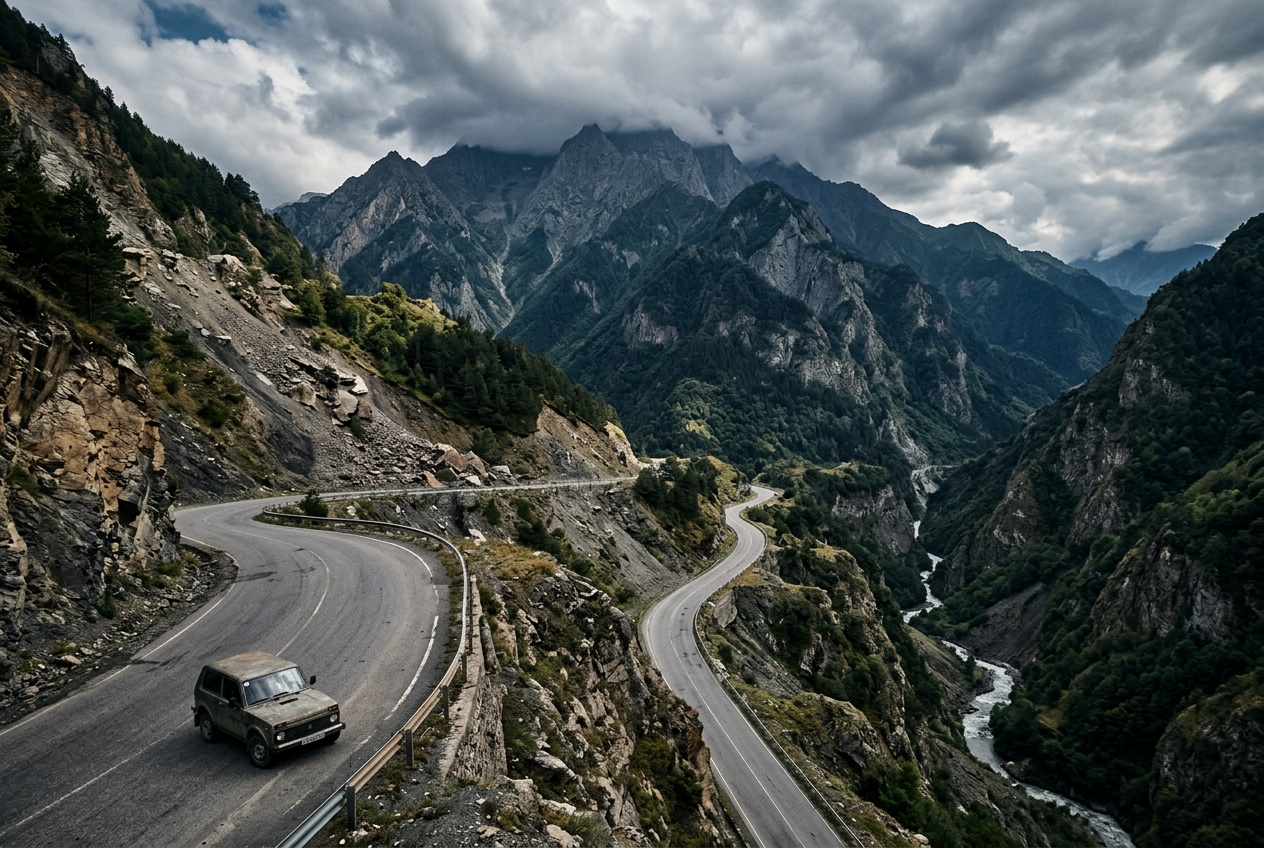
Georgia, the small South Caucasus nation wedged between Russia, Turkey, Armenia, and Azerbaijan, has become one of the most talked-about destinations for expats, digital nomads, and long-term travelers over the past decade. Tbilisi’s charm, the affordability, the wine, the food: it all sounds like a dream. And honestly, much of it is. But having spent considerable time in the country and watched wave after wave of newcomers arrive with rose-tinted expectations, I can tell you that the reality includes some serious challenges people rarely discuss until they’re already dealing with them. So what are the biggest risks of living in Georgia? The answer touches on everything from seismic activity and economic volatility to healthcare gaps and political friction. Some of these risks are manageable with preparation. Others require a genuine shift in expectations. This piece breaks them down honestly, because the best way to love a country is to understand it clearly before you commit.
Severe Weather and Natural Hazards
Georgia’s geography is stunning: the Greater Caucasus mountains in the north, subtropical lowlands in the west, semi-arid plains in the east. But that same geographic diversity creates a wide range of natural hazards that catch newcomers off guard. The country sits in a seismically active zone, and earthquakes, while typically moderate, are a real concern, especially in older buildings that predate modern construction codes. Tbilisi experienced a damaging 6.0-magnitude earthquake in 2002, and smaller tremors are routine.
Beyond seismic risks, the seasonal weather patterns bring their own set of problems that residents need to take seriously.
Tornadoes and Intense Thunderstorms
Georgia doesn’t experience tornadoes the way the American Midwest does, but violent thunderstorms are a fixture of spring and summer, particularly in the Kakheti and Kartli regions. These storms bring hail that can destroy crops in minutes, flash flooding in mountain valleys, and lightning strikes that have caused fatalities in rural areas where shelter is limited. The Alazani Valley, one of the country’s prime agricultural zones, regularly suffers hail damage that devastates vineyards and orchards.
For anyone living outside Tbilisi, especially in agricultural communities, these storms represent a direct threat to livelihood. Infrastructure in rural Georgia often lacks adequate drainage systems, which means even moderate rainfall can turn roads into rivers and cut off villages for hours.
Hurricane Aftermath and Inland Flooding
While Georgia doesn’t face hurricanes directly, the broader Black Sea weather system and climate patterns increasingly bring extreme precipitation events. The western regions of Samegrelo and Adjara are particularly flood-prone, with rivers swelling rapidly during heavy rains. Landslides in mountainous areas have displaced entire communities.
The 2024 season offered a stark reminder of how devastating extreme weather can be in the Caucasus region. Hurricane Helene, though it struck the American Southeast, highlighted a parallel reality: Georgia (the country) faces its own escalating climate costs. In fact, agricultural and timber losses in the U.S. state of Georgia alone reached an estimated $6.4 billion from that single event. The South Caucasus nation faces proportionally similar threats from flooding and landslides relative to its smaller economy, making disaster preparedness a critical concern.
Extreme Summer Heat and Humidity
Tbilisi summers are brutal. Temperatures regularly hit 38-40°C (100-104°F) in July and August, and the city’s basin geography traps heat like an oven. Air conditioning is not universal, particularly in older Soviet-era apartment blocks that many expats rent. The combination of heat and humidity in western Georgia, particularly in Batumi, can feel oppressive from June through September.
Heatstroke is a genuine medical risk, especially for those not accustomed to the climate. Public cooling infrastructure is minimal. If you’re apartment hunting, prioritize units with modern HVAC systems: the price difference is worth every tetri.
Economic and Cost of Living Challenges
Georgia’s economy has been one of its biggest draws for foreigners. Low costs, no visa requirements for many nationalities, and a flat income tax rate created a magnet for remote workers. But the economic picture is shifting, and not entirely in a favorable direction.
Rising Housing Costs in Metro Areas
Tbilisi’s rental market has transformed dramatically since 2022. The influx of Russian and Belarusian relocants following the invasion of Ukraine sent rents skyrocketing in desirable neighborhoods like Vake, Vera, and Saburtalo. A one-bedroom apartment that cost 600-800 GEL per month in 2021 now routinely lists for 1,500-2,500 GEL. Batumi has seen similar spikes during peak season.
For Georgians earning local salaries (the average monthly wage hovers around 1,800-2,000 GEL), this has created a genuine housing affordability crisis. Expats working on foreign incomes may absorb the increase more easily, but the social tension it creates is palpable. Landlords increasingly prefer foreign tenants who can pay more, which has fueled resentment in some communities.
High Property and Sales Tax Burdens
Georgia’s tax system is often marketed as business-friendly, and in many ways it is. The flat 20% income tax and the small business status (1% on revenue under 500,000 GEL) are genuinely attractive. But the full picture includes a 18% VAT on goods and services, property taxes that vary by municipality, and import duties that make certain goods surprisingly expensive.
The economic outlook also carries broader uncertainty. Foreign direct investment fell by 30% in 2024 due to political uncertainty and government actions that spooked international investors. For anyone building a business or investing in property here, that kind of volatility matters.
Public Infrastructure and Safety Concerns
Georgia has made real progress on infrastructure since the Rose Revolution of 2003, but significant gaps remain, particularly once you leave the capital.
Traffic Congestion and Commute Times
Tbilisi’s traffic is chaotic by any standard. The city was built for a fraction of its current vehicle count, and public transit, while improving with a metro system and bus network, doesn’t cover many residential areas adequately. Rush hour commutes that should take 15 minutes regularly stretch to 45-60 minutes. Driving culture is aggressive: lane markings are treated as suggestions, and pedestrian crossings offer little actual safety.
Ride-hailing apps like Bolt and Yandex Go have made getting around easier and cheaper than traditional taxis, but they don’t solve the underlying congestion. If you’re choosing where to live, proximity to the metro line should be high on your priority list.
Crime Rates in Urban vs. Rural Districts
Georgia is generally safe by international standards, and violent crime against foreigners is rare. That said, the data tells a more complex story. Georgia’s overall crime rate in 2025 was higher than the national average when benchmarked against comparable transitional economies, and the violent crime rate stood at 326 per 100,000 people in 2024.
Petty crime, pickpocketing, and car break-ins are more common in Tbilisi’s tourist-heavy areas like the Old Town. Scams targeting foreigners in rental markets and currency exchange are also worth watching for. Rural Georgia, by contrast, remains remarkably safe: the concept of “stumari ghvtisaa” (a guest is from God) still holds genuine weight in villages where doors go unlocked and strangers are fed before they’re questioned.
FBI Special Agent In Charge Paul Brown has noted that focused enforcement efforts make a measurable difference: “This is a result of a focused effort, so when you see aggressive investigation, a surge of resources, and aggressive prosecution, you can expect to see these numbers come down.”
| Risk Category | Severity (1-5) | Most Affected Areas | Mitigation Options |
|---|---|---|---|
| Extreme Heat | 4 | Tbilisi, Kakheti | AC, hydration, scheduling |
| Flooding/Landslides | 4 | Western Georgia, mountains | Avoid flood zones, insurance |
| Rising Rent | 4 | Tbilisi, Batumi | Negotiate long leases, explore suburbs |
| Traffic/Road Safety | 3 | Tbilisi, highways | Metro proximity, ride-hailing |
| Petty Crime | 2 | Old Town Tbilisi, tourist areas | Awareness, secure belongings |
| Healthcare Gaps | 3 | Rural areas statewide | Private insurance, Tbilisi-based care |
Health Risks and Environmental Allergens
Healthcare in Georgia is a mixed bag. Private clinics in Tbilisi, particularly Evex and MediClub, offer decent care for routine issues. But the system has real limitations, especially for complex procedures, and a significant portion of the population lacks coverage entirely. Roughly 11.7% of Georgia’s residents lack health insurance, a rate 58% higher than comparable averages, which strains public facilities and creates long wait times.
For expats, securing private international health insurance before arriving is non-negotiable. Don’t assume you can sort it out later.
Record-Breaking Pollen Counts
If you have any history of allergies, Georgia will test you. Tbilisi sits in a valley surrounded by diverse vegetation, and spring brings an onslaught of pollen from plane trees, cypress, and grasses that regularly pushes counts into extreme ranges. April through June is peak misery season. Many long-term residents who never had allergies before develop them within their first year or two.
Stock up on antihistamines (available cheaply at any “aptiaki” or pharmacy), and consider an air purifier for your apartment. The pollen here isn’t a minor inconvenience: it can genuinely affect quality of life for months at a time.
Venomous Wildlife and Pest Infestations
Georgia’s biodiversity includes several venomous snake species, most notably the Caucasus viper and the Levantine viper, which inhabit rural and semi-rural areas. Bites are uncommon but can be serious, and antivenom availability outside Tbilisi is limited. Scorpions are present in the eastern lowlands, though their stings are rarely life-threatening.
More practically, cockroaches and bedbugs are common in older buildings across Tbilisi. Mosquitoes in western Georgia can carry diseases, and stray dogs, while generally friendly, occasionally pose risks. Regular pest control and careful apartment selection go a long way.
Navigating the Social and Political Landscape
Georgia’s political situation is the elephant in the room for anyone considering long-term residency. The country has been in a state of political turmoil since the contested 2024 parliamentary elections, with large-scale protests, a suspended EU accession process, and deepening polarization between pro-European and pro-Russian camps.
For foreigners, this creates practical concerns. Protests can shut down central Tbilisi for days. Government policy shifts can affect visa regulations, business licensing, and property ownership rules with little warning. The 30% drop in foreign direct investment mentioned earlier is a direct consequence of this instability.
There are also social dynamics to be aware of. Georgia is a deeply traditional, Orthodox Christian society. LGBTQ+ rights are limited, and public displays of affection between same-sex couples can provoke hostile reactions, particularly outside Tbilisi. Gender roles are more traditional than many Western expats expect. Political conversations, especially regarding Russia, Abkhazia, and South Ossetia, carry emotional weight: tread carefully and listen more than you speak.
The generational divide is striking. Older Georgians who grew up during the Soviet era tend to speak Russian and hold more conservative views. The post-2003 generation, shaped by Saakashvili-era reforms and Western-oriented education, is more likely to speak English and hold progressive attitudes. Understanding this split helps you read social situations more accurately.
Long-term Sustainability and Resource Management
Georgia faces real questions about long-term sustainability that anyone putting down roots should consider. Water infrastructure is aging, and while Tbilisi’s supply is generally reliable, boil advisories and pipe breaks are not unusual. Many residents rely on filtered or bottled water as a default.
Energy dependence is another concern. Georgia generates much of its electricity from hydropower, which is clean but vulnerable to drought years. Natural gas comes primarily from Azerbaijan, creating a geopolitical dependency. Winter heating costs can spike unpredictably, and power outages in rural areas during storms are common.
Waste management remains a visible problem. Illegal dumping outside cities is widespread, and recycling infrastructure barely exists. The stunning landscapes that draw people to Georgia are increasingly threatened by unregulated development, particularly along the Black Sea coast where construction booms have outpaced environmental oversight.
For those thinking about buying property or starting businesses tied to tourism or agriculture, these resource management gaps represent both risks and, potentially, opportunities for those willing to invest in solutions.
Georgia remains one of the most compelling, affordable, and culturally rich places to live in the region. The risks outlined here aren’t meant to discourage anyone: they’re meant to prepare you. The people who thrive long-term in Georgia are the ones who arrived with open eyes, built genuine relationships with locals, learned at least basic Georgian (“gamarjoba” and “madloba” will carry you far), and planned for the realities alongside the romance. If you’re considering the move, spend at least three months here across different seasons before committing to anything permanent. Rent before you buy. Get health insurance. And learn to love khinkali in the summer heat: it builds character.