
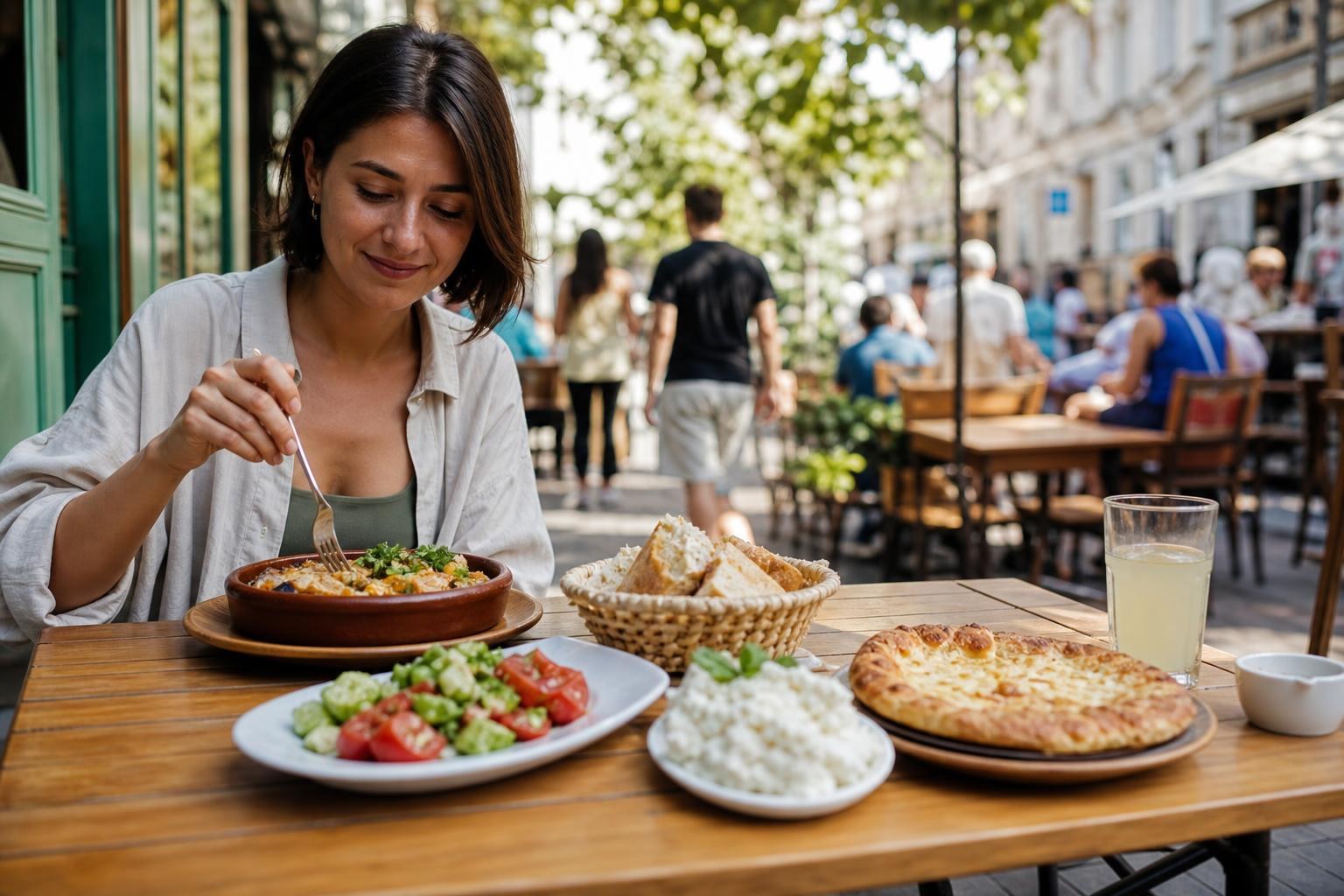
Table of Contents
- Average Daily Food Costs for Different Travel Styles
- Dining Out: From Street Food to Fine Dining
- Grocery Shopping and Local Markets
- Alcohol and Beverage Pricing
- Food Delivery Apps and Convenience Costs
- Money-Saving Tips for Eating in Tbilisi
- Your Daily Food Budget, Distilled
Georgia’s capital has a reputation that precedes it: incredible food, absurdly affordable prices, and a culture that treats feeding guests like a sacred duty. The Georgian saying “stumari ghvtisaa” – a guest is a gift from God – isn’t just a proverb. It shapes how restaurants portion their plates, how market vendors toss in extra herbs for free, and how a simple lunch can turn into a two-hour feast. But if you’re planning a trip and trying to figure out how much food actually costs in Tbilisi on a daily basis, the vague “it’s cheap!” advice from travel forums doesn’t cut it. You need real numbers. The Georgian lari (GEL) has fluctuated against the dollar over the past couple of years, and as of early 2026, 1 USD sits around 2.75-2.80 GEL. That exchange rate matters because it determines whether Tbilisi stays in the “absurdly cheap” category or merely “very affordable.” Spoiler: it’s still firmly in the first camp for most visitors. What follows is a practical daily budget breakdown for food in Tbilisi, organized by travel style and covering everything from street-side khinkali to craft cocktails on Aghmashenebeli Avenue.
Average Daily Food Costs for Different Travel Styles
The range of what you can spend on food in Tbilisi is enormous. A backpacker cooking half their meals and eating khinkali for dinner lives in a completely different financial universe than someone ordering wine pairings at Shavi Lomi. I’ve watched travelers spend 10 GEL on a full day of eating and others drop 300 GEL on a single dinner. Both had a great time.
Your daily food spend depends on three main variables: how often you eat out, where you eat, and how much wine you drink (and in Georgia, that last one can escalate quickly). The city rewards budget travelers more generously than almost any European capital, but it also has a growing fine dining scene that can surprise you with the bill.
For context, a filling meal at a local canteen-style restaurant runs about 8-15 GEL ($3-5), while a three-course dinner at a well-regarded restaurant with wine might cost 80-120 GEL ($29-43) per person. Groceries are remarkably cheap, especially produce, bread, and dairy.
Budget, Mid-Range, and Luxury Estimates Table
Here’s a realistic daily breakdown based on 2026 prices:
| Travel Style | Daily Food Budget (GEL) | Daily Food Budget (USD) | What This Looks Like |
|---|---|---|---|
| Budget | 25-40 GEL | $9-14 | Market groceries, bakery breakfasts, one cheap restaurant meal |
| Mid-Range | 60-100 GEL | $22-36 | Café breakfast, restaurant lunch and dinner, a glass or two of wine |
| Luxury | 150-300+ GEL | $55-110+ | Upscale restaurants, wine bars, cocktail spots, food tours |
These figures cover food and drinks only, not accommodation or transport. The budget tier is genuinely comfortable in Tbilisi: you’re not scrounging or eating poorly. You’re eating khachapuri from a bakery, grabbing fruit from the market, and sitting down at a real restaurant for dinner. The mid-range tier is where most travelers land, and it feels almost luxurious compared to what the same money buys in Western Europe. A detailed breakdown of Georgia travel costs confirms that food remains one of the country’s biggest draws for value-conscious travelers.
Dining Out: From Street Food to Fine Dining
Tbilisi’s restaurant scene has matured significantly over the past few years. You’ll find everything from hole-in-the-wall spots where the menu is handwritten in Georgian only, to polished restaurants with English-speaking sommeliers and tasting menus. The city’s Old Town and Vera neighborhood are packed with options, but some of the best value hides in residential areas like Saburtalo and Gldani, where locals eat.
Street food is where Tbilisi truly shines for budget eaters. Lobiani (bean-filled bread) from a bakery costs 2-3 GEL. A massive portion of shotis puri (traditional bread baked in a tone oven) runs about 1.5 GEL. You can grab churchkhela (walnut-and-grape-juice candy) for 2-4 GEL per strand. These aren’t tourist snacks: they’re what Georgians eat on the go.
Mid-range restaurants typically charge 15-25 GEL for a main course. A full meal with appetizer, main, and a glass of house wine comes to about 40-60 GEL per person. Fine dining spots like Barbarestan or Shavi Lomi push that to 80-150 GEL, though even those prices would be considered moderate in most European capitals.
The Cost of Georgian Staples: Khinkali and Khachapuri
These two dishes are the backbone of any Tbilisi food budget, and they’re both ridiculously cheap. Khinkali, the iconic soup dumplings, are sold by the piece at most restaurants. A single khinkali typically costs between 1.00 and 1.50 GEL, which means a filling portion of 8-10 dumplings runs you 8-15 GEL ($3-5). That’s a complete meal.
Khachapuri varies by style. The classic Imeruli (round, cheese-filled) costs 8-14 GEL at most restaurants. The Adjarian version – the boat-shaped one with egg and butter – runs 12-18 GEL and is large enough to share. I’ve seen tourists order one each and deeply regret it by the halfway mark. These are not small dishes.
Other staples worth knowing about: ojakhuri (pan-fried meat and potatoes) runs 12-18 GEL, a plate of badrijani (eggplant rolls with walnut paste) costs 8-12 GEL, and a full chakapuli (lamb stew with tarragon) goes for 15-22 GEL. The portions at traditional restaurants are generous, sometimes absurdly so.
Coffee Culture and Breakfast Prices
Tbilisi’s coffee scene has exploded. The city now has dozens of specialty coffee shops, and a quality flat white or pour-over costs 7-12 GEL ($2.50-4.30). That’s crept up from a few years ago but still undercuts most European cities. Chain spots like Coffee Bean or Dunkin’ are cheaper at 4-6 GEL, while tiny neighborhood cafés sometimes charge as little as 3 GEL for a Turkish-style coffee.
Breakfast at a café typically runs 15-25 GEL for a full plate with eggs, bread, cheese, and coffee. Many Georgians don’t eat a big breakfast, so the elaborate brunch culture you see in some neighborhoods is aimed partly at expats and tourists. A budget-friendly alternative: grab fresh tonis puri from a bakery for 1.5 GEL and pair it with sulguni cheese from a corner store for another 3-5 GEL. That’s a filling breakfast for under $2.50.
Hotels and guesthouses in Tbilisi frequently include breakfast, which can save you 15-20 GEL per day. If yours doesn’t, bakeries are your best friend.
Service Charges and Tipping Etiquette
Most restaurants in Tbilisi do not add a service charge to the bill, though a handful of upscale spots include a 10% fee. Always check before tipping on top. Tipping culture in Georgia is evolving: locals traditionally didn’t tip much, but the influx of international visitors has shifted expectations at tourist-facing restaurants.
A good rule: round up the bill or leave 10% at sit-down restaurants. At casual spots and bakeries, tipping isn’t expected. For food delivery, a small tip of 1-2 GEL is appreciated but not required. This is a stark contrast to the transactional tipping culture in the US, where 20% is baseline. In Tbilisi, generosity is expressed through hospitality rather than percentages.
Grocery Shopping and Local Markets
Cooking some of your own meals is the single fastest way to cut your daily food budget in half. Tbilisi’s grocery options range from large supermarket chains to tiny neighborhood shops where the owner knows every regular by name. Produce quality is generally excellent, especially during summer and early fall when local fruits and vegetables are in peak season.
A rough weekly grocery budget for one person eating most meals at home: 60-100 GEL ($22-36). That covers bread, cheese, eggs, seasonal vegetables, fruit, pasta, and basic proteins. Chicken is particularly cheap at 12-16 GEL per kilogram. Imported products like olive oil, specialty cheeses, or anything labeled “organic” cost more, but local equivalents are almost always available at a fraction of the price.
Supermarket Chains vs. Neighborhood Corner Stores
The main supermarket chains are Goodwill, Nikora, and Carrefour (which entered the Georgian market and has been expanding). Goodwill tends to have the widest selection and competitive prices. Nikora is everywhere and convenient for quick stops. Carrefour skews slightly more expensive but stocks more imported goods.
Neighborhood corner stores, called “magazias,” are scattered on virtually every block. Prices are sometimes slightly higher than supermarkets, but the convenience factor is real. These shops carry basics: bread, eggs, cheese, beer, snacks, and household items. They’re also where you’ll find churchkhela, dried fruits, and local spices at fair prices. Don’t expect price tags on everything: just ask, and the shopkeeper will tell you.
For the best value on staples, Goodwill and Nikora run regular promotions. Download the Nikora app for loyalty discounts if you’re staying longer than a week.
Fresh Produce at the Dezerter Bazaar
The Dezerter Bazaar, near the central train station, is Tbilisi’s largest and most chaotic open-air market. It’s where locals shop for produce, spices, cheese, pickles, dried fruits, and meat. Prices here are lower than any supermarket, and the quality of seasonal produce is outstanding.
Expect to pay about 2-4 GEL per kilogram for tomatoes, 1-3 GEL for cucumbers, 3-5 GEL for peaches or plums in season, and 6-10 GEL per kilo for good sulguni cheese. Vendors often let you taste before buying, especially for cheese, honey, and churchkhela. Bargaining is acceptable but not aggressive: a friendly smile and a small counteroffer is the local approach.
The spice section alone is worth a visit. Whole saffron threads, dried marigold petals (used in Georgian cooking), khmeli suneli spice blends, and adjika paste are all available for a few lari. If you’re cooking during your stay, this is where you stock up.
Alcohol and Beverage Pricing
Georgia is one of the oldest winemaking regions on Earth, with 8,000 years of viniculture history. That heritage means wine is woven into daily life, and prices reflect it. Drinking well in Tbilisi costs remarkably little.
Non-alcoholic drinks are equally affordable. A 1.5-liter bottle of Borjomi mineral water (Georgia’s famous sparkling water) costs about 2-3 GEL at a shop. Fresh-squeezed juice at a market stand runs 3-5 GEL. Lemonade, the Georgian kind made with tarragon or other herbs, is 5-8 GEL at restaurants and worth every tetri.
House Wine, Craft Beer, and Chacha Prices
House wine at restaurants costs 4-8 GEL per glass and 15-25 GEL per bottle. The quality is often surprisingly good because Georgia’s winemaking tradition means even cheap wine tends to be drinkable. For something special, a bottle of qvevri-aged amber wine at a wine bar runs 30-60 GEL.
Craft beer has taken off in Tbilisi. Local breweries like Argo and Black Lion sell pints for 8-14 GEL at bars. Imported craft beer costs more, around 12-18 GEL. Mass-market Georgian beer like Natakhtari or Kazbegi is 3-5 GEL for a 500ml bottle at a shop.
Chacha, Georgia’s grape brandy, is the wildcard. Homemade chacha from a market vendor might cost 5-10 GEL per liter (buyer beware on quality). Restaurant chacha shots run 4-8 GEL. Premium distilled chacha from producers like Askaneli costs 25-50 GEL per bottle at a shop.
Food Delivery Apps and Convenience Costs
Tbilisi has fully embraced food delivery. The two dominant apps are Glovo and Wolt, both of which offer extensive restaurant selections with English-language interfaces. Bolt Food also operates in the city. Delivery fees typically range from 2-5 GEL, and minimum order thresholds vary by restaurant.
Ordering delivery adds roughly 15-25% to your meal cost once you factor in delivery fees and slightly inflated menu prices on apps compared to in-restaurant pricing. A meal that costs 20 GEL at the restaurant might run 25-28 GEL delivered. It’s still cheap by international standards, but the markup adds up if you’re ordering daily.
For groceries, Wolt and Glovo both offer supermarket delivery. Nikora and Goodwill products can arrive at your door within 30-60 minutes. This is genuinely useful if you’re staying in an apartment and don’t want to haul watermelons uphill through Tbilisi’s steep streets.
Money-Saving Tips for Eating in Tbilisi
The biggest money-saving hack is also the most enjoyable one: eat where locals eat. Tourist-heavy zones like the area around Shardeni Street charge a premium, sometimes 30-50% more than identical dishes at restaurants two blocks away. Walk five minutes in any direction from a tourist hotspot and prices drop noticeably.
Here are specific strategies that work:
- Buy bread from tone bakeries instead of restaurants. A fresh shotis puri costs 1.5 GEL and pairs perfectly with cheap cheese and tomatoes from any corner store.
- Order khinkali in bulk. Most restaurants give a slight per-piece discount when you order 10 or more.
- Drink house wine. The markup on bottled wine at restaurants is significant. House wine is almost always local and good.
- Shop at the Dezerter Bazaar for produce and cheese. You’ll pay 30-50% less than supermarket prices for better quality.
- Use the Wolt app to compare restaurant prices before walking in. Some places charge differently on the app versus in person.
- Eat your big meal at lunch. Some restaurants offer business lunch specials (called “bisnes lanchi”) for 12-18 GEL that include soup, a main, bread, and a drink.
A restaurant guide focused on Tbilisi dining can help you identify spots that balance quality and value beyond the usual tourist recommendations.
Your Daily Food Budget, Distilled
Tbilisi remains one of Europe’s best cities for eating well on almost any budget. A realistic daily food spend of $15-25 covers three solid meals and a coffee or two. Push it to $35-50 and you’re eating at excellent restaurants with wine every evening. Even at the luxury end, you’d struggle to spend what a comparable day of dining costs in Lisbon or Rome.
The city rewards curiosity. Skip the first restaurant you see on the main strip. Duck into the bakery with the line out front. Ask your guesthouse host where they eat. Buy too much fruit at the bazaar and eat it on a bench overlooking the Mtkvari River. The best meals in Tbilisi often cost the least, and that’s not a cliché: it’s just how this city works.