
Table of Contents
- Planning Your Trip: Essential Batumi Travel Facts
- The Heart of the City: Batumi Boulevard and Old Town
- Sun and Sea: Batumi’s Best Beaches
- Top Cultural and Natural Attractions
- Adjarian Cuisine and Nightlife
- Practical Comparison: Transportation and Costs
Batumi has a way of catching you off guard. You arrive expecting a quiet Black Sea beach town and instead find a city that mixes Soviet-era architecture with futuristic skyscrapers, serves bread boats overflowing with cheese at 2 AM, and somehow makes a casino strip feel charming rather than tacky. It’s the kind of place where you can spend a morning hiking through a subtropical botanical garden, an afternoon lounging on a pebble beach, and an evening wandering cobblestone streets lined with wrought-iron balconies. If you’re wondering what to do in Batumi, Georgia, the honest answer is that the harder question is what to skip. This city packs a surprising amount into a compact footprint, and whether you’re here for three days or two weeks, you won’t run out of things to see, eat, or drink. I’ve spent enough time wandering Batumi’s streets to have strong opinions about what’s worth your time and what’s overrated, and this guide reflects that.
Planning Your Trip: Essential Batumi Travel Facts
Batumi is the capital of the Adjara region, sitting on Georgia’s southwestern Black Sea coast just 20 kilometers from the Turkish border. The city’s population hovers around 170,000, but it swells dramatically during summer months when Georgian and international tourists flood in. Getting here is straightforward: Batumi International Airport handles direct flights from Istanbul, Tel Aviv, Dubai, and several European cities, while a scenic five-hour train ride connects it to Tbilisi. The marshrutka (minibus) from Tbilisi costs around 35 GEL (about $13 USD), though the train at roughly 25 GEL is far more comfortable.
The Georgian lari (GEL) is the local currency, and as of 2026, 1 USD gets you approximately 2.7 GEL. Credit cards work in most restaurants and hotels, but carry cash for markets and smaller cafes. English proficiency is growing but still limited outside tourist-facing businesses, so downloading a Georgian language pack on Google Translate before you arrive will save you real headaches.
Quick Guide: Best Time to Visit and Logistics
Peak season runs from June through September, with July and August being the busiest and most expensive months. Water temperatures reach a comfortable 25-27°C in August, making it the best window for swimming. If you prefer fewer crowds and lower prices, late May or September offers warm weather (around 22-25°C) without the crush of peak season tourists.
Batumi is walkable for most central attractions, but Bolt works well for trips to outlying beaches or the botanical garden, with most rides within the city costing 3-5 GEL. The city has been expanding its recreational infrastructure with 20 new public spaces, making it increasingly pedestrian-friendly. Budget travelers can find guesthouses for 60-80 GEL per night, while mid-range hotels run 150-250 GEL. A solid restaurant meal with wine costs about 30-50 GEL per person, which still feels absurdly cheap compared to most European beach destinations.
The Heart of the City: Batumi Boulevard and Old Town
The soul of Batumi lives in two distinct zones: the long, palm-lined boulevard hugging the coast and the compact Old Town a few blocks inland. These two areas account for most of what visitors spend their time doing, and they couldn’t feel more different from each other. The boulevard is all modern sculpture, cycling paths, and seaside energy, while Old Town is narrow lanes, crumbling facades being slowly restored, and the smell of fresh khachapuri drifting from every other doorway.
Strolling the Seven-Kilometer Boulevard
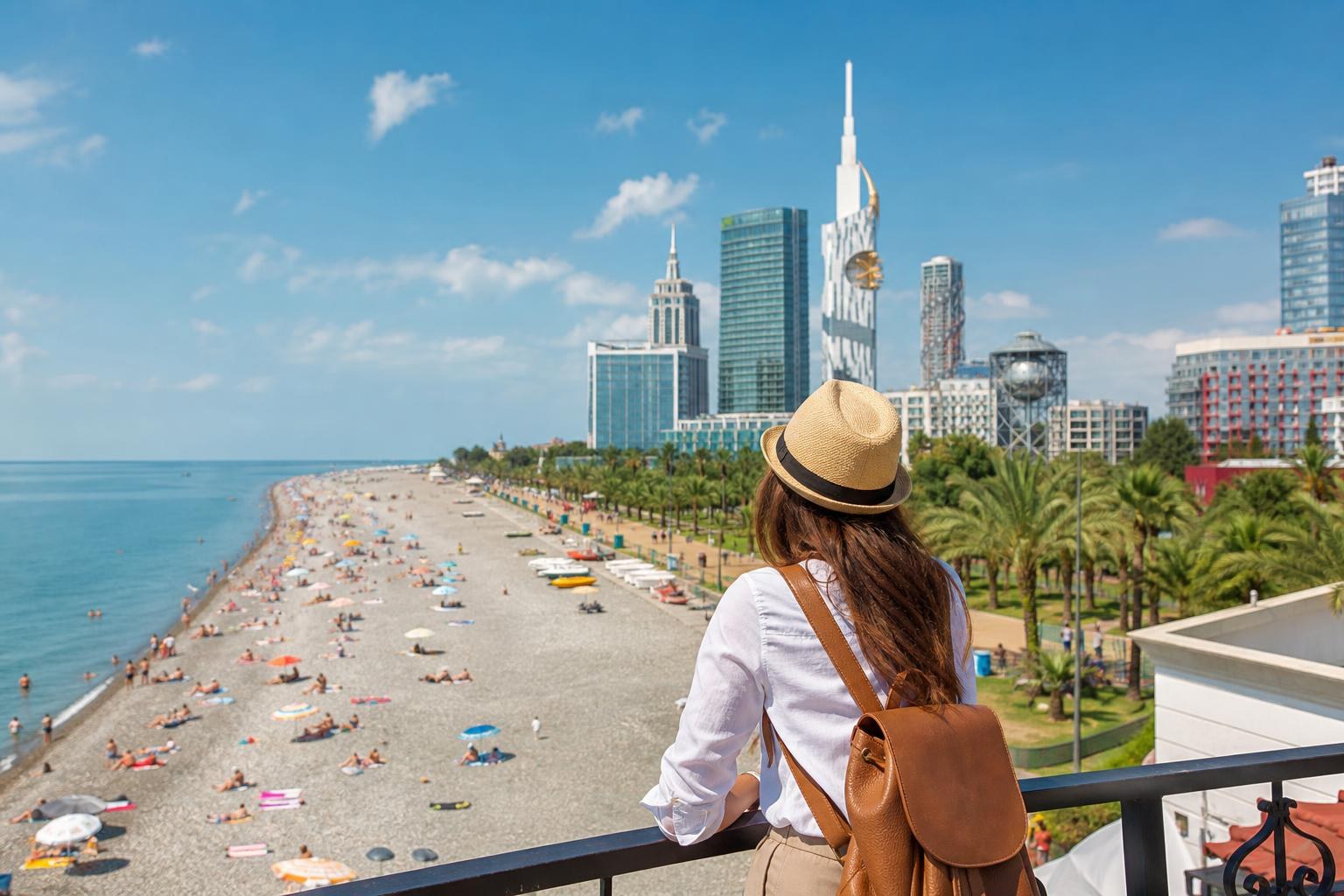
Batumi Boulevard stretches seven kilometers along the coast, and it’s genuinely one of the best waterfront promenades I’ve walked anywhere in the region. Originally laid out in 1884, it’s been expanded and modernized significantly, with the most recent additions including dancing fountains, a Ferris wheel, and an alphabet tower shaped like a strand of DNA. The boulevard is one of the city’s top attractions and works best as an early morning jog or a sunset stroll. Rent a bicycle for about 5 GEL per hour from one of the many stands, or just walk and stop at the various cafes and bars that line the path. The stretch near the lighthouse gets less crowded and offers some of the best photo opportunities.
Architectural Gems of Old Batumi
Old Batumi occupies a tight grid of streets between Gogol Street and the port area. The architecture here tells the story of a city that’s been Ottoman, Russian Imperial, Soviet, and now fiercely Georgian. Look for the ornate 19th-century facades on Gamsakhurdia Street, many featuring the distinctive wooden balconies that define Georgian urban architecture. The Batumi Cathedral (built in 1903 as a Catholic church, later converted to Orthodox) is worth stepping inside for its stained glass alone. Don’t miss the Batumi Archaeological Museum on Jincharadze Street, which houses gold artifacts from the ancient kingdom of Colchis, the land of the Golden Fleece in Greek mythology.
Piazza and Europe Square
Piazza Batumi is one of those love-it-or-hate-it spots. Designed in an Italian style with mosaic floors and stained-glass ceilings, it feels like a miniature version of a Venetian plaza dropped into the Caucasus. Some find it kitschy; I think it works, especially at night when the cafes fill up and live music echoes off the tiled walls. A cappuccino here runs about 8-10 GEL.
Europe Square, a few minutes’ walk away, centers on the Medea statue holding the Golden Fleece, a nod to the region’s mythological heritage. The square hosts seasonal events and is surrounded by some of Batumi’s most striking modern buildings, including the Radisson Blu hotel. Both squares are best visited after dark when the lighting transforms them.
Sun and Sea: Batumi’s Best Beaches
The beaches here are the main draw for most summer visitors, though they require a mental adjustment if you’re used to Caribbean sand. Batumi’s coastline is almost entirely pebble, which means you’ll want water shoes and a thick towel or mat. The upside: the water is remarkably clear compared to sandy beaches, and you won’t be shaking grit out of your belongings for weeks afterward.
Batumi City Beach: Convenience and Vibes
The main city beach runs parallel to the boulevard and is the most accessible option. You can literally walk from your hotel in Old Town and be in the water within ten minutes. Free sections alternate with paid beach club areas where a sunbed and umbrella cost 10-15 GEL. The water quality is decent, though it gets crowded in July and August, and the pebbles are large enough to be uncomfortable without shoes. Vendors sell corn on the cob, churchkhela (the candle-shaped walnut candy), and cold beer along the shore. It’s not paradise, but the convenience is hard to beat.
Escaping to Gonio and Kvariati
For a better beach experience, head 12 kilometers south to Gonio or Kvariati. A Bolt ride costs about 10-12 GEL, or you can catch a marshrutka from the bus station for 1.5 GEL. Gonio’s beach has smaller, smoother pebbles and significantly fewer people. The Gonio-Apsaros Fortress, a remarkably well-preserved Roman fortification dating to the 1st century AD, sits just behind the beach and costs 3 GEL to enter.
Kvariati, another kilometer or two south, is where Batumi residents go when they want to escape tourists entirely. The water here is the clearest along this stretch of coast, and several small guesthouses offer rooms with sea views for 80-120 GEL per night. If you’re staying in Batumi for more than a few days, spending at least one afternoon at these southern beaches is worth the short trip.
The Green Cape (Mtsvane Kontskhi)
Tucked between Batumi and the Turkish border, Green Cape is where the Batumi Botanical Garden meets the sea. The beach here is small and often empty on weekdays, surrounded by subtropical vegetation that creates a genuinely tropical atmosphere. Swimming is excellent, though there are no facilities, so bring your own water and snacks. The combination of botanical garden visit plus Green Cape beach makes for a perfect full-day outing.
Top Cultural and Natural Attractions
Beyond beaches and architecture, Batumi offers a handful of attractions that justify a visit even in the off-season. The city has been investing heavily in tourism infrastructure and transport improvements, and it shows in the quality of its cultural sites.
Batumi Botanical Garden
Founded in 1912, the Batumi Botanical Garden covers 108 hectares on a hillside overlooking the sea. It’s organized into geographic zones: Japanese, Himalayan, Australian, Mediterranean, and more. The garden holds over 5,000 plant species, and the microclimate here supports vegetation you wouldn’t expect this far north, including bamboo groves and eucalyptus forests. Entry costs 15 GEL, and you should budget at least three hours. The upper terraces offer panoramic views of the coastline that rival anything you’ll see from the Argo Cable Car.
Argo Cable Car and Panoramic Views
The Argo Cable Car runs from the boulevard up to Anuria Mountain, covering 2.6 kilometers in about 15 minutes. A round-trip ticket costs 25 GEL. The views from the top are spectacular on clear days, stretching across the city, the port, and the Black Sea. There’s a small cafe and viewing platform at the summit. Go in the late afternoon for the best light, and if you’re feeling adventurous, hike down through the forested hillside rather than taking the cable car back. The trail takes about 45 minutes and passes through residential neighborhoods that give you a very different perspective on the city.
Ali and Nino Moving Sculpture
This eight-meter-tall kinetic sculpture by Tamara Kvesitadze depicts two figures, a man and a woman, who move toward each other, merge, and then pass through one another before separating again. The piece references the novel “Ali and Nino,” a love story between an Azerbaijani Muslim boy and a Georgian Christian girl. The sculpture has become Batumi’s most recognizable landmark and is best watched at sunset when the figures are silhouetted against the sky. The full cycle takes about 10 minutes, and it’s one of those rare public art installations that genuinely moves people.
Adjarian Cuisine and Nightlife
Adjarian food is distinct from the rest of Georgia, shaped by Ottoman influence and the region’s subtropical climate. The flavors lean heavier on butter, cheese, and corn, and portions are enormous. Nightlife in Batumi is surprisingly robust for a city this size, driven largely by the casino industry and a growing beach club scene.
Must-Try Dishes: Adjaruli Khachapuri
The Adjaruli khachapuri is the dish that defines this region: a boat-shaped bread filled with melted cheese, topped with a raw egg and a knob of butter that you stir together at the table. It costs 12-18 GEL at most restaurants and is rich enough to serve as a full meal. Other Adjarian specialties worth seeking out include borano (cheese melted in butter, served with cornbread), sinori (rolled cottage cheese crepes in a walnut sauce), and iakhni (a beef and walnut stew with roots in Ottoman cooking).
For the best khachapuri in Batumi, skip the boulevard restaurants and head to Retro on Parnavaz Mepe Street or Machakhela near the university. Both serve versions that locals actually eat, which is always a good sign.
Casinos and Beach Clubs
Batumi is Georgia’s gambling capital, and the casino strip along Rustaveli Avenue draws visitors from Turkey, Iran, and the Gulf states where gambling is restricted. The casinos are free to enter and offer a surreal contrast to the rest of the city. Even if gambling isn’t your thing, walking through the lobby of the Hilton or Colosseum Casino is an experience in itself.
Beach clubs have expanded rapidly in recent years, and Georgia is positioning itself for a wave of luxury resort development that will likely transform the nightlife scene further. Current favorites include Sector 26 and Batumi Beach Club, where DJ sets run until the early hours during summer weekends. Expect to pay 15-20 GEL for cocktails at the nicer spots.
Practical Comparison: Transportation and Costs
Here’s a quick reference for budgeting your Batumi trip:
| Item | Cost (GEL) | Cost (USD) |
|---|---|---|
| Budget guesthouse (per night) | 60-80 | $22-30 |
| Mid-range hotel (per night) | 150-250 | $55-93 |
| Adjaruli khachapuri | 12-18 | $4.50-6.70 |
| Restaurant meal with wine | 30-50 | $11-18.50 |
| Bolt ride within city | 3-5 | $1.10-1.85 |
| Marshrutka to Gonio | 1.5 | $0.55 |
| Argo Cable Car (round trip) | 25 | $9.25 |
| Botanical Garden entry | 15 | $5.55 |
| Beach sunbed rental | 10-15 | $3.70-5.55 |
| Coffee at Piazza | 8-10 | $3-3.70 |
Batumi remains one of Europe’s most affordable beach destinations. A couple traveling comfortably on a mid-range budget can expect to spend around 250-350 GEL ($93-130 USD) per day including accommodation, meals, transport, and activities. Budget travelers sharing guesthouses and eating street food can manage on 100-150 GEL ($37-55 USD) daily.
The city is compact enough that you won’t spend much on transport unless you’re making regular trips to the southern beaches. Download Bolt before you arrive, as regular taxis often lack meters and will quote inflated prices, especially near the boulevard.
Batumi rewards the visitor who wanders without a rigid plan. Some of my best memories here involve stumbling into a courtyard wine bar in Old Town, spending an unplanned hour watching the Ali and Nino sculpture cycle through its movements, or catching a marshrutka to Kvariati on a whim. This is a city that’s growing fast and changing year by year, but it hasn’t lost the warmth that makes Georgia’s Black Sea coast feel different from any other beach destination in the region. Come for the khachapuri, stay for everything else, and don’t forget the water shoes.