
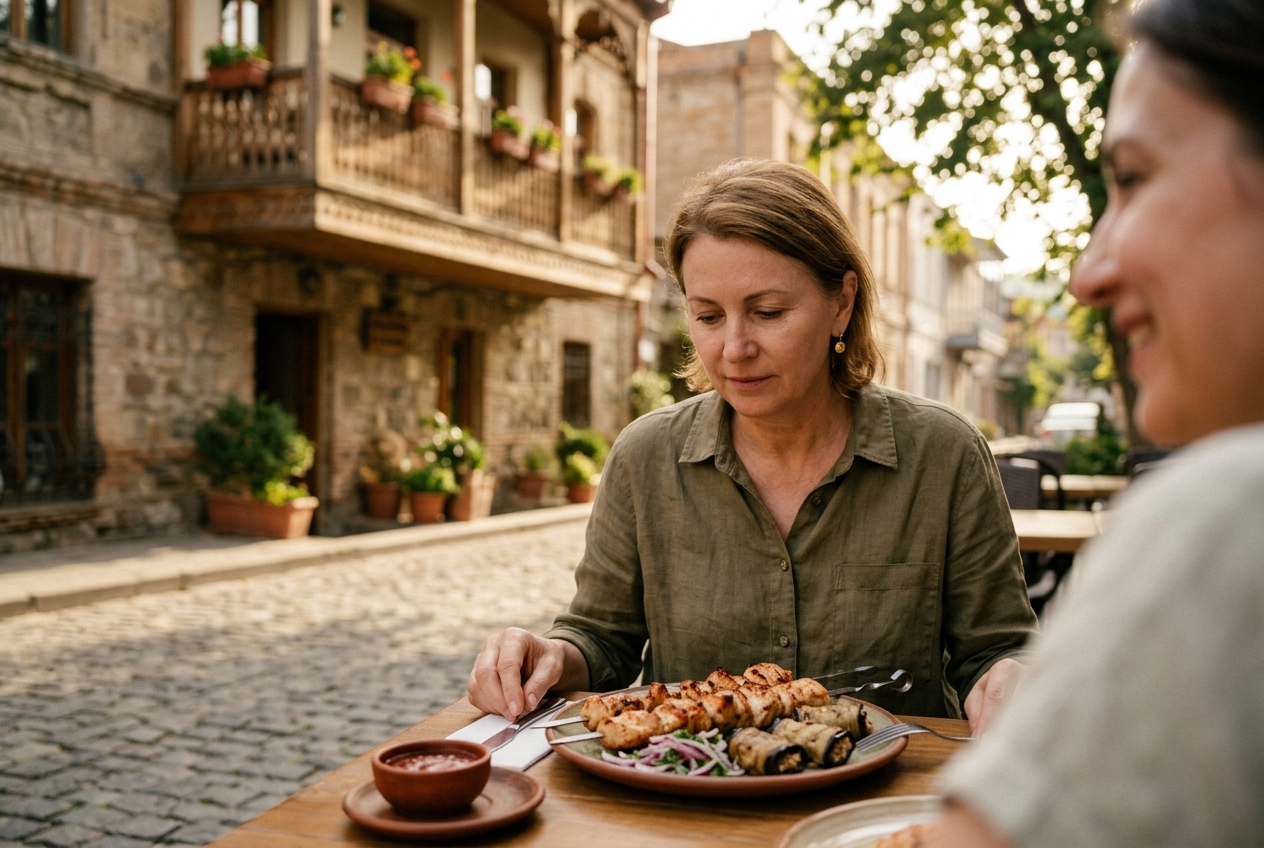
Georgia is one of the most exciting food destinations in the world, and the country’s cuisine is built on centuries of tradition, generous hospitality, and a deep love of bread. That last part is the problem if you’re celiac or gluten-sensitive. Wheat is woven into Georgian food culture so thoroughly that avoiding it requires real planning, not just good intentions. But here’s the encouraging truth: a surprising number of Georgian dishes are naturally free of wheat, and with the right knowledge, you can eat incredibly well here. I’ve spent time working through menus in Tbilisi and smaller towns in Kakheti and Svaneti, and the experience taught me that gluten-free travel in Georgia is absolutely possible, though it demands more homework than most European destinations. The awareness gap is real, but the food itself often works in your favor. This guide breaks down exactly which dishes are safe, where the hidden dangers lurk, and how to communicate your needs in a country where “gluten” isn’t yet a household word.

Navigating Georgian Cuisine with Celiac Disease
Georgian food is legendary for a reason. The country sits at a crossroads of European and Asian culinary traditions, and its dishes reflect influences from Persia, Turkey, Russia, and the Mediterranean. A typical Georgian supra (feast) can include dozens of dishes, from cheese-stuffed breads to walnut-laced vegetable spreads, grilled meats, and herb-heavy salads. For someone with celiac disease, this abundance is both a gift and a minefield. Many of those dishes are safe. Many are not. And the line between them isn’t always obvious.
The biggest challenge isn’t the food itself but the cultural context. Bread is sacred in Georgia. The word for bread, “puri,” is sometimes used synonymously with “meal.” Refusing bread can feel socially awkward, especially in rural areas where a grandmother has baked it fresh for your arrival. Understanding this cultural weight helps you approach the situation with sensitivity rather than frustration.
The Role of Wheat in Traditional Food Culture
Wheat has been cultivated in the South Caucasus for thousands of years. Georgia is actually one of the oldest wheat-growing regions on Earth, and bread holds a near-spiritual significance. The iconic tonis puri, baked in a cylindrical clay oven called a tone, is present at virtually every meal. Khachapuri, the country’s most famous dish, is essentially a bread boat filled with cheese, butter, and egg. Khinkali, the beloved soup dumplings, are wrapped in thick wheat dough.
This means wheat isn’t just an ingredient in Georgian cooking: it’s the foundation. Walk through any neighborhood in Tbilisi and you’ll pass bakeries where fresh bread is pulled from ovens every few minutes. In villages, families still bake their own. For celiacs, this creates a reality where the most iconic and visible Georgian foods are off-limits. But Georgian cuisine is far broader than its bread tradition, and that’s where the opportunity lies.
Essential Phrases for Dining Out Safely
General awareness of celiac disease and gluten-free diets is low in Georgia, which means you can’t assume your server understands what “gluten-free” means. Having a few Georgian phrases ready makes a huge difference.
- “Khorblis gareshe, tu sheidzleba” (ხორბლის გარეშე, თუ შეიძლება) means “without wheat, please”
- “Me var alergiuli khorbalze” (მე ვარ ალერგიული ხორბალზე) means “I am allergic to wheat”
- “Pkhvili khorblisa” (ფქვილი ხორბლისა) means “wheat flour,” useful for asking about ingredients
A translation card in Georgian explaining gluten-free requirements is an excellent investment and can be shown to chefs and waitstaff. I’d recommend printing one rather than relying on your phone screen, since kitchen staff may need to pass it around. Google Translate’s offline Georgian pack is also worth downloading before your trip for on-the-fly conversations.
The word “gluteni” (გლუტენი) is increasingly recognized in Tbilisi among younger, English-speaking restaurant staff, but outside the capital, stick to “khorbali” (wheat) as your primary term. People understand wheat far better than they understand gluten as a protein concept.
Naturally Gluten-Free Georgian Classics
The good news is substantial. Georgian cuisine has an entire category of dishes built on corn, beans, walnuts, vegetables, and grilled meats that contain no wheat whatsoever. These aren’t obscure specialties: they’re everyday staples found in restaurants and homes across the country.
Corn-Based Staples: Mchadi and Ghomi
Corn is Georgia’s second grain, and in western regions like Samegrelo and Imereti, it often takes center stage over wheat. Two dishes in particular are essential for gluten-free travelers.
Mchadi is a traditional Georgian cornbread that is naturally gluten-free. It’s made from cornmeal, water, and salt, shaped into small patties, and pan-fried or baked until golden and slightly crispy on the outside. Mchadi is served everywhere, from high-end Tbilisi restaurants to roadside stops in the mountains. It pairs beautifully with lobio (bean stew) and fresh sulguni cheese. Always confirm that no wheat flour has been added, though traditional recipes use none.
Ghomi is the western Georgian answer to Italian polenta, and the comparison is apt. This gluten-free dish is made from coarsely ground cornmeal, cooked slowly until thick and creamy, then often topped with melted cheese. In Samegrelo, ghomi with sulguni is practically a religion. It’s filling, satisfying, and completely wheat-free in its traditional form.
| Dish | Main Ingredients | Naturally GF? | Watch For |
|---|---|---|---|
| Mchadi | Cornmeal, water, salt | Yes | Added wheat flour in some versions |
| Ghomi | Cornmeal, water, cheese | Yes | Cross-contamination in shared kitchens |
| Lobio | Red beans, herbs, spices | Yes | Flour-thickened versions (rare) |
| Phali | Spinach/beet/cabbage, walnuts | Yes | Breadcrumb additions (uncommon) |
| Shashlik | Grilled meat, onions | Yes | Marinades with soy sauce |
| Ajapsandali | Eggplant, peppers, tomato | Yes | Flour-based thickeners |
Vegetable Delights: Phali and Ajapsandali
Georgian vegetable dishes are some of the most naturally gluten-free foods you’ll find anywhere. Phali is a family of cold appetizers made from finely chopped or pureed vegetables (spinach, beets, cabbage, or green beans) mixed with ground walnuts, garlic, vinegar, and Georgian spices like blue fenugreek. The mixture is shaped into small balls or patties and topped with pomegranate seeds. No flour, no bread, no wheat. It’s one of the safest and most delicious things you can order.
Ajapsandali is a warm vegetable stew built on eggplant, tomatoes, peppers, onions, and fresh herbs like cilantro and basil. Think of it as Georgia’s ratatouille. The traditional recipe uses no thickeners and no wheat. It’s hearty enough to serve as a main course alongside mchadi, and it’s widely available in summer months when the vegetables are at their peak.
Badrijani nigvzit, rolled eggplant slices filled with walnut paste, is another safe bet. The filling is the same walnut-garlic-herb mixture used in phali, and the eggplant is simply fried in oil. Just confirm no flour coating was used on the eggplant before frying.
Meat and Cheese: Shashlik and Sulguni
Grilled meat is a cornerstone of Georgian dining, and most preparations are inherently wheat-free. Shashlik (mtsvadi in Georgian) is chunks of pork, beef, lamb, or chicken grilled over charcoal, often marinated simply in onion juice, salt, and sometimes wine vinegar. No breadcrumbs, no flour coatings, no sauces. It’s one of the safest things you can eat, and it’s everywhere.
Sulguni cheese, a brined, slightly elastic cheese similar to mozzarella, is naturally gluten-free and appears in countless dishes. Eaten fresh, grilled on a skewer, or melted over ghomi, it’s a protein-rich staple for gluten-free travelers. Other Georgian cheeses like imeruli and guda are also safe, though always check that nothing has been dusted with flour to prevent sticking.
Kupati, Georgian pork sausages seasoned with garlic and spices, are typically wheat-free, though some versions may contain breadcrumbs as filler. Ask before ordering. Chicken tabaka, a whole young chicken pressed flat and pan-fried until crispy, is traditionally cooked without any flour coating and served with tkemali (plum sauce), which is also naturally gluten-free.
Hidden Gluten and Cross-Contamination Risks
Knowing what’s safe is only half the equation. The other half is understanding where gluten hides in dishes that look safe on the surface.
Thickening Agents in Sauces and Stews
Several Georgian sauces and stews use flour as a thickening agent, and this isn’t always obvious. Kharcho, the beloved beef and walnut soup, traditionally uses rice as its starch, but some restaurant versions substitute wheat flour to save time. Chakhokhbili, a chicken stew with tomatoes and herbs, is usually flour-free, but not always.
The biggest offender is satsivi, the cold walnut sauce served over turkey or chicken. Traditional recipes thicken satsivi with ground walnuts alone, but some cooks add a small amount of wheat flour for body. This is the kind of hidden gluten that catches people off guard because the dish looks and tastes like it should be safe.
Bazhe, another walnut-based sauce, carries the same risk. Always ask: “Pkhvili khorblisa khmardeba?” (Is wheat flour used?). If you’re eating at someone’s home, this question might feel intrusive, but Georgians genuinely want their guests to be comfortable. Frame it as a health need, and most hosts will go out of their way to accommodate you.
Shared Kitchen Spaces and Flour Dust
Even when a dish contains no wheat ingredients, cross-contamination is a real concern. Georgian kitchens, especially in smaller restaurants and family-run guesthouses, are compact spaces where khinkali dough is rolled on the same surfaces where salads are assembled. Flour dust settles on everything.
In rural guesthouses, the kitchen may have one prep area, one set of pots, and one fryer used for everything from mchadi to cheese-filled pastries. If you’re highly sensitive, communicate clearly that your food needs to be prepared on a clean surface with clean utensils. Some travelers bring their own small cutting board and utensils for exactly this reason.
Tbilisi restaurants with dedicated allergen menus handle this much better, but in the countryside, assume nothing is separated unless you’ve specifically arranged it.
Regional Specialties and Dietary Flexibility
Georgia’s cuisine varies dramatically by region, and some areas are friendlier for gluten-free eating than others. Western Georgia, particularly Samegrelo and Guria, relies heavily on corn. You’ll find mchadi and ghomi on nearly every table, and wheat bread plays a smaller role in daily meals. This makes the western half of the country generally easier for celiacs.
Eastern Georgia, including Kakheti (the wine region), leans more heavily on wheat bread and wheat-based dishes. That said, Kakheti is also the heartland of Georgian barbecue culture, and grilled meats with fresh herb salads are everywhere. Pair mtsvadi with a plate of fresh tomatoes, cucumbers, and herbs, and you have a completely safe and deeply satisfying meal.
Svaneti, in the mountainous northwest, presents mixed results. The region’s famous kubdari (meat-filled bread) is off-limits, but Svan salt, the aromatic spice blend used across the region, is gluten-free and makes everything taste extraordinary. Bean soups and corn-based dishes are common in Svan homes.
Adjara, on the Black Sea coast, is famous for Adjarian khachapuri, which is sadly wheat-based. But the coastal location means excellent fresh fish, grilled simply with herbs and lemon. Fish restaurants along the Batumi waterfront often have straightforward grilled options that are naturally free of wheat.
The flexibility really comes from understanding that Georgian cuisine has always been seasonal and regional. Not every meal revolves around bread, even if the culture celebrates bread above all else.
Practical Tips for Gluten-Free Travel in Tbilisi and Beyond
Supermarket Shopping and Label Reading
Self-catering is a smart strategy, at least for breakfasts and snacks. Tbilisi has several well-stocked supermarkets, including Carrefour, Goodwill, and Nikora, where you can find naturally gluten-free staples: fresh fruit, nuts, cheese, cured meats, eggs, and vegetables.
Georgian food labels are printed in Georgian script, which makes reading them challenging. Download Google Translate’s camera feature and use it to scan ingredient lists. Look for “ხორბლის ფქვილი” (wheat flour) and “ქერის” (barley). Rice, buckwheat, and corn products are widely available and clearly labeled.
Health food stores in Tbilisi carry imported gluten-free pasta, bread, and snack bars, though prices are significantly higher than standard products. The Vake and Vera neighborhoods have the best selection. Stock up on portable snacks before heading to rural areas, where options thin out considerably.
Modern Restaurants with Allergen Menus
Tbilisi is where gluten-free dining gets genuinely comfortable. The city offers the most gluten-free options in the country, and a growing number of restaurants cater to dietary restrictions. The younger generation of Georgian chefs, many trained internationally, understands allergen management in ways that older establishments don’t.
Gluten Free Zone in Tbilisi is known for its dedicated gluten-free offerings, including gluten-free khinkali, which is something you won’t find anywhere else in the country. Being able to eat khinkali safely is a genuine thrill for celiacs who’ve watched others enjoy this iconic dish.
Other Tbilisi restaurants worth checking include Cafe Littera, Shavi Lomi, and Barbarestan, all of which have English-speaking staff who can discuss ingredients in detail. Use apps like Bolt Food for delivery if you want to browse menus with photos and ingredient descriptions before committing.
Outside Tbilisi, your best bet is agriturismos and family guesthouses where you can communicate directly with the cook. Call ahead, explain your needs, and most Georgian hosts will prepare something safe and delicious. The concept of “stumari ghvtisaa” (the guest is from God) runs deep, and making a guest sick would be a source of genuine shame.
Georgia rewards travelers who plan ahead and communicate clearly. The cuisine is far more than its bread, and once you know which dishes are safe, you’ll discover a food culture that’s generous, vibrant, and surprisingly accessible without wheat. Pack your translation card, memorize a few key phrases, download offline maps and translation tools, and don’t be afraid to ask questions at every meal. The Georgians I’ve met would rather answer ten questions than see a guest go hungry. Your best meals here might not include khachapuri, but they’ll include flavors you won’t find anywhere else on Earth.