
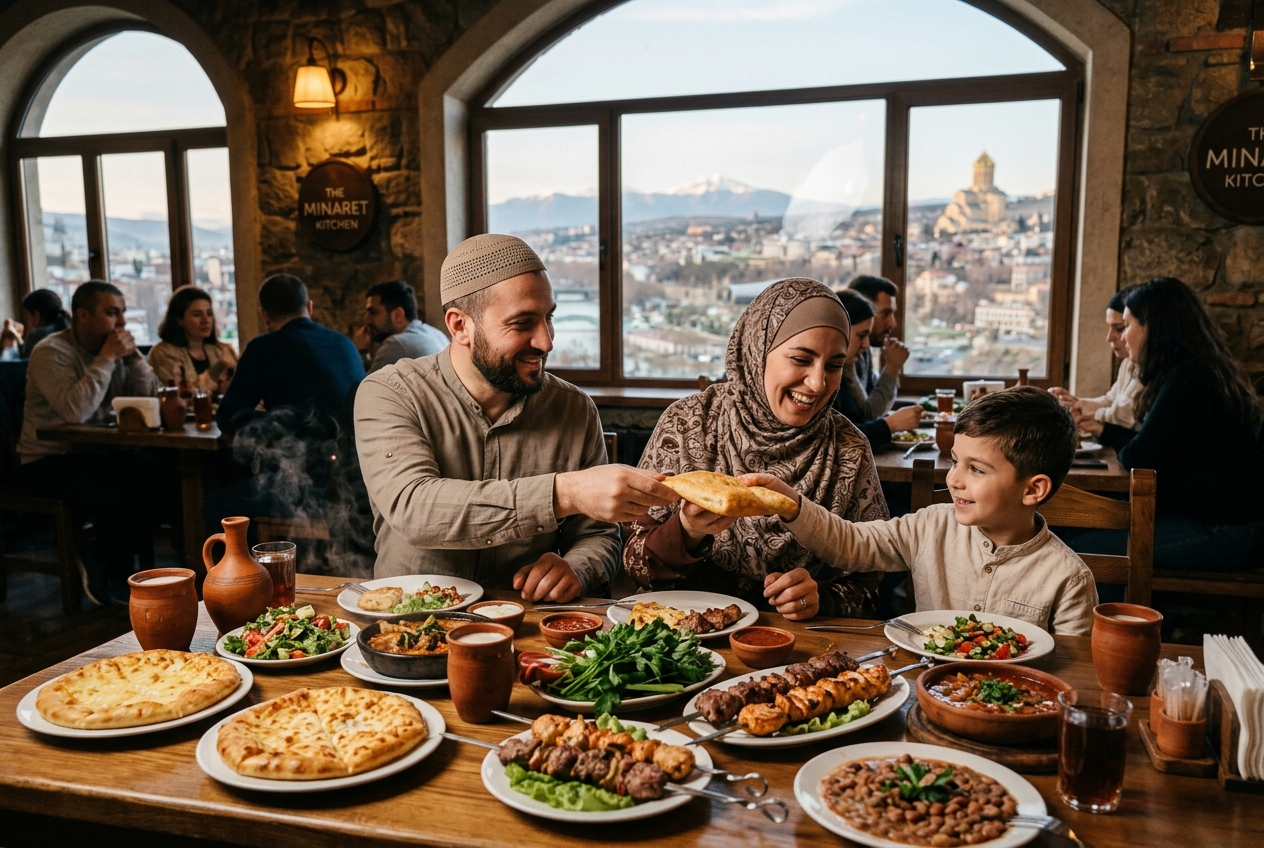
Georgia sits at a crossroads where Europe meets Asia, and its food culture reflects that beautifully. For Muslim travelers, this small Caucasian country might not be the first destination that comes to mind, but it should be. The halal dining scene here has grown steadily over the past decade, driven by increasing tourism from Turkey, Iran, the Gulf states, and Central Asia. Tbilisi’s Old Town now has more halal-friendly restaurants than some European capitals twice its size, and the coastal city of Batumi isn’t far behind. The country’s deep-rooted tradition of hospitality, known locally as “stumari ghvtisaa” (the guest is from God), means restaurant owners genuinely want to accommodate dietary needs, even when a formal halal certification isn’t hanging on the wall. Whether you’re craving a perfectly grilled kebab or wondering if you can enjoy Georgia’s iconic khinkali dumplings without compromising your faith, this guide covers the practical realities of finding halal food and restaurants across Georgia, from city centers to seaside towns.
Overview of Halal Dining Culture in Georgia
Georgia is a predominantly Orthodox Christian country, but its geographic position between Muslim-majority neighbors, Turkey and Azerbaijan, has shaped its culinary identity in ways most visitors don’t expect. The Azerbaijani community in Georgia, concentrated in the southeastern Kvemo Kartli region, has maintained halal butchering traditions for centuries. Iranian traders, Ottoman-era influences, and more recent waves of Arab and Central Asian tourists have all layered onto this foundation.
The result is a country where halal dining isn’t a niche market but a visible, growing part of the food economy. The Georgia halal meat market is projected to grow at 6.29% in 2026, reflecting real demand from both residents and visitors. Walk through Tbilisi’s Marjanishvili district on any evening, and you’ll hear Arabic, Farsi, and Turkish alongside Georgian at the restaurant tables.
Influence of Middle Eastern and Central Asian Cuisines
Georgian cuisine already shares DNA with its neighbors. Grilled meats, flatbreads, walnut-based sauces, and aromatic herb salads are staples across the entire region. This overlap makes the transition to halal-friendly dining surprisingly natural.
Turkish restaurants were among the first to establish a halal presence in Tbilisi, and they remain the most common option. You’ll find doner kebab shops and pide restaurants in virtually every tourist area. Persian cuisine followed, with several Iranian-run restaurants offering chelo kebab, tahdig, and saffron-infused rice dishes. More recently, Uzbek and Kazakh restaurants have appeared, serving plov (pilaf), manti (large dumplings), and lagman (hand-pulled noodle soup). These Central Asian spots tend to be popular with budget-conscious travelers because portions are enormous and prices stay low.
Arab cuisine has made the biggest splash in the last five years. Lebanese, Syrian, and Egyptian restaurants now dot Agmashenebeli Avenue and the streets around Dry Bridge Market. The global halal food market was valued at USD 2.95 trillion in 2025, and Georgia is clearly tapping into that expanding demand.
Understanding Local Halal Certification and Standards
Here’s where things get a bit complicated. Georgia does not have a government-run halal certification body equivalent to what you’d find in Malaysia, Indonesia, or the UAE. There is no single “halal stamp” that every restaurant displays. Instead, certification tends to come from private organizations or from the restaurant’s own claims based on their sourcing practices.
What does this mean practically? It means you need to ask questions. Many restaurants run by Turkish, Iranian, or Azerbaijani owners source their meat from halal butchers and slaughter according to Islamic guidelines, but they may not have a formal certificate on display. Some newer establishments, particularly those targeting Gulf tourists, have sought certification from international bodies or from Turkish halal authorities.
A good rule of thumb: restaurants with Arabic or Turkish signage in tourist areas almost always serve halal meat. If you’re unsure, ask directly. The Georgian phrase “halali khortsia?” (halal meat?) will get you a clear answer. Most restaurant staff in tourist zones speak enough English, Turkish, or Russian to communicate about ingredients.
Halal Hotspots in Tbilisi
Tbilisi is where you’ll find the highest concentration of halal dining options in the country. The city has pockets where Muslim-friendly restaurants cluster together, making meal planning straightforward.
The Old Town: Turkish and Persian Delights
The Old Town, centered around the sulfur baths district and Meidan Square, is where most first-time visitors spend their time, and it’s also one of the best areas for halal food. The narrow streets between the Narikala Fortress and the Metekhi Bridge are packed with small restaurants, many of which cater to Middle Eastern tourists.
Turkish restaurants dominate this area. Expect classic dishes: Adana kebab, lahmacun, mercimek soup, and freshly baked pide. Several spots along Kote Abkhazi Street serve excellent iskender kebab, and the prices are roughly 40-60% lower than what you’d pay in Istanbul for comparable quality.
Persian restaurants in the Old Town tend to be slightly more upscale. A few Iranian-owned establishments near the Botanical Garden entrance serve proper joojeh kebab and ghormeh sabzi. These places often double as tea houses in the afternoon, offering Persian tea with saffron rock candy, which is a welcome break between sightseeing sessions.
I’ve noticed that the Old Town restaurants are generally honest about their halal status. If a place serves alcohol prominently and doesn’t advertise halal, it’s worth asking before ordering meat dishes. Many Georgian restaurants in this area use pork in several traditional dishes, including some that don’t obviously contain it, like certain bean stews flavored with smoked pork.
Agmashenebeli Avenue: The Hub for Arab Cuisine
If the Old Town is the Turkish and Persian quarter, Agmashenebeli Avenue is where Arab cuisine thrives. This long, tree-lined boulevard in the Chugureti district has transformed over the past five years into Tbilisi’s most diverse food street.
Lebanese restaurants here serve proper fattoush, hummus, and mixed grills. Syrian-run shawarma shops offer some of the best street food in the city, with prices hovering around 8-12 GEL (roughly $3-4 USD) for a loaded wrap. Egyptian koshari has even made an appearance at a couple of spots near the avenue’s eastern end.
| Area in Tbilisi | Primary Cuisine Types | Average Meal Cost (GEL) | Halal Availability |
|---|---|---|---|
| Old Town / Meidan | Turkish, Persian | 25-45 | High |
| Agmashenebeli Ave | Lebanese, Syrian, Egyptian | 15-30 | Very High |
| Marjanishvili | Uzbek, Kazakh, Mixed | 12-25 | High |
| Vake / Saburtalo | Turkish chains, Indian | 20-40 | Moderate |
| Avlabari | Azerbaijani, Georgian-Halal | 15-30 | High |
The Avlabari district deserves a mention too. This historically Azerbaijani neighborhood sits just across the river from the Old Town and has several family-run restaurants serving Azerbaijani plov, lula kebab, and dushbara (tiny dumplings in broth). These are often the most affordable halal meals in central Tbilisi.
Exploring Halal Options in Batumi and the Coast
Batumi, Georgia’s second city on the Black Sea coast, has its own halal dining scene, shaped heavily by its proximity to the Turkish border. The Adjara region where Batumi sits has a significant Muslim Georgian population, which means halal infrastructure here isn’t just for tourists: it’s part of the local fabric.
The city’s boulevard area and the streets around Batumi’s central mosque host a mix of Turkish restaurants, local Adjarian eateries, and a growing number of Arab-run establishments. Batumi sees heavy summer tourism from the Gulf states, and the restaurant scene has adapted accordingly. Several hotels along the coastline now offer halal room service and breakfast options.
Popular Halal Seafood and Turkish Grills
Batumi’s coastal location means fresh seafood is everywhere, and this is great news for halal-conscious diners. Fish and shellfish are generally considered halal across all major schools of Islamic jurisprudence, so the Black Sea’s bounty, including anchovy, trout, turbot, and sea bass, is fair game without worrying about certification.
Turkish grill restaurants along the Batumi seafront serve excellent balik ekmek (fish sandwiches) and grilled whole fish alongside standard kebab menus. Several places near the Piazza area offer combination platters: grilled fish with Turkish-style rice, grilled vegetables, and fresh salads. Prices are reasonable, typically 20-35 GEL for a full seafood meal.
For something more local, look for Adjarian-style fried fish served with cornbread (mchadi) and tkemali sauce. Many small family restaurants along the coast between Batumi and Gonio prepare fish simply, grilled or fried with minimal seasoning, and these meals are inherently halal. Just confirm that the cooking oil isn’t shared with pork dishes.
The halal food market globally is estimated to reach USD 6.32 trillion by 2034, and Georgia’s Black Sea coast is positioning itself to capture a share of that growth. New halal-certified restaurants open in Batumi every tourist season.
Adapting Traditional Georgian Dishes for Halal Diets
Georgian cuisine is spectacular, but it presents real challenges for halal diners. Pork is deeply embedded in the culinary tradition, appearing in sausages (kupati), stews, and grilled dishes. Wine is central to Georgian culture and often used in cooking. But with some knowledge, you can enjoy many of Georgia’s most famous dishes without compromise.
Vegetarian Classics: Khachapuri and Lobio
The good news is that some of Georgia’s most beloved dishes are naturally halal, or at least vegetarian, which sidesteps the meat question entirely.
Khachapuri, the iconic cheese-filled bread, is halal in all its regional variations. The Adjarian version, shaped like a boat and topped with egg and butter, is one of the most satisfying meals in the country. Imeruli khachapuri (round, with a sulguni cheese filling) is available at every bakery and restaurant. No pork, no alcohol in the preparation: just bread, cheese, and butter.
Lobio, a slow-cooked red bean stew seasoned with coriander, fenugreek, and chili, is another safe bet. It’s served in a clay pot with mchadi cornbread and pickled vegetables. Pkhali, a family of dishes made from minced vegetables (spinach, beet, or cabbage) mixed with walnut paste, garlic, and herbs, is entirely plant-based. Badrijani, fried eggplant rolls stuffed with walnut paste, rounds out a genuinely satisfying halal-friendly Georgian meal without touching any meat at all.
Finding Halal-Certified Meat for Khinkali and Mtsvadi
Khinkali (Georgian soup dumplings) and mtsvadi (grilled meat skewers) are two dishes you shouldn’t leave Georgia without trying, and both can be halal if you know where to look.
Several restaurants in Tbilisi now specifically advertise halal khinkali. These are typically filled with beef or lamb instead of the traditional pork-beef mix. The taste difference is minimal: the magic of khinkali is in the spiced broth trapped inside the dough, and that works beautifully with halal meat. Ask for “khalkhis khinkali” (beef khinkali) or “tskhvris khinkali” (lamb khinkali).
Mtsvadi is traditionally made with pork, but beef and lamb versions are common, especially in areas with Azerbaijani or Turkish influence. In the Avlabari district and along Agmashenebeli Avenue, you’ll find mtsvadi made with halal-certified beef that’s been marinated in onion, vinegar, and Georgian spices. The charcoal-grilled flavor is identical.
Practical Tips for Muslim Travelers in Georgia
Beyond restaurant dining, there are logistics that make daily life easier for Muslim visitors. Knowing where to buy groceries, how to communicate dietary needs, and which apps to use can save real frustration.
Locating Halal Butcher Shops and Grocery Stores
Tbilisi has several dedicated halal butcher shops, mostly concentrated in the Marjanishvili and Avlabari districts. The Dezerter Bazaar, Tbilisi’s largest open-air market near the train station, has multiple vendors selling halal-slaughtered beef and lamb. Prices are significantly lower than restaurant meals: expect to pay 15-20 GEL per kilogram for good quality beef.
For packaged halal products, look for Turkish and Iranian grocery stores scattered throughout central Tbilisi. These stock halal-certified canned goods, snacks, spices, and frozen items imported from Turkey. Carrefour and Goodwill supermarkets in Tbilisi carry some halal-labeled products, though the selection varies by location.
In Batumi, the central market near the mosque is the best source for halal meat. Turkish grocery stores are even more common here due to border proximity, and many carry fresh Turkish bread, cheeses, and ready-made meals.
A practical tip: download the Bolt app for transportation between halal shops and restaurants. It’s cheaper than taxis and works reliably in both Tbilisi and Batumi. Google Maps has reasonably accurate restaurant listings, and searching “halal” in the map app will surface most dedicated halal spots. For travelers in the US state of Georgia, halal delivery is available in Atlanta through platforms like Uber Eats, but in the country of Georgia, in-person dining and market shopping remain the primary experience.
Useful Georgian Phrases for Dietary Requirements
Georgian is not an easy language, but a handful of phrases will make your dining experience dramatically smoother. Most younger Georgians in Tbilisi speak English, but outside the capital, especially in smaller towns and rural areas, Georgian or Russian is essential.
- “Es halalia?” – Is this halal?
- “Ghoris khortsi ar minda” – I don’t want pork
- “Saqonlis khortsi gaqvt?” – Do you have beef?
- “Tskhvris khortsi gaqvt?” – Do you have lamb?
- “Alkoholi ar unda” – No alcohol
- “Ra ingredientebia?” – What are the ingredients?
Download Google Translate’s offline Georgian language pack before your trip. The camera translation feature works surprisingly well for reading menus, though some handwritten Georgian script can trip it up. The older generation, those educated during the Soviet era, often speaks Russian fluently, so basic Russian food vocabulary can serve as a backup.
Your Next Meal in Georgia Is Waiting
Georgia rewards the curious eater, and Muslim travelers are no exception. The country’s halal dining infrastructure isn’t perfect: you won’t find the standardized certification systems of Malaysia or the UAE. But what you will find is genuine hospitality, a growing number of dedicated halal restaurants, and a traditional cuisine where many of the best dishes happen to be naturally suitable for halal diets. Some estimates project the global halal food market could reach USD 10.42 trillion by 2035, and Georgia is clearly becoming part of that story. Start your trip in Tbilisi’s Old Town, work your way through the kebab shops and shawarma stalls of Agmashenebeli, and don’t skip the vegetarian Georgian classics. Pack a few Georgian phrases, keep an open mind about asking questions, and you’ll eat extraordinarily well.