
Table of Contents
- What is Mtsvadi? Defining the Authentic Georgian Barbecue
- Mtsvadi vs. Shashlik: Understanding the Key Differences
- The Elements of Perfection: Meat, Vine Cuttings, and Tkemali
- A Simple Mtsvadi Recipe for the Home Cook
- Roadside Mtsvadi Culture: Where to Stop While Driving
- Practical Logistics for Roadside Dining in Georgia
- How to Order and Eat Mtsvadi Like a Local
- Frequently Asked Questions About Georgian Barbecue
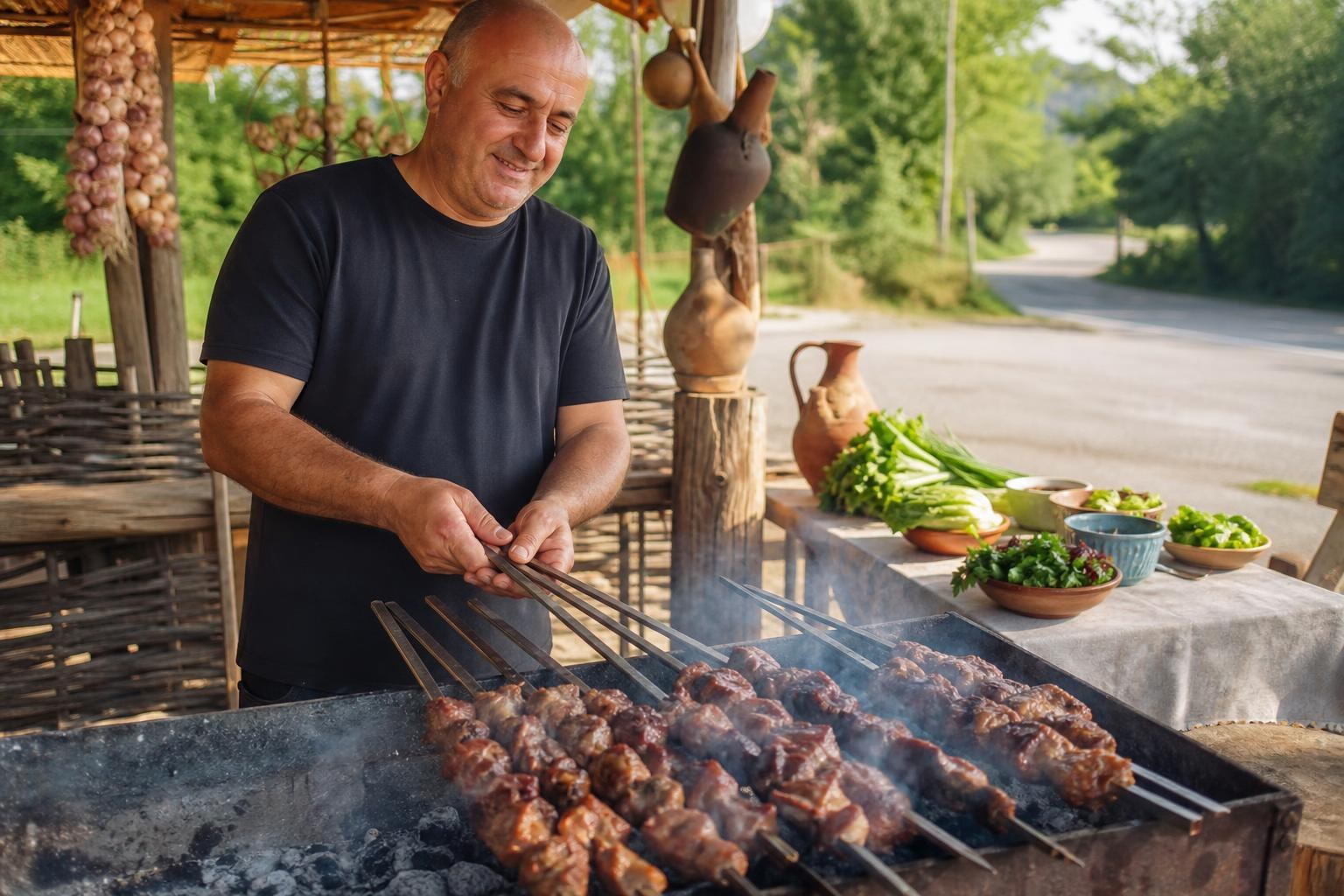
Few things in Georgia hit harder than the smell of pork fat dripping onto smoldering grapevine embers at a roadside stall. If you’ve driven any major highway in this country, you know the scene: a concrete shelter, a metal trough glowing with coals, and a man rotating skewers with the patience of a monk. This is mtsvadi, Georgia’s answer to barbecue, and it’s as much a part of road travel here as potholes and stunning mountain passes. Forget the fancy restaurants in Tbilisi for a moment. The best grilled meat in Georgia is eaten standing up, on the shoulder of a highway, with a cold beer you probably shouldn’t be having if you’re the driver. This guide covers what makes Georgian barbecue distinct, where to find the best roadside stops in 2026, and how to cook it yourself when you’re back home missing the Caucasus.
What is Mtsvadi? Defining the Authentic Georgian Barbecue
Mtsvadi is, at its simplest, chunks of pork grilled on a skewer over an open fire. But calling it “just grilled pork” is like calling khachapuri “just cheese bread.” The technique, the fuel, and the accompaniments create something specific to Georgia that you won’t find replicated anywhere else.
The traditional approach starts with pork shoulder or neck, chosen specifically for its high fat content. Expert tradition holds that high-quality meat should not be marinated; the fat does the work of keeping things moist. The meat is cut into generous chunks, roughly the size of a small fist, and threaded onto long metal skewers called “shampuri.”
What makes the preparation distinctive is the practice of alternating meat chunks with pieces of pork tail fat, known as kudis koni. As the skewers rotate over the heat, this fat melts and bastes the meat naturally, creating a self-basting system that keeps every piece juicy without any marinade or sauce.
The result is meat that’s charred on the outside, tender and almost creamy with rendered fat on the inside, and infused with a faint smokiness from the fuel below. It’s served with raw onion rings, a splash of pomegranate seeds, and a bowl of tkemali (sour plum sauce) on the side.
Mtsvadi vs. Shashlik: Understanding the Key Differences
If you’ve traveled in Russia, Central Asia, or the broader post-Soviet world, you’ve eaten shashlik. And yes, the two look almost identical on a skewer. But Georgians will correct you quickly if you use the word “shashlik” for their barbecue, and they have a point.
Shashlik, across most of the former Soviet Union, relies heavily on marinades. Vinegar, onion juice, kefir, wine: the meat soaks for hours, sometimes overnight. The marinade is the star. The fuel source is typically charcoal briquettes or whatever hardwood is available. Shashlik also tends to use a wider variety of meats, from lamb to beef to chicken, with regional preferences varying wildly.
Georgian barbecue flips this logic. The meat is the star, and the fat does what marinades do elsewhere. Pork dominates, particularly shoulder and neck cuts, because their natural fat content eliminates the need for tenderizing acids. The fuel is not generic charcoal but specific plant material (more on that below). And the accompaniments are distinctly Georgian: tkemali rather than ketchup, pomegranate seeds rather than sumac.
There’s also a cultural difference. Shashlik is often a weekend picnic activity. In Georgia, roadside mtsvadi stalls are a year-round institution tied to specific highways and mountain passes, operating as permanent fixtures rather than seasonal pop-ups.
The Elements of Perfection: Meat, Vine Cuttings, and Tkemali
Three things separate a forgettable skewer from the real thing: the cut of meat, the fire source, and the sauce. Get any one wrong and you’re eating generic grilled pork.
Pork shoulder or neck (kiseri) is the standard. The fat-to-meat ratio in these cuts means the meat stays tender over high, direct heat. Leaner cuts dry out fast. The kudis koni technique of threading tail fat between meat chunks adds another layer of insurance against dryness, and the rendered fat creates those flame flare-ups that char the exterior.
Tkemali, the sour plum sauce, is non-negotiable. Made from wild cherry plums, garlic, coriander, and dill, it cuts through the richness of the pork like nothing else. Every family has their own recipe, and roadside stalls often make it in-house. You’ll see it in green (unripe plum) and red (ripe plum) versions.
The Role of ‘Tsalami’ Vine Cuttings
The fuel source is where Georgian barbecue gets truly specific. Authentic preparation uses tsalami, dried grapevine prunings, to impart a unique smoky flavor. In a country with over 500 indigenous grape varieties and vineyards everywhere, there’s no shortage of this material.
An alternative fuel is deka, a Caucasian azalea bush. Both tsalami and deka provide high, consistent heat and a distinct, subtle smoky aroma that generic charcoal simply cannot replicate. The vine cuttings burn hot and fast, which is exactly what you want for searing meat quickly while keeping the interior juicy.
Essential Accompaniments: Onions and Pomegranate Seeds
The side plate matters. Raw white onion, sliced into thick rings and sometimes lightly salted, is always present. The sharpness of the onion balances the fatty richness of the pork.
Pomegranate seeds, scattered over the finished meat, add bursts of tartness and a visual pop of red against the charred brown. In autumn, when pomegranates are in season, the seeds are especially plump and sweet-tart. Flatbread (shotis puri or tonis puri) rounds out the plate, acting as both utensil and carb.
Tip: If you’re eating at a roadside stall, ask for extra tkemali. It’s usually free, and having enough sauce to dip every bite makes a real difference.
A Simple Mtsvadi Recipe for the Home Cook
You won’t have tsalami vine cuttings at home (unless you keep a vineyard), but you can get close. Here’s a straightforward approach:
- Buy 1.5 kg of bone-in pork shoulder or boneless pork neck. Cut into 4-5 cm chunks, keeping the fat on.
- If you can find pork tail fat at a butcher (ask at Eastern European or Asian grocery stores), cut it into 2 cm pieces. You’ll need about 200g.
- Thread the meat onto flat metal skewers, alternating with pieces of tail fat every two or three chunks. Season with salt and black pepper only.
- Build a fire using grapevine cuttings if available, or use natural lump hardwood charcoal (not briquettes). Let it burn down to glowing embers with no visible flame.
- Grill the skewers about 10-15 cm above the coals, rotating every 2-3 minutes. Total cooking time is roughly 15-20 minutes, depending on chunk size and heat.
- Serve immediately with sliced raw onion, pomegranate seeds, tkemali sauce, and fresh bread.
Important: Do not marinate the meat. The whole philosophy here is letting the pork fat and the smoke do the flavoring. If your meat is good quality, salt and pepper are genuinely all you need.
The biggest mistake home cooks make is using lean pork loin or trimming the fat. Resist that instinct. The fat is the point.
Roadside Mtsvadi Culture: Where to Stop While Driving
Roadside grilling isn’t a gimmick or a tourist attraction in Georgia. It’s a legitimate food culture tied to specific travel corridors. For decades, families have operated permanent stalls along the country’s major highways, and stopping for a skewer is as natural as stopping for fuel.
If you’re renting a car to explore the country (which remains the best way to see Georgia beyond Tbilisi), these stops will become highlights of your driving days. The table below compares the three main routes known for roadside Georgian barbecue.
| Route | Starting Point | Distance from Tbilisi | Drive Time | Best Season | What to Expect |
|---|---|---|---|---|---|
| Rikoti Pass (E60) | Tbilisi to Kutaisi | ~230 km to Kutaisi | ~3 hours | Year-round | Dedicated vendor area near Shrosha village |
| Kakheti Wine Route | Tbilisi to Sighnaghi/Telavi | ~110-150 km | ~1.5-2 hours | Sept-Nov (harvest) | Stalls near vineyards, wine pairing possible |
| Georgian Military Highway | Tbilisi to Kazbegi | ~155 km | ~3 hours | May-Oct | Concentrated stalls around Pasanauri |
The Rikoti Pass: The Heart of Roadside Dining
The Rikoti Pass corridor between eastern and western Georgia has been the spiritual home of roadside mtsvadi for generations. The 52-kilometer, four-lane Rikoti Pass motorway opened on December 30, 2025, dramatically cutting travel time between Tbilisi and Kutaisi.
The new highway bypasses many of the old roadside stalls that once lined the winding mountain road. But the Georgian government recognized the cultural and economic importance of these vendors. Designated commercial premises for mtsvadi and pottery sellers were established near the village of Shrosha to keep the tradition alive.
If you’re driving the E60 in 2026, look for the Shrosha exit. The new vendor area consolidates what was previously scattered along 30 km of mountain road into a more accessible stop. Expect to pay around 5-10 GEL per skewer (prices fluctuate, so check locally).
Kakheti Wine Route: Mtsvadi in the Vineyards
The drive east from Tbilisi toward Sighnaghi or Telavi passes through Georgia’s premier wine region, and the connection between vine cuttings and grilled meat is literal here. Many roadside stalls in Kakheti grill over tsalami sourced from the vineyards you can see from the road.
Autumn is the prime season, when the grape harvest (rtveli) is underway and the entire region smells of fermenting juice and wood smoke. You’ll find stalls clustered near Gurjaani and along the road between Telavi and Tsinandali.
Note: If you’re tasting wine at Kakheti’s many cellars, do not drink and drive. Use a designated driver, hire a local taxi for cellar visits, or stay overnight in Sighnaghi or Telavi. Georgian police conduct random breathalyzer checks, and the legal limit is strict.
The Georgian Military Highway: Fuel for the Mountains
The road north from Tbilisi to Kazbegi (Stepantsminda) is one of the most dramatic drives in the Caucasus, and the town of Pasanauri, about 90 km north of the capital, is the traditional lunch stop. Several well-established restaurants here specialize in grilled meat, and you can watch the skewers being prepared over open fires.
The Military Highway is a two-lane road that climbs to over 2,300 meters at the Jvari Pass. No 4×4 is needed in summer, but winter conditions (November through April) can require chains. Stopping in Pasanauri for a hot skewer before the final push to Kazbegi is practically a ritual for anyone driving this route.
Practical Logistics for Roadside Dining in Georgia
Roadside stalls operate on a cash-first basis. While card payments are increasingly common in Tbilisi restaurants, don’t count on it at a highway grill. Carry Georgian lari in small denominations (5, 10, 20 GEL notes).
Most stalls don’t have printed menus. You’ll see the meat displayed (often in a glass case or on the counter), and you order by the skewer. Pointing works fine if your Georgian is limited. Prices per skewer vary by region and meat type but generally fall in the 5-10 GEL range in 2026. Confirm the price before ordering, as some stalls charge by weight rather than per skewer.
- Restrooms at roadside stops range from acceptable to grim. Carry tissues and hand sanitizer.
- Parking is usually informal: pull off the road onto the gravel shoulder or into a dirt lot.
- Dogs are common around stalls. They’re generally friendly but don’t feed them from your plate unless you want company for the duration of your meal.
- Most stalls are open from late morning (around 10-11 AM) until the meat runs out, which can be early evening.
If you’re using Triproadwayplanner’s route guides, the major mtsvadi stops are marked on the recommended itineraries for each corridor.
How to Order and Eat Mtsvadi Like a Local
Walk up, look at what’s grilling, and hold up fingers for the number of skewers you want. Two skewers per person is a solid meal. Say “ori shampuri” (two skewers) if you want to try your Georgian. Ask for “tkemali” and “puri” (bread) separately if they’re not automatically included.
Eating etiquette is relaxed. Use the bread as a plate, sliding the meat off the skewer with a piece of flatbread. Alternate bites of meat with raw onion. Dip everything in tkemali. There’s no wrong way to do this, but eating with your hands is normal and expected.
One thing to know: Georgians often order a plate of fresh herbs (cilantro, basil, tarragon) alongside their meat. If you see bundles of greens on the counter, grab some. The herbs provide a fresh counterpoint to the richness of the pork and are usually free or cost very little.
- Don’t ask for ketchup. You’ll get a look.
- Beer (Natakhtari, Kazbegi, or local craft options) is the standard drink pairing, but remember the designated driver rule.
- If you’re offered chacha (grape brandy) by a friendly local, that’s hospitality in action. Accept politely, but one shot is enough if you’re driving.
Frequently Asked Questions About Georgian Barbecue
Is mtsvadi always pork?
Pork is the default and the most traditional option. You’ll occasionally find beef or lamb at some stalls, especially in regions with Muslim communities (Adjara, parts of Kvemo Kartli). Chicken skewers exist but are considered a separate dish. If a stall doesn’t specify, assume pork.
Can I find good Georgian barbecue in Tbilisi, or only on the road?
Tbilisi has excellent options, particularly in the Mtatsminda and Vera neighborhoods, where traditional restaurants grill over vine cuttings. But the roadside experience is different: it’s faster, cheaper, and tied to the ritual of a road trip. Both are worth trying.
How much does a roadside mtsvadi meal cost in 2026?
Budget roughly 25-50 GEL per person for two skewers, bread, tkemali, onions, and a drink (https://1tv.ge/lang/en/news/last-4-kilometre-long-road-opens-at-rikoti-pass/). Prices vary by location and portion size. Stalls near tourist-heavy routes (like the Military Highway) may charge slightly more. Always confirm pricing before ordering, especially at stalls that charge by weight.
Is it safe to eat at roadside stalls?
The meat is cooked over extremely high heat, which handles most food safety concerns. Look for stalls with visible turnover: a busy grill with fresh coals and a steady stream of local customers is a good sign. Avoid stalls where meat has been sitting out in the sun without refrigeration.
What’s the best time of year for a Georgian barbecue road trip?
Late September through October is ideal. The weather is warm but not scorching, the grape harvest is underway (meaning fresh tsalami fuel and wine everywhere), and pomegranates are in season. Spring (April-May) is a close second, with green landscapes and fewer tourists on the roads.
Georgia’s roadside grilling tradition is one of those experiences that no restaurant can fully replicate. The combination of specific fuel, unadulterated pork, and the ritual of stopping mid-journey creates something greater than the sum of its parts. Whether you’re crossing the Rikoti Pass on the new motorway or winding north toward Kazbegi, build in an extra 30 minutes for a skewer stop. Your schedule can wait. The meat cannot.