
Table of Contents
- Exploring the Heart of Telavi: History and Landmarks
- The Wine Lover’s Guide to Telavi and Surroundings
- Essential Kakheti Travel Data and Logistics
- Spiritual and Architectural Gems Near Telavi
- Where to Eat: Authentic Kakhetian Cuisine
- Practical Tips for Navigating the Wine Region
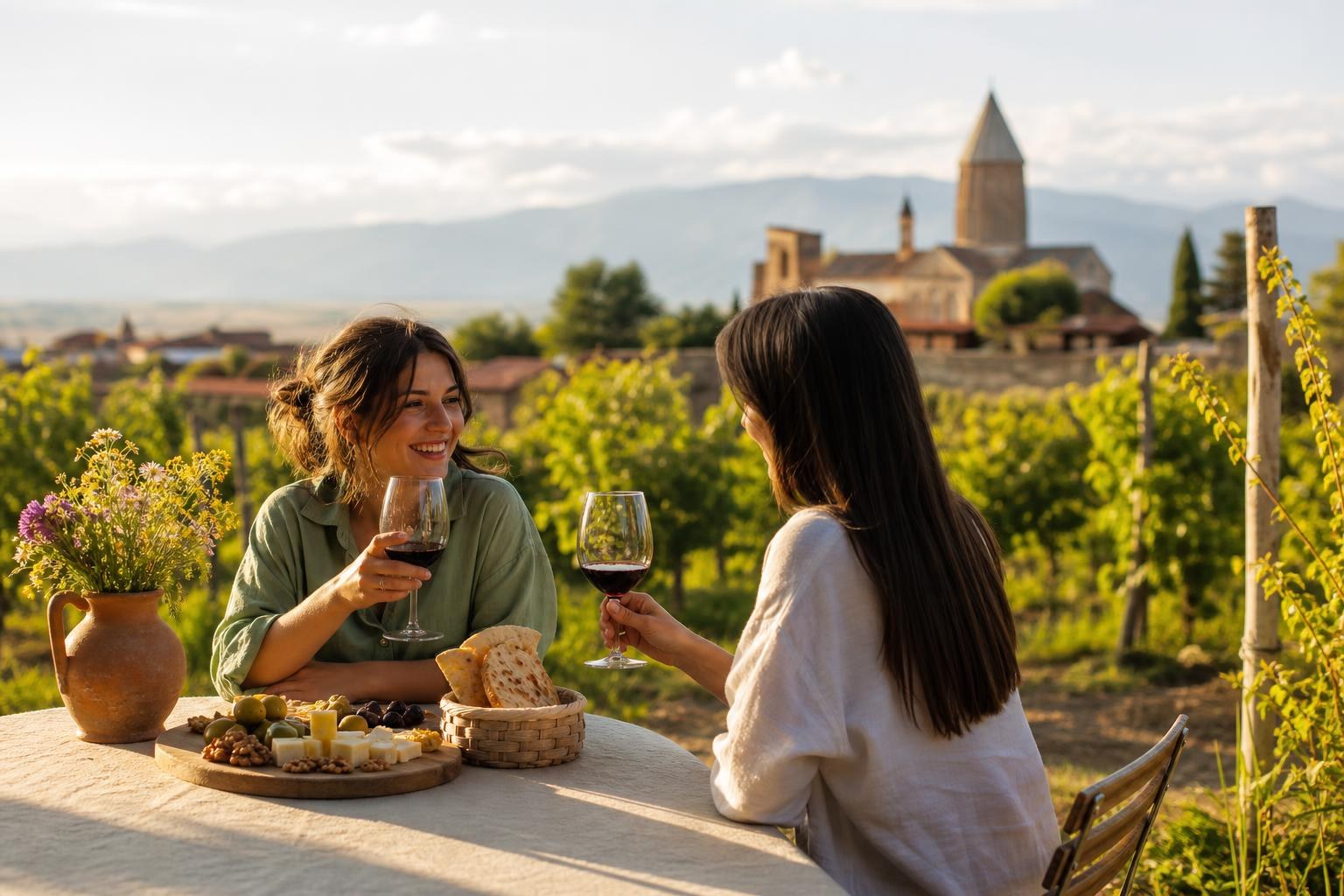
Telavi sits in the Alazani Valley like a town that hasn’t quite decided whether it belongs to the present or the past, and that’s precisely what makes it magnetic. As the capital of Georgia’s Kakheti region, it’s surrounded by vineyards, monasteries, and a food culture that treats every meal like a small celebration. Georgia welcomed over 5.5 million international tourists in 2025, and a growing share of those visitors are heading east to Kakheti rather than just ticking off Tbilisi. If you’re wondering what to do in Telavi and the wider wine region, the answer is: slow down, drink well, eat better, and let the place surprise you. I’ve spent enough time in this valley to know that the best experiences here aren’t on any checklist. They happen when a winemaker invites you into his cellar, or when you stumble onto a crumbling church at golden hour. This guide covers the practical stuff: where to go, what to taste, how to get around, and what it’ll cost you. But it also tries to capture what makes Kakheti feel different from every other wine region I’ve visited.
Exploring the Heart of Telavi: History and Landmarks
Telavi is compact enough to walk in a couple of hours, but interesting enough to hold you for days. The town has been a center of power in eastern Georgia since at least the 10th century, and layers of that history show up everywhere: in fortress walls, ancient trees, and the layout of the old town itself. Unlike Tbilisi, which has been heavily developed and renovated, Telavi retains a rougher, more authentic texture. You’ll see Soviet-era apartment blocks next to medieval churches, and market vendors selling churchkhela (walnut-stuffed grape candy) from the same stalls their grandmothers used.
The population hovers around 20,000, which means you’ll run into the same faces at breakfast and dinner. That smallness is part of the charm. Telavi doesn’t perform for tourists; it just exists, and you’re welcome to join in.
Batonis Tsikhe: The Fortress of King Erekle II
The main landmark in town is Batonis Tsikhe, the 17th-century royal residence of King Erekle II (Heraclius II), who ruled the Kingdom of Kakheti and later a unified eastern Georgian kingdom. The fortress complex includes two churches, a royal palace, and a small museum with artifacts from the region’s history. Entry costs about 7 GEL (roughly $2.50 USD in 2026), and the museum is well worth the time, especially for its collection of medieval weapons and royal portraits.
What struck me most was the scale. This isn’t a grand European palace; it’s a working fortress built by a king who spent much of his life fighting off Persian and Ottoman invasions. The walls are thick, the rooms are modest, and the whole place feels more military than decorative. The gardens surrounding it, though, are lovely and offer views across the Alazani Valley toward the Greater Caucasus mountains. On a clear day, you can see snow-capped peaks from the ramparts.
The 900-Year-Old Giant Plane Tree
A five-minute walk from the fortress brings you to one of Telavi’s most beloved landmarks: a massive plane tree (platanus) estimated to be around 900 years old. The trunk is over 12 meters in circumference, and the canopy spreads wide enough to shade a small parking lot. Locals call it simply “the big tree,” and it’s become an unofficial symbol of the town.
There’s a small park around it, and on warm evenings, you’ll find families gathered underneath. It’s not a major tourist attraction in the traditional sense, but it’s the kind of thing that anchors a place. This tree was already old when the Mongols arrived. Standing next to it recalibrates your sense of time in a useful way.
The Wine Lover’s Guide to Telavi and Surroundings
Kakheti produces roughly 70% of Georgia’s wine, and Georgia itself is widely considered one of the oldest winemaking countries on earth, with archaeological evidence of viticulture dating back 8,000 years. Georgian wines are poised to expand their global presence even amid shifting international markets, and Kakheti is the engine driving that growth. The region’s signature grape is Saperavi, a dark-skinned variety that produces deeply colored, tannic reds. But there are over 500 indigenous grape varieties in Georgia, and Kakheti is where you’ll encounter the widest range.
Wine here isn’t a lifestyle brand or a weekend hobby. It’s woven into daily life, religious practice, and social identity. The tamada (toastmaster) tradition at Georgian feasts, or supras, elevates drinking into something closer to ritual. You don’t just pour and sip; you toast to ancestors, to peace, to the land itself.
Traditional Qvevri Winemaking at Local Maranis
The thing that sets Georgian wine apart from everything else in the world is the qvevri: a large, egg-shaped clay vessel buried underground, where grapes ferment and age with their skins, seeds, and sometimes stems. This method produces what’s often called “amber wine” or “orange wine” from white grapes, and it yields flavors you simply can’t get from stainless steel tanks. UNESCO recognized qvevri winemaking as Intangible Cultural Heritage in 2013.
In Telavi and the surrounding villages, many families still make wine this way in their marani (wine cellar). Several offer tastings and tours, often for free or for a modest fee of 20-30 GEL. The experience is nothing like visiting a commercial winery. You’re in someone’s basement, surrounded by buried qvevri, and the winemaker is pouring directly from the vessel. The wines tend to be unfiltered, complex, and occasionally challenging if you’re used to clean, fruit-forward styles. Give them a chance. The best qvevri wines have a depth and earthiness that stays with you.
Must-Visit Vineyards: Tsinandali Estate and Shumi Winery
Tsinandali Estate is the most famous wine destination in Kakheti, and for good reason. It was the home of Prince Alexander Chavchavadze, a 19th-century aristocrat who introduced European winemaking techniques to Georgia. The estate includes a beautiful house museum, manicured gardens, and a wine cellar with bottles dating back to the 1800s. Tastings typically run 15-25 GEL for a flight of four wines.
Shumi Winery, located near the village of Tsinandali, takes a different approach. It’s a working winery with a small vineyard museum showcasing dozens of indigenous grape varieties. The staff is knowledgeable and less tourist-oriented than Tsinandali, which I appreciated. You can taste both qvevri and European-style wines here side by side, which is the best way to understand the difference. For a more immersive experience, wine tasting tours in Kakheti can be arranged through local operators who handle transport and guide you through multiple cellars in a single day.
Essential Kakheti Travel Data and Logistics
Getting to Telavi from Tbilisi is straightforward but not luxurious. The drive takes about two hours via the Gombori Pass, a winding mountain road that’s scenic but can be rough in winter. Marshrutkas (minibuses) depart from Tbilisi’s Samgori metro station regularly, and the ride costs around 10-12 GEL one way. Private taxis via the Bolt app run 80-120 GEL depending on negotiation and time of day.
Once in Telavi, you’ll want your own transport to explore the wider region. Car rental through local agencies costs 80-150 GEL per day, and fuel is about 3.20 GEL per liter. Alternatively, hiring a driver for a full day of Kakheti exploration runs 150-200 GEL and saves you the stress of navigating unmarked village roads.
Table: Best Time to Visit and Transport Costs
| Detail | Information |
|---|---|
| Best months to visit | September – October (harvest season, Rtveli festival) |
| Second-best window | May – June (warm, green, fewer crowds) |
| Marshrutka from Tbilisi | 10-12 GEL (~$3.60 USD), 2 hours |
| Private taxi from Tbilisi | 80-120 GEL (~$30-45 USD) |
| Daily car rental | 80-150 GEL (~$30-55 USD) |
| Fuel cost | ~3.20 GEL/liter (~$1.15 USD) |
| Hired driver (full day) | 150-200 GEL (~$55-75 USD) |
| Average hotel (Telavi) | 80-180 GEL/night (~$30-65 USD) |
| Budget guesthouse | 40-70 GEL/night (~$15-25 USD) |
September and October are the undisputed best months. The Rtveli grape harvest transforms the entire region into a working festival. Families press grapes, cellars open, and the air smells like fermenting fruit. If you can only visit once, come during Rtveli.
Spiritual and Architectural Gems Near Telavi
Kakheti’s religious architecture is extraordinary, and most of it sits within a 30-minute drive of Telavi. These aren’t museum pieces cordoned off behind ropes. They’re active churches and monasteries where monks still pray, make wine, and tend gardens. Dress modestly: women should bring a headscarf and long skirt (often available to borrow at the entrance), and men should wear long pants.
Alaverdi Monastery: Wine and Medieval Grandeur
Alaverdi Cathedral, about 20 kilometers from Telavi, is one of the tallest religious buildings in Georgia. The main church dates to the 11th century, and the monastery complex is still home to a small community of monks who produce their own qvevri wine. The setting is extraordinary: the cathedral rises from flat farmland with the Caucasus mountains behind it, and the scale of the building is genuinely impressive for its age.
The monks’ wine isn’t commercially available in any meaningful quantity, but if you visit at the right time and ask politely, you might get to taste it. The monastery also hosts a small wine festival during Rtveli. Entry is free, though donations are appreciated. This is a place where wine and faith have been intertwined for a thousand years, and you can feel that continuity.
Gremi Citadel and Ikalto Academy
Gremi, about 20 kilometers northwest of Telavi, was once the capital of the Kingdom of Kakheti before it was destroyed by Shah Abbas I in 1615. What remains is a fortified citadel with the Church of the Archangels, perched on a hill with panoramic views. The small museum inside costs 3 GEL and contains artifacts from the town’s brief but prosperous heyday as a Silk Road trading post.
Ikalto Academy, closer to Telavi, is one of the oldest educational institutions in the Caucasus, founded in the 6th century. Legend has it that the great Georgian poet Shota Rustaveli studied here, though historians debate this. The ruins are atmospheric rather than grand: crumbling walls, old qvevri embedded in the ground, and a quiet courtyard shaded by trees. It’s the kind of place that rewards patience. Sit for a while and let the silence work on you.
Where to Eat: Authentic Kakhetian Cuisine
Kakhetian food is Georgian cuisine turned up a notch. The portions are bigger, the flavors are bolder, and bread plays an even more central role. The signature dish is shotis puri, a canoe-shaped bread baked in a tone (clay oven), and you’ll see bakeries producing it fresh throughout the day. Pair it with local cheese, walnuts, and a glass of Saperavi, and you have a meal that costs almost nothing but satisfies completely.
For a proper sit-down experience, try Restaurant Kapiloni on Telavi’s main street. A full meal with wine runs about 35-50 GEL per person. Their khashlama (boiled veal) and lobiani (bean-stuffed bread) are excellent. For something more casual, the central market has vendors selling khinkali (dumplings) for about 1 GEL each, and the churchkhela hanging from market stalls is fresher and chewier than anything you’ll find in Tbilisi.
Kakhetian mtsvadi (grilled pork skewers) is a regional specialty worth seeking out. The meat is typically marinated in pomegranate juice and grilled over grapevine cuttings, which gives it a subtle smoky sweetness. Look for roadside stalls on the highway between Telavi and Sighnaghi, where you can get a full plate with tkemali (plum sauce) and fresh herbs for 12-15 GEL.
One more tip: if a family invites you to a supra (feast), say yes. Georgian hospitality, rooted in the phrase stumari ghvtisaa (“a guest is from God”), means you’ll be fed far more than you can eat, toasted repeatedly by the tamada, and sent home with a bottle of homemade wine. This isn’t transactional hospitality or resort-style service. It’s personal, intense, and genuinely generous.
Practical Tips for Navigating the Wine Region
Kakheti rewards preparation but doesn’t punish spontaneity. Here’s what actually matters for a smooth trip.
- Download Google Translate’s Georgian offline pack before you leave Tbilisi. English is spoken at major wineries and hotels but rarely in villages or marshrutkas.
- Use the Bolt app for taxis. It’s widely available in Telavi and prevents the usual price negotiation that can be exhausting after a long day.
- Carry cash in GEL. Many smaller wineries, guesthouses, and restaurants don’t accept cards. ATMs exist in Telavi center but are scarce outside town.
- Don’t try to visit more than three wineries in a day. Tastings here are generous, and you’ll want to actually remember what you drank.
- If you’re driving, be cautious on the Gombori Pass, especially after dark. The road is narrow, poorly lit, and occasionally shared with livestock.
- Solo female travelers generally report feeling very safe in Kakheti. Police are reliable, and the culture of guest protection extends strongly to women traveling alone.
Georgia’s tourism revenue was on track to hit $4.6 billion in 2025 as wine tourism drove record growth, and Kakheti is absorbing more of that attention each year. Prices remain remarkably low compared to European wine regions, but they’re rising. A bottle of excellent qvevri wine that cost 15 GEL three years ago now costs 25-30 GEL. Visit sooner rather than later if budget matters to you.
The best Kakheti travel tip I can offer is this: build in unstructured time. Schedule your monastery visits and winery tours, sure, but leave half your days open. The most memorable moments in this region happen when you wander into a village, accept an invitation, or simply sit on a terrace watching the light change over the Alazani Valley. Telavi and its surroundings aren’t a destination you conquer. They’re a place you settle into, one glass at a time.