
Table of Contents
- The Magic of October in Georgia: Weather and Atmosphere
- Rtveli: Participating in the Ancient Wine Harvest
- Chasing Fall Foliage in the Caucasus Mountains
- Cultural Festivals and Autumn Events
- Seasonal Flavors to Try in October
- Planning Your Autumn Itinerary: Tips for Travelers
October in Georgia feels like a secret the country keeps from most of the world. While tourists crowd Mediterranean beaches and European capitals during summer, this small Caucasus nation quietly enters its most spectacular season: the vineyards turn amber and crimson, the mountains catch their first dustings of snow, and entire villages come alive with the ancient grape harvest. If you’re wondering what to do in Georgia in October, the short answer is everything. The longer answer involves wine pressed in clay vessels buried underground, hiking trails framed by fall color so vivid it looks manipulated, and street festivals where strangers hand you freshly roasted chestnuts and insist you eat more. Georgia welcomed a record 5.5 million international tourists in 2025, and a growing share of those visitors are choosing autumn for exactly these reasons. This is the month when Georgia’s harvest traditions and natural scenery converge into something you won’t find anywhere else.
The Magic of October in Georgia: Weather and Atmosphere
October in Georgia delivers the kind of weather that makes you want to stay outside all day. The oppressive summer heat has broken, the winter rains haven’t arrived yet, and the light takes on a golden quality that photographers obsess over. Tbilisi’s tree-lined streets feel different in autumn: cafe terraces stay open, locals linger longer over coffee, and the pace of the city slows just enough to match the season.
What makes October particularly special is the contrast between regions. You can spend a morning in the warm lowlands of Kakheti, surrounded by vineyards heavy with fruit, and by afternoon be in the mountains where the air is crisp and the peaks are dusted white. This geographic diversity means you’re essentially experiencing multiple seasons in a single day of travel. The country is small enough (roughly the size of Ireland) that these transitions happen quickly, often within a two- or three-hour drive.
October Climate and Packing Essentials
Tbilisi in October sits comfortably between 10°C and 20°C most days, though early October can still push toward 24°C. Evenings cool down noticeably, so layering is essential. A light jacket, a warm sweater, and a rain shell will cover most situations.
For mountain regions like Svaneti and Kazbegi, expect temperatures to dip below 5°C at night and occasionally near freezing at higher elevations. Pack thermal base layers if you plan to hike. Comfortable waterproof boots serve double duty: they handle both muddy vineyard visits and mountain trails.
A few practical items people forget: sunscreen (the UV at altitude is stronger than you’d expect), a reusable water bottle, and a small daypack for spontaneous market visits. Download the Bolt app for taxis in Tbilisi and Batumi, and grab the Google Translate offline Georgian language pack before you leave home. English is spoken widely in Tbilisi’s tourist areas but becomes sparse in rural wine country.
Average Temperatures and Rainfall by Region (Table)
| Region | Avg. High (°C) | Avg. Low (°C) | Rainfall (mm) | Best For |
|---|---|---|---|---|
| Tbilisi | 20 | 10 | 35 | City culture, food tours |
| Kakheti | 21 | 9 | 40 | Wine harvest, vineyards |
| Svaneti | 10 | 2 | 70 | Alpine hiking, towers |
| Kazbegi | 8 | 0 | 55 | Mountain scenery, Gergeti |
| Batumi | 20 | 13 | 120 | Coastal walks, botanical gardens |
| Borjomi | 14 | 5 | 45 | Forest hikes, mineral springs |
| Racha | 15 | 5 | 50 | Foliage, quiet villages |
Batumi is the outlier: it receives significantly more rain in October than other regions, so plan coastal visits for early in the month if possible.
Rtveli: Participating in the Ancient Wine Harvest
Rtveli, the Georgian grape harvest, is not a spectator event. It’s a full-body, full-community affair that has been happening in these valleys for roughly 8,000 years, making Georgia the oldest known winemaking civilization on Earth. October is peak rtveli season, and if you time your visit right, you can join families as they pick grapes, crush them by foot, and celebrate with enormous feasts called supras.
The harvest is deeply communal. Neighbors help neighbors, and visitors who show up willing to work are treated like honored guests: stumari ghvtisaa, as Georgians say, meaning “a guest is a gift from God.” This isn’t performative hospitality. Expect to be handed clippers, pointed toward a row of vines, and fed until you physically cannot eat another bite. Georgia’s 2024 grape harvest set records despite a global wine production slump, and the 2025 season continued that momentum with strong yields across key regions.
Wine Regions to Visit: Kakheti and Imereti
Kakheti produces roughly 70% of Georgia’s wine and is the undisputed heart of rtveli. The Alazani Valley, flanked by the Greater Caucasus mountains, is where you’ll find the most concentrated vineyard activity in October. Towns like Sighnaghi (often called the “City of Love” for its wedding chapels and panoramic views) and Telavi serve as excellent bases.
Smaller family wineries are where the real magic happens. Operations like Pheasant’s Tears in Sighnaghi or Nika Winery near Kvareli welcome visitors for tastings and harvest participation. Expect to pay around 30-50 GEL (roughly $11-18 USD) for a guided tasting at most family cellars. Some charge nothing at all and simply invite you to their table.
Imereti, in western Georgia, offers a different winemaking style. The wines here tend to be lighter, and the region uses a variation of the traditional method that involves less skin contact. It’s less touristy than Kakheti, which is either a drawback or a selling point depending on your preferences.
Traditional Winemaking in Qvevri
Qvevri are large, egg-shaped clay vessels buried in the ground, and they represent Georgia’s UNESCO-recognized winemaking tradition. Grapes go in whole: skins, stems, seeds, and all. The qvevri is sealed with a stone lid and beeswax, and fermentation happens underground at a naturally stable temperature.
The resulting wine, often called amber wine or orange wine in Western markets, has a tannic, complex character unlike anything you’ll taste from a stainless steel tank. Watching a winemaker unseal a qvevri that’s been fermenting for months is genuinely moving, especially when they scoop out the first glass and hand it to you with visible pride.
Many guesthouses in Kakheti have their own qvevri buried in the yard. Ask your host if they make wine: the answer is almost always yes. A bottle of homemade qvevri wine typically costs 10-15 GEL ($4-6 USD) if they’ll sell it at all. More often, it’s simply poured for you at dinner.
Chasing Fall Foliage in the Caucasus Mountains
Georgia’s autumn scenery rivals New England and Hokkaido, but with a fraction of the crowds. The Caucasus Mountains provide dramatic elevation changes, which means fall color cascades down the slopes over several weeks rather than hitting all at once. Early October catches the higher elevations in full color, while lower valleys and forests peak closer to the end of the month.
The variety of tree species helps too. Georgian forests include beech, oak, chestnut, hornbeam, and wild fruit trees, each turning a different shade. The effect is a patchwork of gold, rust, burgundy, and deep green that stretches across entire mountainsides. Autumn in Georgia is increasingly recognized as one of Europe’s best-kept seasonal secrets.
Hiking in Svaneti and Kazbegi
Svaneti, in Georgia’s northwest, is home to medieval stone towers, glacial valleys, and some of the most dramatic hiking in the Caucasus. The four-day trek from Mestia to Ushguli (one of Europe’s highest continuously inhabited settlements) is a classic, though October weather can make the higher passes unpredictable. Check conditions locally before starting, and consider hiring a guide through the Mestia tourist information center for around 100-150 GEL per day.
Kazbegi (officially Stepantsminda) is more accessible: it’s a three-hour drive north of Tbilisi along the Georgian Military Highway, one of the most scenic road trips you’ll ever take. The hike to Gergeti Trinity Church, perched at 2,170 meters with Mount Kazbek towering behind it, takes about 90 minutes up and is manageable for most fitness levels. In October, the surrounding meadows glow gold against the snow-capped peak, creating the kind of scene that ends up as someone’s desktop wallpaper for years.
Photography Hotspots: Racha and Borjomi-Kharagauli
Racha is Georgia’s least-visited major wine region, tucked into the mountains of the northwest. The fall colors here are extraordinary, with dense forests of beech and chestnut blanketing the hillsides. The village of Oni makes a good base, and the surrounding countryside feels like stepping into a painting. Racha is also known for Khvanchkara, a naturally semi-sweet red wine that was reportedly Stalin’s favorite.
Borjomi-Kharagauli National Park offers well-maintained trails through old-growth forest that turns spectacular in October. The park covers over 85,000 hectares, making it one of the largest protected areas in Europe. Trail options range from easy two-hour loops to multi-day routes with overnight shelters. The mineral springs in Borjomi town are worth a stop: fill a bottle from the public fountain (free) and taste the naturally carbonated, slightly sulfuric water that made this town famous across the former Soviet Union.
Cultural Festivals and Autumn Events
October is festival season in Georgia, and the celebrations feel genuinely rooted in community rather than staged for tourists. The harvest creates a natural reason to gather, eat, drink, and make music, and Georgians need very little encouragement for any of those activities.
Tbilisoba: Celebrating the Capital City
Tbilisoba is Tbilisi’s annual city celebration, typically held on the last weekend of October. The Old Town fills with stages, food stalls, craft vendors, and performances of traditional polyphonic singing and dance. Streets around the Narikala Fortress and the sulfur baths district become pedestrian zones packed with locals and visitors.
The food alone is worth showing up for. Vendors sell freshly baked shotis puri (traditional bread from a clay oven), churchkhela, grilled meats, and regional specialties from across the country. Live music ranges from traditional Georgian folk to contemporary acts, and the atmosphere stays festive well into the night. Entry to all public events is free.
Local Harvest Markets and Food Fairs
Beyond Tbilisoba, smaller harvest markets pop up across the country throughout October. The Dezerter Bazaar in Tbilisi is a year-round market, but it peaks in autumn when vendors pile their stalls with pomegranates, persimmons, walnuts, fresh herbs, and homemade tkemali (sour plum sauce). A kilo of ripe persimmons runs about 2-3 GEL ($0.75-1.10 USD), and a jar of homemade adjika (spicy pepper paste) costs around 5 GEL.
In Kakheti, look for roadside stands selling freshly pressed grape juice, chacha (grape brandy), and churchkhela strung up like colorful sausages. These aren’t tourist traps: they’re the same stands locals use. Prices are low and bargaining is generally unnecessary.
Seasonal Flavors to Try in October
Georgian cuisine is built around seasonal ingredients, and October brings some of the year’s best eating. The harvest isn’t just about grapes: it’s walnuts, pomegranates, persimmons, chestnuts, and late-season vegetables all arriving at once.
Fresh Churchkhela and Pelamushi
Churchkhela is Georgia’s iconic candy: walnuts or hazelnuts threaded on a string and dipped repeatedly in thickened grape juice until they form a candle-shaped confection. October is when churchkhela is made fresh, and the difference between a freshly made strand and a dried-out tourist-shop version is enormous. Fresh churchkhela is soft, chewy, and intensely fruity. A single strand costs 3-5 GEL.
Pelamushi is the lesser-known companion: a thick, pudding-like dessert made from the same concentrated grape juice. It’s served warm, often topped with walnuts, and has a deep, almost chocolatey sweetness despite containing no chocolate. You’ll find it at harvest festivals and in homes across Kakheti. Ask for it by name: most visitors don’t know about it, and Georgians light up when foreigners request it.
Roasted Chestnuts and Persimmons
Street vendors in Tbilisi begin roasting chestnuts in October, and the smell alone is worth a detour. A paper cone of roasted chestnuts costs about 3 GEL and makes the perfect walking snack while exploring the Old Town’s winding streets.
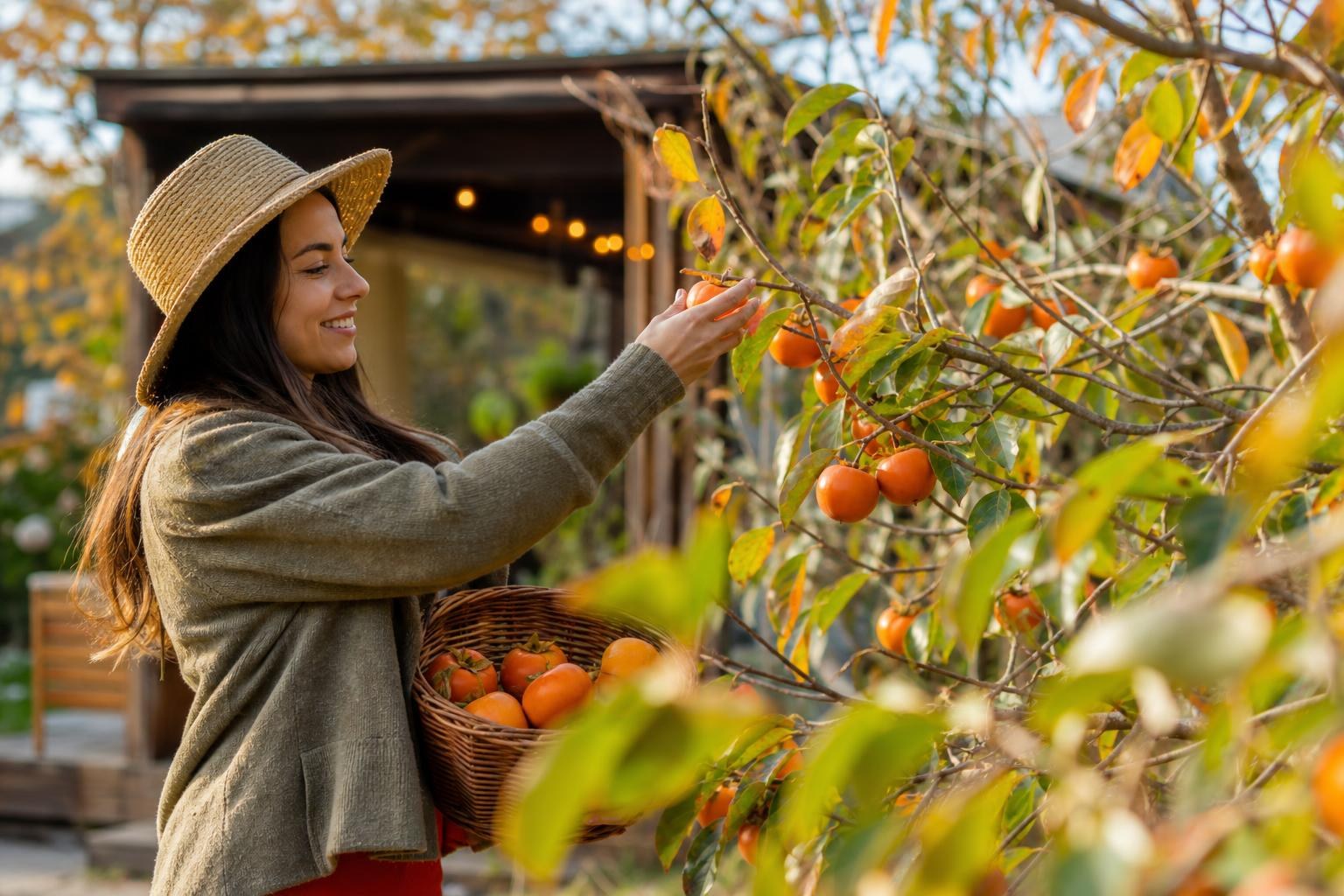
Persimmons (called khurma in Georgian) reach their peak sweetness in late October. The variety grown in Georgia is typically the astringent type, which needs to be fully ripe before eating: look for fruit that feels almost overripe to the touch. When ready, the flesh is like honey-flavored jelly. Locals eat them for breakfast, blend them into smoothies, or dry them for winter storage.
Planning Your Autumn Itinerary: Tips for Travelers
A solid October itinerary in Georgia balances city, wine country, and mountains. Here’s a realistic framework for 10 days:
- Days 1-3: Tbilisi (Old Town, sulfur baths, Dezerter Bazaar, day trip to Mtskheta)
- Days 4-6: Kakheti (Sighnaghi, vineyard visits, rtveli participation, qvevri tastings)
- Days 7-8: Kazbegi (Georgian Military Highway drive, Gergeti Trinity Church hike)
- Days 9-10: Borjomi or Racha (forest hiking, mineral springs, foliage photography)
Book guesthouses directly when possible: many family-run places in Kakheti and mountain villages aren’t listed on major booking platforms. A guesthouse with dinner and breakfast typically costs 60-100 GEL ($22-37 USD) per person per night, and the homemade meals alone are worth the price.
Marshrutkas (shared minibuses) connect most towns cheaply, but renting a car gives you far more flexibility, especially for vineyard hopping. Rental rates in October 2026 start around 80-100 GEL per day for a basic sedan. Drive carefully on mountain roads: they’re scenic but narrow, and livestock has the right of way in practice if not in law.
Georgia’s October harvest and scenery represent the country at its most authentic. This isn’t a destination that needs to manufacture experiences for visitors: the traditions are real, the landscapes are unfiltered, and the hospitality is so intense it can catch you off guard. Whether you’re pressing grapes with a Kakhetian family, hiking through golden beech forests in Svaneti, or eating your weight in churchkhela at Tbilisoba, October gives you Georgia without pretense. Come hungry, pack layers, and leave room in your luggage for a few bottles of amber wine.