
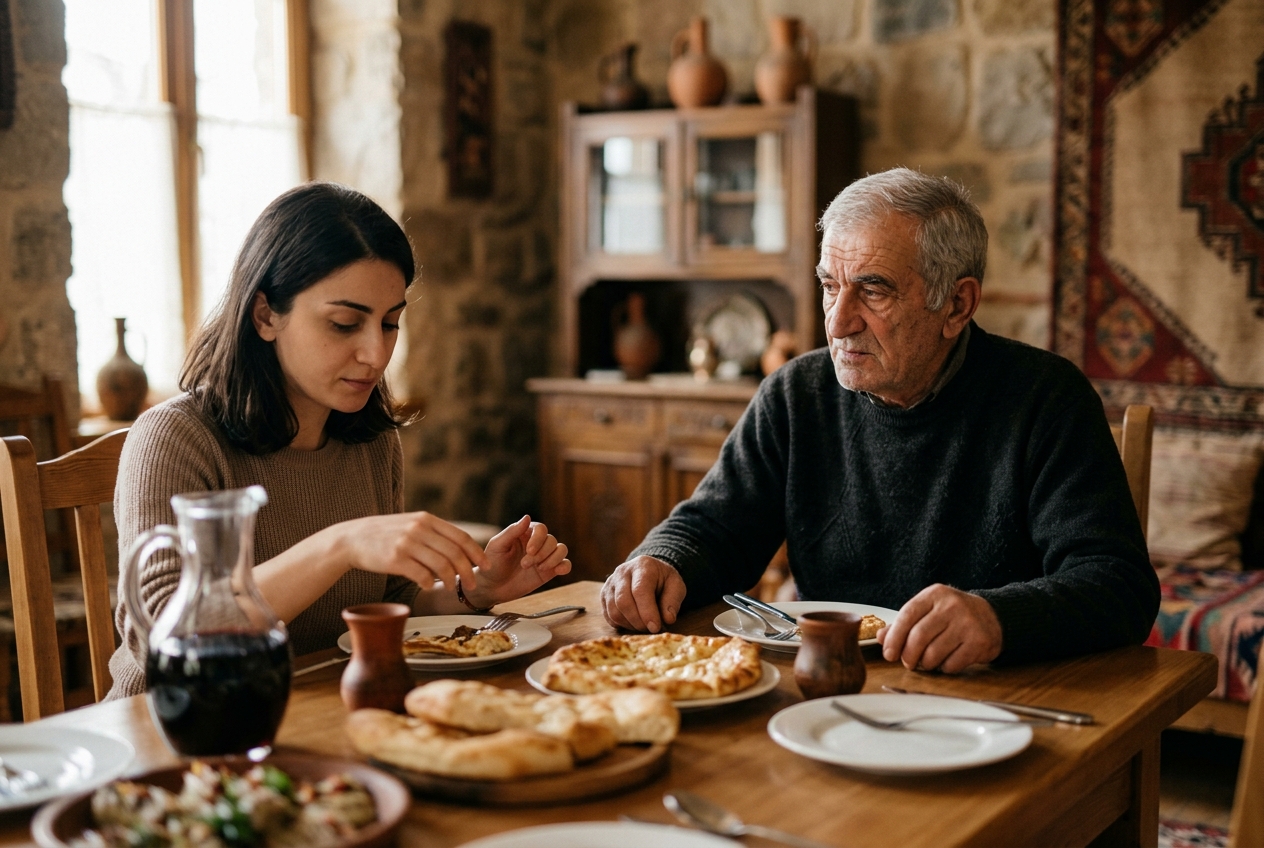
Georgia is one of those countries that catches travelers off guard – not because it’s unwelcoming, but because it’s almost overwhelmingly hospitable. The culture runs on a deep code of honor, generosity, and respect that has been shaped by centuries of Orthodox Christianity, communal village life, and a geographic position at the crossroads of empires. What might seem like a small social misstep to a visitor can land as a genuine insult to a Georgian host. Understanding what’s considered rude in Georgia isn’t about memorizing a rulebook; it’s about grasping the values underneath the customs. I’ve watched tourists stumble through these situations dozens of times, and the good news is that Georgians are incredibly forgiving when they see you’re trying. But a little knowledge goes a long way toward turning a good trip into a deeply meaningful one.
The Foundations of Georgian Hospitality and Etiquette
Georgian culture is built on a concept that doesn’t have a clean English translation: “stumari ghvtisaa,” meaning “a guest is a gift from God.” This isn’t a quaint saying people toss around casually. It’s a lived philosophy that shapes how families organize their homes, prepare their meals, and interact with strangers. Hospitality here isn’t transactional the way it can feel at a Western resort or hotel – it’s a spiritual obligation.
The Sacred Role of the Guest
When a Georgian family invites you into their home, they are offering you the best of everything they have. The best food, the best seat, the best wine. Declining that generosity or failing to acknowledge it is one of the fastest ways to cause offense. A guest who doesn’t show appreciation for the host can inadvertently embarrass them, because in Georgian thinking, the host’s entire reputation rests on how well they treat you.
Practically speaking, this means you should always compliment the food, express gratitude multiple times, and never rush through a visit. If someone in a rural village invites you for coffee, expect to stay for at least an hour. Trying to leave quickly feels dismissive. Another thing that surprises visitors: you should remove your shoes at the entrance of most Georgian homes. It’s a common household custom that signals respect for the home itself.
Bringing a small gift – wine, sweets, flowers, or something from your home country – is always appreciated and never expected. But showing up empty-handed repeatedly, especially if you’re a regular guest, will eventually be noticed.
Respecting Elders and Social Hierarchy
Age carries enormous weight in Georgian society. This isn’t the kind of casual “respect your elders” advice you hear everywhere – it’s structural. Older family members speak first at gatherings. They’re served first at meals. Their opinions carry the most authority in family decisions, and publicly contradicting an elder is a serious social faux pas.
If you’re at a dinner and an older Georgian makes a statement you disagree with, the polite move is to nod, perhaps gently offer a different perspective later in private, but never challenge them in front of others. This applies doubly if you’re a guest. The hierarchy isn’t just about age, either – men and women often have distinct roles at traditional gatherings, particularly in rural areas, though Tbilisi and other cities are considerably more relaxed about this.
On public transport, giving up your seat for elderly passengers isn’t optional – it’s expected. Young Georgians do this automatically, and a tourist who stays seated while an elderly person stands will draw disapproving looks.
Dining and Supra Traditions
The supra – Georgia’s legendary communal feast – is where etiquette matters most. This is not just a meal. It’s a ritualized social event with specific rules, a designated leader, and a sequence of toasts that can stretch for hours. Getting it wrong won’t ruin your life, but understanding the basics will earn you real respect.
The Role of the Tamada and Toasting Protocols
Every supra has a tamada, or toastmaster, who controls the flow of the evening. The tamada decides the order and subject of toasts – to God, to Georgia, to family, to the deceased, to friendship. You don’t freelance your own toast until the tamada invites you to do so. Interrupting the toasting sequence or raising your glass at the wrong time is considered disrespectful.
Here’s the detail that catches most foreigners: beer is traditionally reserved for enemies at a Georgian feast. Toasting with beer is an insult. You toast with wine or chacha (Georgian grape brandy). If you don’t drink alcohol, explain this clearly and early – Georgians will understand, but you need to communicate it rather than just quietly sipping beer while everyone else raises wine glasses.
When the tamada makes a toast, you’re expected to drink. Not necessarily the entire glass every time, but at least take a meaningful sip. Setting your glass down untouched after a heartfelt toast about someone’s deceased grandmother is going to land badly.
Table Manners and Refusing Food or Drink
The single most common mistake tourists make at a Georgian table is saying “no” to food. Georgian hosts will pile your plate high with khinkali, khachapuri, pkhali, and a dozen other dishes. Your job is to eat. Refusing food or drink offered by a host more than once is considered genuinely rude, because it suggests either that the food isn’t good enough or that you don’t trust the host.
If you’re full, the better strategy is to eat slowly, take small portions, and praise everything enthusiastically. Saying “I’m saving room for more” works better than a flat refusal. If you have dietary restrictions, mention them before the meal starts so the host can plan accordingly.
One specific khinkali rule worth knowing: these soup dumplings are eaten with your hands, never with a fork and knife. You pick them up by the twisted top knot, bite a small hole, sip the broth, then eat the dumpling. The top knot itself is traditionally left on the plate uneaten – and the number of knots on your plate at the end is a playful measure of how much you enjoyed the meal.
| Behavior | Why It’s Rude | What to Do Instead |
|---|---|---|
| Refusing food repeatedly | Insults the host’s generosity | Accept graciously, eat slowly |
| Toasting with beer | Beer is symbolically for enemies | Use wine or chacha |
| Cutting khinkali with a fork | Wastes the broth, breaks tradition | Eat with your hands |
| Leaving the table early | Signals disrespect to the gathering | Stay until the tamada winds down |
| Making unsanctioned toasts | Undermines the tamada’s authority | Wait to be invited to speak |
Navigating Social Interactions and Body Language
Georgian social norms around personal space and public behavior differ significantly from what most Western travelers are used to, and the urban-rural divide matters here. Tbilisi operates on a more cosmopolitan wavelength, while villages and smaller towns hold tighter to traditional expectations.
Physical Space and Public Displays of Affection
Georgians are physically warm with people they know – men greet each other with firm handshakes, hugs, and cheek kisses. Women often walk arm-in-arm with friends. But public displays of romantic affection between couples, particularly anything beyond holding hands, can draw stares and disapproval outside of Tbilisi’s more progressive neighborhoods.
Same-sex couples should be especially cautious. Georgia remains a socially conservative country, and public displays of affection between same-sex partners can provoke hostile reactions, particularly in rural areas. This isn’t a judgment on the country’s trajectory – attitudes are shifting among younger Georgians in cities – but it’s a reality travelers need to be aware of for their own safety.
Personal space in conversation is closer than most Americans or Northern Europeans are comfortable with. Georgians stand close, touch your arm while talking, and maintain strong eye contact. Pulling away or stepping back during conversation can be read as coldness or disinterest.
Appropriate Conversation Topics and Taboos
Georgians love to talk. They’ll ask about your family, your job, your impressions of their country, and whether you’ve tried their wine. They genuinely want to know what you think of Georgia, and honest praise goes far. But there are clear conversational minefields.
Never bring up the conflicts with Russia over Abkhazia and South Ossetia unless a Georgian raises it first, and even then, tread carefully. These are not abstract political topics – they involve displacement, loss, and ongoing tension. Referring to these regions as independent or Russian-controlled will offend most Georgians deeply.
Avoid comparing Georgia to Russia generally. Georgians are fiercely proud of their distinct identity, language, and alphabet – one of only 14 unique writing systems in the world. Calling the country “part of Russia” or assuming people speak Russian as a first language is a quick way to sour a conversation. Older Georgians from the Soviet generation often do speak Russian, but the post-2003 Rose Revolution generation is far more likely to speak English, and many actively resist Russian cultural associations.
Religious and Cultural Sensitivity
Georgia adopted Christianity in 337 AD, making it one of the oldest Christian nations on earth. The Georgian Orthodox Church isn’t just a religious institution – it’s a pillar of national identity. Even Georgians who aren’t particularly devout tend to hold the church and its traditions in high regard.
Dress Codes for Churches and Holy Sites
This is where tourists most frequently get it wrong. Georgian churches enforce dress codes, and showing up in shorts and a tank top will either get you turned away or earn you a wrap-around skirt from the basket by the door (yes, they keep them on hand for unprepared visitors).
Men should cover their knees and shoulders. Women need to cover their shoulders, knees, and hair with a head covering when entering any Orthodox church or monastery. Carrying a lightweight scarf in your daypack solves this problem entirely. I keep one in my bag at all times when traveling through the Caucasus.
Behavioral Expectations in Orthodox Spaces
Inside a church, keep your voice low. Photography rules vary by location – some churches allow it, others strictly prohibit it, and a few allow photos but not of specific icons. When in doubt, ask or look for posted signs. Never use flash photography near icons or frescoes, as it damages the artwork.
Don’t cross your legs while sitting in a church. Don’t turn your back to the altar. If a service is in progress, stand quietly along the sides rather than wandering through the center of the nave snapping photos. These spaces are active places of worship, not museums, and treating them otherwise is one of the most common ways visitors cause offense without realizing it.
Touching icons, religious artifacts, or altar items without invitation is strictly off-limits. If you see worshippers kissing icons, that’s a specific devotional practice – it doesn’t mean the icons are available for everyone to handle.
Communication Styles and Language Nuances
Directness vs. Politeness in Georgian Speech
Georgian communication sits in an interesting middle ground. People are warm and expressive, but there’s a layer of indirectness when it comes to criticism or disagreement. A Georgian might say “yes” or “maybe” when they mean “no,” particularly if saying no would cause someone to lose face.
This can be confusing for travelers from cultures where directness is valued. If you ask a Georgian for directions and they seem uncertain but still point you somewhere, they may genuinely not know but feel it would be rude to admit it. Using Google Maps as a backup is wise. For real-time communication, downloading an offline Georgian language pack on Google Translate helps enormously, especially outside Tbilisi where English proficiency drops sharply. Georgia ranks relatively low on the EF English Proficiency Index, and most interactions in rural areas will require some creative communication.
Learning a few Georgian phrases makes a huge difference. “Gamarjoba” (hello), “madloba” (thank you), and “gmadlobt” (a more formal thank you) will light up faces everywhere you go. Georgians are deeply proud of their language – the Georgian script, Mkhedruli, is visually stunning and completely unique. Showing even minimal effort to engage with it signals respect.
Common Tourist Faux Pas to Avoid
Most of the rude behaviors in Georgia boil down to a handful of repeated mistakes that travelers make out of ignorance rather than malice. Here’s a quick rundown of the most common ones:
- Haggling aggressively at markets. Unlike bazaar cultures in some neighboring countries, aggressive price negotiation in Georgia can feel insulting. A gentle ask for a better price is fine; treating every transaction like a battle is not.
- Littering or disrespecting nature. Georgians have a deep connection to their land. Leaving trash at hiking spots, mountain viewpoints, or near churches is taken personally.
- Photographing people without asking. Especially in rural areas, always ask before taking someone’s photo. Most people will happily agree, but assuming permission is rude.
- Ignoring taxi negotiations. In Tbilisi, use Bolt or Yandex Go to avoid fare disputes. Unmetered taxis are common, and not agreeing on a price beforehand leads to awkward confrontations.
- Talking loudly about how cheap everything is. Georgia’s cost of living is lower than Western Europe, but broadcasting this in front of locals who earn Georgian salaries is tone-deaf.
The thread connecting all of these is awareness. Georgians don’t expect perfection from visitors. They expect effort, humility, and genuine appreciation for the culture they’re so proud of. If you approach the country with curiosity rather than entitlement, you’ll find that the warmth you receive in return is unlike anything you’ve experienced elsewhere. Georgia doesn’t do hospitality halfway – and neither should you.