
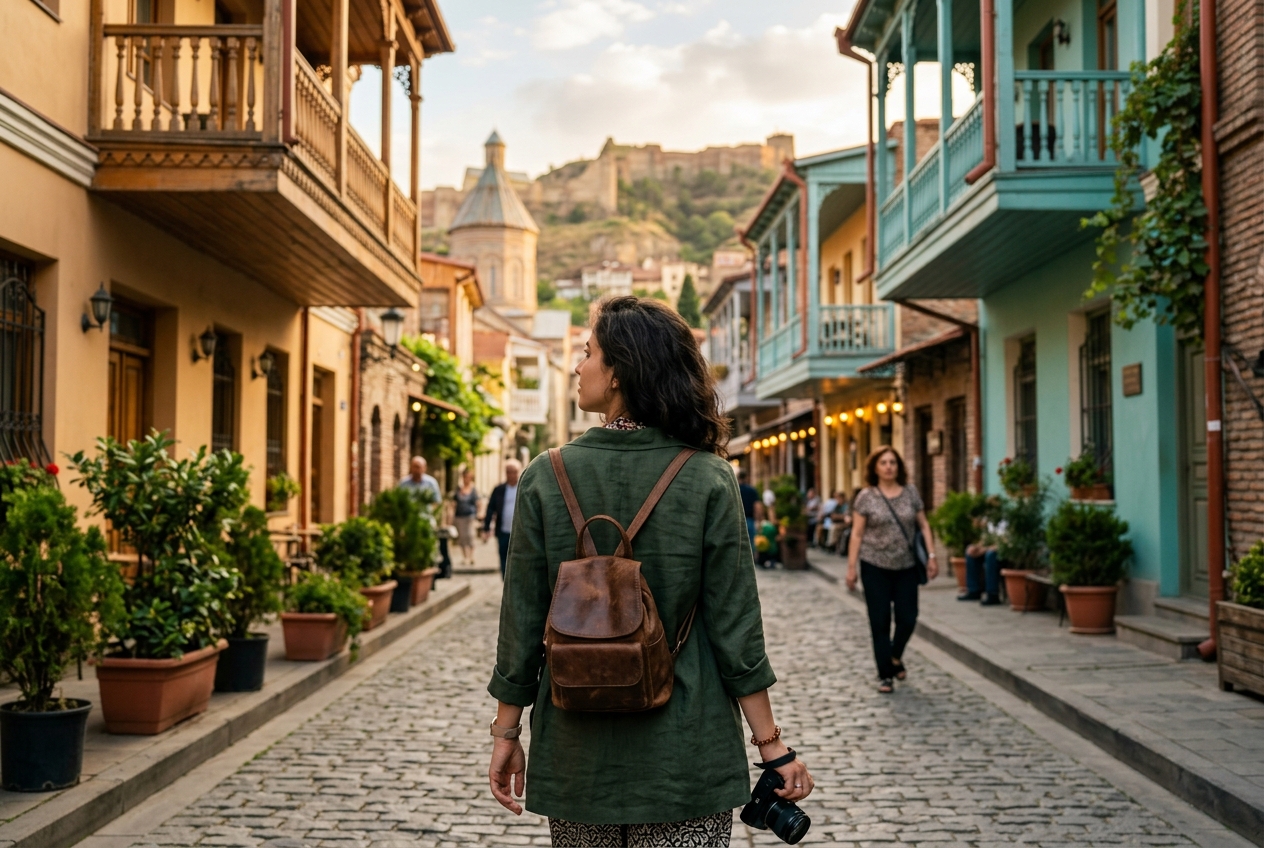
Georgia’s capital has been quietly climbing the ranks of solo travel destinations, and for good reason. Affordable wine, jaw-dropping architecture, and a food scene that could make a grown adult weep with joy: Tbilisi has a lot going for it. But if you’re a woman planning to visit alone, the practical question on your mind is probably less about khinkali dumplings and more about personal safety. Is Tbilisi safe for female travellers, or does the reality on the ground tell a different story than the Instagram posts suggest? I’ve spent considerable time in this city, walked its cobblestone streets well past midnight, and talked to dozens of women who’ve done the same. The short answer is yes, Tbilisi is remarkably safe. But the full picture deserves more than a one-word response. Here’s what you actually need to know before booking that flight, broken down by the specific concerns most women have when they travel solo.
Current Safety Landscape for Women in Tbilisi
Crime Rates and Statistical Overview
The numbers tell a reassuring story. Tbilisi ranked around 32nd on the 2024 Safety Index, placing it ahead of cities like London, Paris, and New York. That’s not a typo. A city where you can eat a full meal for under $5 also happens to be statistically safer than most Western European capitals.
On a national level, Georgia scores 86 out of 100 on the Gallup Law and Order Index, which puts it in the top 35 safest countries worldwide. Violent crime against tourists is extremely rare. Petty theft exists, as it does everywhere, but even pickpocketing is far less common here than in Barcelona or Rome.
The police in Georgia have undergone significant reform since the Rose Revolution of 2003. The old Soviet-era corruption has largely been replaced by a professional force that tourists generally find helpful and responsive. If something does go wrong, you can expect the police to take your report seriously. Several women I’ve spoken with have described interactions with Georgian police as surprisingly efficient and respectful.
| Safety Metric | Tbilisi | London | Paris |
|---|---|---|---|
| 2024 Safety Index Ranking | ~32nd | Lower | Lower |
| Gallup Law and Order Score (National) | 86/100 | 78/100 | 73/100 |
| Public Transport Safety (Women’s Rating) | 4.1/5 | 3.5/5 | 3.2/5 |
Cultural Attitudes Toward Foreign Women
Georgia is a traditionally patriarchal society with deep Orthodox Christian roots. That’s the honest starting point. But what this means in practice for a visiting woman is more nuanced than you might expect.
Georgians have a centuries-old saying: “stumari ghvtisaa,” meaning “a guest is a gift from God.” This isn’t just a quaint phrase on a fridge magnet. It’s a genuinely held belief that shapes how locals interact with visitors. As a foreign woman, you’re far more likely to receive unsolicited hospitality (a free plate of churchkhela, directions walked rather than pointed) than any kind of hostility.
That said, there’s a generational divide worth understanding. Older Georgians, raised during the Soviet era, tend to hold more traditional views about women’s roles. Younger Tbilisi residents, especially those born after the 2003 revolution, are often progressive, internationally minded, and speak English. In cafes around Vera or Fabrika, you’ll find a social atmosphere that feels as open and liberal as any European city. Step into a rural village outside Tbilisi, and the vibe shifts considerably. The warmth remains, but expectations around modesty and behavior become more conservative.
Navigating the City Solo and After Dark
Safe Neighborhoods for Solo Accommodation
Where you stay matters, though not as dramatically as in some other capitals. Most of central Tbilisi is walkable and well-lit, and the neighborhoods popular with tourists are generally safe around the clock.
Old Town (Kala) is the classic choice. It’s touristy, yes, but the narrow streets are full of life at all hours, and the density of guesthouses means there are always people around. Vera is a quieter residential area that’s become a favorite among digital nomads and longer-stay visitors. It has a slightly bohemian feel, excellent cafes, and feels safe even late at night. Vake is more upscale and residential, popular with expats and wealthier locals, and one of the calmest neighborhoods in the city.
Areas to approach with more caution after dark include the outskirts near Gldani and Varketili. These aren’t dangerous per se, but they’re less well-lit, more spread out, and have fewer English speakers if you need help. For a first visit, sticking to the central districts keeps things simple and stress-free.
Nightlife and Socializing Safely
Tbilisi’s nightlife scene has exploded in recent years. The city draws comparisons to Berlin for its underground club culture, centered around venues like Bassiani (located beneath a football stadium) and Mtkvarze. These clubs have strong door policies and a culture of mutual respect that many women find refreshing compared to nightlife in Western cities.
Wine bars are everywhere, and Georgians take their wine seriously: this is, after all, one of the oldest winemaking regions on Earth. Sitting alone at a wine bar won’t raise eyebrows. In fact, a bartender or fellow patron will likely strike up a conversation and recommend a Kakheti amber wine you’ve never heard of.
One traveler’s sentiment captures the general feeling well: “Very safe for women. Even walking at night in the street no one is looking or bothering you.” That tracks with my own experience. I’ve walked from Rustaveli Avenue to the sulfur baths district well past midnight and felt nothing but calm. Standard precautions still apply: don’t leave drinks unattended, tell someone where you’re going, and trust your instincts. But the baseline level of safety here is genuinely high.
Transport and Mobility for Female Travelers
Ride-Sharing Apps vs. Street Taxis
This is one area where a clear recommendation exists: use Bolt. The app works exactly like Uber, with tracked routes, driver ratings, and predetermined fares. Most rides within central Tbilisi cost approximately 5-7 GEL, which is roughly $2-3 USD. At those prices, there’s little reason to haggle with street taxis.
Street taxis aren’t inherently dangerous, but they come with predictable annoyances. Drivers may not use meters, prices can be inflated for tourists, and some will attempt extended conversation that can feel pushy. Bolt eliminates all of this. You see the price upfront, you share the ride details with a friend, and there’s a digital record of every trip.
Yandex Go is another option, though it’s a Russian-owned app, which carries political undertones in Georgia given the complicated relationship between the two countries. Many locals and expats prefer Bolt for both practical and political reasons.
Using Public Metro and Marshrutkas
Tbilisi’s metro system is small (just two lines) but clean, efficient, and remarkably cheap at 1 GEL per ride (about $0.35). Women rate public transport safety in Tbilisi at 4.1 out of 5, which is higher than most European capitals.
The metro runs from roughly 6 AM to midnight. Stations are well-lit, and during peak hours, trains are crowded but not uncomfortably so. I’ve never felt unsafe on Tbilisi’s metro, even during late evening rides.
Marshrutkas (minibuses) are a different experience. These yellow vans follow fixed routes but don’t always have visible signage in English. They’re cheap and used by everyone, but figuring out routes requires either a Georgian-speaking friend or the app called Moovit, which maps marshrutka routes in English. Marshrutkas themselves are safe; the main challenge is logistical, not security-related.
Common Challenges and How to Handle Them
Dealing with Unwanted Attention or Catcalling
Let’s be honest about this. Catcalling exists in Tbilisi. It’s not pervasive, and it’s less aggressive than what many women experience in parts of Southern Europe or North Africa, but it happens. The most common form is staring or unsolicited comments from older men, particularly in less touristy areas.
The effective response is the same as anywhere: ignore and keep walking. Georgian men who catcall are generally not persistent. A firm “ara” (Georgian for “no”) usually ends any interaction. Physical harassment from strangers is extremely rare.
Inside social settings like bars or clubs, the dynamic is different. Georgian men can be forward in expressing interest, but most will back off quickly if you’re clear about boundaries. The culture places high value on hospitality and not making guests uncomfortable, which works in your favor. If a situation ever escalates, nearby Georgians are very likely to intervene. There’s a strong collective sense of protecting guests.
Language Barriers and Local Assistance
English proficiency in Tbilisi follows a clear generational line. If someone is under 35, there’s a good chance they speak at least conversational English. Many younger Georgians are fluent. The older generation, educated during the Soviet period, is far more likely to speak Russian than English. Georgia ranks in the moderate band on the EF English Proficiency Index, but Tbilisi itself skews higher than the national average.
Download the Google Translate offline pack for Georgian before you arrive. The Georgian script (Mkhedruli) is beautiful but completely unique, so you won’t be able to sound out words the way you might with Cyrillic or Latin alphabets. Having offline translation available for pharmacy visits, doctor’s offices, or police interactions is a genuine safety tool, not just a convenience.
Pharmacies (called “aptiaki”) are on nearly every block and pharmacists are often helpful even across the language barrier. For more complex situations, the tourist police hotline (dial 112) has English-speaking operators available 24/7.
Essential Tips for a Trouble-Free Stay
Dress Code and Religious Etiquette
Tbilisi is a cosmopolitan city, and in central neighborhoods, you can wear whatever you’d wear in any European capital. Shorts, tank tops, and sundresses are all common in summer. Nobody will bat an eye.
The exception is churches and monasteries. Georgia is deeply Orthodox Christian, and religious sites require women to cover their heads and shoulders. Many churches provide headscarves at the entrance, but carrying a lightweight scarf in your bag saves awkwardness. Knees should also be covered. This isn’t optional or a suggestion: you will be turned away from major sites like Jvari Monastery or Svetitskhoveli Cathedral without appropriate coverage.
Outside Tbilisi, especially in the mountainous regions of Svaneti or Tusheti, dressing more conservatively earns respect and smoother interactions. This doesn’t mean covering head to toe, but opting for longer pants over short shorts and keeping shoulders covered in village settings shows cultural awareness that locals genuinely appreciate.
Emergency Contacts and Health Resources
- 112: Universal emergency number (police, ambulance, fire) with English-speaking operators
- 116 006: Domestic violence hotline
- US Embassy Tbilisi: +995 32 227 7000
- Nearest 24-hour pharmacy: use Google Maps and search “aptiaki”
Medical care in Tbilisi is affordable and generally competent for routine issues. Private clinics like Evex and MediClub have English-speaking staff and modern facilities. Travel insurance is still strongly recommended, as costs can add up for anything requiring hospitalization. EU citizens should note that Georgia is not covered by the EHIC card.
Keep digital copies of your passport, insurance documents, and emergency contacts in a cloud folder you can access from any device. This takes five minutes before your trip and can save hours of stress if something goes wrong.
Final Verdict: Is Tbilisi a Good Choice for Women?
Georgia’s capital is one of the safest and most rewarding cities a woman can visit solo. The country ranks among the top 30 safest nations globally, and the on-the-ground experience matches the statistics. Affordable transport, walkable neighborhoods, a culture that genuinely reveres guests, and a growing community of female solo travelers all make Tbilisi an excellent choice.
Is it perfect? No city is. You’ll encounter occasional staring, a language barrier with older generations, and conservative expectations at religious sites. But these are minor inconveniences, not safety threats. Compared to most popular European destinations, Tbilisi offers more warmth, less petty crime, and a cost of living that means you can afford to stay longer and go deeper.
If you’ve been on the fence about whether Tbilisi is safe for women traveling alone, stop hesitating. Book the flight, download Bolt and Google Translate, pack a headscarf for the churches, and go. This city has a way of turning cautious first-time visitors into passionate repeat travelers, and you’ll almost certainly be one of them.