
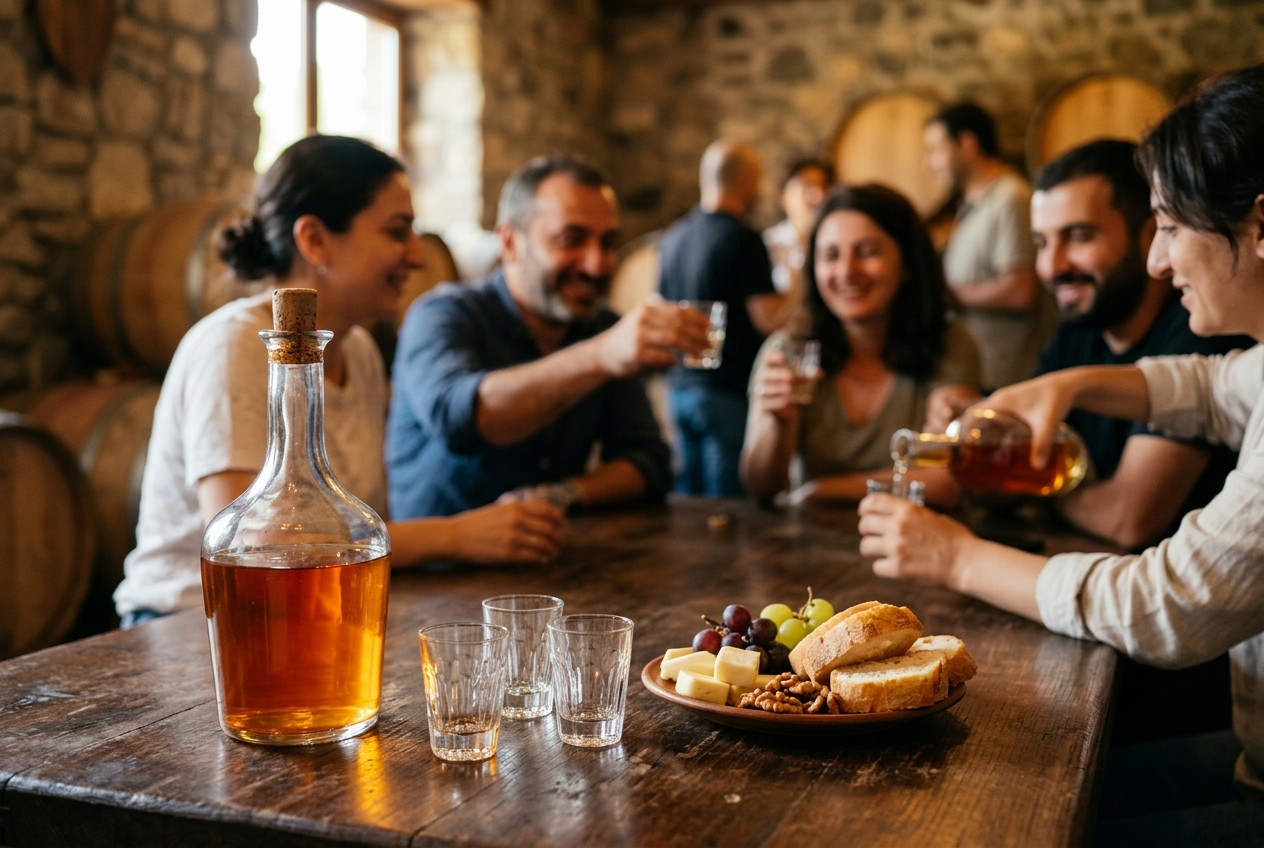
Few spirits carry the soul of a nation quite like chacha carries the soul of Georgia. This fiery grape brandy, sometimes called “Georgian grappa” by travelers trying to place it on a familiar map, is far more than a drink. It’s a cultural artifact, a family tradition, and a test of character all poured into a single glass. Walk through any village in Kakheti or Imereti during autumn, and the sweet, heady aroma of distillation hangs in the air like fog. Understanding what chacha is and how to drink it safely matters because this isn’t your average 40-proof spirit: homemade versions can hit you like a freight train if you’re not prepared. I’ve seen confident whiskey drinkers humbled by a single toast at a Georgian supra. Whether you’re planning a trip to Sakartvelo (as Georgians call their country) or simply curious about one of the world’s oldest distilled spirits, this guide covers everything from production and flavor to safe consumption and food pairings.
The Origins and Production of Georgian Chacha
Chacha’s roots run deep into Georgian identity. The word “chacha” literally translates to “grape pomace” in Georgian, which tells you exactly what this spirit is built from: the skins, seeds, stems, and pulp left over after winemaking. Georgia is one of the oldest winemaking regions on Earth, with archaeological evidence of viticulture dating back 8,000 years. Chacha emerged as a natural byproduct of that ancient tradition, a way to ensure nothing from the harvest went to waste.
The spirit’s cultural weight is enormous. Chacha production skills have been passed down through generations for over 1,000 years, making it one of the longest-surviving distillation traditions anywhere. In rural Georgia, nearly every family with a vineyard produces their own batch. It’s offered to guests as a gesture of hospitality, poured at funerals and celebrations alike, and sometimes even used as folk medicine. The phrase “stumari ghvtisaa” – the guest is a gift from God – often comes with a glass of chacha in hand.
Understanding the Grape Pomace Base
The foundation of chacha is the pomace, or “chacha” in Georgian, that remains after grapes are pressed for wine. Think of it as the grape’s second life. In Kakheti, the primary wine region, Rkatsiteli and Saperavi grapes dominate production. Western Georgia relies more on varieties like Tsolikouri and Tsitska.
The pomace is mixed with water and sometimes sugar, then left to ferment for weeks. The quality of the base material matters enormously. Pomace from qvevri (traditional clay vessel) winemaking, where skins and seeds have already spent months in contact with the juice, produces a different character than pomace from modern pressed wine. Some producers also distill whole grape must rather than just pomace, creating a smoother, more aromatic spirit that purists sometimes classify separately.
Traditional vs. Industrial Distillation Methods
Village distillation in Georgia looks almost exactly the way it did centuries ago. A copper pot still sits over a wood fire, the pomace mixture bubbles inside, and the vapor travels through a coiled copper tube cooled by running water. The distiller watches the stream of liquid, tests it by touch and taste, and separates the “heads” and “tails” (the first and last portions of the run, which contain harmful compounds) from the desirable “heart.”
Commercial distilleries use column stills and precise temperature controls to produce a more consistent product. Brands like Askaneli, Telavi Wine Cellar, and Sarajishvili have brought chacha to international markets with standardized quality. In 2017, chacha exports reached 132,746 bottles (0.5L), generating $367,757 in revenue, and that same year saw an 85% increase in exports compared to the previous year. The Georgian government has pushed for chacha to receive geographic indication protection, similar to how only brandy from Cognac can be called Cognac.
Flavor Profiles and Varieties
Chacha is not a one-note spirit. The grape variety, distillation method, aging process, and regional traditions all shape the final product. Expecting a single flavor profile from chacha is like expecting all wine to taste the same.
Classic Clear Chacha
The most common form of chacha is unaged and crystal clear, bottled immediately or shortly after distillation. This is the version you’ll encounter at family tables and village markets across Georgia. The aroma hits you first: a burst of grape, sometimes floral, sometimes earthy, depending on the variety used.
Saperavi-based chacha tends to carry darker fruit notes and a slightly tannic edge, while Rkatsiteli versions lean brighter and more citrusy. A well-made clear chacha should feel clean on the palate, with a warming but not burning finish. “Good chacha is said to be surprisingly smooth, with some Georgians claiming that properly made chacha doesn’t cause hangovers.” I’ll let you test that theory yourself, but there’s a kernel of truth: clean distillation with proper separation of heads and tails removes many of the congeners responsible for rough mornings.
Oak-Aged and Infused Variations
Aged chacha is a more recent commercial development, but it has gained serious traction. Producers rest the spirit in oak barrels for anywhere from six months to several years, producing an amber-colored drink with vanilla, caramel, and spice notes that remind some drinkers of brandy or even bourbon.
Infused varieties are common in home production. Families steep chacha with tarragon, honey, walnuts, or various fruits. Tarragon chacha, with its bright green color and anise-like flavor, is particularly popular. Some producers in western Georgia infuse with feijoa or persimmon, creating seasonal specialties you won’t find in any store.
| Chacha Type | Color | Typical ABV | Flavor Notes | Best For |
|---|---|---|---|---|
| Classic Clear (Rkatsiteli) | Transparent | 40-50% | Citrus, floral, clean | Toasting, sipping chilled |
| Classic Clear (Saperavi) | Transparent | 40-50% | Dark fruit, tannic | Pairing with grilled meats |
| Oak-Aged | Amber/Gold | 40-45% | Vanilla, caramel, spice | After-dinner sipping |
| Tarragon-Infused | Green | 35-45% | Anise, herbal, sweet | Aperitif or digestif |
| Honey-Infused | Golden | 35-40% | Honey, warm, mellow | Dessert pairing |
Essential Safety Guidelines for Consumption
This is the section that could save you a genuinely terrible experience – or worse. Chacha demands respect, and understanding its potency is non-negotiable for anyone drinking it safely.
Recognizing Alcohol Content and Potency
Commercial chacha sold in bottles typically sits around 40% ABV, which puts it in the same range as vodka, whiskey, or standard brandy. That’s manageable territory for experienced spirit drinkers. The danger lies in the gap between commercial and homemade versions.
Homemade chacha, the kind poured from unmarked plastic bottles at village tables and roadside stalls, can exceed 60% or even 80% ABV. That’s approaching the strength of Everclear. The problem is that well-made high-proof chacha can taste deceptively smooth, especially when served cold. You might not realize you’re drinking something at 70% until you try to stand up. Always ask your host about the strength, and if they shrug or laugh, assume it’s strong and pace yourself accordingly.
A practical test Georgians use: dip your finger in the chacha and light it. If it burns with a steady blue flame, you’re dealing with something well above 50%. It’s a party trick, yes, but also a genuine safety check.
The Risks of Homemade ‘Samogon’ Spirits
The term “samogon” (from Russian, meaning “self-distilled”) applies broadly to homemade spirits across the post-Soviet world, and Georgia is no exception. While many Georgian families produce excellent chacha with generations of expertise, the lack of regulation means quality varies wildly.
The real danger is methanol. Improper distillation, specifically failing to discard the “heads” of the distillation run, can leave dangerous levels of methanol in the final product. Methanol poisoning causes blindness, organ failure, and death. This isn’t theoretical: incidents occur every year across Eastern Europe and the Caucasus. Stick to commercial brands from reputable producers if you’re buying bottles. If drinking homemade chacha, accept it only from hosts you trust or situations where the producer’s reputation is established. Never buy unmarked bottles from random market stalls, no matter how cheap they are.
How to Drink Chacha Like a Local
Drinking chacha correctly is as much about social ritual as it is about the liquid itself. Georgians have strong opinions about this, and following local customs will earn you genuine respect at any table.
Ideal Serving Temperatures and Glassware
Clear chacha is best served chilled, between 5-10°C (41-50°F). Some Georgians keep a bottle in the freezer, though purists argue this mutes the grape aromatics. Oak-aged chacha should be served at room temperature, like cognac, to let the barrel-derived flavors open up.
Glassware is simple. Forget snifters and tulip glasses: traditional chacha is poured into small shot-sized glasses or ceramic cups called “piala.” At a formal supra (feast), you might see horn-shaped drinking vessels called “kantsi,” though these are more commonly associated with wine. The portions are small, usually 30-50ml, because chacha is sipped between toasts, not gulped continuously.
Sipping vs. Toasting Traditions
The Georgian supra is one of the most structured drinking traditions on the planet. A tamada (toastmaster) leads the table through a sequence of toasts: to God, to Georgia, to ancestors, to family, to peace, and many more. Each toast is followed by a drink, and chacha often appears alongside wine during these rounds.
The key rule: you don’t drink chacha casually at a supra. You drink when the tamada calls for it. Between toasts, eat. Eat a lot. This is both cultural expectation and survival strategy. Sipping chacha outside of toasts is acceptable in casual settings, but at a formal feast, follow the tamada’s lead. If you need to slow down, it’s perfectly acceptable to take smaller sips rather than draining the glass. Georgians respect someone who knows their limits far more than someone who collapses before the fifth toast.
Food Pairings to Balance the Spirit
Chacha was never meant to be consumed alone. The Georgian table is built around abundance, and the food serves a critical role in balancing the spirit’s intensity.
Traditional Georgian Supra Appetizers
A proper supra table groans under the weight of starters before any main course appears. These cold dishes, collectively called “pkhali” and “meze,” are your best friends when drinking chacha.
- Badrijani nigvzit: eggplant rolls stuffed with walnut paste, garlic, and herbs
- Lobio: slow-cooked kidney beans with coriander and fenugreek, served warm in a clay pot
- Pkhali: finely chopped spinach, beet, or cabbage mixed with ground walnuts and spices
- Jonjoli: pickled bladdernut buds, tangy and crunchy, a perfect palate cleanser
- Nadugi: fresh cottage cheese wrapped in thin suluguni cheese sheets
The fat and protein in walnut-based dishes coat the stomach, while the acidity of pickled items cuts through chacha’s warmth. This isn’t accidental: centuries of pairing have refined these combinations.
Rich Meats and Pickled Delicacies
As the supra progresses, heavier dishes arrive, and they pair beautifully with chacha’s grape-forward character. Mtsvadi (Georgian shashlik) grilled over grapevine embers is the classic partner: the smoky, charred meat and the grape-based spirit share a deep connection through the vine.
Khinkali, the famous Georgian soup dumplings, are another essential pairing. The rich broth trapped inside the dumpling provides a savory counterpoint to chacha’s fire. Satsivi, a cold turkey or chicken dish in a creamy walnut sauce, works particularly well with aged chacha. Pickled vegetables, especially green tomatoes and garlic, appear throughout the meal and serve as constant palate refreshers between sips.
Chacha in Modern Mixology
For years, chacha existed almost exclusively within Georgian borders, known only to travelers who stumbled upon it. That’s changing. A growing number of bartenders in Tbilisi, Moscow, Berlin, and even New York have started incorporating chacha into cocktail menus, drawn by its grape-forward character and versatility.
The simplest cocktail is the Chacha Sour: chacha, fresh lemon juice, simple syrup, and egg white, shaken hard and strained into a coupe glass. It works because chacha’s grape notes play beautifully with citrus, much like a pisco sour. Some Tbilisi bars, like Dive Bar on Atoneli Street and Café Littera, have developed more complex recipes using chacha with tarragon syrup, pomegranate molasses, or tkemali (sour plum sauce) reductions.
Oak-aged chacha substitutes surprisingly well for bourbon or cognac in classic cocktails. Try it in an Old Fashioned with a strip of dried persimmon instead of orange peel, or in a Manhattan variation with Georgian sweet wine as the vermouth component. The grape base gives these familiar templates a distinctly Caucasian twist that feels fresh rather than gimmicky.
Home bartenders experimenting with chacha should start with commercial bottles in the 40% range from producers like Askaneli Brothers or Telavi Wine Cellar. These offer consistent quality and clear flavor profiles that mix predictably. Save the homemade village chacha for sipping at the table, where its wild character belongs.
A Spirit Worth Knowing
Chacha is one of those rare drinks that refuses to be separated from its homeland. You can buy a bottle in a shop, but the full experience requires a Georgian table, a tamada raising a toast, and plates of walnut-stuffed eggplant and grilled mtsvadi within arm’s reach. If you find yourself in Georgia, say yes when someone offers you a glass. Just remember the basics: know what you’re drinking, eat generously, pace yourself through the toasts, and never trust an unmarked bottle from a stranger. Treat chacha with the respect it deserves, and it will reward you with one of the most memorable drinking experiences of your life. Gaumarjos – to your victory, and to drinking well.