
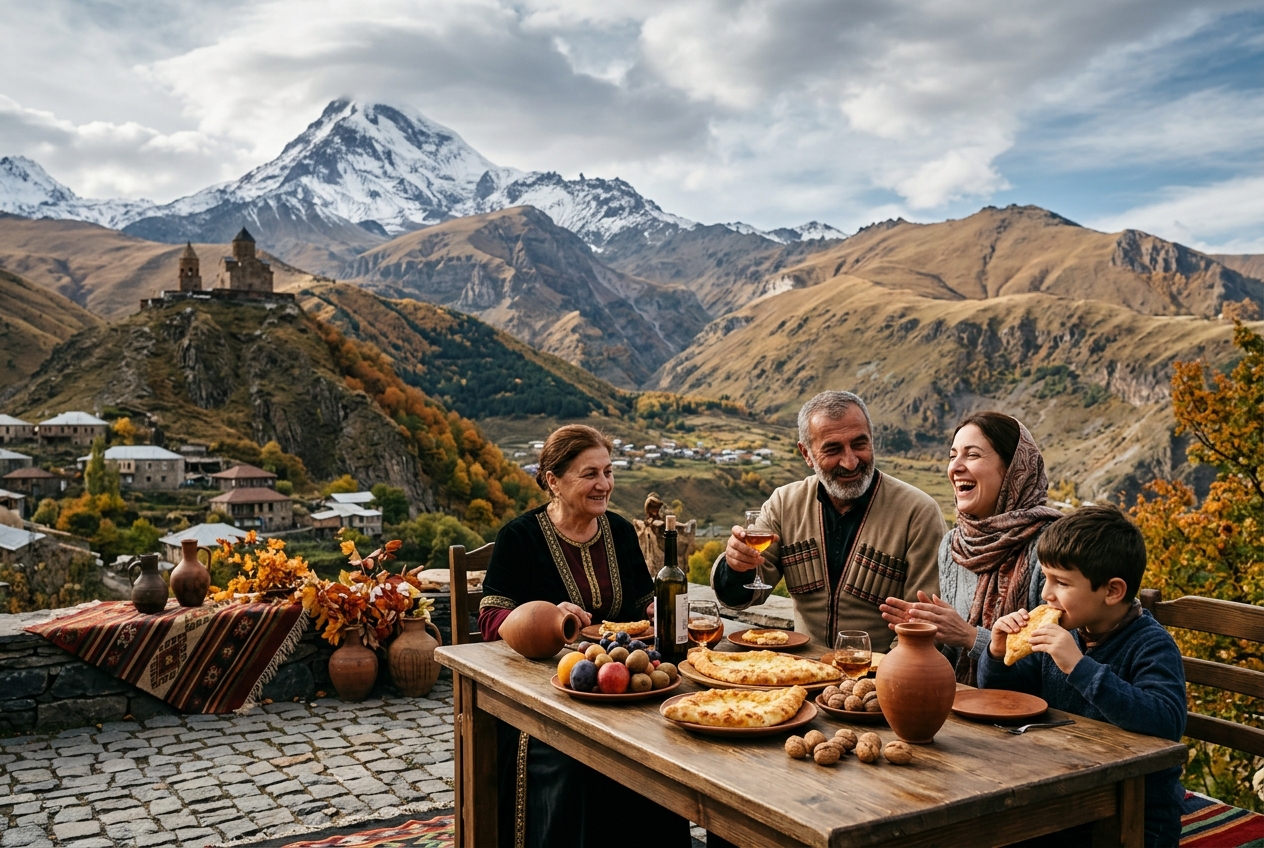
Georgia, the small Caucasus nation known locally as Sakartvelo, runs on a rhythm shaped by centuries of Orthodox Christianity, fierce national pride, and a deep love of gathering around a table. Understanding holidays and days off in Georgia is essential whether you’re planning a trip, relocating for work, or simply trying to figure out why every shop in Tbilisi is suddenly closed on a random Tuesday. The country officially recognizes 15 public holidays each year, a number that surprises many visitors given Georgia’s size. Some of these dates are fixed to the calendar, others shift with the Orthodox liturgical cycle, and a few are so deeply emotional that the entire country seems to pause and reflect. Having spent years watching how Georgians celebrate, mourn, and feast their way through the calendar, I can tell you this: no other country I’ve visited treats its holidays with quite the same intensity. Tourism in Georgia generated $82 billion in economic impact in 2024, and a huge chunk of that spending clusters around holiday periods when the country is at its most vibrant and, occasionally, its most chaotic.
Overview of Georgia’s Official Public Holidays
Georgia recognizes 15 public holidays, a mix of religious observances, national commemorations, and cultural celebrations. On these days, most government offices, banks, and many private businesses close entirely. The holidays range from the familiar (New Year’s Day on January 1) to the distinctly Georgian (Svetitskhovloba on October 14, honoring the country’s most sacred cathedral). For visitors, these closures can be either a delightful surprise or a logistical headache, depending on preparation.
Here’s a quick reference table of all official public holidays:
| Date | Holiday | Type |
|---|---|---|
| January 1-2 | New Year’s Day | National |
| January 7 | Orthodox Christmas | Religious |
| January 19 | Epiphany (Natlisgheba) | Religious |
| March 3 | Mother’s Day | National |
| March 8 | International Women’s Day | National |
| April 9 | Day of National Unity | Historical |
| Moveable | Easter (Good Friday – Monday) | Religious |
| May 9 | Victory Day | Historical |
| May 12 | St. Andrew’s Day | Religious |
| May 26 | Independence Day | National |
| August 28 | Mariamoba (Assumption) | Religious |
| October 14 | Svetitskhovloba | Religious |
| October 28 | Didgoroba | Historical |
| November 23 | St. George’s Day (Giorgoba) | Religious |
The Labor Code and Employee Rights
Georgia’s Labor Code guarantees that employees are entitled to paid leave on all 15 official public holidays. If an employee works on a holiday, the employer must compensate them at an increased rate, typically 1.5 times the standard wage. This is a clear legal protection, though enforcement can vary, especially in smaller businesses and rural areas. It’s worth knowing that the Georgian labor framework differs significantly from what you might find in the U.S. state of the same name, where private employers aren’t required to provide paid leave for national holidays.
For expats working in Georgia on local contracts, the holiday calendar directly affects your work schedule. Most international companies operating in Tbilisi honor both Georgian public holidays and a selection of Western ones, but this varies by employer. If you’re freelancing or running your own business, you’ll quickly learn to plan around these dates because finding a notary, a government clerk, or even a reliable courier during holiday weeks is nearly impossible.
Fixed-Date vs. Moveable Holidays
Most Georgian holidays fall on fixed dates. January 7 is always Orthodox Christmas, May 26 is always Independence Day, and so on. The major exception is Easter, which follows the Julian calendar used by the Georgian Orthodox Church. This means Georgian Easter typically falls one to five weeks after Western Easter, sometimes even later. In 2025, for instance, Orthodox Easter lands on April 20.
The Easter period creates a four-day weekend from Good Friday through Bright Monday, and many Georgians extend this into a full week off by using annual leave. Planning travel around Easter requires checking the specific dates each year, as they shift significantly. The rest of the calendar is predictable, which makes long-term planning straightforward once you’ve memorized the key dates.
Religious Observances and Orthodox Traditions
Georgia adopted Christianity in 337 AD, making it one of the oldest Christian nations on Earth. The Orthodox Church isn’t just a spiritual institution here; it’s a pillar of national identity. Eight of the 15 public holidays are explicitly religious, and even the secular ones carry a spiritual undertone. Churches fill up, families gather, and the supra (traditional feast) becomes the center of social life. If you visit during a religious holiday, expect processions, chanting echoing from hilltop churches, and an atmosphere that feels genuinely ancient.
Orthodox Christmas and Epiphany
Orthodox Christmas on January 7 is celebrated with a solemnity that contrasts sharply with the festive chaos of New Year’s. Families attend midnight liturgy on January 6, and the following day is spent at home with a traditional Christmas meal. The table typically features satsivi (walnut sauce with turkey or chicken), gozinaki (honey and walnut candy), and churchkhela.
Epiphany, or Natlisgheba, follows on January 19. This holiday commemorates the baptism of Jesus, and across Georgia, priests bless rivers and lakes. In Tbilisi, the Patriarch leads a ceremony at the Mtkvari River, and some brave souls plunge into the frigid water. The period between January 1 and January 19 essentially functions as an extended winter holiday season, and many Georgians take most of this stretch off work. Expect reduced services and a quieter pace throughout the country.
Easter Traditions and Bright Monday
Easter is the most important religious holiday in Georgia, full stop. The week leading up to it, known as Holy Week, builds in intensity. On Good Friday, churches hold somber processions, and many Georgians fast strictly. Saturday night brings the Paschal Vigil, where congregations gather in darkness until midnight, when the church erupts in light and the declaration “Kriste Aghsdga!” (Christ is Risen) rings out. The response, “Cheshmaritad Aghsdga!” (Truly He is Risen), echoes through every corner.
Bright Monday, the day after Easter Sunday, is a public holiday, and it’s when the feasting truly begins. Red-dyed eggs, paska bread, and lamb dishes dominate the table. Families visit cemeteries to honor deceased relatives, sharing food and wine at gravesides in a tradition that blends Christian practice with older customs. If you’re in Georgia during Easter, you’ll witness a level of communal devotion that’s become rare in much of Europe.
Mariamoba and Svetitskhovloba
Mariamoba on August 28 celebrates the Assumption of the Virgin Mary. Georgians have a particular devotion to the Theotokos (Mother of God), and this holiday draws massive crowds to churches and monasteries across the country. Many families make pilgrimages to mountain monasteries, and the holiday falls during the warmest part of the year, making it a popular time for combining spiritual observance with vacation.
Svetitskhovloba on October 14 honors the Svetitskhoveli Cathedral in Mtskheta, Georgia’s ancient capital and a UNESCO World Heritage site. The cathedral is believed to house the robe of Christ, and the holiday commemorates this relic. Thousands gather in Mtskheta for the celebration, and the Patriarch typically leads a special liturgy. If you visit Mtskheta on this date, arrive early because the small town gets overwhelmed quickly, and parking becomes a genuine ordeal.
National and Historical Commemorations
Georgia’s national holidays carry deep emotional weight. This is a country that has fought for its independence multiple times, lost it, and regained it. The historical commemorations aren’t abstract; they connect to living memory and ongoing political realities.
Independence Day (May 26)
May 26 marks the day in 1918 when Georgia declared independence from the Russian Empire, establishing the First Georgian Republic. The celebration is the most outwardly festive of the national holidays, with military parades on Rustaveli Avenue, concerts, and fireworks. Government buildings fly the five-cross flag, and politicians deliver speeches that invariably reference Georgia’s European aspirations.
For visitors, May 26 is one of the best times to experience Georgian patriotism at its most joyful. The weather is typically warm, outdoor cafes are packed, and the city buzzes with energy. It’s also a peak travel weekend, so book accommodation well in advance. Travel on Airbnb alone generated approximately $2.6 billion in economic activity in Georgia in 2024, and holiday weekends account for a disproportionate share of that figure.
Day of National Unity (April 9)
April 9 is the most somber date on the Georgian calendar. It commemorates the 1989 tragedy when Soviet troops violently dispersed a peaceful pro-independence demonstration in Tbilisi, killing 21 people, most of them young women. The event became a turning point in Georgia’s independence movement and remains a raw wound in the national psyche.
On this day, Georgians lay flowers at the memorial on Rustaveli Avenue. There are no parades or celebrations. The mood is reflective and grief-stricken, even among younger generations who weren’t alive in 1989. If you’re in Tbilisi on April 9, be respectful of the atmosphere. It’s not a day for loud tourism. Many restaurants and shops close voluntarily, not because the law requires it, but because the owners feel it’s the right thing to do.
Victory Day and Didgoroba
Victory Day on May 9 commemorates the defeat of Nazi Germany in World War II. Georgia lost an estimated 300,000 soldiers during the conflict, a staggering number for a small nation. Veterans, now very few in number, are honored with ceremonies, and families visit war memorials. The holiday has become somewhat politically complicated in recent years due to Georgia’s fraught relationship with Russia, but respect for the fallen remains universal.
Didgoroba on October 28 celebrates the 1121 Battle of Didgori, where King David IV (David the Builder) defeated a vastly larger Seljuk army. Georgians consider this their greatest military victory, and the holiday carries a tone of fierce pride. Celebrations include reenactments near the battlefield site outside Tbilisi, traditional music, and plenty of wine. It’s a holiday that connects modern Georgia to its medieval golden age.
New Year Celebrations and Bedoba
New Year’s is the biggest party on the Georgian calendar, eclipsing even Easter in terms of sheer festivity. Celebrations begin on December 31 and technically continue through January 2, though many families keep the spirit alive until Epiphany on January 19. The supra on New Year’s Eve is legendary: tables groan under the weight of khinkali, khachapuri, satsivi, and an absurd variety of salads, meats, and sweets.
Georgian consumers are projected to spend an average of $890.49 per person on gifts, food, and decorations during the 2025 holiday season, a figure that reflects just how seriously Georgians take this period. “Retail remains a cornerstone of Georgia’s economy, supporting more than one million jobs statewide,” noted Shelby Dotson, Executive Director of the Georgia Retailers.
Bedoba, celebrated on January 2, is a uniquely Georgian tradition. The word comes from “bedi,” meaning fate or destiny. Georgians believe that the first person to enter your home on January 2 determines your luck for the entire year. Families carefully choose their “mekvle” (first footer), preferring someone considered lucky or blessed. It’s a charming custom that visitors rarely hear about, and participating in it, even as a guest, is a wonderful way to connect with local culture.
Regional Festivals and Unofficial Days Off
Beyond the 15 official holidays, Georgia hosts dozens of regional festivals that effectively shut down specific cities or towns. These aren’t public holidays in the legal sense, but employers in the affected areas often give workers the day off, and the celebrations draw visitors from across the country.
Tbilisoba and Harvest Festivals
Tbilisoba, held in late October, is Tbilisi’s city festival and one of the most vibrant events in the Georgian calendar. The Old Town fills with food stalls, wine vendors, folk musicians, and craft sellers. Traditional Georgian polyphonic singing echoes through the narrow streets, and you can sample wines from nearly every region. The festival typically runs for a weekend, and while it’s not an official public holiday, many Tbilisi-based businesses close or operate on reduced hours.
Rtveli, the grape harvest, happens in September and October across the wine regions of Kakheti, Kartli, and Imereti. This isn’t a single event but a season, and rural communities celebrate with communal grape pressing, feasting, and the preparation of new wine. If you visit a village during Rtveli, you’ll almost certainly be invited to participate. Bring old clothes you don’t mind staining purple.
Practical Information for Travelers and Expats
Knowing the holiday calendar is one thing; knowing how it affects your daily life is another. Georgia’s public holidays create ripple effects across transportation, banking, and commerce that catch unprepared visitors off guard.
Business and Bank Closures
Banks close on all 15 public holidays without exception. ATMs remain operational, but if you need in-branch services like currency exchange at a bank rate, wire transfers, or document notarization, plan around the holiday schedule. Government offices follow the same pattern, and processing times for visas, permits, and registrations slow dramatically in the days surrounding holidays.
Supermarkets like Carrefour, Goodwill, and Nikora typically remain open on holidays, though with reduced hours. Smaller shops and family-run businesses close entirely. Restaurants in tourist areas stay open, but neighborhood spots often shut down, especially during Easter and New Year’s. The Bolt app works for food delivery on most holidays, though expect longer wait times and surge pricing.
Tourism generated $5.1 billion in state and local tax revenues in 2024, which means the hospitality sector has strong financial incentives to stay open during peak holiday periods. Hotels, guesthouses, and tourist-oriented restaurants rarely close, but they do fill up fast. Book ahead.
Public Transport Schedules During Holidays
Tbilisi’s metro and bus system operates on reduced schedules during public holidays, typically running less frequently and closing earlier. On New Year’s Eve, the metro usually offers extended hours to handle the crowds, but don’t count on this for other holidays. The Tbilisi metro app and Google Maps provide reasonably accurate real-time updates.
Intercity marshrutkas (minibuses) are less predictable. Routes to popular destinations like Kazbegi, Batumi, and Kutaisi run more frequently during holiday weekends due to demand, but departure times become irregular. The Didube and Ortachala bus stations get chaotic during peak travel days. For longer trips, Georgian Railways is more reliable, though trains sell out quickly during holiday periods. Book tickets through the railway’s website at least a week in advance.
Ride-hailing apps like Bolt and Yandex Go work throughout holidays and are often the most stress-free way to get around. Prices spike during peak hours on major holidays, particularly New Year’s Eve, so budget accordingly.
Georgia’s calendar of public holidays and days off reflects a nation that values its faith, its history, and its traditions with remarkable intensity. Whether you’re watching fireworks over Tbilisi on New Year’s Eve, standing in a candlelit church at Easter midnight, or joining a village family for Rtveli, these holidays offer a window into what makes Georgia unlike anywhere else. Plan around them, respect their significance, and you’ll find that the days when Georgia pauses are often the days when it reveals itself most fully.