
Table of Contents
- The Snow Season in Tbilisi: What to Expect
- Best Ski Resorts Near Tbilisi
- Planning Your Ski Trip Logistics
- Winter Activities Beyond the Piste
- Essential Winter Travel Tips for Georgia
Georgia’s capital city sits in a valley surrounded by mountains, which means Tbilisi itself gets a modest dusting of snow most winters, but the real action happens just a couple of hours north. If you’re wondering when snow hits Georgia and whether Tbilisi makes a good base for a ski trip, the short answer is yes, absolutely. The country has been quietly building a reputation as one of Europe’s most affordable and exciting ski destinations, and the infrastructure has improved dramatically in recent years. Georgia welcomed over 5.5 million international tourists in 2025, and a growing share of those visitors came specifically for winter sports. The combination of cheap lift passes, uncrowded slopes, and some of the best off-piste terrain on the continent keeps drawing skiers who’ve grown tired of paying Alpine prices. Here’s everything you need to know about snow seasons, ski resorts, logistics, and what to do when you’re not on the mountain.
The Snow Season in Tbilisi: What to Expect
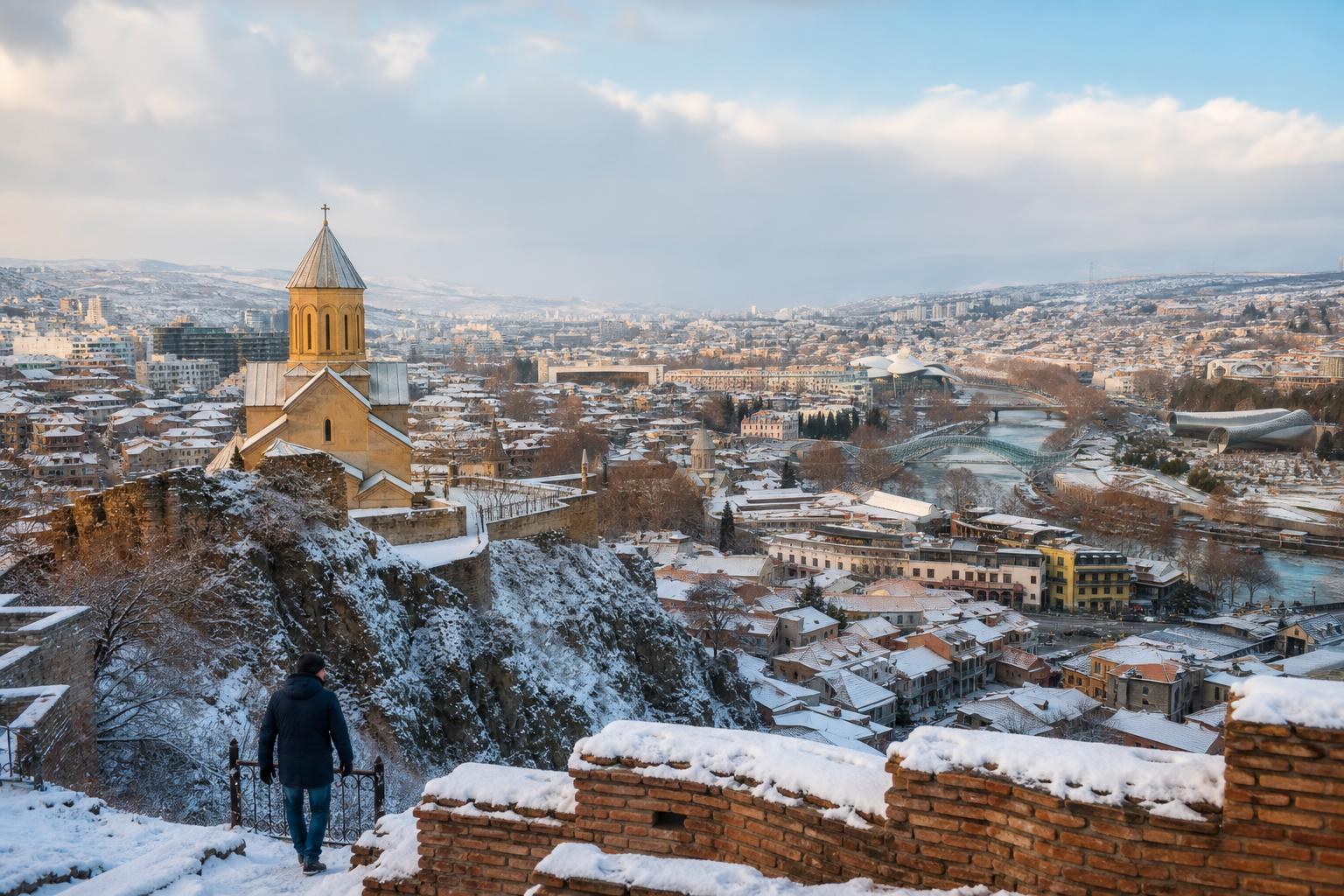
Tbilisi sits at roughly 490 meters above sea level, which puts it in an interesting position. The city gets cold enough for snow but not so cold that winter becomes unbearable. Average winter temperatures hover between -2°C and 6°C from December through February, and snowfall is sporadic rather than sustained. You might wake up to a beautiful blanket of white covering the Old Town one morning, only to see it melt by the afternoon.
The real snow, the kind that builds up and stays, happens at higher elevations. Georgia’s Greater Caucasus range captures massive amounts of precipitation, and resorts above 2,000 meters regularly see snow depths exceeding two meters by mid-season. This is what makes Tbilisi such a clever base: you get the cultural richness and mild weather of a capital city, then drive two hours to reach world-class powder.
Monthly Snowfall Data and Temperatures
Here’s a breakdown of what to expect across the winter months, both in Tbilisi and at resort altitude:
| Month | Tbilisi Avg Temp | Tbilisi Snow Days | Gudauri Avg Temp | Gudauri Snow Depth |
|---|---|---|---|---|
| November | 5°C to 10°C | 1-2 | -3°C to 2°C | 20-40 cm |
| December | 0°C to 5°C | 3-5 | -7°C to -2°C | 60-100 cm |
| January | -2°C to 3°C | 4-6 | -10°C to -4°C | 120-180 cm |
| February | -1°C to 5°C | 3-5 | -9°C to -3°C | 150-220 cm |
| March | 3°C to 10°C | 1-3 | -6°C to 0°C | 130-200 cm |
| April | 8°C to 16°C | 0-1 | -2°C to 4°C | 60-100 cm |
January is consistently the coldest month in both locations. Tbilisi’s snowfall is unpredictable: some years bring heavy dumps, others barely a flurry. The mountains, though, are reliable.
Peak Months for Winter Magic
January and February deliver the best conditions for skiing. Snow depth at Gudauri typically peaks in late February, and the quality stays excellent through mid-March. I’ve seen years where April still offered decent spring skiing above 3,000 meters, though conditions become slushy by afternoon.
For Tbilisi itself, the most photogenic snow usually falls in late December or early January. If you want to see the city draped in white while also hitting the slopes, aim for the first two weeks of January. Georgian Christmas falls on January 7th (the country follows the Orthodox calendar), and the festive atmosphere in Tbilisi during this period is genuinely special: think mulled wine vendors in Rustaveli Avenue, snow-dusted church domes, and far fewer tourists than you’d find in any Western European capital.
March is underrated. Crowds thin out, prices drop slightly, and the snow at altitude remains deep. The tradeoff is that lower runs can get icy in the morning and soft in the afternoon, but upper-mountain conditions often stay pristine.
Best Ski Resorts Near Tbilisi
Georgia has several ski areas, but three stand out for accessibility from Tbilisi and overall quality. Each serves a different type of skier, and all three can be reached in under three hours from the capital.
Gudauri: The Premier High-Altitude Destination
Gudauri is the flagship. Sitting at 2,196 meters with runs reaching up to 3,307 meters, it offers the most vertical drop, the most reliable snow, and the best infrastructure of any Georgian resort. The resort has 22 runs served by modern gondolas and chairlifts, with a total skiable area of about 70 kilometers.
What sets Gudauri apart from comparable resorts in Austria or France is the off-piste terrain. The backcountry here is vast, largely untracked, and accessible without lengthy hikes. Heli-skiing operations run from January through April, offering drops onto virgin powder fields for a fraction of what you’d pay in Canada or Alaska. A full day of heli-skiing at Gudauri typically costs between $800 and $1,200 per person, compared to $1,500-plus in British Columbia.
The resort has grown significantly in the past five years. New hotels, restaurants, and rental shops have popped up along the main road, and a second gondola line added in recent years has reduced lift queues considerably. That said, Gudauri still feels refreshingly uncommercialized compared to European mega-resorts. You won’t find luxury brand boutiques or overpriced champagne bars here, and that’s exactly the point.
Bakuriani: Family-Friendly Slopes and Pine Forests
Bakuriani is the gentler option, and I mean that as a compliment. Located about 180 kilometers west of Tbilisi at 1,700 meters elevation, this resort sits in a beautiful pine forest setting that feels completely different from Gudauri’s open alpine bowls.
The runs here are shorter and less steep, making Bakuriani ideal for beginners and families with young children. The resort hosted events during the 2023 FIS Freestyle Ski and Snowboard World Championships, which brought upgrades to its lift system and snowmaking capabilities. Those improvements remain in place, and the resort now has a solid mix of blue and red runs alongside a terrain park.
Bakuriani is also noticeably warmer than Gudauri, which matters if you’re traveling with kids who get cold easily. The town itself has a charming, slightly Soviet-era feel, with affordable guesthouses and family-run restaurants serving khinkali (Georgian dumplings) that rival anything you’ll find in Tbilisi. A day ski pass here runs about 30-40 GEL (roughly $11-15 USD), making it one of the cheapest ski experiences in Europe.
Didveli and Kokhta: Night Skiing and Advanced Trails
These two areas are technically part of the greater Bakuriani complex but deserve their own mention. Didveli sits at higher elevation and offers more challenging terrain, including some genuinely steep black runs that attract experienced skiers. The top station reaches 2,700 meters, providing access to above-treeline skiing with panoramic views of the Lesser Caucasus.
Kokhta is the spot for night skiing. Floodlit runs operate several evenings per week during peak season, and the experience of carving down an illuminated slope through pine forest is memorable. Night skiing sessions typically cost 15-20 GEL (about $6-8 USD), which is almost comically cheap by international standards.
For advanced skiers who want to base themselves in Bakuriani rather than Gudauri, Didveli provides enough vertical and challenge to keep things interesting for a few days. The freeride potential off the upper lifts is underexplored and worth investigating with a local guide.
Planning Your Ski Trip Logistics
Getting from Tbilisi to the slopes is straightforward, though it helps to know your options before you arrive. Georgia’s tourism sector has experienced both growth and shifting trends in recent years, and the winter sports infrastructure has matured alongside it.
Transportation from Tbilisi to the Slopes
Gudauri is 120 kilometers north of Tbilisi along the Georgian Military Highway, one of the most scenic mountain roads in the world. The drive takes about two hours in good conditions, though heavy snowfall can slow things down or occasionally close the road temporarily.
Your options for getting there:
- Shared minibuses (marshrutkas) depart from Tbilisi’s Didube station and cost around 15-20 GEL ($6-8). They’re cheap but not always comfortable, and schedules can be irregular.
- Private transfer services run daily shuttles for about 50-80 GEL per person round trip. These are more reliable and often include hotel pickup.
- Renting a car gives you flexibility, but winter tires and chains are essential. Georgian drivers can be aggressive, and the mountain road demands full attention.
- Bolt and Yandex Go both operate in Tbilisi and can arrange longer trips to Gudauri, though expect to negotiate the fare. A one-way taxi typically costs 120-180 GEL ($45-70).
For Bakuriani, the most atmospheric option is the narrow-gauge Kukushka train from Borjomi. The two-hour ride through snowy forest is an experience in itself, though you’ll need to get to Borjomi first (about four hours from Tbilisi by bus or car).
Equipment Rental and Ski Pass Pricing
One of the biggest draws of skiing in Georgia is the cost. A full day lift pass at Gudauri for the 2025-2026 season costs between 50 and 70 GEL (roughly $19-27 USD) depending on the day. Compare that to $60-80 at mid-tier European resorts and $100-plus at major Alpine destinations.
Equipment rental is equally affordable. A full setup of skis, boots, poles, and helmet runs about 40-60 GEL ($15-23) per day at shops in Gudauri. Quality has improved significantly: most rental shops now stock recent-model equipment from brands like Rossignol and Atomic. If you’re picky about gear, bring your own boots and rent the rest.
Ski lessons with English-speaking instructors cost approximately 100-150 GEL ($38-58) per hour for private sessions. Group lessons are cheaper but less common for English speakers. Download the Google Translate offline pack for Georgian before your trip: it’s useful at rental shops where staff may have limited English.
Winter Activities Beyond the Piste
A ski trip to Georgia that only involves skiing misses half the point. Tbilisi in winter is a destination in its own right, and the city offers experiences you simply won’t find at a typical ski resort town.
Sulfur Baths and Old Town Charm
The Abanotubani sulfur bath district sits in the heart of Old Tbilisi, and there’s no better way to recover from a day on the slopes than soaking in naturally heated mineral water. The baths have operated here for centuries: the city’s name literally derives from “tbili,” meaning warm, referring to these hot springs.
Private rooms at the most popular bathhouses, like Chreli Abano or the Royal Bath, cost between 80 and 150 GEL ($30-58) for an hour. The experience includes a hot soak in a tiled chamber, followed by an optional (and highly recommended) scrub-down by a bath attendant called a “mekise.” It sounds rough, and it is, but you’ll feel reborn afterward.
The Old Town itself is worth a full day of wandering. Carved wooden balconies lean over narrow streets, street cats lounge on ancient stone walls, and tiny wine bars hide in basement cellars. The Narikala Fortress, accessible by cable car for 2.5 GEL, offers sweeping views of the city blanketed in winter light.
Georgian Après-Ski: Wine and Traditional Cuisine
Georgia’s claim as the birthplace of wine isn’t marketing spin: archaeological evidence dates Georgian winemaking back 8,000 years. The traditional method uses qvevri, large clay vessels buried underground, and the resulting amber-colored wines taste unlike anything produced in France or Italy.
After skiing, the ritual is clear: find a “dukani” (a traditional restaurant, sometimes literally someone’s home) and order a spread. A typical dinner might include khachapuri (cheese-filled bread, with the Adjarian boat-shaped version being the showstopper), pkhali (walnut-herb paste), badrijani (eggplant rolls with walnut filling), and mtsvadi (grilled meat). A full meal with a bottle of wine rarely exceeds 50-60 GEL ($19-23) per person.
The Georgian concept of “stumari ghvtisaa,” meaning “a guest is a gift from God,” runs deep. Don’t be surprised if a restaurant owner sends over a complimentary carafe of homemade chacha (grape brandy) or if strangers at the next table invite you to join their feast. This kind of warmth isn’t performative hospitality designed for tourists: it’s a cultural reflex that predates Georgia’s tourism boom by centuries.
Essential Winter Travel Tips for Georgia
Pack layers. Tbilisi can swing from 0°C to 10°C in a single day, and the mountains are significantly colder. A good base layer, insulated mid-layer, and waterproof shell will cover most situations. Bring sunscreen and quality sunglasses for the slopes: UV intensity at 3,000 meters is fierce, even on cloudy days.
Cash is still useful in smaller towns and at some mountain vendors, though Tbilisi itself is largely card-friendly. The Georgian lari (GEL) trades at roughly 2.6 to the US dollar in early 2026. ATMs are plentiful in Tbilisi and available in Gudauri, though having some cash on hand for marshrutkas and small purchases saves hassle.
Travel insurance with winter sports coverage is non-negotiable. Mountain rescue in the Caucasus is improving but not as organized as in the Alps, and a helicopter evacuation can cost thousands. Verify that your policy specifically covers skiing and snowboarding: many standard travel policies exclude these activities.
Solo female travelers will find Georgia generally safe and welcoming. Police are reliable and responsive in both Tbilisi and resort areas. The main cultural note: avoid discussing the Russian-occupied territories of Abkhazia and South Ossetia unless you’re prepared for an emotional conversation.
The best time to visit for a ski-focused trip is mid-January through late February. You’ll get peak snow conditions, festive energy in Tbilisi, and prices that make the Alps look absurd. Georgia won’t stay this affordable forever: the secret is out, visitor numbers are climbing fast, and resort prices inch upward each season. If you’ve been considering a winter trip to the Caucasus, 2026 is the year to go.