
Table of Contents
- The Heart of the City: Batumi Boulevard and the Waterfront
- Old Batumi: Architectural Gems and Historic Squares
- Nature and Scenic Escapes Beyond the Promenade
- Cultural Experiences and Local Museums
- Quick Reference: Opening Hours and Entry Fees
- Day Trips and Nearby Attractions in Adjara
- Your Batumi Itinerary: Making the Most of Every Day
Batumi sits on the eastern shore of the Black Sea, a city that somehow manages to be ancient and futuristic at the same time. Roman-era fortifications stand within walking distance of glass skyscrapers, and Ottoman-style mosques share blocks with Italian-inspired piazzas. Georgia’s second-largest city has become one of the most talked-about destinations in the Caucasus, and the numbers back it up: the country welcomed over 5.5 million international tourists in 2025, with Batumi pulling a significant share of that traffic. I’ve spent weeks here across multiple visits, and each time the city reveals something new. If you’re looking for a top sights guide to what’s worth your time in Batumi, Georgia, this is it: the places that genuinely deliver, the ones that photograph well but disappoint, and the practical details you need to plan around. Whether you have two days or a full week, this breakdown will help you prioritize.
The Heart of the City: Batumi Boulevard and the Waterfront
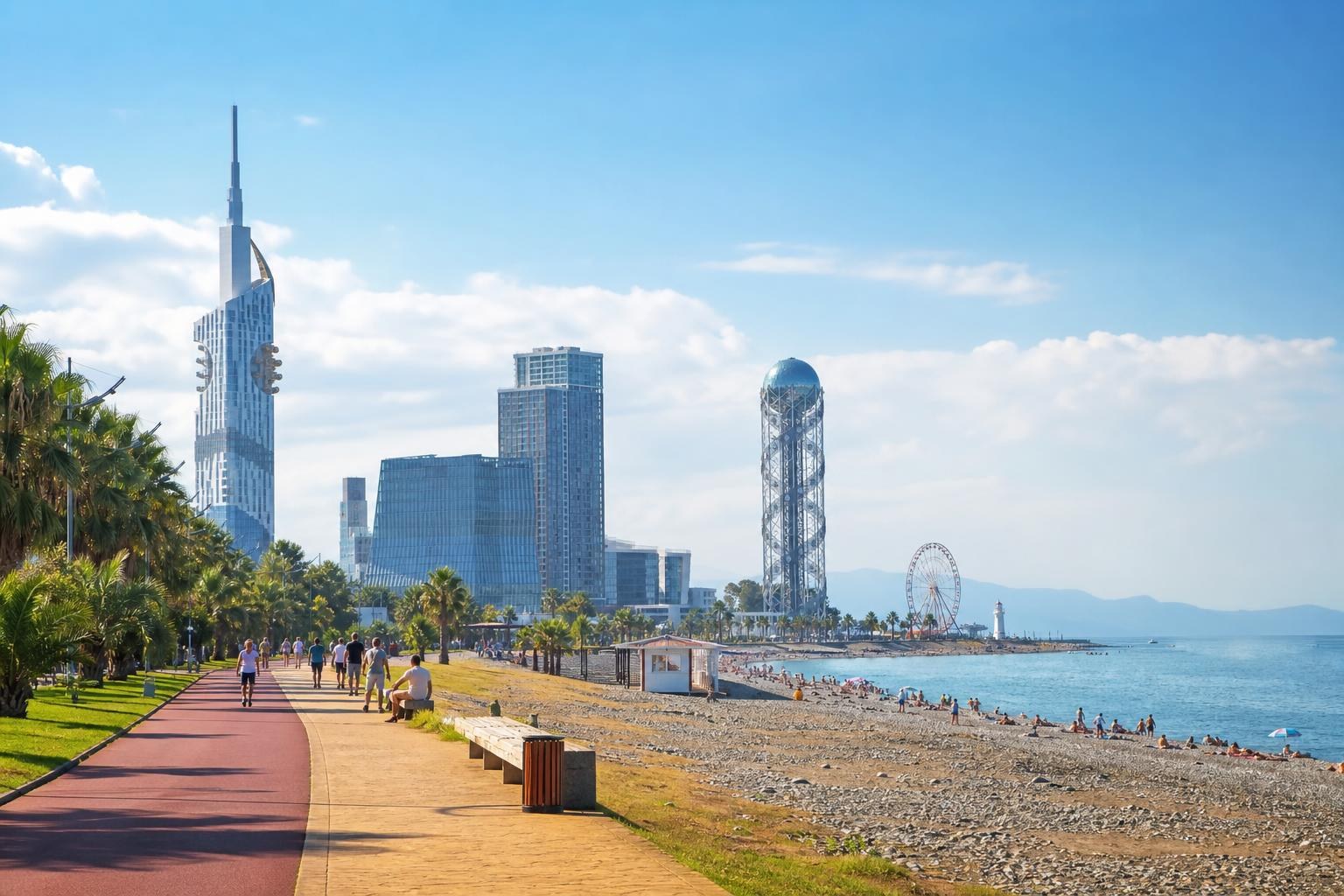
Batumi Boulevard is the spine of the city’s social life, stretching roughly 7 kilometers along the coast. Originally laid out in 1884, it’s been expanded and modernized several times, most recently with extensions that push the promenade south toward the port area. The boulevard isn’t just a walkway: it’s where locals jog at dawn, families picnic at dusk, and tourists stumble across some of the city’s most recognizable landmarks without really trying.
Walking the full length takes about 90 minutes at a relaxed pace. You’ll pass palm-lined gardens, open-air cafes, a small amusement park, and several modern art installations. Bike rentals are available for around 10-15 GEL per hour if your feet need a break. The real magic happens after sunset, when the waterfront transforms into a strip of colored lights and live music.
The Iconic Ali and Nino Moving Sculpture
This 8-meter steel sculpture near the southern end of the boulevard depicts two figures: a man and a woman who slowly rotate toward each other, merge into a single form, then separate again. The cycle takes about 10 minutes and represents a love story from the 1937 novel by Kurban Said, set against the backdrop of cultural conflict between East and West. It’s one of the most photographed attractions in Batumi, and for good reason. Timing matters: visit at sunset for the best light, or after dark when the figures are illuminated against the sea.
Alphabetic Tower and Panoramic Views
The 130-meter Alphabetic Tower is impossible to miss. Its exterior features the 33 letters of the Georgian alphabet spiraling up the structure, a tribute to a writing system that UNESCO recognizes as an Intangible Cultural Heritage. An elevator takes you to the observation deck and revolving restaurant near the top, where the views stretch across the city, the port, and the Caucasus foothills. Tickets cost around 30 GEL. My honest take: the views are better from the Argo Cable Car (more on that below), but the tower itself is architecturally fascinating and worth seeing up close even if you skip the ride up.
Dancing Fountains and Evening Light Shows
The musical fountain near Ardagani Lake puts on free shows most evenings from May through October, typically starting around 9 PM. The choreography syncs water jets with colored lights and a playlist that ranges from classical to Georgian pop. It’s not Bellagio, but it’s surprisingly well-produced for a free attraction. Grab a bench early on weekends because locals treat this as a nightly event. The lake area also has a small park with cafes and paddle boat rentals during the day.
Old Batumi: Architectural Gems and Historic Squares
Step a few blocks inland from the boulevard and the city’s personality shifts. Old Batumi is a tangle of narrow streets lined with 19th-century buildings, wrought-iron balconies, and facades that show their age in the best possible way. This is where you feel the Ottoman and Russian Imperial layers of the city’s history most clearly. Street art has crept into the mix over recent years, adding a contemporary edge to the crumbling plaster and wooden shutters.
Piazza Square’s Italian Influence
Piazza Square was completed in 2010, designed by Georgian architect Vazha Orbeladze as an homage to Italian Renaissance plazas. The mosaic floors, clock tower, and stained-glass ceiling over the central area create a space that feels transplanted from Venice or Florence. It’s a popular spot for evening drinks, with several restaurants and cafes lining the perimeter. Prices here run about 20-30% higher than comparable spots a block or two away, so consider having your coffee here for the atmosphere and eating dinner elsewhere.
Europe Square and the Medea Statue
Europe Square serves as a kind of architectural showroom for Batumi’s ambitions. The centerpiece is the Medea statue, a gold-colored figure holding the Golden Fleece atop a tall column, referencing the ancient Greek myth that placed Colchis (roughly modern-day western Georgia) as the destination of Jason and the Argonauts. The square is flanked by the Batumi Drama Theatre and several ornate buildings. Forbes has called Batumi a city where the future is being built, and standing in this square, surrounded by a mix of classical European architecture and glass towers, you understand why.
Religious Heritage: St. Nicholas Church and Batumi Mosque
St. Nicholas Church, built in 1865, is a small but elegant Orthodox church with a pale blue exterior and a surprisingly detailed interior of icons and frescoes. It survived the Soviet era largely intact, which is rare. The Batumi Mosque (Orta Jame), dating to the 1860s, sits about a 10-minute walk away and reflects the city’s Ottoman heritage. Visiting both within the same afternoon gives you a visceral sense of how different cultures have coexisted here for centuries. Neither charges admission, though modest dress is expected. The mosque is one of the few remaining in the Adjara region and holds particular significance for the local Muslim community.
Nature and Scenic Escapes Beyond the Promenade
Batumi’s urban attractions are concentrated enough that you can cover the major ones in two days. That leaves time for the natural scenery surrounding the city, which honestly rivals anything within the city limits.
Batumi Botanical Garden at Mtsvane Kontskhi
Located about 9 kilometers north of the city center, the Batumi Botanical Garden covers 111 hectares across a hillside overlooking the Black Sea. Founded in 1912, it contains plant collections organized by geographic region: Japanese, Himalayan, Australian, Mediterranean, and more. The garden sits on Cape Mtsvane Kontskhi (Green Cape), and the combination of subtropical plants and ocean views makes it one of the most beautiful botanical gardens I’ve visited anywhere. Entry costs around 15 GEL. Budget at least three hours. You can reach it by marshrutka (minibus) number 31 from central Batumi for about 1 GEL, or by taxi for 15-20 GEL. There’s a beach below the garden that’s far less crowded than the city beaches.
Argo Cable Car and Anuria Mountain Lookout
The Argo Cable Car runs from near the waterfront up to Anuria Mountain, covering about 2.5 kilometers in roughly 15 minutes. A round-trip ticket costs 25 GEL. The views from the top are genuinely spectacular: the entire city, the coastline, and on clear days, the mountains of Turkey across the border. There’s a small cafe and observation platform at the summit. I’d rank this as the single best viewpoint in Batumi, better than the Alphabetic Tower and far more affordable than a helicopter tour. Go in the late afternoon for the best light and to watch sunset from above the city.
Cultural Experiences and Local Museums
Batumi’s museum scene is modest compared to Tbilisi, but a couple of spots are worth your time, especially on a rainy day or when you need a break from the heat.
Batumi Archaeological Museum
This compact museum houses artifacts spanning thousands of years, from Colchian gold jewelry and Greek pottery to Roman-era coins and medieval weaponry. The collection isn’t enormous, but the quality is high, and the displays do a good job of contextualizing Batumi’s position as a trading crossroads. Entry is around 5 GEL. Allow about an hour. The Colchian gold pieces are the highlight and connect directly to the Golden Fleece mythology you’ll encounter at Europe Square.
The Adjara Museum of Art
Housed in a renovated building near the old town, this museum features rotating exhibitions of Georgian contemporary art alongside a permanent collection of Soviet-era and pre-Soviet paintings. It’s small enough to see in 45 minutes, and admission is typically free or very low cost. The museum occasionally hosts evening events and openings that are worth checking local listings for.
Quick Reference: Opening Hours and Entry Fees
Planning around opening hours saves frustration. Most attractions in Batumi follow seasonal schedules, with extended hours from June through September and reduced hours or closures during winter months.
| Attraction | Typical Hours | Entry Fee (GEL) | Notes |
|---|---|---|---|
| Batumi Boulevard | 24/7 | Free | Best after sunset |
| Alphabetic Tower | 10:00-22:00 | ~30 | Revolving restaurant at top |
| Batumi Botanical Garden | 09:00-20:00 (summer) | ~15 | Closed Mondays in winter |
| Argo Cable Car | 11:00-22:00 | ~25 (round trip) | Weather-dependent |
| Archaeological Museum | 10:00-18:00 | ~5 | Closed Mondays |
| Adjara Museum of Art | 10:00-18:00 | Free-3 | Check for evening events |
| Dancing Fountains | ~21:00 (May-Oct) | Free | Weekend shows most reliable |
Prices listed are approximate for 2026 and may fluctuate slightly. Most attractions accept card payments, but carrying some cash in GEL is still advisable for marshrutkas and smaller vendors.
Day Trips and Nearby Attractions in Adjara
The Adjara region beyond Batumi’s city limits holds some of the most rewarding half-day and full-day excursions. Both destinations below can be reached by car in under an hour, and organized tours are widely available through local operators.
Gonio-Apsaros Fortress
Twelve kilometers south of Batumi, the Gonio-Apsaros Fortress is one of the oldest fortifications in Georgia, with origins dating to the 1st century AD. The Romans built the original structure, and it was subsequently used by Byzantines, Ottomans, and Georgians. The walls are remarkably well-preserved, standing up to 5 meters high in places, and the interior houses a small museum with excavated artifacts. Entry costs about 5 GEL. The fortress sits near the Turkish border, and on clear days you can see both countries from the ramparts. Archaeological work continues here, so you may spot active dig sites during your visit.
Makhuntseti Waterfall and Tamar Bridge
About 30 kilometers inland from Batumi, the Makhuntseti Waterfall drops roughly 20 meters into a natural pool. The setting is lush subtropical forest, and during summer months, swimming in the pool below the falls is popular with locals. A few hundred meters away, the Tamar Bridge (also called Queen Tamar’s Bridge) is a graceful stone arch bridge dating to the 12th century, spanning the Adjaristskali River. The bridge is still structurally sound and walkable. Combine both into a single trip: they’re close together and the drive through the Adjara mountains is scenic enough to justify the journey on its own. Taxis from Batumi charge around 80-100 GEL for the round trip with waiting time.
Your Batumi Itinerary: Making the Most of Every Day
Batumi rewards the visitor who balances the urban and the natural, the historic and the modern. If you have three days, spend the first walking the boulevard and old town, the second on the Botanical Garden and cable car, and the third on a day trip to Gonio or Makhuntseti. The city is compact enough that taxis (use Bolt, which works reliably here) rarely cost more than 5-8 GEL for trips within the center.
What makes Batumi special isn’t any single monument or museum. It’s the accumulation of small surprises: a street corner where a 150-year-old church faces a glass tower, a waterfront where Turkish fishermen sell the morning catch next to a contemporary art installation, a cable car ride that reveals how green and mountainous this corner of the Black Sea coast really is. Georgia’s tourism growth shows no signs of slowing, and Batumi sits at the center of that momentum. Come before the next wave of development changes the skyline again. The city you’ll find in 2026 is already different from what it was five years ago, and five years from now it will be different again. That’s part of what makes it worth seeing now.